
In southwest England, Bath preserves the traces of two millennia of thermal history. From the Roman complex to the elegant Georgian buildings, the city invites visitors to explore its heritage with a careful and responsible eye. This is not about seeking medical promises, but about understanding how hot water and local limestone shaped a unique urban landscape.
Founded by the Romans in the 1st century AD around natural hot springs, the city has been a magnet for travelers ever since. Its designation as a UNESCO World Heritage Site in 1987 recognizes the exceptional integration of architecture, urban design, and natural setting. This report proposes an unhurried visit, with curiosity as a compass and respect for the place as a rule.
A valley, three layers of history
Bath sits in a hollow between hills, a location that explains its development. The thermal waters rise from the subsoil at a constant temperature and were the reason the Romans established the settlement of Aquae Sulis. Today, beneath the Georgian streets, the remains of that thermal complex and the temple dedicated to Sulis Minerva are preserved—a deity that fused Celtic and Roman traditions.
The medieval city, with its abbey at the epicenter, adds a second layer. The wool industry brought prosperity and funded the construction of the abbey church that still dominates the skyline. But it was in the 18th century that Bath underwent its most decisive transformation. Under the reigns of George I, II, and III, architects such as John Wood the Elder, John Wood the Younger, Robert Adam, and Thomas Baldwin designed an urban ensemble in the Palladian style that turned the city into a fashionable destination for the British aristocracy.
The greatness of Bath lies not in a single building, but in the harmony of an ensemble that spreads over the hills and integrates with the landscape.
The Roman legacy: water, stone, and ritual
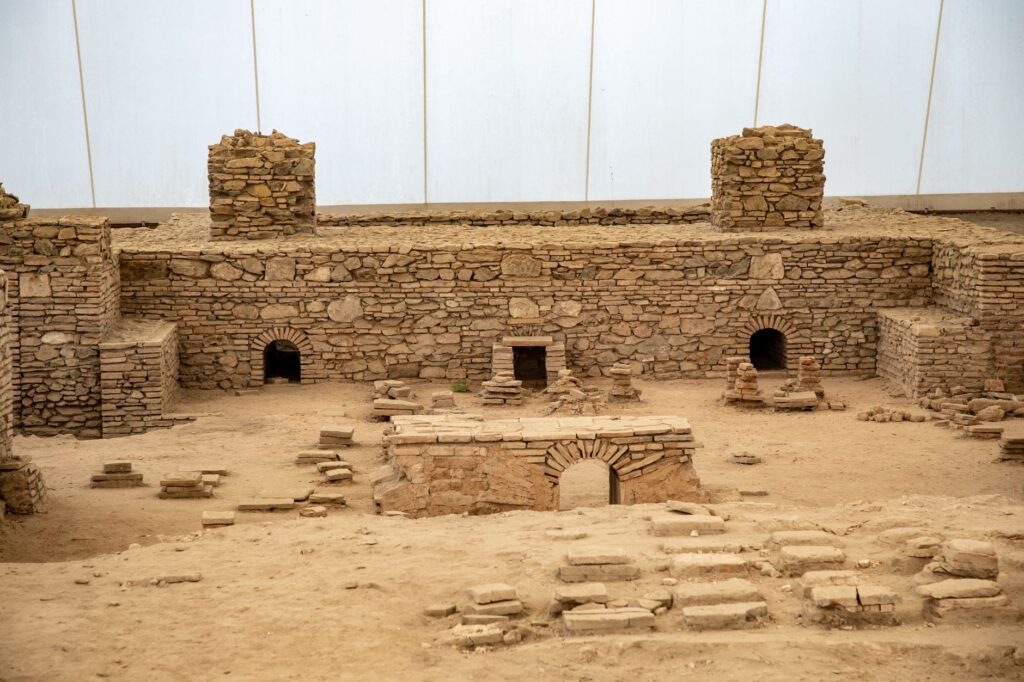
The Great Bath, the large Roman pool, remains the heart of the site. Walking along its walkways allows you to imagine the bustle of those who came to socialize, negotiate, and seek relief in the waters. The museum around it displays objects found in excavations: coins, votive offerings, jewelry, and utensils that reveal the religious and social importance of the place. Don’t miss the head of the goddess Sulis Minerva, an exceptional testimony to the religious syncretism of the era.
A visit to the Roman complex is also a lesson in ancient engineering. The drainage system, water conduits, and construction techniques using local limestone (known as Bath stone) demonstrate a sophisticated knowledge of the environment. Walking on the same flagstones the Romans trod is an experience that connects directly with the past.
The temple of Sulis Minerva, though only partially preserved, offers clues about the spiritual life of Aquae Sulis. Inscriptions and altars found at the site suggest that pilgrims came from distant regions to leave offerings and seek the favor of the goddess. This religious dimension, often overshadowed by the purely recreational image of the baths, reminds us that thermalism in antiquity was inseparable from ritual and belief.
The Georgian city: elegance and urban order
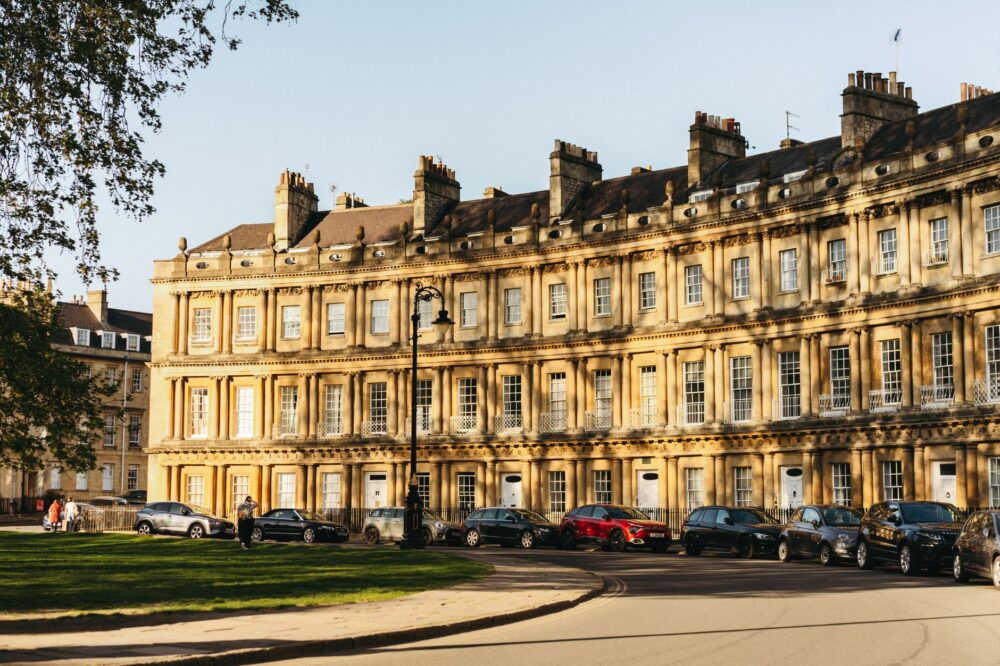
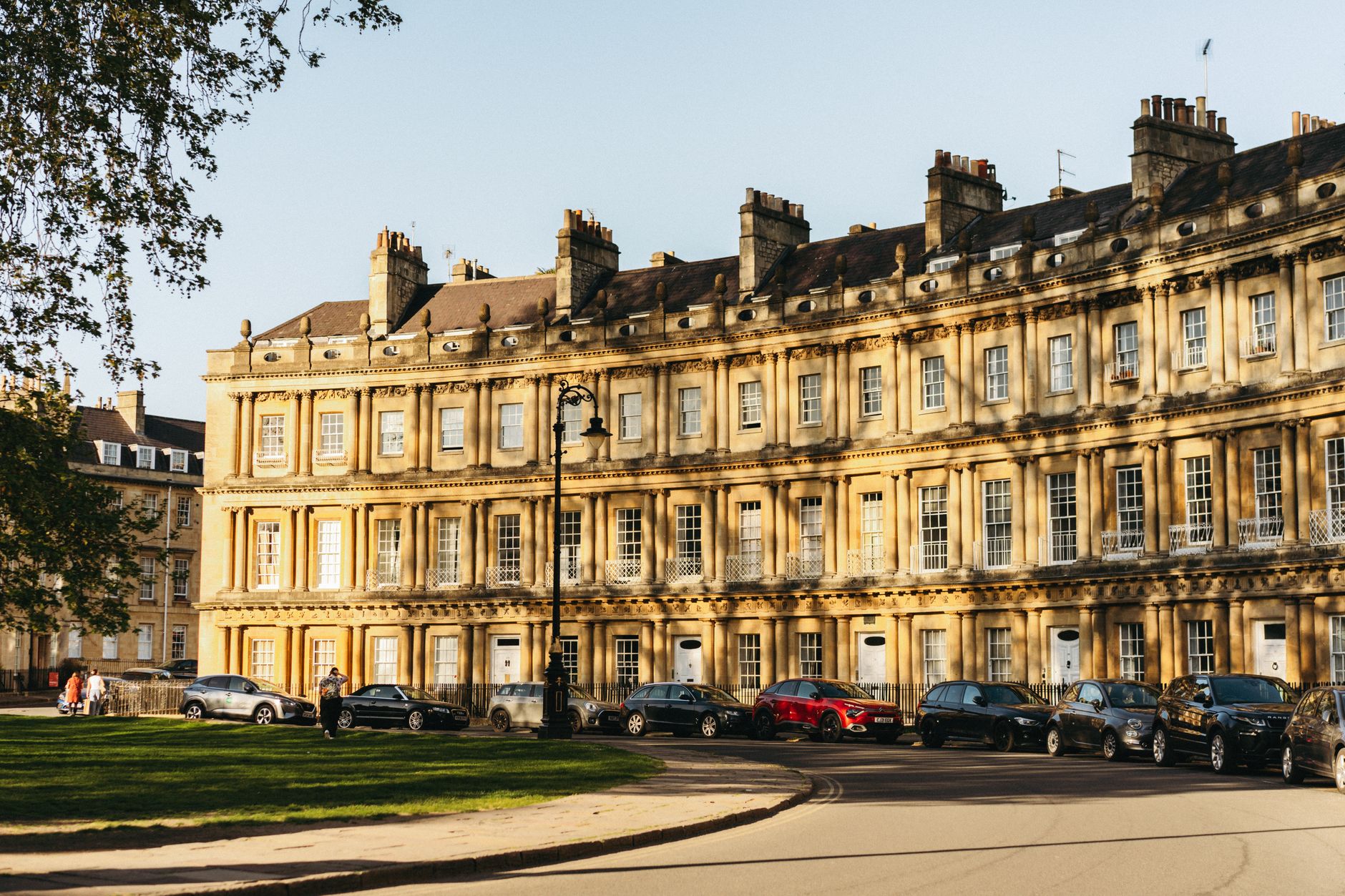
The 18th century left Bath with an architectural repertoire that still defines its character. The Royal Crescent, a semicircle of terraced houses with a curved facade, is the most famous example. Designed by John Wood the Younger, it combines monumentality with functionality: individual homes are integrated into a unitary composition facing a park. The Circus, a circular plaza with three segments of houses, and Queen Square complete the trio of Palladian ensembles that transformed the city.
The Assembly Rooms, halls for dancing and social gatherings, and the Pump Room, where visitors drank the waters, are testimony to the social life that revolved around the thermal cure. The neoclassical architecture of these public buildings harmonizes with the grandiose proportions of the residential ensembles, creating a sense of cohesion rare in European cities of the time.
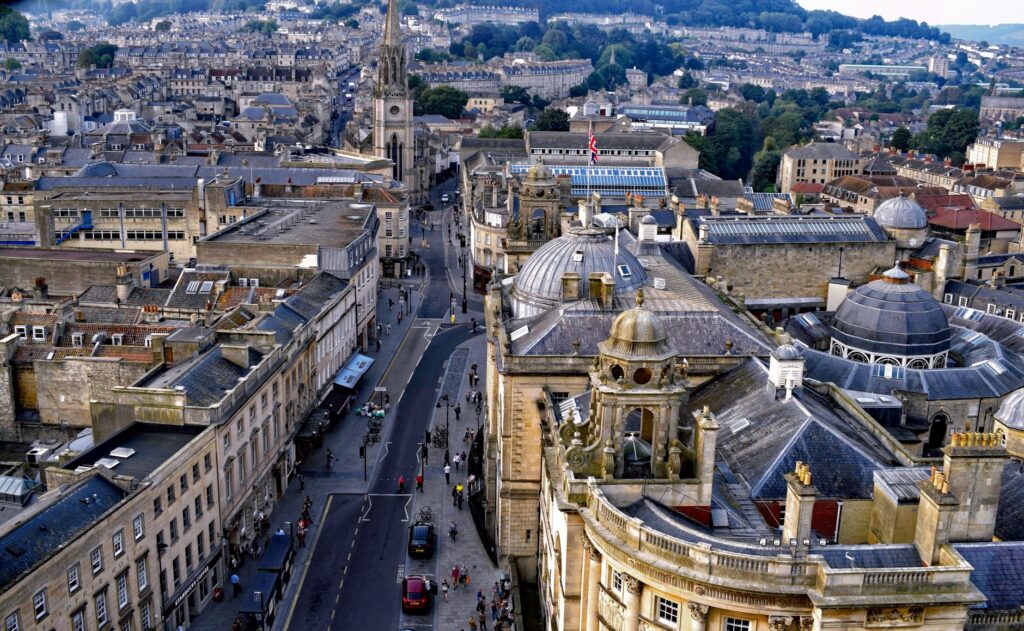
Bath was not the project of a single architect or patron, but the result of a century of interventions that knew how to dialogue with each other and with the landscape.
Behind this urban harmony lie figures such as Ralph Allen, an entrepreneur and quarry owner whose vision and resources were instrumental in the city’s rebirth, and Richard «Beau» Nash, Master of Ceremonies, who shaped the social codes of the spa. Their influence, combined with that of the architects, explains why Bath became a model of the neoclassical city.
The Abbey: the medieval heart
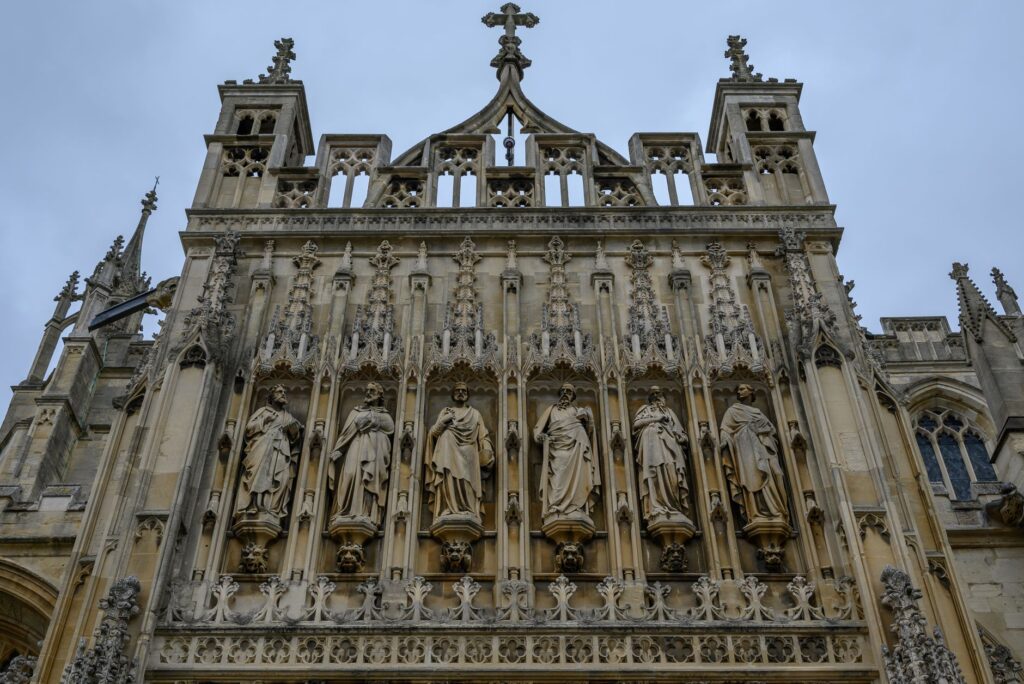
Bath Abbey, with its Gothic facade and stained-glass windows, stands next to the Roman baths. Its current construction largely dates from the 15th and 16th centuries, though it has been restored several times. The interior, with fan vaulting and funerary monuments, offers a spiritual counterpoint to the commercial vitality of the city. Climbing the tower, when permitted, rewards with panoramic views of the rooftops and surrounding hills.
The abbey also bears witness to the continuous development of Bath over two millennia. Its presence beside the Roman temple and baths illustrates how different eras have layered upon the same site without erasing one another. For the visitor, this proximity is a reminder that heritage is not a static relic but a living accumulation of stories.
Beyond the center: walks and landscape
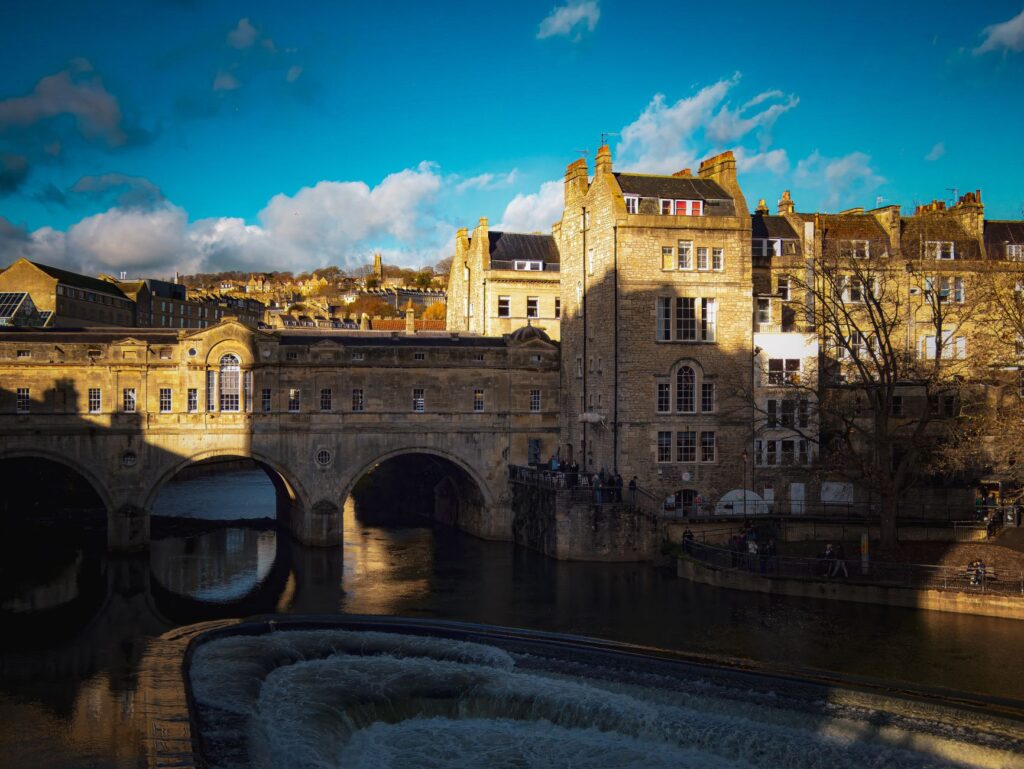
Bath is a city for walking. The River Avon runs through it, and its banks offer tranquil strolls. Pulteney Bridge, with its three arches and shops, is another Georgian masterpiece. The Parade Gardens and the walk along Great Pulteney Street invite you to pause and observe local life.
For those seeking nature, the hills surrounding the city offer hiking routes with exceptional views. The Skyline Walk, a circular path of about 10 kilometers, allows you to appreciate the relationship between the city and its environment. It is a way to understand why Bath was conceived as a garden city avant la lettre.
These green surroundings are not merely a backdrop. They are part of the Outstanding Universal Value of the site, as they frame the views and preserve the picturesque aestheticism that guided the Georgian builders. Walking these paths is, in a sense, to read the city from its edges.
Thermalism today: responsibility and wellbeing
Thermae Bath Spa, opened in 2006, allows visitors to bathe in thermal waters in a contemporary setting. No miracle cures are promised, but the experience of floating in a rooftop pool with views of the abbey is a reminder that water remains the soul of the city. It is important to book in advance and respect hygiene and capacity rules.
The responsible visitor must be aware that Bath is a living city, not a museum. Mass tourism creates tensions between conservation and development. Choosing small accommodations, avoiding peak hours at the busiest sites, and using public transport are gestures that help maintain the balance.
It is also worth remembering that the thermal waters are a natural resource with limits. Treating them with respect, following the rules of each establishment, and not expecting therapeutic miracles are part of an ethical approach to wellbeing tourism. The experience is about relaxation and connection with the place, not about medical treatment.
Local flavors: a gastronomic pause
Bath’s culinary scene reflects its history and location. Somerset products, such as cheddar cheese and cider, appear on many menus. Sally Lunn’s, a tea house in a 15th-century building, serves the famous Sally Lunn bun, a tradition dating back centuries. For a more contemporary meal, restaurants in the Kingsmead area offer seasonal cuisine with local ingredients.
Markets and small shops also provide opportunities to discover regional produce. Buying from local vendors is a way to support the community and reduce the environmental impact of tourism. A simple picnic by the river, with local bread and cheese, can be as memorable as a formal dinner.
Practical guide
When to go: Spring and autumn offer mild temperatures and fewer crowds. Summer is busier but also livelier. Winter, with its Christmas lights, has a special charm.
How to get there: Bath is well connected by train from London (about 1 hour 30 minutes from Paddington) and from Bristol (about 15 minutes). The train station is in the city center. There are also bus services and park-and-ride facilities on the outskirts.
What to see: The Roman complex and museum, the abbey, the Royal Crescent, the Circus, Queen Square, Pulteney Bridge, and the Assembly Rooms. The Bath Skyline Walk for hiking enthusiasts.

Tips: Wear comfortable shoes, as some streets are steep. Book thermal baths and popular restaurants in advance. Respect residential areas and keep your voice down in heritage spaces.
Accessibility: Many main attractions have wheelchair access, though some historic streets can be challenging. Check official websites for up-to-date information.
A closing for memory
At sunset, when Bath’s limestone takes on a golden hue, the city seems suspended in time. Visitors stroll along the Royal Crescent, locals chat in pubs, and the thermal water continues to flow underground. Bath is not just a destination; it is a lesson in how humans can build in dialogue with nature. Taking away that impression, and not a towel stolen from the spa, is the best souvenir.