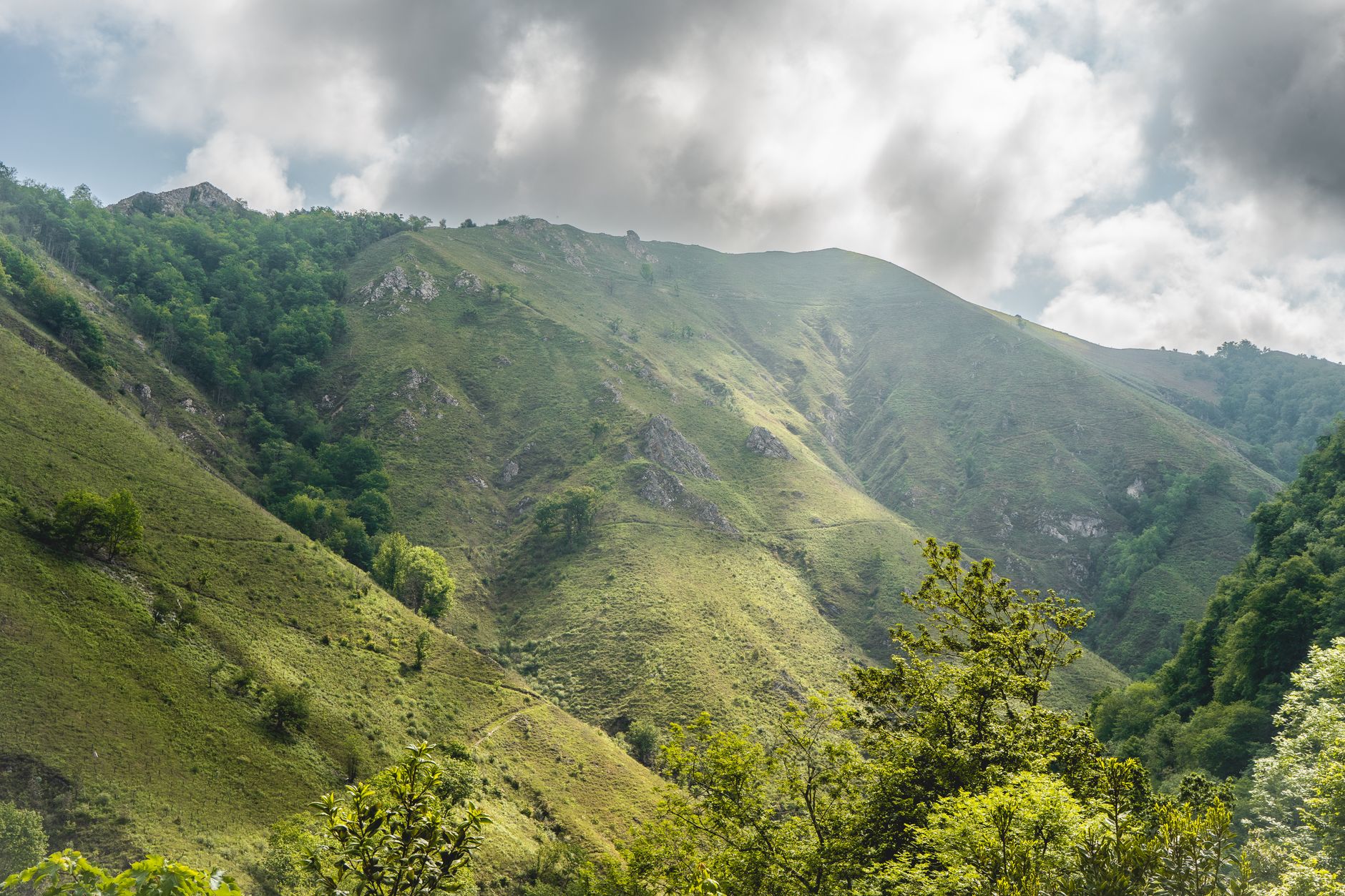

On the shaded slopes of the Cantabrian Mountains in northern Spain, the beech and oak forests hide a treasure that seemed doomed to disappear decades ago. The brown bear, emblem of these mountains, has returned to corners it had abandoned. Its presence is not only a conservation success but a reminder that coexistence between humans and large carnivores is possible when certain unwritten rules are respected.
This report travels through the Asturian and Leonese valleys to discover how life is organized around the bear: from measures to protect beehives and livestock to responsible observation routes. It is not about seeking a guaranteed sighting, but about understanding the delicate balance that allows an endangered species to share territory with those who inhabit it.
A landscape shaped by the bear
The Cantabrian Mountains stretch over 300 kilometers across northern Spain, from the Basque Country to Galicia, with Asturias and León at their heart. Their peaks, exceeding 2,000 meters in the Picos de Europa, harbor exceptional biodiversity. Here, the brown bear finds refuge in mature forests of beech, oak, and chestnut, and in high-mountain scrub where it searches for fruits and small mammals.

The recent history of this subpopulation is a seesaw of hope and fragility. Just three decades ago, the number of bears was critical. Thanks to conservation, monitoring, and education programs, the population has been slowly recovering. But recovery should not be confused with abundance: every bear counts, and each individual needs a vast territory to survive.
The presence of the bear is not an obstacle to rural development; it is an indicator that the forests are alive and that there is still room for the wild.
The mosaic of coexistence
In the mountain villages, the relationship with the bear has changed. Once feared and persecuted, today it is viewed with a mix of pride and caution. Farmers have learned to protect their flocks with mastiffs and electric fences, and beekeepers install elevated or fenced hives. These measures, often subsidized, reduce damage and allow life to continue.
However, coexistence is not without tensions. When a bear attacks a hive or a corral, conflict erupts. That is why administrations and conservation organizations work on prevention and compensation for damage. The key is that the bear is not perceived as a threat to the local economy.
Responsible observation routes
For travelers wishing to delve into this territory, there are several marked routes that allow them to learn about the bear’s habitat without disturbing it. One of the most emblematic is the one that runs through Somiedo Natural Park in Asturias, where beech forests and glacial lakes offer a breathtaking scene. Another option is the Fuentes del Narcea, Degaña e Ibias Natural Park, on the border with León, a labyrinth of deep valleys and well-preserved forests.
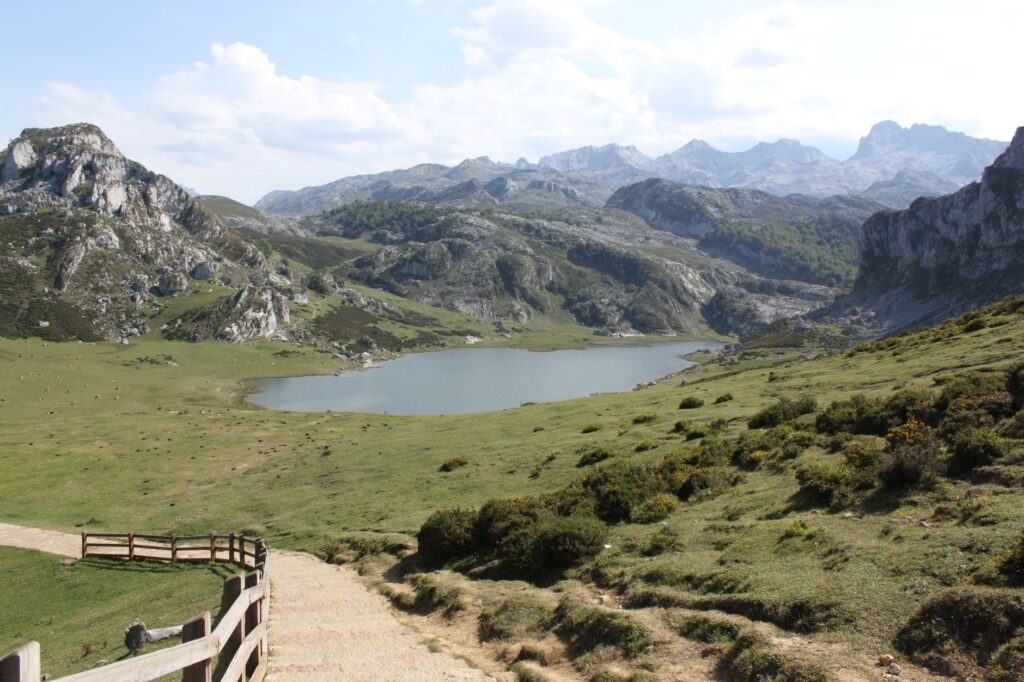
It is essential to remember that the bear is an elusive animal and sightings are rare and never guaranteed. The best way to enjoy its presence is through interpreting the landscapes it inhabits: tracks, scat, marks on trees. Interpretation centers, such as those in Somiedo or Proaza, offer detailed information and exhibitions that help understand its biology and conservation efforts.
What to do if you encounter a bear
Although encounters are infrequent, it is wise to know how to act. First, stay calm. The brown bear avoids human contact and, if it detects our presence, it will most likely flee. We should not run or shout; nor should we approach to take photos. If the animal has not noticed us, we retreat slowly without turning our back. In the unlikely event of a close encounter, it is advisable to speak loudly and adopt a calm but firm attitude, without aggressive gestures.
Authorities recommend not leaving food scraps, not leaving marked trails, and keeping dogs on a leash. These rules not only protect the visitor but also prevent the bear from associating people with food, a behavior that always ends badly for the animal.

The best sighting is the one that does not happen: knowing that the bear is there, in its world, without needing to see it, is proof that we have done things right.
The role of extensive livestock farming
Extensive livestock farming is a traditional activity that has shaped the Cantabrian landscape for centuries. Cows, sheep, and goats graze in the mountain passes, keeping scrub at bay and promoting plant diversity. For the bear, these pastures are also a source of food: carrion, insects, and small rodents. However, the presence of livestock can attract the bear to areas near villages, increasing the risk of conflicts.
Therefore, coexistence programs include aid for farmers to adopt protection measures. Mastiffs, large dogs with a strong guarding instinct, are the most effective method. Electric fences are also used, and it is recommended to keep livestock at night in stables or secure enclosures. These practices, although they require extra effort, are proving effective in reducing damage.
Nature tourism: opportunities and limits
The bear has become a tourist attraction for the area. More and more visitors arrive attracted by the possibility of seeing it, even from a distance. This has boosted the local economy, with an increase in rural accommodations, specialized guides, and active tourism companies. But it also carries risks: overcrowding, noise, and pressure on habitats can alter the bear’s behavior and reduce its chances of survival.

For tourism to be truly sustainable, it must be regulated. Some companies offer excursions with telescopes and expert guides who know traditional observation points and respect safety distances. Others, however, organize mass expeditions that chase the animal. The responsible traveler should inform themselves and choose proposals that guarantee the bear’s well-being and contribute to conservation.
Conservation: achievements and challenges
The recovery of the brown bear in the Cantabrian Mountains is one of the greatest conservation successes in Spain. It has gone from a few individuals to a population that, although still vulnerable, reproduces and expands. Monitoring projects with GPS collars, camera traps, and genetic analysis allow us to know their movements and design ecological corridors that connect different areas.
But not everything is resolved. Habitat fragmentation, road infrastructure, and climate change are latent threats. Furthermore, social acceptance is fragile: any serious incident can rekindle rejection. Therefore, environmental education and the participation of local communities are essential for the bear’s future.
Practical guide
If you plan to visit the Cantabrian Mountains to learn about the bear’s territory, here are some useful tips.
- Best time: Spring and autumn are ideal for mild weather and fewer visitors. In summer, villages fill up, but it is also when bears are most active at dawn and dusk.
- What to bring: Mountain footwear, warm clothing, and rain protection. Binoculars or a telescope to observe wildlife from a distance. A camera with zoom, but without getting close.
- Where to stay: Rural houses and hotels in Somiedo, Cangas del Narcea, Proaza, or Pola de Lena. Book in advance in high season.
- Basic rules: Do not leave the trails, do not litter, do not feed animals, and keep dogs on a leash. If you see a bear, keep your distance and do not chase it.
- Interpretation centers: The Brown Bear Interpretation Center in Proaza and the one in Somiedo offer valuable information. Also the Bear Museum in Cangas del Narcea.
- Gastronomy: Be sure to try Asturian fabada, cachopo, Cabrales cheeses, and sweets like carbayón. Cider is the traditional drink.
A closing reflection
The brown bear in the Cantabrian Mountains is much more than an emblematic species. It is a symbol that nature can recover if we give it space and time. But it is also a reminder that coexistence requires effort, respect, and responsibility. Every visitor who comes to these valleys has the opportunity to contribute to that balance, simply by observing without interfering, learning, and supporting the communities that have chosen to live with the bear.
At the end of the day, when the sun sets over the peaks and the forests become silent, there remains the certainty that somewhere, among the shadows, a bear walks free. And that, in itself, is a reason for hope.