
In the heart of Italy, Bologna unfurls 62 kilometres of porticoes that have shaped its urban life since the 12th century. A journey through these passages reveals the symbiosis between architecture, commerce and sociability. The Emilian city, famed for its university and cuisine, finds in these covered walkways a distinctive trait that transcends the merely structural.
Bologna’s porticoes are far more than a shelter from rain or sun: they are the stage where history, daily life and the identity of a community that has preserved a unique model of public space intertwine.
A UNESCO World Heritage Site
In 2021, UNESCO inscribed twelve ensembles of Bologna’s porticoes on its World Heritage List, selected as the most representative in the city. These twelve components, spread across both the historic centre and peripheral areas, reflect the architectural and social evolution of a tradition dating back to the 12th century and still alive today.
The international body highlighted that the porticoes constitute the largest system of covered walkways in the world, with a total length of 62 kilometres. The series includes examples built in wood, stone, brick and reinforced concrete, demonstrating the typology’s adaptability over the centuries.
“Defined as private property for public use, the porticoes have become an expression and element of Bologna’s urban identity,” states the official description of the site.
The listing recognises not only the architectural value but also the social function these spaces have continuously served. The porticoes are places of encounter, commerce and transit, where city life unfolds under cover.

From the 1288 Statute to the Present Day
The regulatory origin of the porticoes dates back to the 1288 Statute, a municipal law that required building owners to construct and maintain these corridors. The rule sought to expand living space in a growing city while offering shelter for passers-by.
Since then, the construction of porticoes has been a constant in Bologna’s urban growth. The legislation has endured through the centuries, adapting to changing needs and ensuring the conservation of this heritage. Regulatory continuity is one of the factors explaining the system’s exceptional integrity.
In the 20th century, the introduction of reinforced concrete allowed new construction solutions. The Barca district, on the outskirts, exemplifies this modern architectural language, where porticoes take freer, wider forms without losing their original function.
Typologies and Materials: A Journey Through Diversity
The twelve ensembles selected by UNESCO represent a variety of typologies ranging from working-class houses to aristocratic residences, public and religious buildings. This diversity is reflected in the materials used: wood, stone, brick and reinforced concrete.

Each material tells a story. Wooden porticoes, lighter and cheaper, were common in popular areas. Stone and brick ones, more durable and costly, were associated with more prestigious buildings. The choice of materials also influenced the height and width of the passages, creating a wide range of spatial experiences.
A Walk Through the Historic Centre
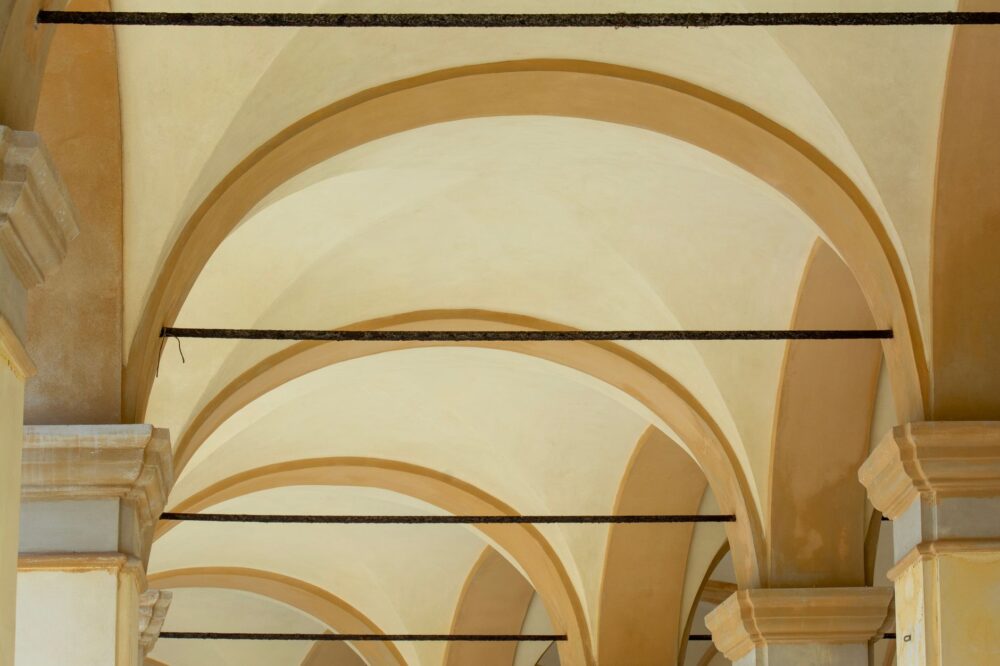
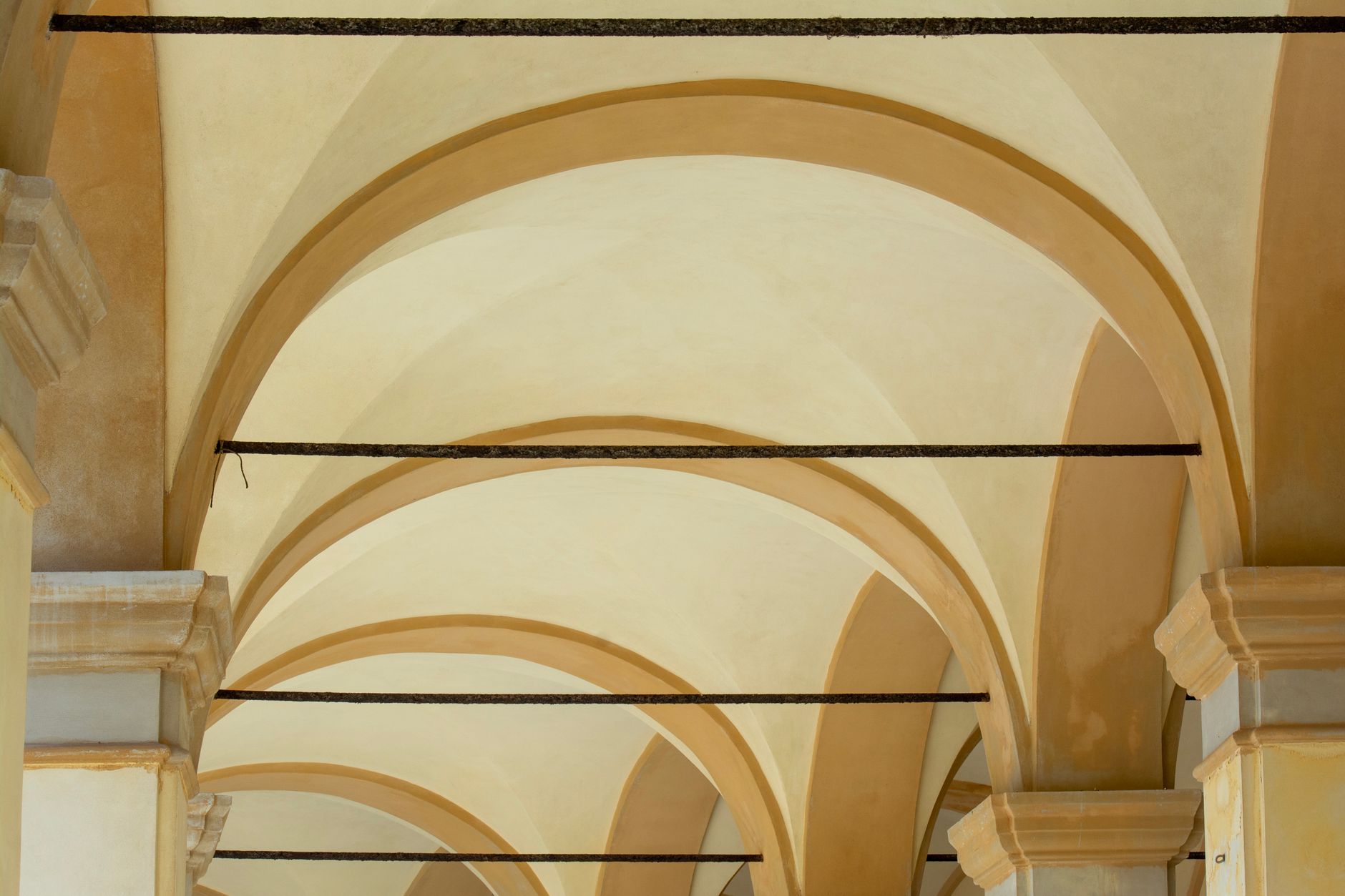
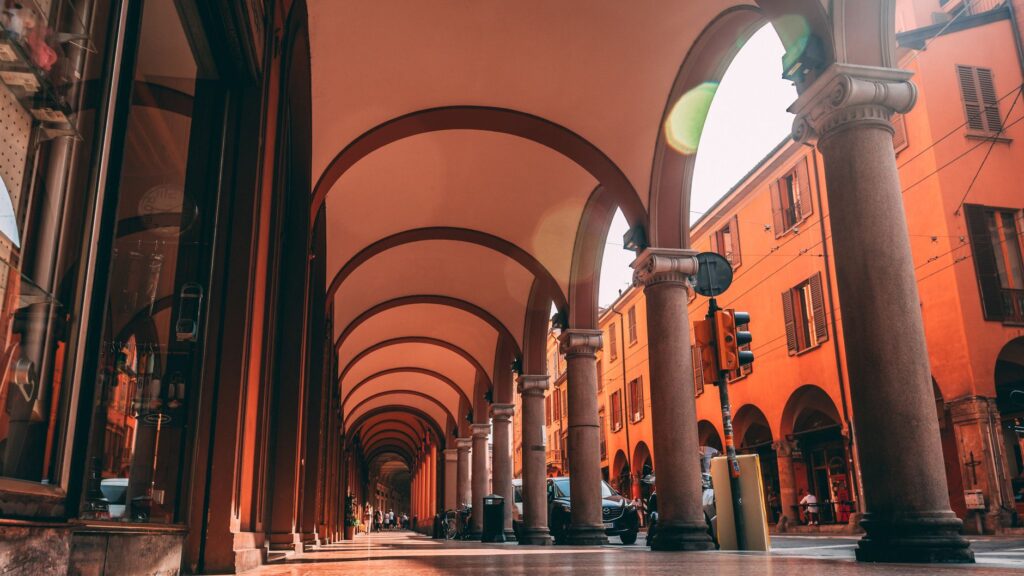
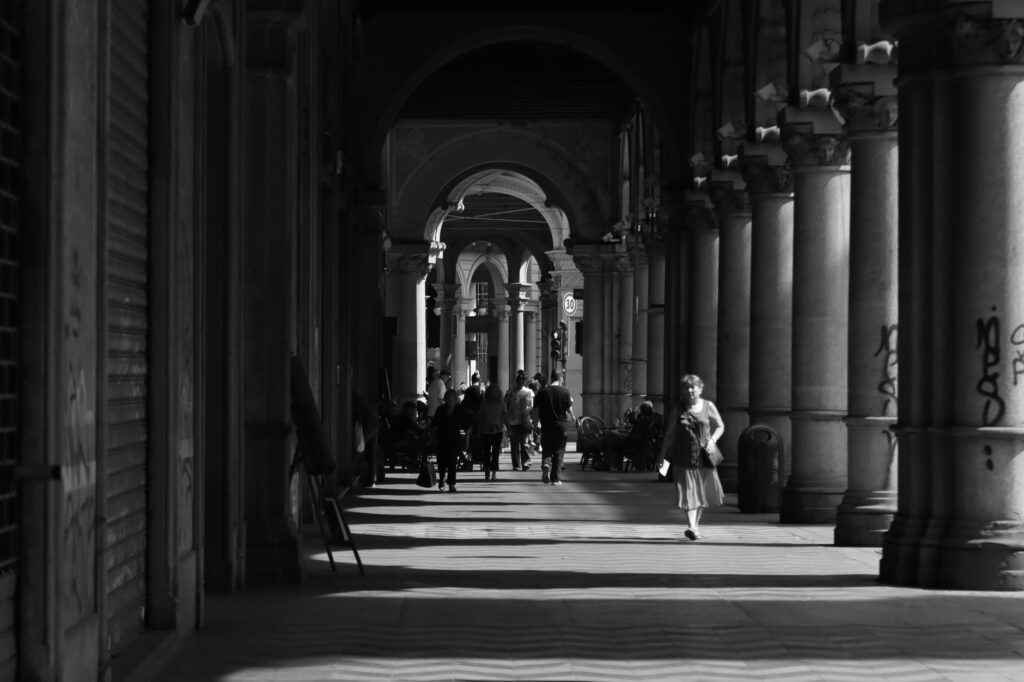
Walking through the porticoes of the historic centre is entering a labyrinth of sensations. The filtered light, the echo of footsteps on the pavement, shop windows and the aromas of trattorias create a unique atmosphere. On Via Zamboni, the portico reaches its most monumental expression, with round arches and ribbed vaults.
Other stretches, such as those bordering Piazza Maggiore, combine commercial and representational functions. The porticoes of the Basilica of San Petronio, though unfinished, show the ambition of a project that was never completed. Each street offers a different perspective, but always under the protection of these corridors.
Beyond the Centre: The Peripheral Porticoes
The UNESCO listing is not limited to the historic centre. It also includes ensembles in peripheral areas, such as the aforementioned Barca district. These modern porticoes, built in concrete, respond to the needs of an expanding city and demonstrate that tradition is not static.
In Barca, the porticoes take more geometric and wider forms, often integrated into multi-storey residential buildings. The function remains the same: to provide covered space for transit and social interaction. But the architectural language is decidedly contemporary.
This continuity between past and present is one of the aspects most valued by experts. The porticoes’ ability to adapt to different contexts and eras demonstrates their validity as an urban model.
Social Life Beneath the Arches
The porticoes are the stage for intense social life. Throughout the day, a variety of activities unfold: students heading to university, shopkeepers opening their stores, neighbours chatting, tourists taking photos. The mix of uses and people is an essential characteristic of these spaces.
The University of Bologna, the oldest in the Western world, has a notable presence in the porticoes. Many of its buildings are integrated into the covered walkway system, and students use these corridors as places to study, meet and rest. The academic community appropriates the public space, reinforcing the bond between the institution and the city.
“The portico is an architectural model but also a social one, a place of integration and exchange,” highlights UNESCO documentation.
Shops also play a crucial role. Beneath the porticoes, cafés, bookshops, grocery stores and artisan workshops follow one another. Proximity to pedestrian flow ensures their viability, and in turn, these businesses contribute to the animation of the space. The symbiosis between commercial activity and portico is one of the pillars of its success.
A Model of Public-Private Management
One of the most singular aspects of Bologna’s portico system is its property regime. Although the porticoes are privately owned, their use is public. This duality dates back to the 1288 Statute and has been maintained to this day.
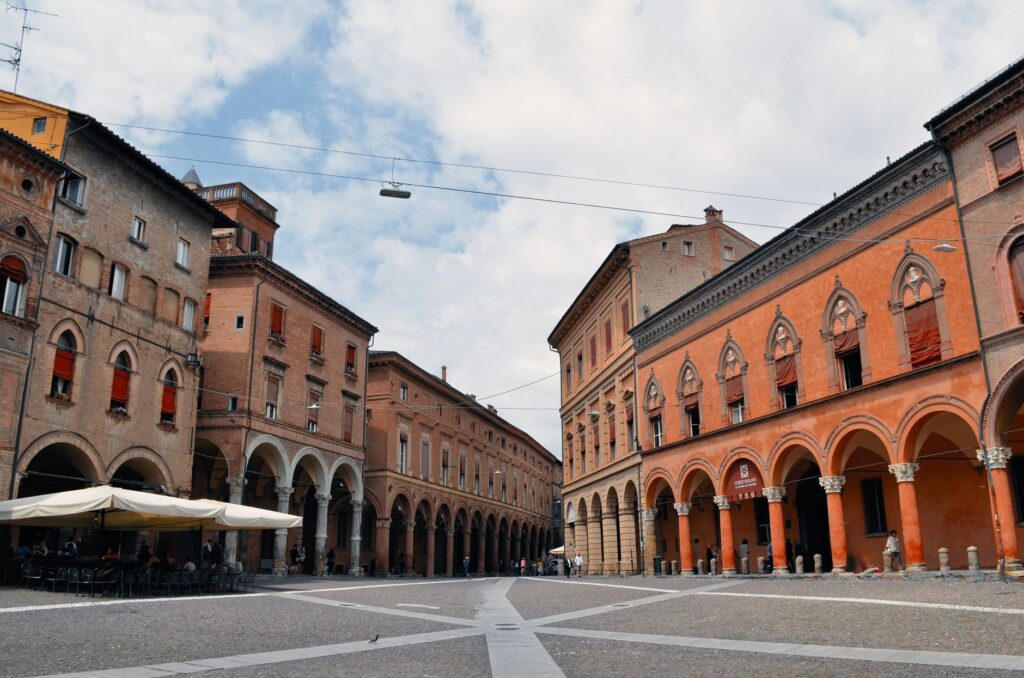
Building owners are responsible for the maintenance and conservation of the porticoes, while the municipality sets the rules for construction, access and decoration. This collaboration between the private sector and public administration has preserved urban quality and collective usability.
The Municipality of Bologna has created a dedicated office, Portici Patrimonio Mondiale, responsible for coordinating the management, protection and promotion of the site. Guidelines for the care and use of the porticoes have also been developed, regulating accessory elements and ensuring their visual integrity.
Practical guide
To enjoy Bologna’s porticoes, it is recommended to walk them slowly, paying attention to architectural details and the life that animates them. The best seasons are spring and autumn, when the weather is mild and the streets are not too crowded.
- Essential itinerary: Start at Piazza Maggiore and follow Via Zamboni to the university district. Continue to the Basilica of San Petronio and then to the Barca district to see the modern version.
- Recommended duration: Allow at least two days to explore the different stretches and enjoy the cafés and shops.
- Accessibility: The porticoes are mostly accessible for wheelchairs, although some stretches may have steps or uneven surfaces.
- Hours: The porticoes are public spaces open 24 hours, but shops have varying hours.
- Tip: Wear comfortable shoes and bring a camera to capture the beauty of the arches and vaults.
It is important to remember that the porticoes are a living space, not a museum. Respecting silence in residential areas and not obstructing passage are courtesies that locals appreciate.
A Heritage for the Future
Inclusion on the World Heritage List has brought international recognition but also a renewed commitment to conservation. Local authorities and owners work together to maintain the site’s authenticity and integrity.
The challenges are significant: mass tourism, climate change and real estate pressure are some of the threats. However, the solid regulatory tradition and community involvement offer a favourable framework for sustainable management.
Bologna’s porticoes are an example of how an architectural element can become a hallmark and a driver of social cohesion. Their history shows that it is possible to reconcile private interest with public benefit, and that beauty can be both functional and everyday.
At dusk, when golden light filters through the arches, the porticoes fill with shadows and whispers. It is the moment when the city seems to pause, and the walker understands that they are traversing not just a series of covered streets, but the very soul of Bologna.