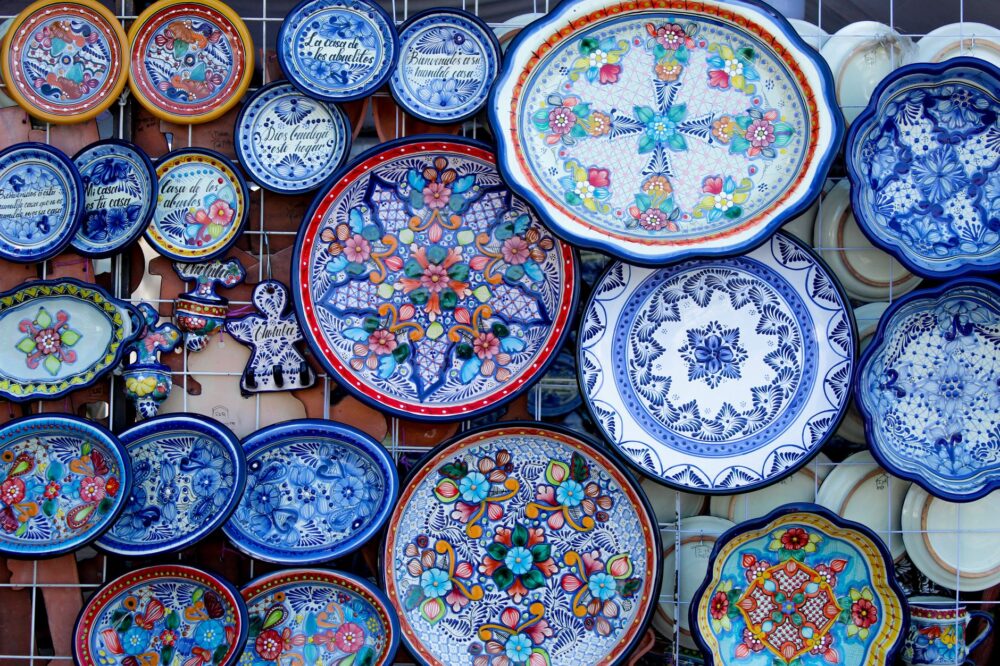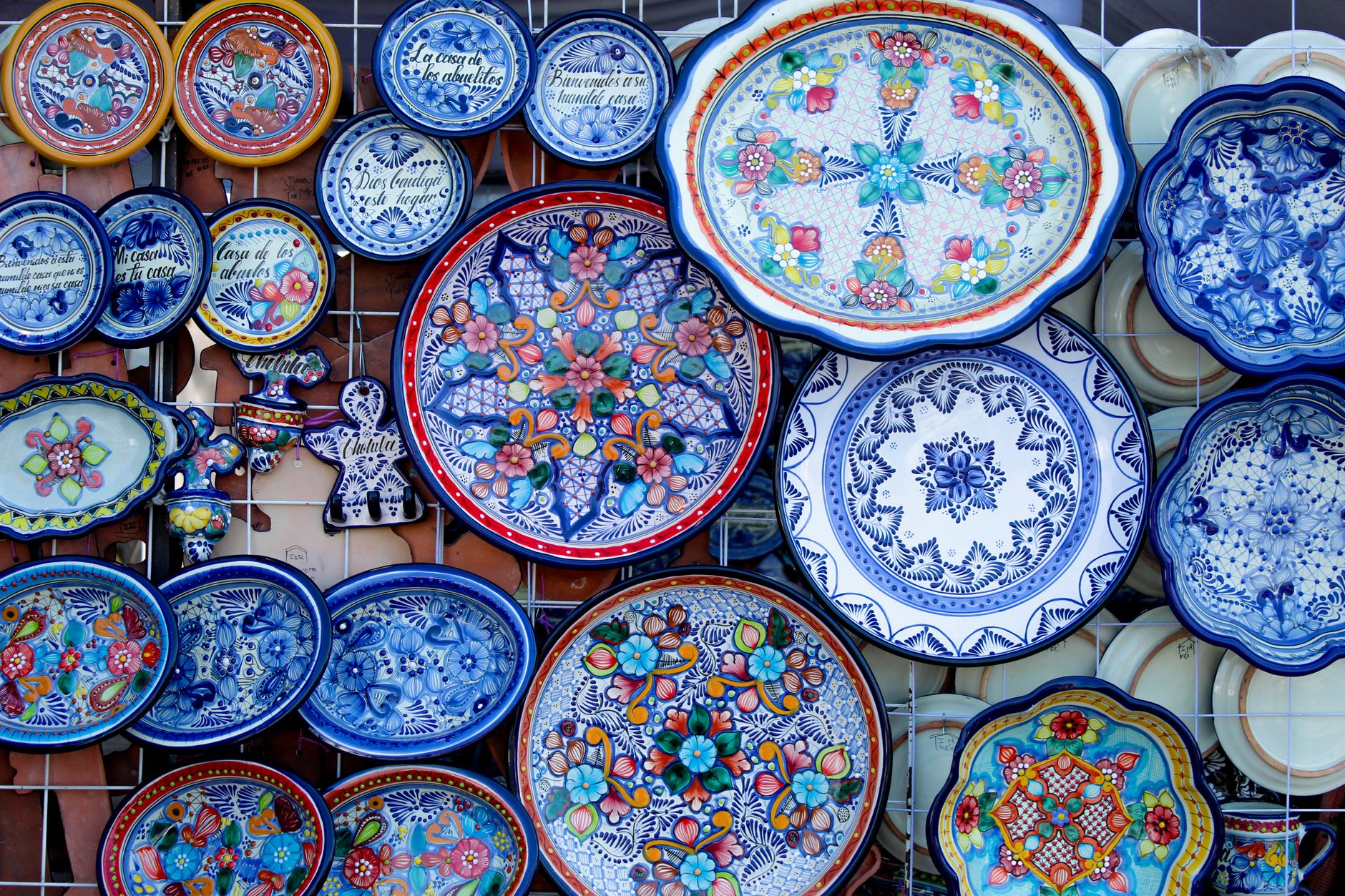

In Talavera, a city in the Mexican state of Puebla, clay becomes memory. Its ceramic workshops preserve a technique that arrived with Spanish potters in the 16th century and, over time, acquired a character of its own. In 2019, UNESCO inscribed the artisanal processes of Talavera of Puebla and Tlaxcala, in Mexico, together with the ceramics of Talavera de la Reina and El Puente del Arzobispo, in Spain, on the Representative List of the Intangible Cultural Heritage of Humanity. What was protected was not an object but a know-how: preparing the clay, throwing or molding the piece, decorating it, making enamels and pigments, and managing the kiln.
The city of Talavera, in Puebla, is one of the hubs where that knowledge remains alive. There, ceramics is not just a craft: it is a symbol of identity passed down in workshops and within families. Each workshop keeps its own character in shapes, colors and enamels. This report explores how the craft is learned and taught, what challenges it faces, and why it remains a heritage passed from hand to hand.
A craft learned with the hands
The process begins long before touching the clay. Preparing the clay demands patience: cleaning it, kneading it and letting it rest until it reaches the right plasticity. Then comes modeling, which can be done on a potter’s wheel or with a mold. UNESCO notes that, despite technical changes such as the current use of electric potter’s wheels, the artisanal processes retain the same pattern as in the 16th century.
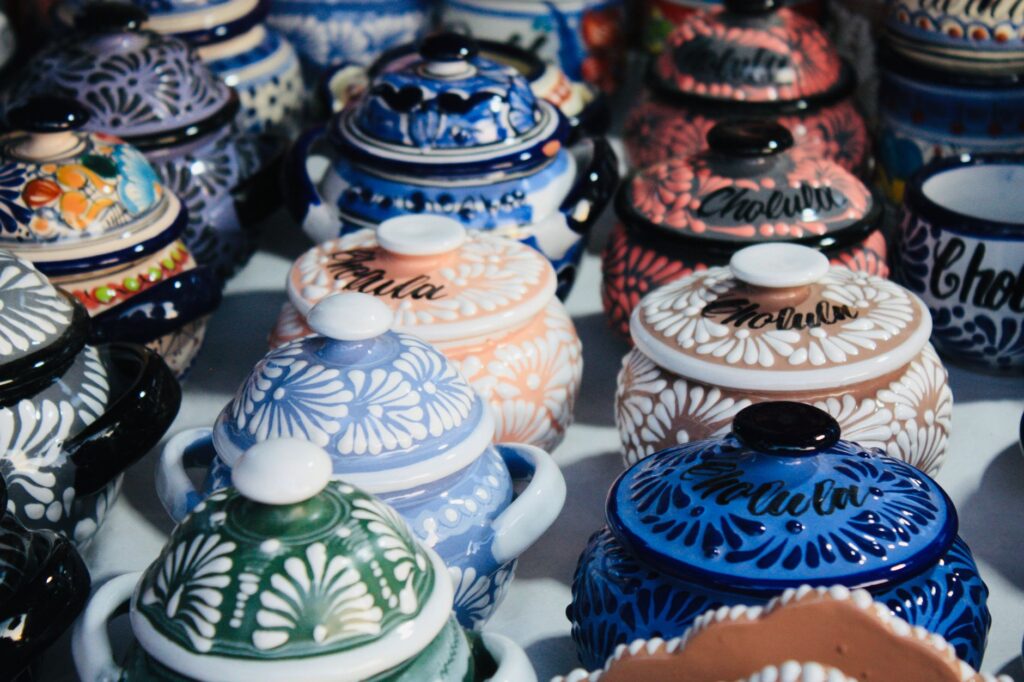
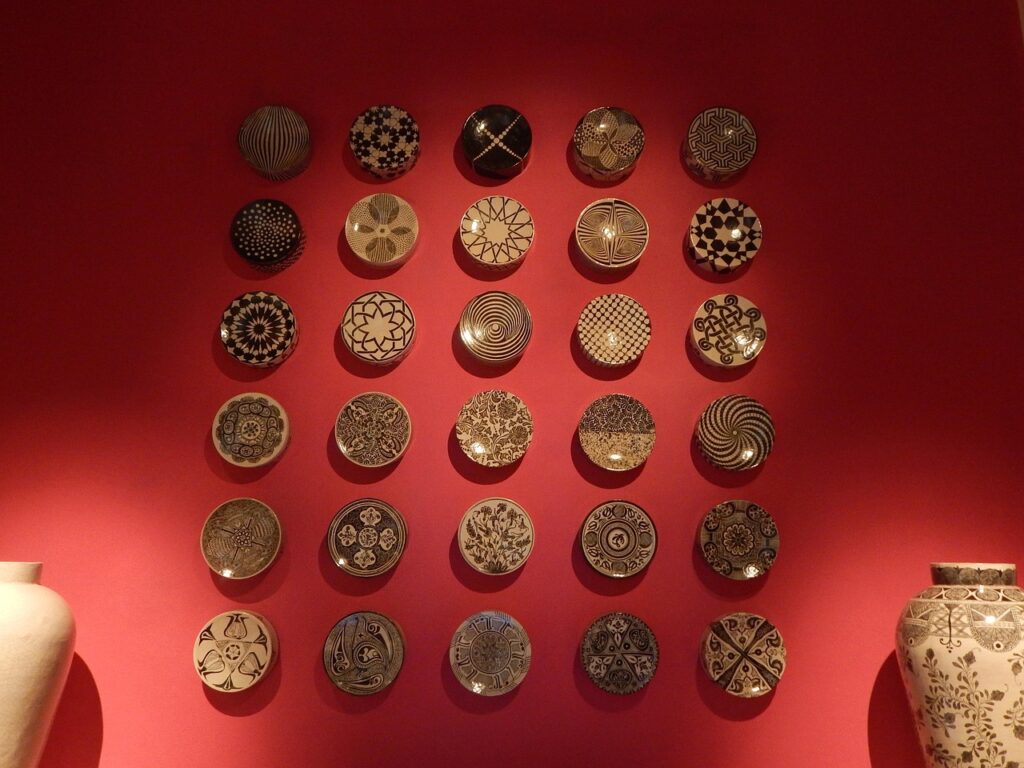
Decoration is the most recognizable moment. Ceramists apply pigments over the enamel and achieve the blues, greens, yellows and blacks that characterize Talavera. No two workshops are identical: the proportion of colors, the brushstroke and the repertoire of motifs vary. That diversity is precisely one of the reasons the knowledge was recognized.
“The knowledge related to Talavera is mostly borne by master earthenware artisans and ceramists, who transmit it to the next generations through oral transmission in their artisanal workshops or in the family setting,” UNESCO states.
Masters and apprentices: the chain that does not break
In Talavera, as in other ceramic centers, teaching does not happen in conventional classrooms. It is learned by watching, repeating and correcting. The master shows how to center the clay on the wheel, how to measure the wall’s thickness, how to hold the brush. The apprentice starts with simple tasks and, over the years, takes on more complex pieces.
Some ceramists carry out the whole process; others specialize in a specific task: extracting raw materials, modeling, decorating or firing. That division of labor does not prevent the craft from being transmitted as a whole. UNESCO stresses that oral transmission and direct practice are the main vehicles of this knowledge.
The workshop as a school
The workshop is a space of daily learning. There, tricks are shared, mistakes are corrected and conversations about commissions, fairs and clients take place. Living together makes the craft not just a technique but a way of life. In Talavera, many families have turned ceramics into a tradition passed from parents to children.
A heritage shared between Mexico and Spain
The 2019 inscription brought together two traditions separated by the Atlantic. On one hand, the artisanal processes of Talavera of Puebla and Tlaxcala, in Mexico; on the other, the ceramics of Talavera de la Reina and El Puente del Arzobispo, in Spain. Both communities share techniques, vocabulary and a history of exchanges dating back to colonial times.
That international recognition distinguishes not only the product but the set of skills that make it possible. UNESCO highlights that ceramic production remains a key identity symbol in both countries. In Talavera, Puebla, that identity is expressed in facades, churches, fountains and tableware that are part of the urban landscape.
The challenges of an artisanal craft
Artisanal ceramics faces various pressures. Competition from industrial products, the cost of raw materials and the difficulty of finding apprentices willing to dedicate years to the craft are some of the challenges. Added to this is the need to adapt to a market that values handmade goods but also demands competitive prices.

However, UNESCO recognition has given visibility to the work of the workshops. It has also driven safeguarding initiatives, such as training programs and specialized fairs. Generational transmission remains the most fragile link and, at the same time, the most valuable.
Women and men of clay
UNESCO links this heritage to sustainable development goals such as gender equality and decent work. In the workshops of Talavera, men and women share tasks, although gaps persist in access to management positions or workshop ownership. The visibility of women ceramists has grown in recent years.
Firing: the moment of truth
The kiln is the final judge. Temperature, time and atmosphere determine the final color and the piece’s resistance. UNESCO includes kiln management among the skills that require great expertise. A miscalculation can ruin weeks of work.
In Talavera, some workshops still use traditional kilns, while others have incorporated more controllable technologies. The choice is not neutral: it influences the finish, energy consumption and final cost. Masters know these differences well and explain them to those who visit their workshops.
What you can see in a Talavera workshop
A visit to a ceramic workshop in Talavera, in Puebla, allows you to follow the complete process. You can observe clay preparation, modeling, brush decoration and kiln loading. You can also appreciate the differences between utilitarian, decorative and architectural pieces: from plates and vases to tiles and finials.
Workshops often display finished pieces and, in some cases, offer demonstrations. It is important to remember that each workshop has its own rhythm and that artisanal production does not follow factory schedules. Patience is part of the experience.
The future of the craft
The continuity of Talavera depends on new generations finding in it a viable life project. Training, promotion and recognition of the value of artisanal work are key. So is the demand from consumers willing to pay for unique, handmade pieces with a story behind them.

UNESCO warns that, despite changes, artisanal processes maintain their essence. That continuity is not automatic: it requires effort, support policies and, above all, people willing to teach and learn. In Talavera, Mexico, that chain keeps working, workshop by workshop, generation by generation.
Practical guide
- Where: Talavera, in the state of Puebla, Mexico. It is one of the ceramic hubs recognized by UNESCO along with Tlaxcala.
- What to look for: artisanal workshops producing Talavera with traditional processes. A visit allows you to see modeling, decoration and firing.
- When to go: it is advisable to check opening hours and visit availability, as workshops are working spaces and are not always open to the public.
- How to buy: ask about the piece’s origin, the type of enamel and whether it was handmade. Authentic Talavera usually bears the workshop’s signature.
- Respect: avoid touching pieces without permission and do not interrupt the ceramists’ work. Silent observation is welcome.
- Language: Spanish is the local language. Tourist-oriented workshops may offer English, but it is not the norm.
Talavera in Puebla is not just a souvenir to take home. It is a craft learned with the hands, taught with patience and inherited like a surname. Anyone who visits a workshop and watches a master decorate a piece understands that the true heritage is not in the object but in the gesture that creates it.