
Helsinki is not a city to be admired from afar. Its architecture is experienced on foot, while waiting for a tram, stepping into a library, or sitting in a square. In Finland’s capital, design is not confined to museums or exclusive districts: it is a daily practice that shapes how Helsinkians live, move, and relate to their surroundings. From the imposing Art Nouveau ensemble of the Katajanokka district to the clean lines of Nordic functionalism, the city offers a living catalogue of styles that are not exhibited but inhabited.
This feature offers a reading of Helsinki through its most accessible architecture: the kind used every day. It is not an inventory of monuments, but an exploration of how design—from street furniture to major public buildings—shapes an identity and a way of life. Finland has turned design into a national hallmark, and its capital is the best place to see it in action.
A walk through history: from neoclassicism to Art Nouveau
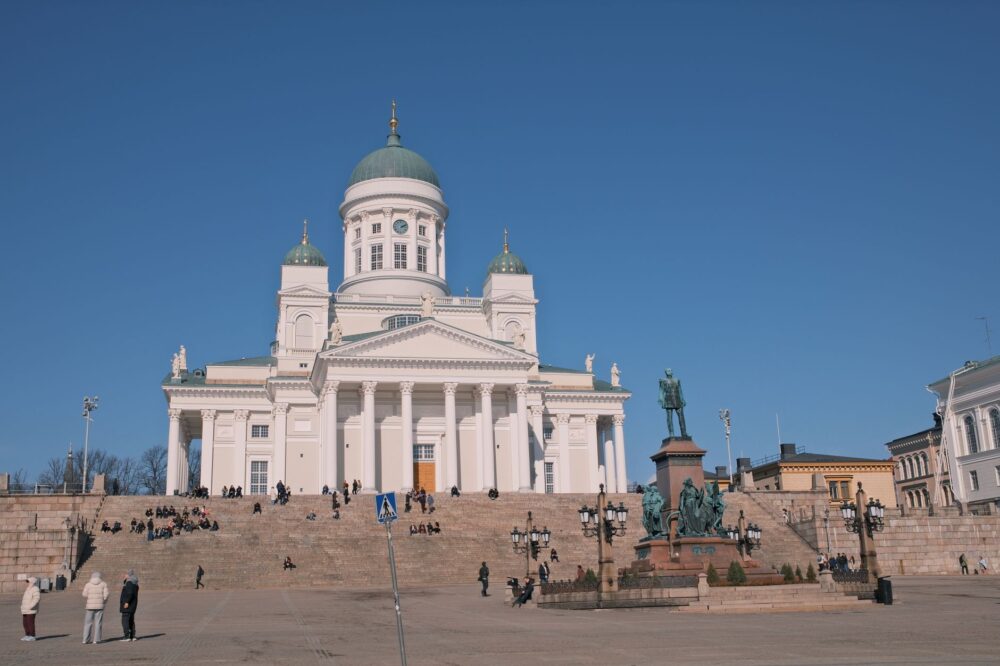
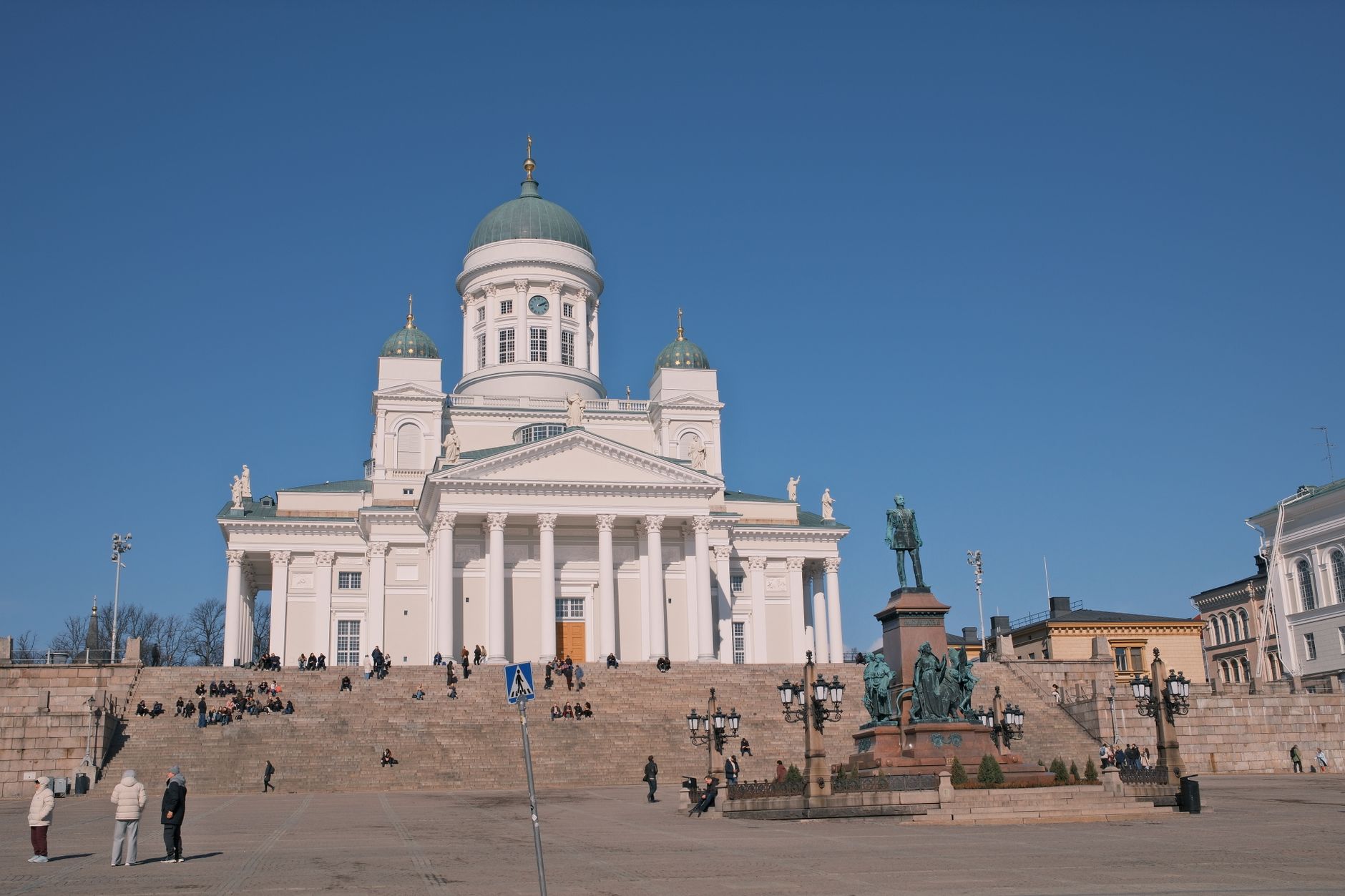
Helsinki’s historic centre is organised around Senate Square, a neoclassical ensemble designed by Carl Ludvig Engel in the 19th century, including the Cathedral, the Government Palace, and the University. This space, almost scenographically austere, was conceived to impress, but today it is also a daily thoroughfare for thousands. The pale stone and white columns contrast with the bustle of trams and bicycles crossing the square.
Close by, in the Kruununhaka district, the first examples of Art Nouveau, known in Finland as Jugendstil, begin to appear. Unlike other European cities, where modernism was reserved for singular buildings, in Helsinki it was applied to apartment blocks, shops, and offices. The result is a homogeneous and elegant urban landscape, with ornate facades, corner towers, and organic window shapes. Katajanokka is the most representative neighbourhood: its narrow streets and early 20th-century buildings form the largest Art Nouveau ensemble in Northern Europe.
The functionalism that humanised the city
After Finland’s independence in 1917, a new generation of architects sought a language of their own, away from historicist ornamentation. Nordic functionalism, with Alvar Aalto as its central figure, proposed buildings with simple lines, natural materials, and special attention to light and comfort. In Helsinki, this style left deep marks: from the Helsingin Sanomat newspaper headquarters to the Olympic swimming pool, and numerous housing blocks in Töölö and Kallio.
Functionalism was not just an aesthetic but a tool to improve daily life. Finnish architects designed everything from chairs to cities, convinced that the built environment directly influences well-being. That idea is still alive: today, any urban intervention in Helsinki starts from the premise that design must serve people.
Finnish design does not seek spectacle, but harmonious integration with daily life. In Helsinki, architecture is measured by its ability to make life easier, not more ostentatious.
Libraries, saunas, and trams: design in the everyday
If one building sums up Helsinki’s 21st-century spirit, it is the Oodi Central Library, opened in 2018. Facing Parliament, Oodi is not just a library: it is a community living room, a workshop, a concert hall, and a viewing point. Its wood-and-glass architecture, with a large public plaza on the ground floor and a reading space above, has been internationally praised for attracting all kinds of audiences. Here, design is not an ornament but a social infrastructure.

The sauna is another essential element of Finnish culture, and Helsinki has several public saunas with contemporary design. Löyly Sauna, in the Hernesaari district, combines wood, glass, and Baltic Sea views in a building that has become a benchmark for sustainable architecture. There, the sauna ritual—heat, steam, cold plunge—is experienced in a carefully designed environment that enhances the sensory experience.
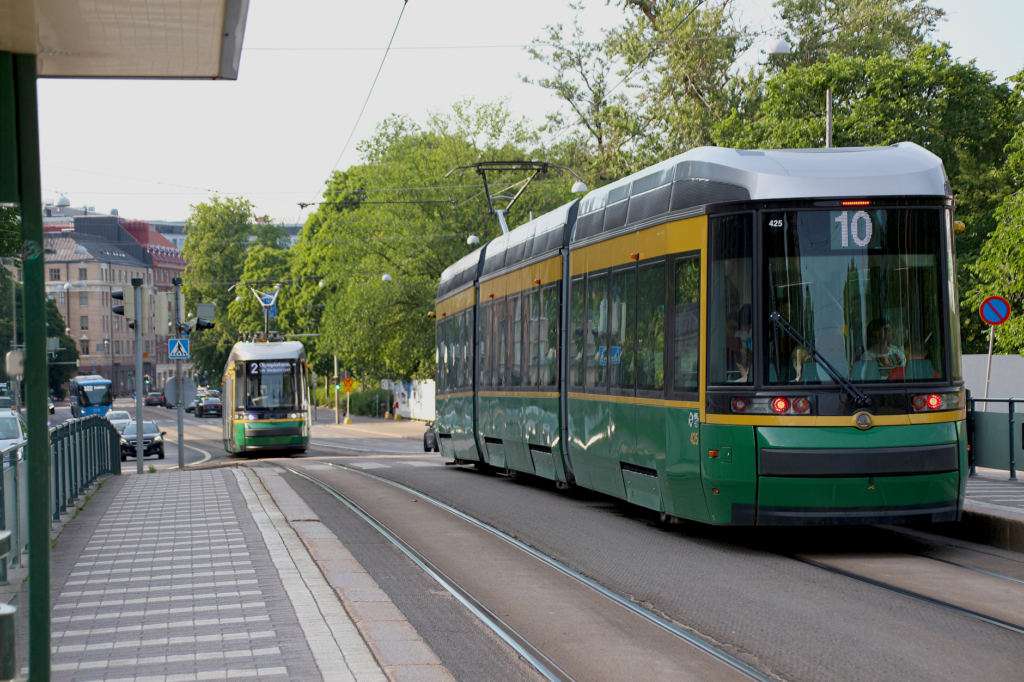
Even public transport participates in this design culture. Helsinki’s trams, some with classic designs dating back to the 1970s, circulate through the city as pieces of moving street furniture. Stops, benches, signage: everything is conceived to be functional, durable, and aesthetically coherent.
Katajanokka: the neighbourhood that tells the story of Art Nouveau
Katajanokka is a peninsula east of the centre, separated by a canal. Its streets, laid out in the late 19th century, are lined with Art Nouveau apartment buildings that surprise with their variety and decorative richness. Merchants, artists, and professionals lived here, and today it is one of the city’s most sought-after neighbourhoods. A walk along Luotsikatu street or through Katajanokka market square reveals details such as sculpted dragons, domed towers, and arched windows.
Finnish Art Nouveau is distinguished by its inspiration from nature and national folklore, especially the Kalevala, the Finnish epic. Architects such as Lars Sonck, Gesellius, Lindgren, and Saarinen incorporated plant and animal motifs into their facades, creating a style of their own that moved away from Central European models. The Eira building, in the neighbourhood of the same name, and Helsinki Central Station, by Eliel Saarinen, are other landmarks of this period.
Alvar Aalto and the architecture of well-being
Alvar Aalto (1898–1976) is the most influential Finnish architect of the 20th century. His work in Helsinki includes the house-studio in the Munkkiniemi district, now a museum, and the Enso-Gutzeit building in the South Harbour. Aalto combined functionalism with an expressive use of wood and brick, and argued that architecture should be humanist, attentive to the scale of the body and the northern climate.
His legacy is felt in the way Helsinki plans its public spaces: wooden benches, simply designed street lamps, and well-integrated parks abound. The city does not seek to dazzle with skyscrapers but to offer a friendly and functional environment. That philosophy, inherited from Aalto and his contemporaries, still guides new construction, such as the Jätkäsaari district, where housing, offices, and green areas are combined with sustainability criteria.

Design for all: the Finnish identity
Finland has exported brands like Marimekko, Iittala, and Artek, but the true character of Finnish design lies in its universal access. In Helsinki, you can buy designer tableware in a neighbourhood shop, sit on a classic chair in a café, or admire iconic lamps in the public library. Design is not a luxury but part of the everyday landscape.
This philosophy dates back to the 1950s and 60s, when the Finnish state promoted design as a tool for modernisation and well-being. Today, the Design Museum in Helsinki documents that history and organises exhibitions connecting the past with current challenges such as sustainability and the circular economy. The city also hosts events like Helsinki Design Week, which every September opens studios, workshops, and urban projects to the public.
In Helsinki, design is not contemplated: it is used. It is a tool for building a more functional, more beautiful, and more egalitarian society.
Architecture and nature: the landscape as design material
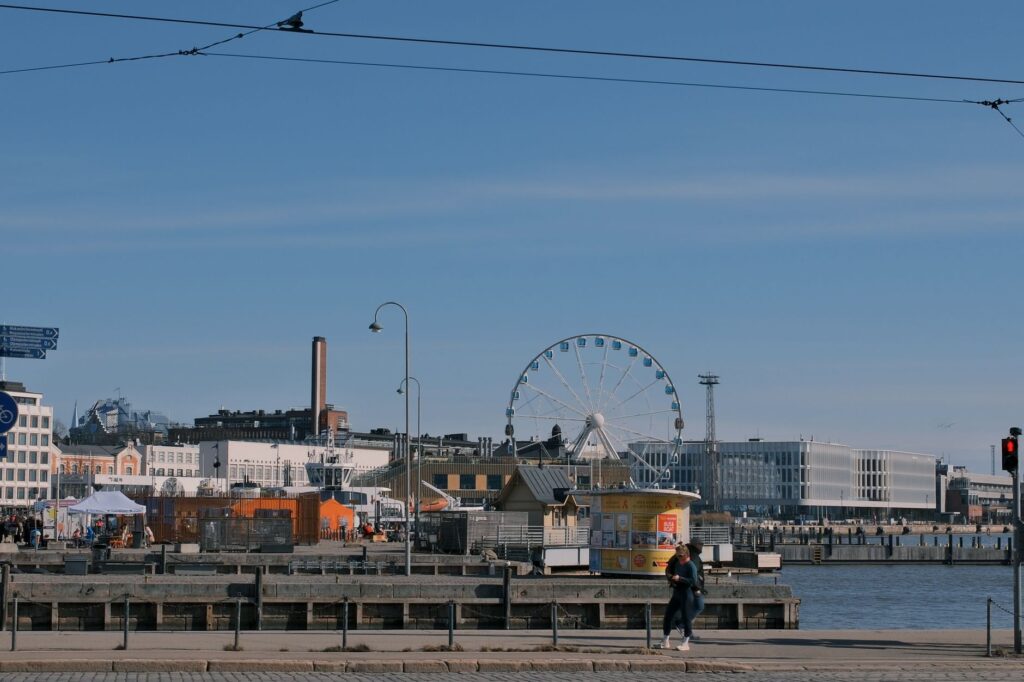
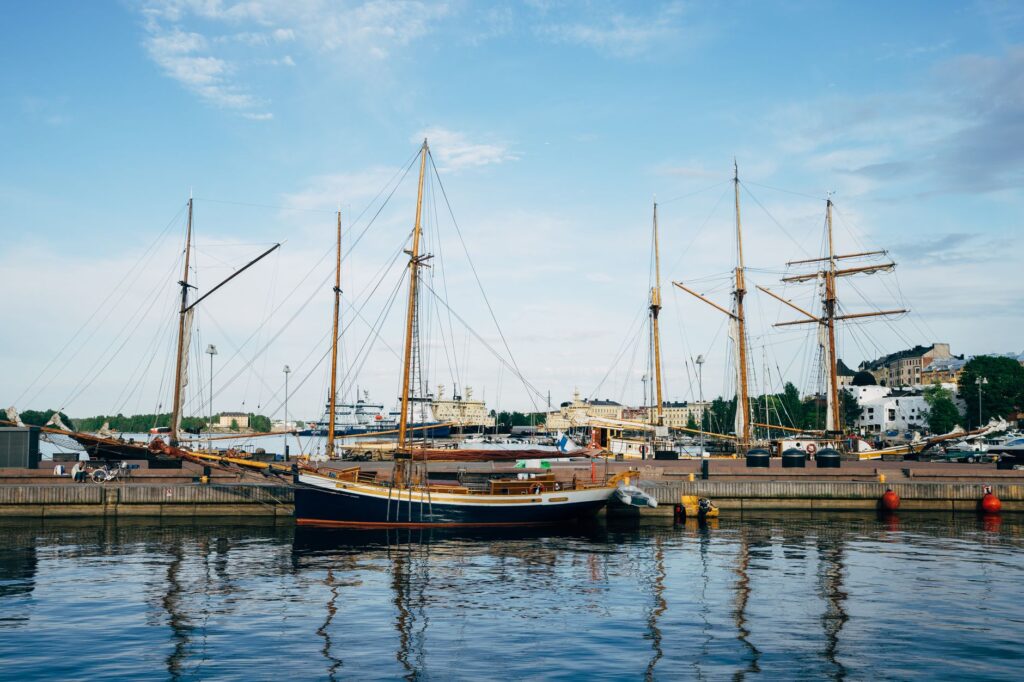
Helsinki is surrounded by sea and islands. That geographical condition has influenced its architecture, which often seeks to frame views or blend into the landscape. Kaivopuisto Park, at the southern tip, offers a walk along the Baltic with the city skyline in the background. In summer, ferries connect the market to Suomenlinna, an 18th-century fortress declared a UNESCO World Heritage Site, and to smaller islands where design becomes landscape.
Nature is also present in materials: wood, stone, and glass are common in contemporary architecture. The Arabianranta district, to the north, is home to the former Arabia porcelain factory complex, now converted into housing and cultural spaces. There you can visit the Arabia Design Museum, which tells the story of one of Finland’s most beloved brands.
Practical guide
To explore Helsinki’s everyday architecture and design, at least three days are recommended. The city is compact and easy to navigate on foot, by tram, or by bicycle. The best time to visit is from May to September, when days are long and public spaces are full of life.
- What to see: Senate Square, Helsinki Cathedral, Oodi Central Library, Katajanokka district, Central Station, Alvar Aalto’s house-studio, Löyly Sauna, Design Museum, Suomenlinna island.
- Getting around: The tram network is excellent for exploring the centre. The HSL public transport pass covers trams, buses, metro, and local ferries.
- Where to eat: Kauppatori and Hakaniemi markets offer local food. For a design experience, many cafés and restaurants in the centre use tableware and furniture from Finnish brands.
- Tips: Many public buildings are free to enter. Check opening hours for museums and saunas, which may vary by season. In winter, the cold is intense, but the city remains active and offers a different perspective on its architecture.
A closing by the sea
At sunset, the northern light gilds the facades of Katajanokka and reflects on the harbour water. It is the moment when Helsinki’s architecture reveals its true dimension: not that of an open-air museum, but of a city that has made design a way of life. In every bench, every tram stop, every lit window, there beats a way of understanding the world that combines beauty, function, and community. Finland has achieved it, and Helsinki is its finest example.