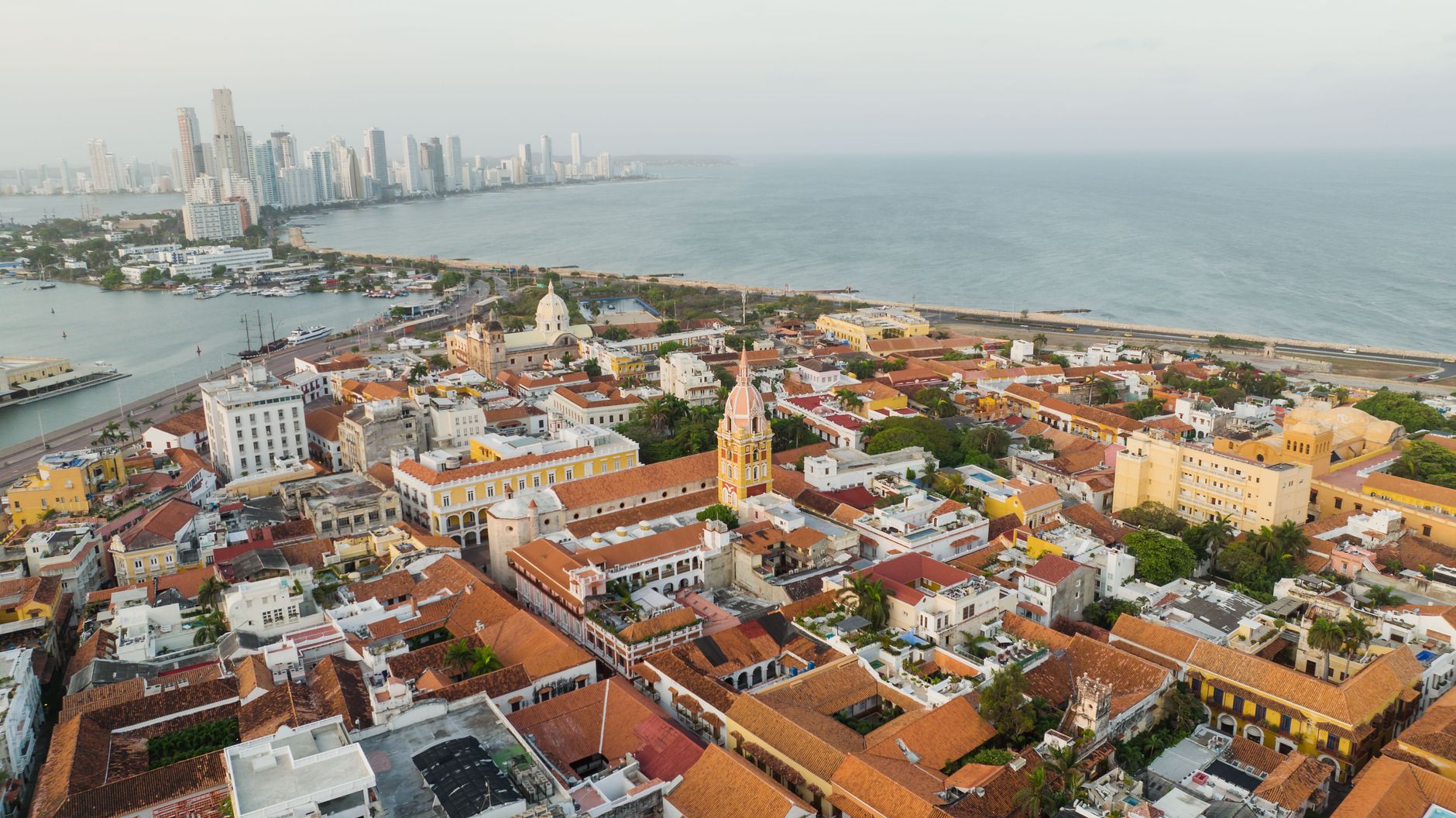

On Colombia’s Caribbean coast, Cartagena de Indias holds South America’s most extensive collection of military fortifications. It is not an open-air museum: it is an inhabited neighbourhood where 17th-century walls still set the rhythm of daily life. UNESCO recognised it as a World Heritage Site in 1984, and ever since the city has maintained a fragile balance between conservation, tourism and the communities that keep it alive.
Unlike other heritage destinations, here memory is not displayed in glass cases. You walk on it, live in houses with high ceilings and overhanging balconies, and negotiate every day with the weight of history.
A bay that was once a gateway to empire
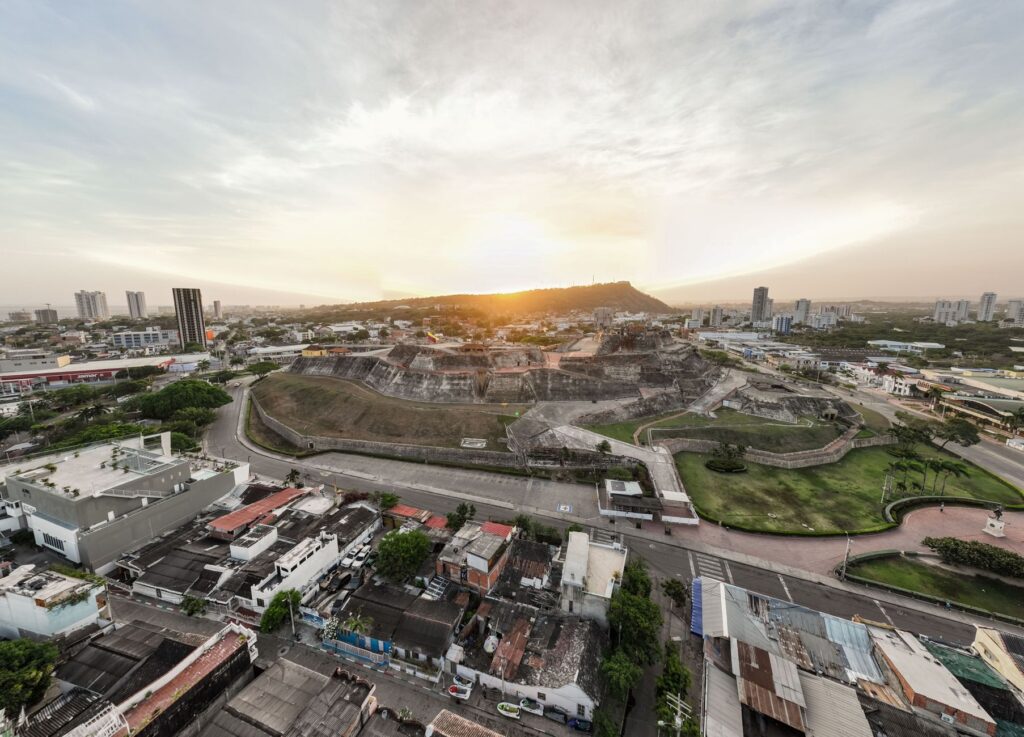
Cartagena was born as a strategic port in the Caribbean. Its bay, protected by natural channels and passes, made it a key point on trade routes between Europe and the Americas. During the 16th, 17th and 18th centuries, Spanish, English, French and Dutch forces fought for its control. The fortifications responded to that pressure: a system of walls, bastions and castles that surrounded the city and dominated maritime access.
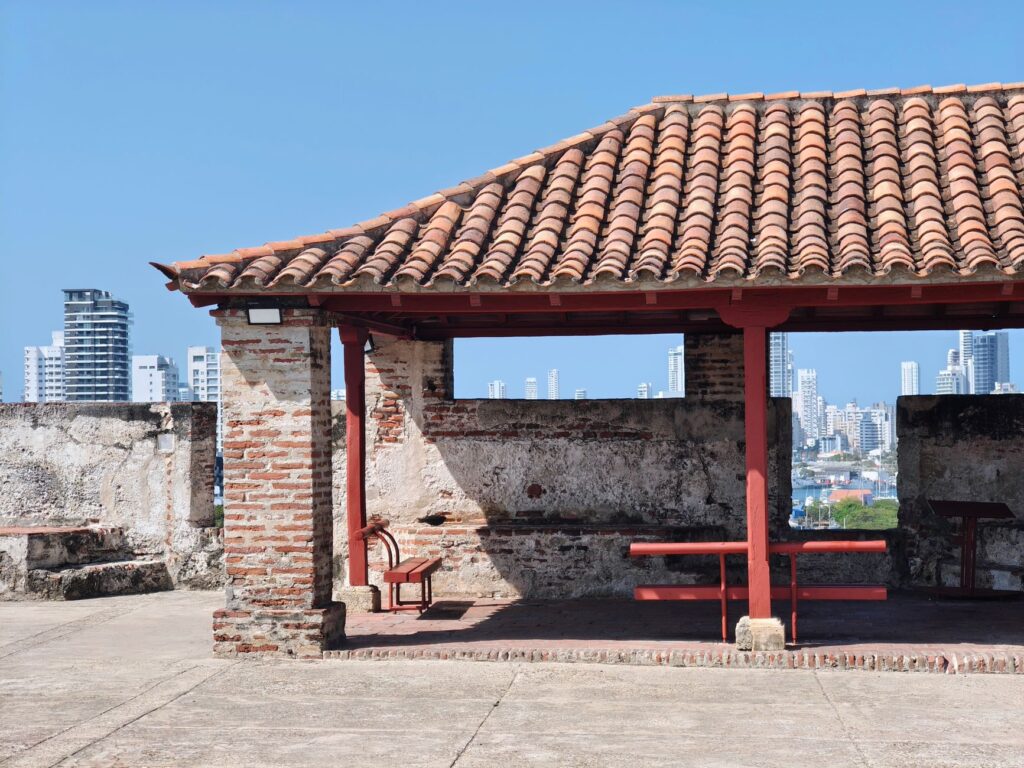
Castillo San Felipe de Barajas, on a rocky hill to the east, protected the Cabrero isthmus. At Bocachica, to the southwest, the forts of San Luis, San José, San Fernando and San Rafael guarded the sea pass. Inside the bay, Santa Cruz, San Juan de Manzanillo and San Sebastián de Pastelillo completed the defensive ring. The military engineering of the era left a mark that still defines the city’s silhouette.
Three neighbourhoods, three ways of inhabiting the walled enclosure
Within the walls, the historic centre is divided into three areas with distinct identities. San Pedro, or Centro, is home to the cathedral, the Convent of San Pedro Claver, the Palace of the Inquisition and the houses of wealthy families. San Diego, or Santo Toribio, was the neighbourhood of middle-class merchants and craftsmen. Getsemaní, the old suburb, grew as a space for artisans and enslaved people who sustained much of the city’s economic activity.
That division is not only historical. It can be seen in the layout of the streets, the size of the houses, the rhythm of the plazas. While San Pedro concentrates boutique hotels and fine dining, Getsemaní maintains a more intense neighbourhood life, with workshops, schools and family homes resisting real estate pressure.
The wall does not separate the city from the sea: it separates two ways of remembering. On one side, the official narrative; on the other, the life that insists on staying.
Heritage as a space of everyday dispute
The World Heritage listing brought visibility and resources, but also tensions. The rise in tourism has transformed the use of many buildings: family homes turned into hotels, traditional shops replaced by souvenir stores. UNESCO has warned that these changes can affect the authenticity of functions and the spirit of the place.
The historic centre’s management plan, known as PEMP, seeks to regulate interventions. There are also legal instruments requiring authorisation from the Ministry of Culture for any work in the protected area. However, management involves multiple actors — the Ministry, the Mayor’s Office, the IPCC, the Society for Public Improvement and the Historic Centre Corporation — and this overlapping of functions complicates decision-making.
In Getsemaní, some families have lived in the same house for generations. They watch tourism pass with a mix of pride and concern. They know their neighbourhood is attractive, but they fear speculation will displace them. The question is not whether heritage should be preserved, but for whom.
Life among bastions: trades that endure
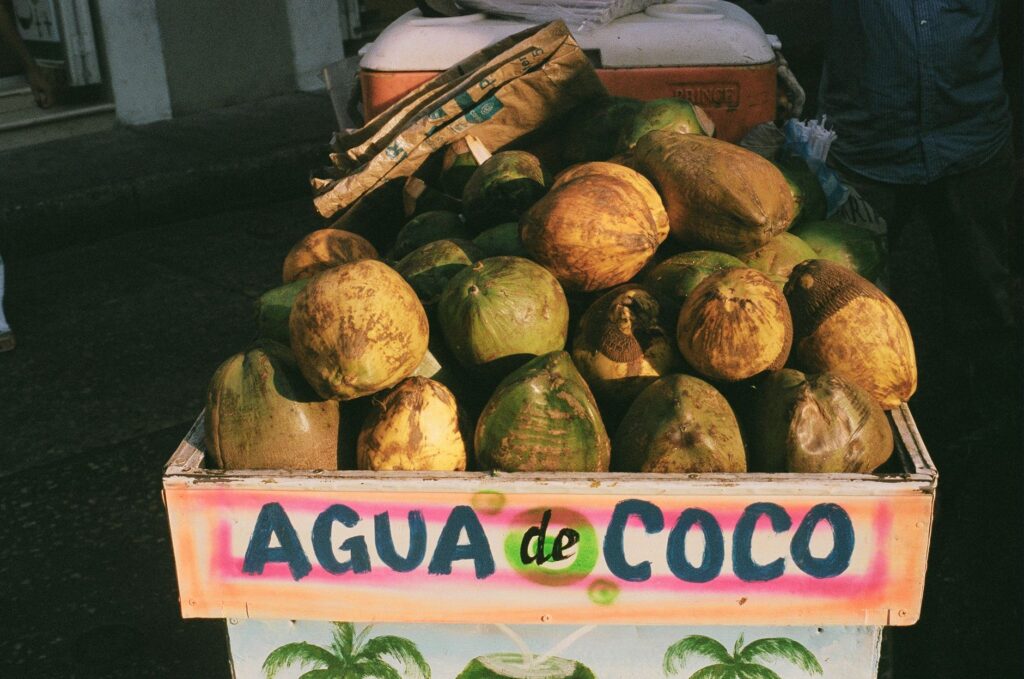
Along the walls, artisans, vendors and musicians occupy the plazas. In Plaza de la Aduana, Plaza de San Pedro and Plaza de la Trinidad, public space becomes a stage for encounters. These are not only places for tourists: they are meeting points for locals who buy fruit, chat or simply sit to watch the sunset over the bay.
Traditional trades also endure. There are shoe repair workshops, neighbourhood bakeries, barbershops that have been in the same spot for decades. The economy of the historic centre is not only hospitality; it is also domestic, everyday, made of small exchanges that never appear in travel guides.
The challenge of conserving without emptying
Keeping a historic centre alive is harder than restoring façades. It means ensuring that people can continue to live there, that basic services work, that schools and health centres do not disappear. In Cartagena, as in other heritage cities, the risk is that the centre becomes a backdrop for visitors and loses the human density that makes it authentic.
UNESCO has pointed to the need to strengthen residential and tourism-related activities, change inappropriate uses and develop strategic projects in the historic centre and its zone of influence. It has also warned about the risks of dredging in the Bocachica channel and the impact of the Transcaribe transport system on the authenticity of the ensemble.
Conserving is not freezing. It is allowing the city to remain a city, with its noises, its smells and its contradictions.
Getsemaní: the neighbourhood that defends itself with colour
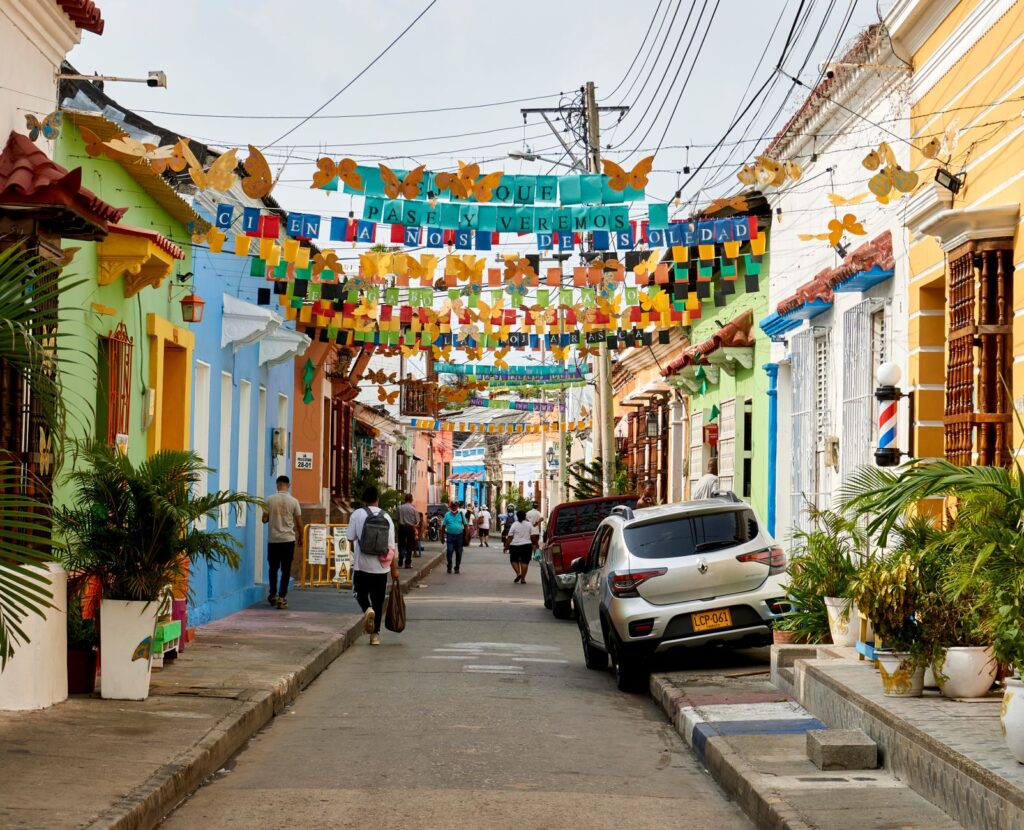
Getsemaní is today one of the most visited sectors, but its history is one of resistance. It was the suburb where artisans, enslaved people and free workers lived. Its narrow streets and colourful houses tell that story better than any commemorative plaque. In recent years, murals and community projects have reclaimed that identity.
The neighbourhood faces a paradox: its authenticity attracts tourism, and tourism threatens to erase that same authenticity. Some residents have managed to stay, others have sold and moved to the periphery. The tension between staying and leaving is part of Getsemaní’s human landscape.
The city that breathes between two waters
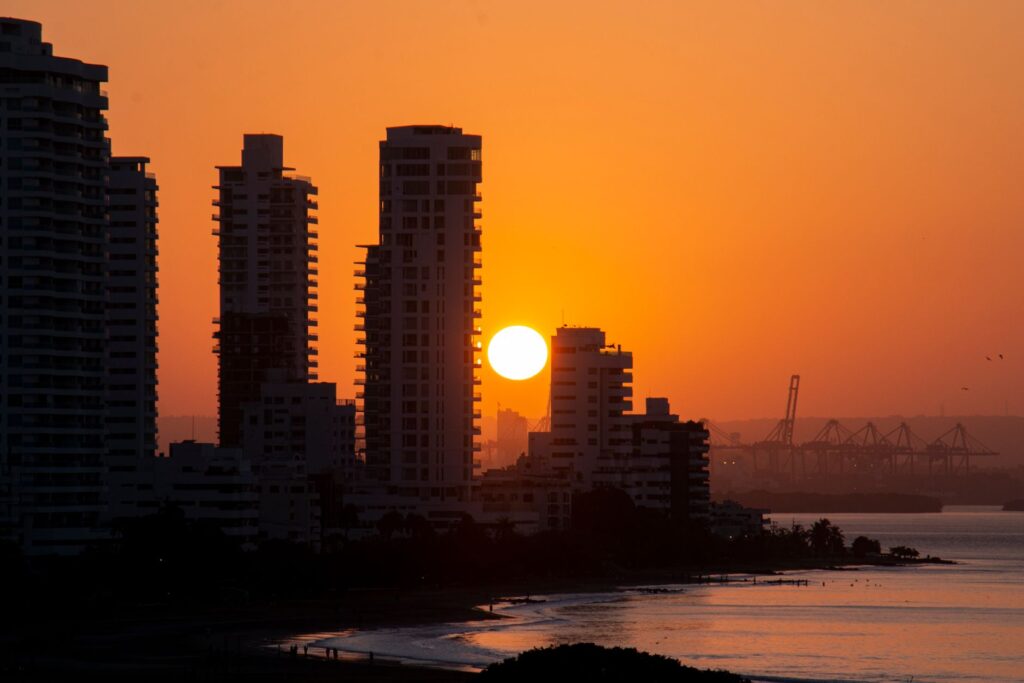
Cartagena is surrounded by water: the bay, the Caribbean Sea, the channels that cross the marshland. That geography defined it as a port and a fortress. Today it also exposes it to sea-level rise and extreme weather events. Heritage conservation cannot be separated from environmental management of the bay.
The fortification system used natural channels as defence. Now, those same channels require attention to prevent flooding and damage to historic structures. The relationship between the city and the water remains the axis of its vulnerability and its beauty.
Practical guide
If you plan to visit Cartagena, keep in mind that the historic centre is a heritage area with specific regulations. Walking its streets is the best way to get to know it, but do so with respect for residents. Not all houses are hotels; many are family homes.
- Best time: the dry season, from December to April, offers less rain and more pleasant temperatures. The rainy season, from May to November, is more humid but less crowded.
- What to bring: light clothing, sunscreen, a hat and comfortable shoes. Heat and humidity are constant.
- Routes: the walls can be walked, especially at sunset. Castillo San Felipe de Barajas and the Convent of San Pedro Claver are essential visits.
- Food: Cartagena’s cuisine includes coconut rice, fried fish, patacones and arepas de huevo. Markets and neighbourhood eateries offer cheaper options than tourist restaurants.
- Transport: the historic centre is walkable. For longer distances, there are taxis and ride-hailing apps. The Transcaribe system connects the centre with other parts of the city.
- Heritage respect: avoid touching walls or historic façades. Do not enter private property without permission. Remember that heritage is also home to many people.
The best way to experience Cartagena is to let yourself be carried by its streets without haste, observing how history and daily life intertwine. It is not a city frozen in time, but one that negotiates every day with its past to remain habitable.