
In Amsterdam, the tram is not an attraction for visitors: it is the infrastructure that sustains daily life in a Dutch capital where more than half of urban journeys are made on foot, by bicycle or on public transport. The electric network, with more than a century of history, connects the historic centre with residential districts such as Nieuw-West, Zuid and Noord, and works as a kind of collective clock that sets the city’s rhythm.
Exploring Amsterdam along the tram tracks is a way to understand how a city that decided, decades ago, not to prioritise the private car is planned. This report examines the Dutch tram network as a system of everyday mobility: its history, its planning logic, its unwritten rules and the practical keys for anyone who wants to use it with judgement.
A network born with the industrial city
The first trams in Amsterdam appeared in the late nineteenth century, when the city was undergoing an industrial and demographic expansion that demanded mass transport. Those early horse-drawn vehicles gave way to electric traction and to a network that was gradually densified as the peripheral neighbourhoods planned by the City Council grew.
The history of the Dutch tram is tied to the history of Amsterdam’s urbanism. Each new line responded to a specific need: connecting the working-class districts of the east with the factories, linking Central Station with the residential areas of the south, or serving the new post-war developments. That functional logic explains why the network today does not draw a tourist map, but a map of work and residence.

This origin matters because it shaped the network’s DNA. Unlike cities where trams were later removed to make room for cars, Amsterdam maintained and expanded its system, integrating it with urban growth. The tram became a tool for social cohesion, ensuring that residents of outlying districts could reach jobs, schools and services without depending on private vehicles. That decision, taken in the mid-twentieth century, still defines the city’s mobility today.
How the network is organised today
Amsterdam’s tram network is managed by the municipal public operator GVB and is articulated with the metro, buses and the free ferries that cross the river IJ. Lines are numbered and connect the city’s main nodes: Central Station, Zuid Station, the airport through rail links and the major commercial axes.
The system runs on a contactless card (OV-chipkaart) or on transport passes valid for days. Users tap in and tap out, a gesture that is decisive for calculating the fare correctly. The network is dense in the centre and branches out towards the periphery, where the tram shares space with cycle lanes and buses.
In recent years, the network has been modernised with low-floor vehicles and real-time information panels at stops. These improvements aim to make the system more accessible for people with reduced mobility and for those travelling with luggage or prams. The integration with other modes is also a priority: at major stations, transfers between tram, metro and bus are designed to be quick and sheltered.
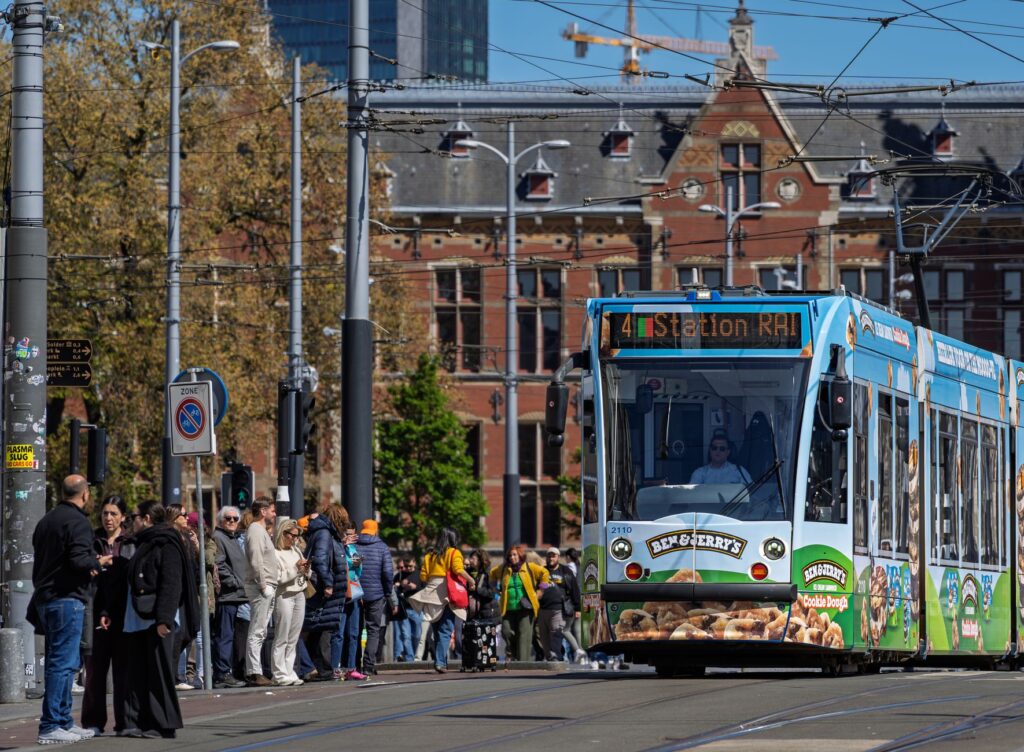
The tram as a neighbourhood thermometer
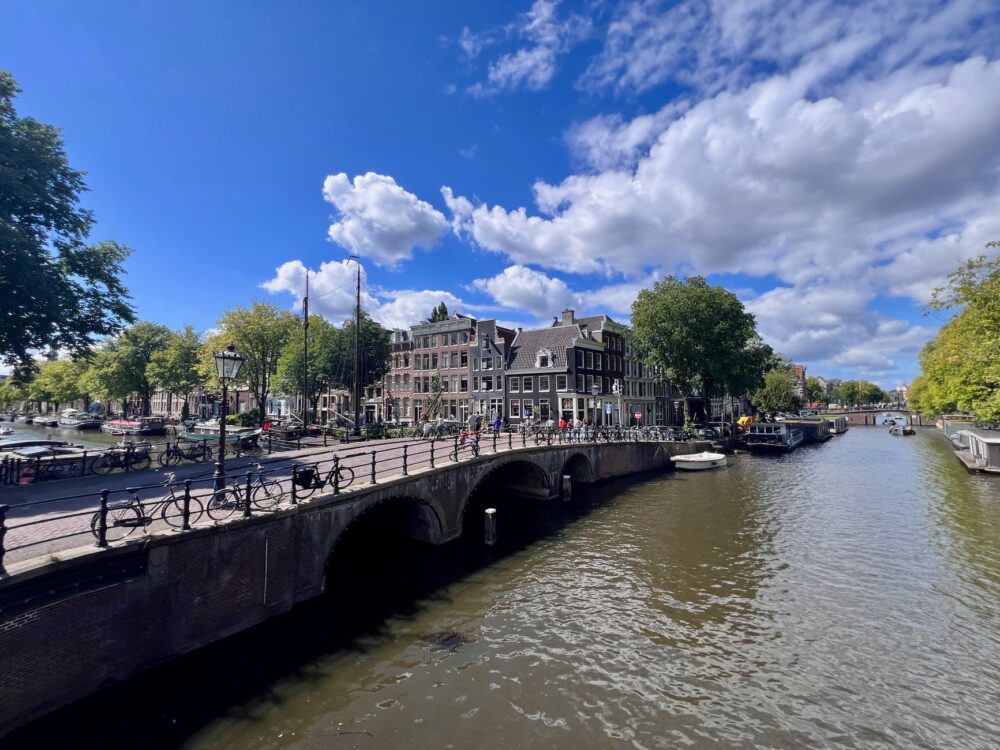
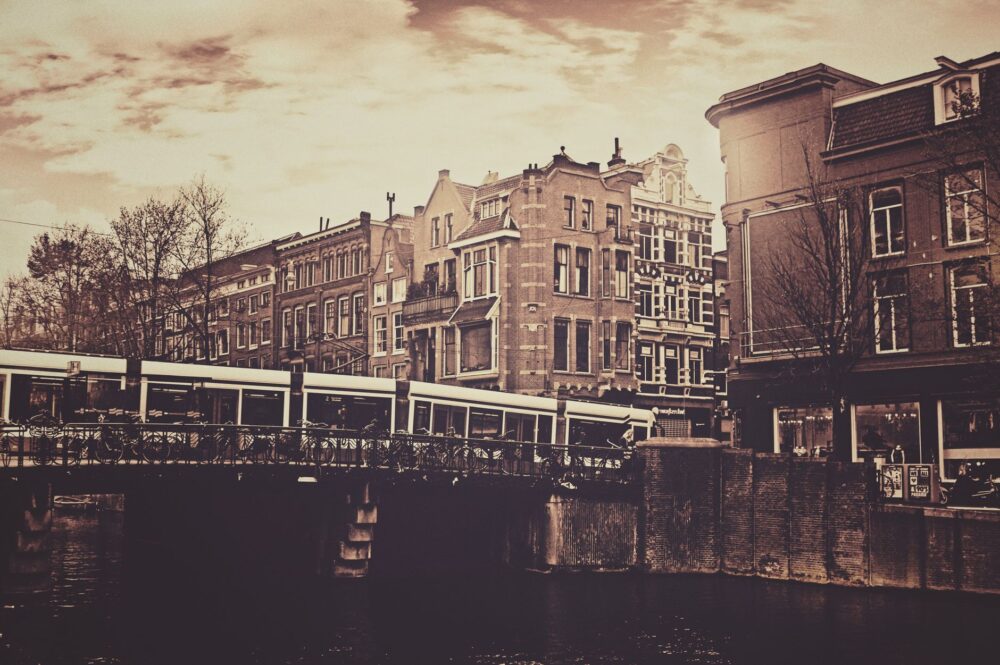
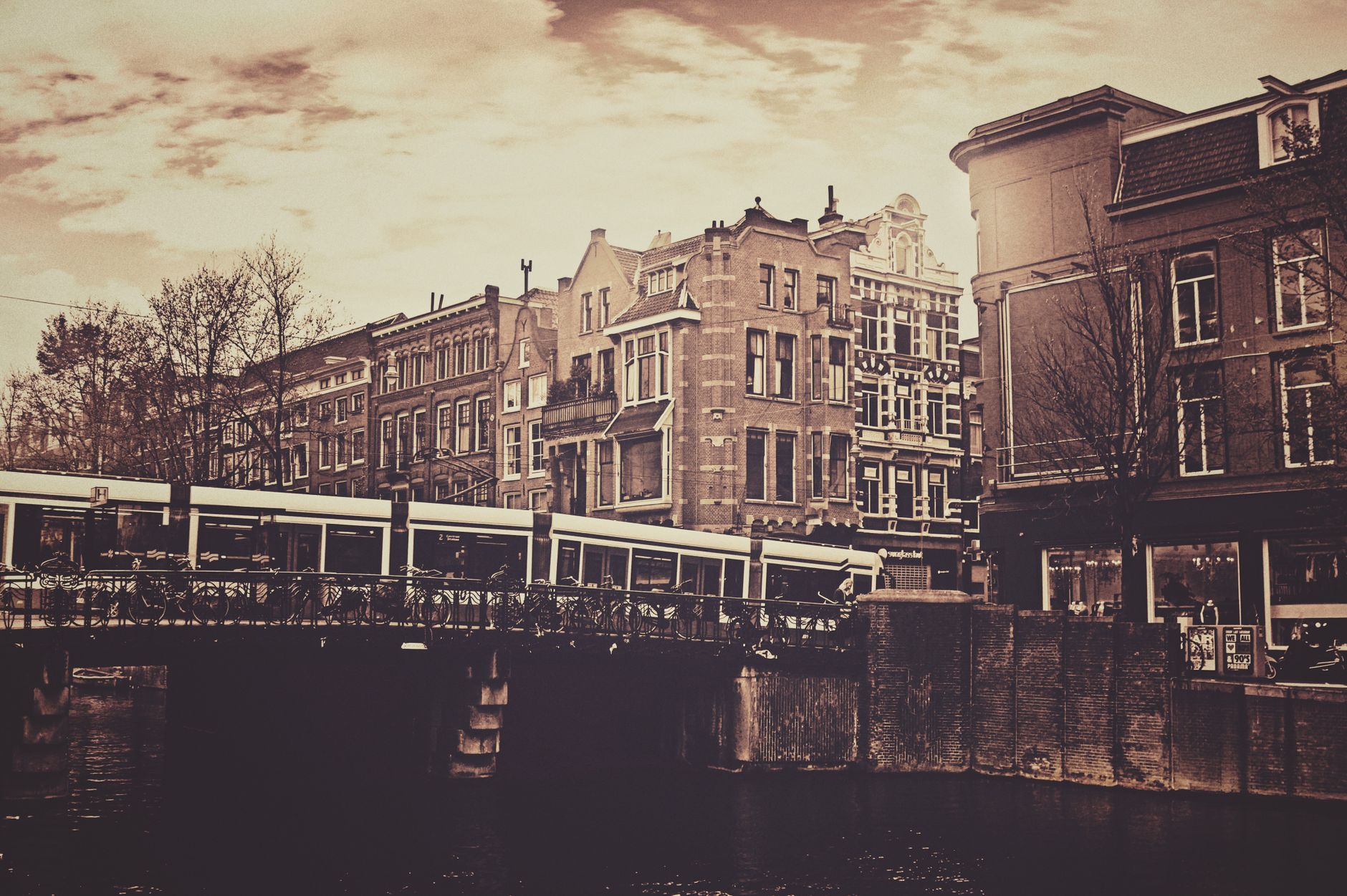
Boarding a tram in Amsterdam is a way of reading the city. The lines crossing the historic centre run between canals, narrow bridges and buildings from the seventeenth and eighteenth centuries. Those heading to Nieuw-West or Zuid show a more modern architecture, with social housing blocks, parks and neighbourhood shopping centres.
The tram also reveals the city’s social differences. At peak times, the vehicles fill with workers, students and residents who use it as daily transport. Outside those hours, the pace slows and the tram becomes a slow observatory of Dutch life.
This contrast is particularly visible on lines that cross both the old centre and the post-war suburbs. In a single journey, passengers can see the transition from monumental canal houses to functionalist apartment blocks, from tourist crowds to local shoppers. The tram thus offers a cross-section of Amsterdam’s urban fabric, making it an ideal tool for understanding how the city has grown and changed.
Unwritten rules and traveller etiquette
Using the tram in Amsterdam involves knowing a set of norms that do not appear in tourist brochures. The first is punctuality: timetables are respected with precision and the vehicle does not wait. The second is validation: boarding without registering the journey can lead to a fine, even if the trip is short.
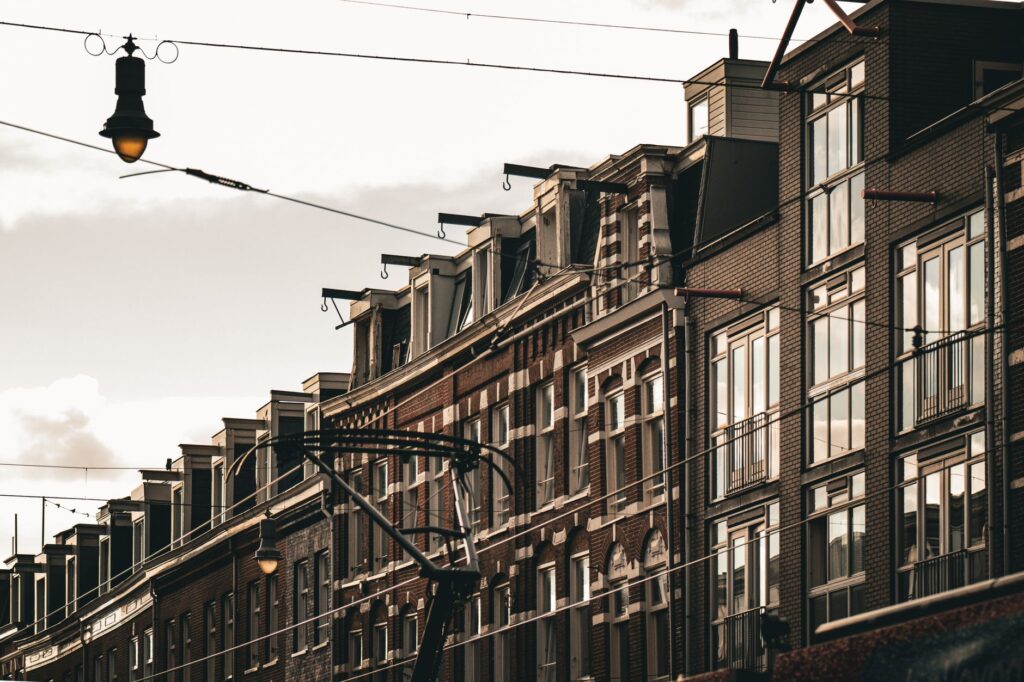
Another rule is relative silence. The Dutch value quiet on public transport; loud conversations or prolonged phone calls are considered annoying. It is also advisable to give up your seat to elderly people, pregnant women or those with reduced mobility, and to keep the space reserved for wheelchairs and prams clear.
In Amsterdam, the tram does not compete with the bicycle: it complements it. Both are part of the same ecosystem of everyday mobility.
Planning a day on rails
For those visiting Amsterdam, planning a day by tram is an efficient way to cover several neighbourhoods without depending on taxis. A common route starts at Central Station, continues along the Damrak and the historic centre, moves on to the Van Gogh Museum and the Rijksmuseum on the Museumplein axis, and ends in the eastern or southern districts.
It is advisable to check the network map before setting out and to group visits by area. The tram is not fast in the centre, where it shares the street with pedestrians and bicycles, but it allows you to see the city from a different perspective than the tourist canals.
For longer stays, consider a multi-day pass that covers tram, bus and metro. This not only saves money but also encourages spontaneous exploration of districts beyond the usual tourist circuit. The tram network is extensive enough to reach almost every point of interest, from the museums of Zuid to the markets of De Pijp and the green spaces of Westerpark.
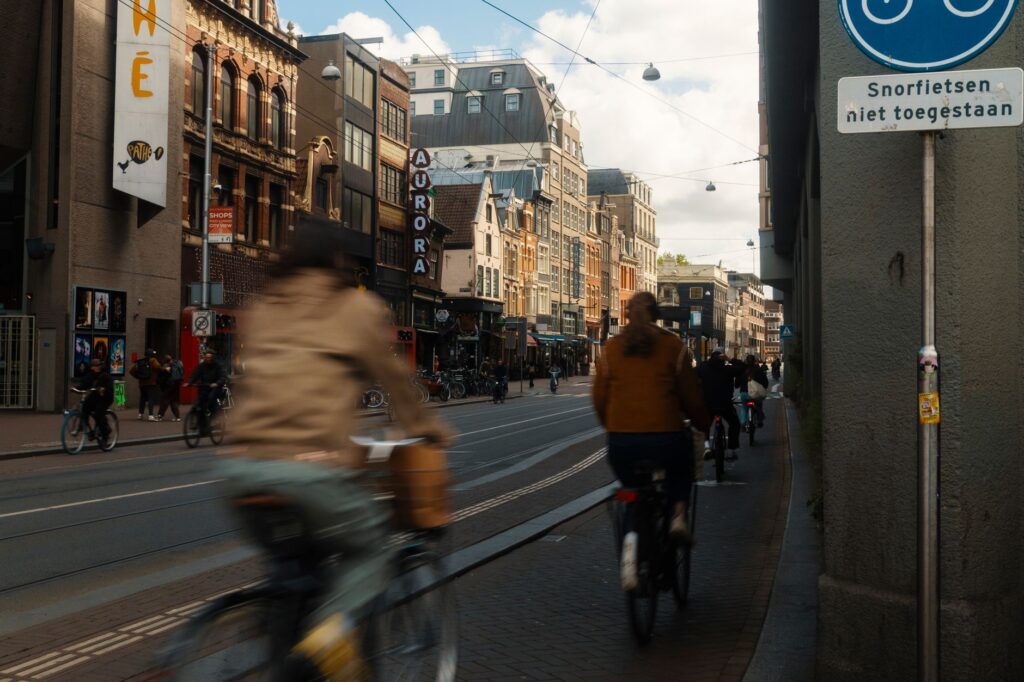
Bicycle, tram and the Dutch logic
Amsterdam is known for its bicycles, but the tram fulfils a function the bike cannot cover: transporting people with reduced mobility, with luggage or with small children, and connecting distant points in less time. The coexistence of both modes is one of the keys to the success of the Dutch system.
Local authorities have worked for decades on separating lanes and giving traffic-light priority to public transport. That planning explains why the tram remains competitive against the car over medium distances and why the city can afford to reduce the space dedicated to private vehicles.
Dutch mobility cannot be understood without a simple idea: public space is designed for people, not for vehicles.
Heritage and future of the network
Some historic vehicles from Amsterdam’s tram network are preserved at the Tram Museum (Electrische Museumtramlijn Amsterdam), a space run by volunteers that keeps old electric models in operation. These pieces form part of the industrial heritage of the Netherlands and attract enthusiasts from across Europe.
At the same time, the network is modernising: low-floor vehicles, real-time information systems and measures to improve accessibility are being introduced. The challenge is to maintain the reliability of a century-old system while the city grows and diversifies its transport needs.
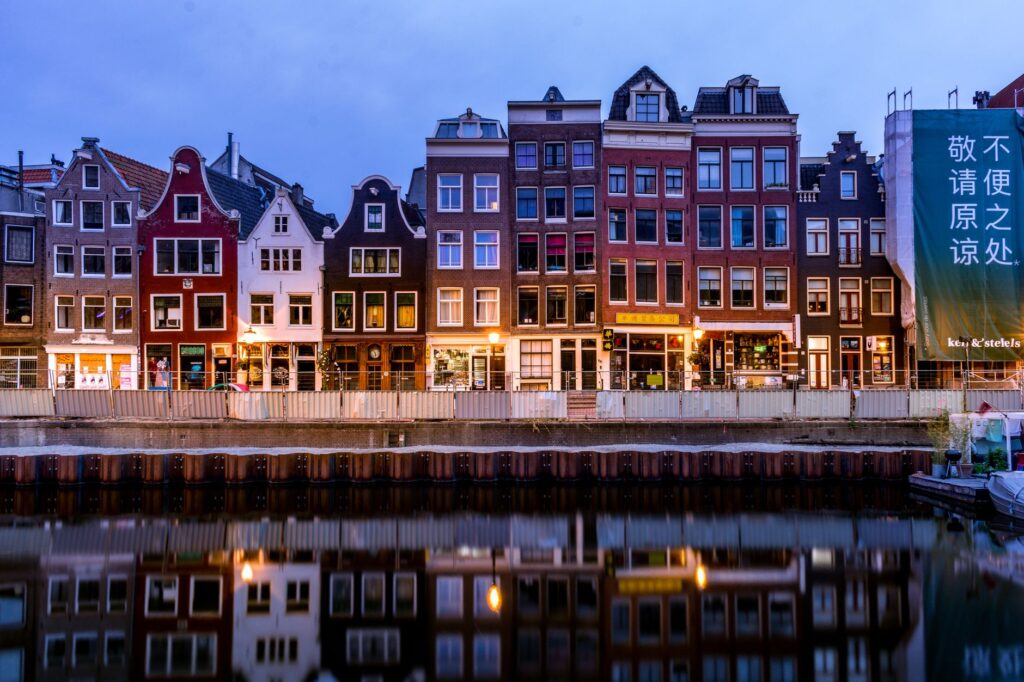
The museum line, which operates on a seasonal basis, offers a glimpse of what tram travel was like in the past. It is a reminder that the current network is the result of continuous adaptation, not a static relic. For those interested in urban history, a visit to the museum can complement the experience of riding the modern tram, providing context on how technology and planning have evolved.
Practical guide
- Validation: always tap in and tap out with the contactless card or transport pass. The fare depends on the distance travelled.
- Passes: there are one-day or multi-day passes covering tram, bus and metro. It is worth comparing them according to the number of journeys planned.
- Timetables: the service runs from early morning until night, with higher frequencies at peak times. Do not assume specific timetables without checking official information.
- Accessibility: many stops and vehicles are adapted, but it is advisable to verify the route in advance if travelling with a wheelchair or pram.
- Luggage: space for suitcases is limited at peak times. It is preferable to travel outside those periods if carrying bulky luggage.
- Coexistence: respect the relative silence, give up your seat when necessary and do not block doors or reserved spaces.
A city to be crossed slowly
The Amsterdam tram does not promise speed, but continuity. It is a system designed for the everyday, for the repeated journey, for the routine of those who live in the Netherlands. For the traveller, using it calmly is a way of understanding that mobility is also a form of culture.
At the end of the route, when the tram returns to the centre and the canal lights reflect on the water, there remains the feeling of having crossed a city that has organised itself on rails for more than a century. It is not an attraction: it is the backbone of a capital that decided to move in another way.