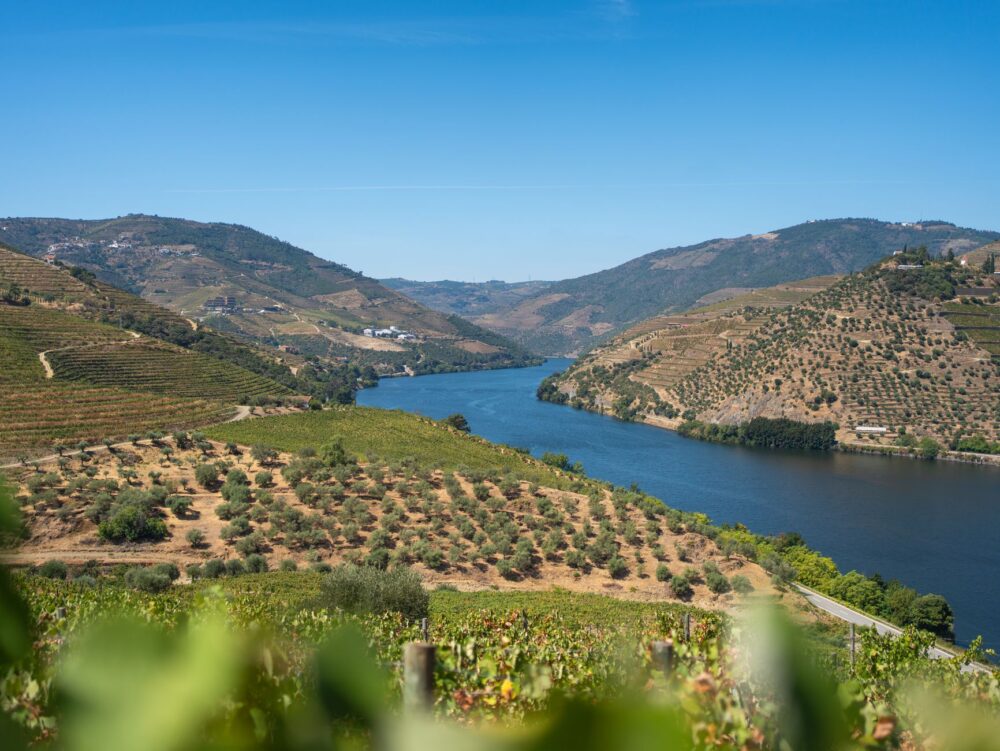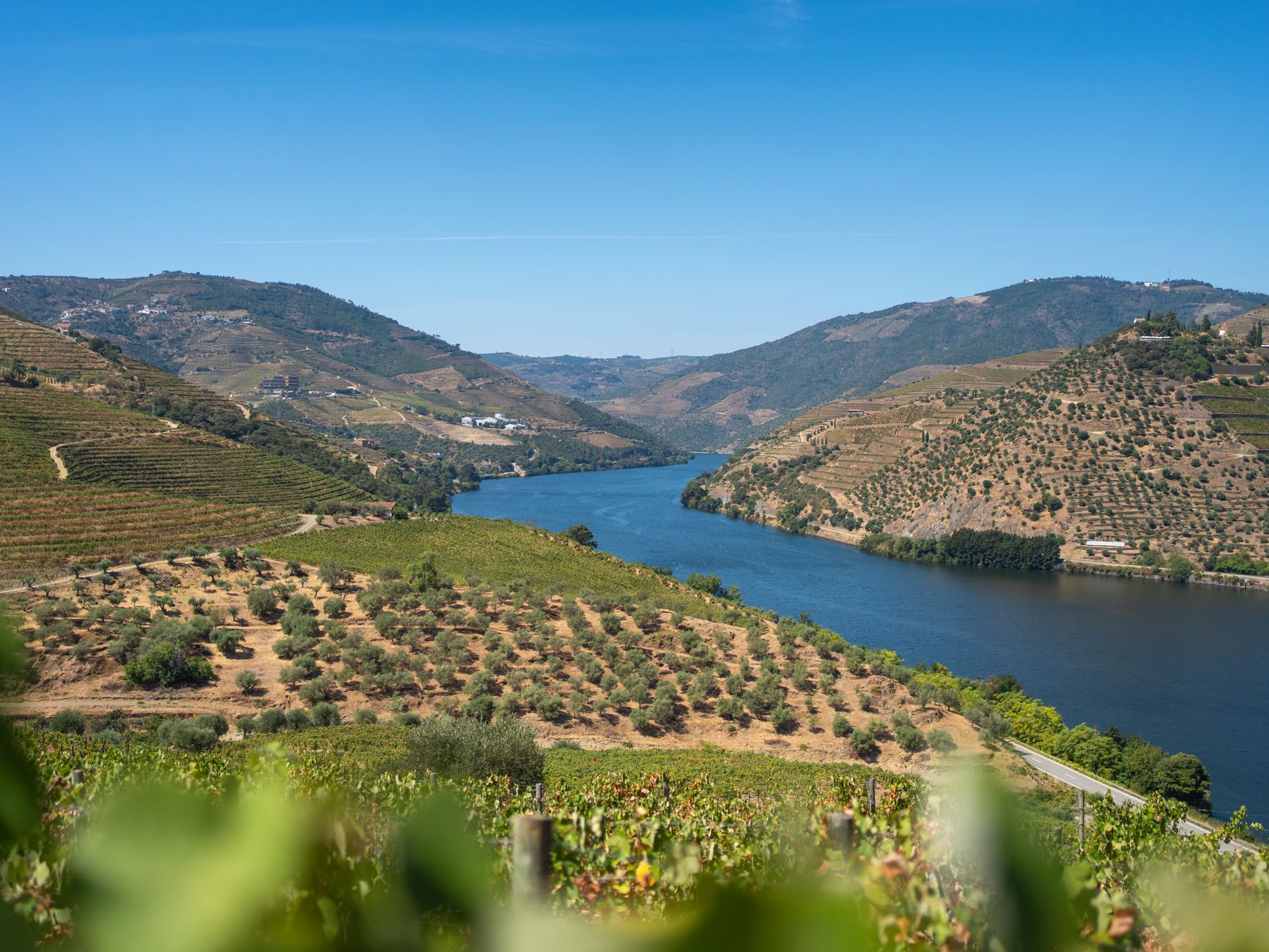

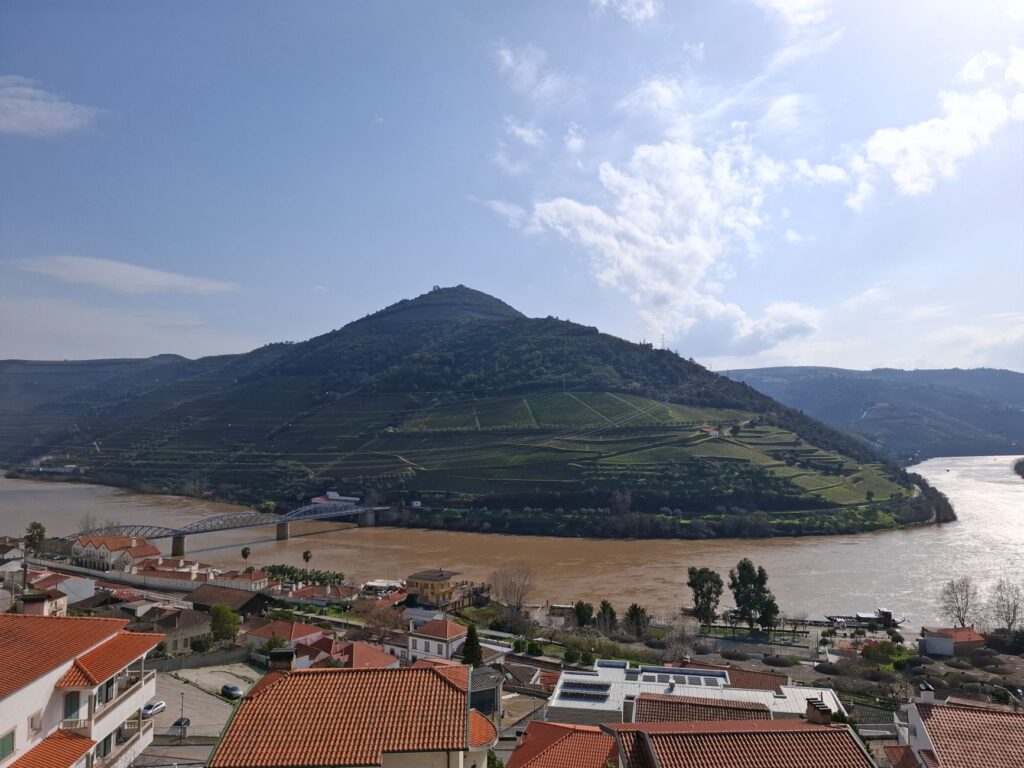
The Douro River enters Portugal through the Bemposta canyon and, from there, carves its way between schist mountains that shield it from the damp Atlantic winds. On its slopes, humans have spent centuries sculpting a mosaic of terraces that support thousands of hectares of vineyards. This is the Alto Douro, the world’s oldest wine region, where Port wine has been produced since the 18th century.
UNESCO inscribed this cultural landscape in 2001, recognizing its outstanding value. It is not merely a territory of extraordinary beauty: it is a living testament to the technical, social, and economic evolution of an activity that has shaped the character of its people and the layout of its villages.
A landscape built by hand
The Alto Douro stretches across some 250,000 hectares, of which 24,600 are protected as a World Heritage Site. The Douro River and its tributaries—the Varosa, Corgo, Távora, Torto, and Pinhão—form the backbone of a rugged terrain, where slopes often exceed 30 degrees. To cultivate under these conditions, winegrowers have built over the centuries a system of terraces that is itself a feat of engineering.
The earliest terraces, known as socalcos, were narrow and irregular, supported by schist stone walls that required constant maintenance. They could accommodate only one or two rows of vines. In the late 19th century, after the devastating phylloxera plague that ravaged European vineyards, the region was rebuilt with wider, slightly sloping terraces designed to give the vines better sun exposure.
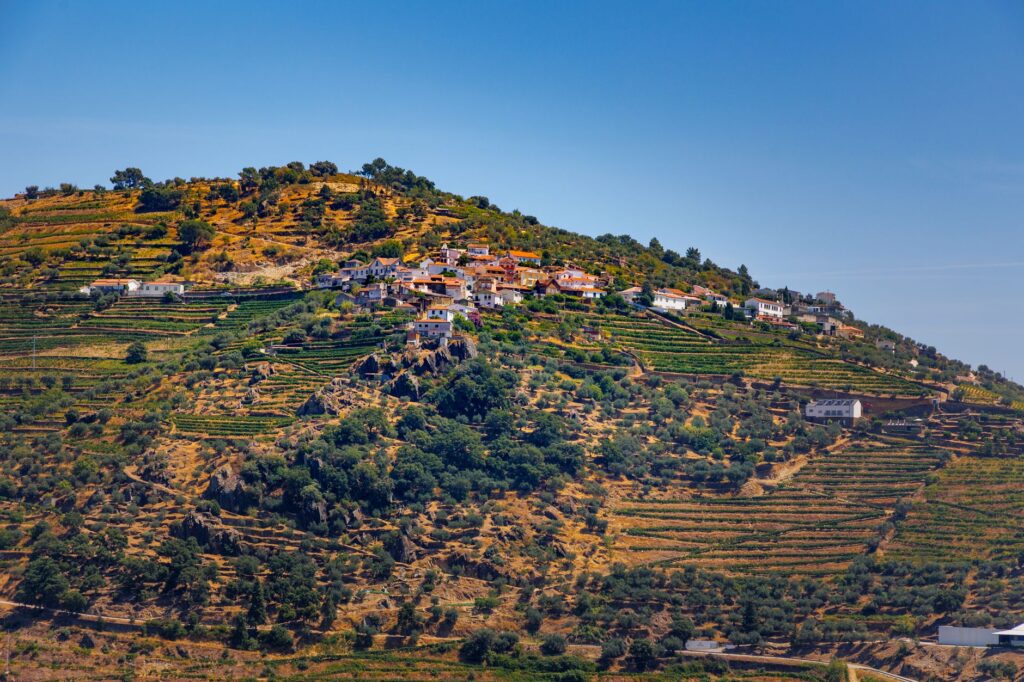
The Alto Douro landscape is the result of a millennia-old dialogue between geography and human labor, a lesson in adaptation and respect for the environment.
The quintas: heart of production
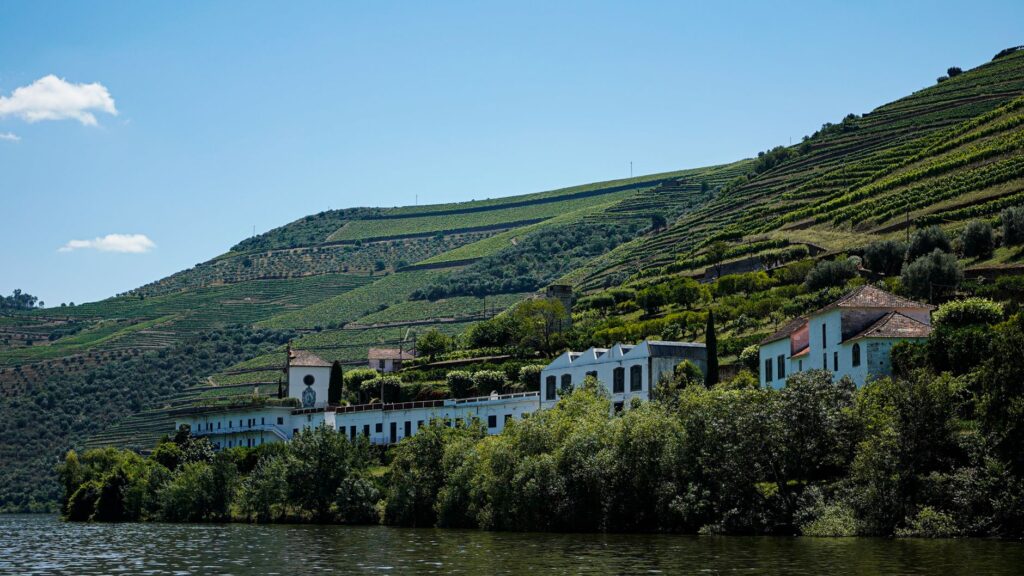
Scattered across the slopes, the quintas—large wine-producing estates—are the most recognizable landmarks of the landscape. They are easily identified by the clusters of farm buildings and wineries grouped around the main house. In the Upper Corgo and Upper Douro, some of the most notable are concentrated, with their red-tiled roofs and whitewashed façades.
Alongside the quintas, the casais—small family holdings—complete the agricultural mosaic. The villages, characteristically white, are located midway up the valley sides, around a parish church that often dates from the 18th century. Their narrow, winding streets preserve notable examples of vernacular architecture, with houses opening directly onto the street.
The wine that conquered the world
The history of wine in the Alto Douro goes back some two thousand years. But it was in the 18th century that Port wine achieved worldwide fame. In 1756, the Marquis of Pombal created the Companhia Geral da Agricultura das Vinhas do Alto Douro, which for the first time demarcated the producing region and established quality standards. It was one of Europe’s first regulated appellations of origin.
Port wine, a fortified wine, is made from native grapes such as touriga nacional, touriga franca, tinta roriz, and tinta barroca, among others. Its production still follows traditional methods: fermentation is stopped by adding grape brandy, which preserves the natural sugars and increases the alcohol content. The result is a generous, long-lived, and complex wine that has been celebrated around the world.
Architecture and spirituality
The Alto Douro landscape is not only made up of vineyards and wineries. Dotted across the hills are small chapels, located high up or next to manor houses. These religious buildings, many of them simple in design, reflect the community’s deep connection to the land and its traditions.
The stone channels that once carried water for irrigation can still be seen in some places, witnesses to a time when water management was a communal and carefully regulated task. Orange groves on the lower banks, sometimes walled, add a note of color and fragrance to the whole.
A living, evolving landscape
Despite its antiquity, the Alto Douro is not a museumified landscape. It is still farmed by growers who respect traditional techniques, though they incorporate innovations to adapt to the times. The region maintains a prosperous and sustainable economy, and the local population still identifies with a territory that has been their livelihood for generations.
Managing the landscape is complex. In 2006, the Estrutura de Missão do Douro was created with the aim of preserving and enhancing the heritage. The Intermunicipal Spatial Plan, approved in 2003, sets out rules for the conservation of schist walls, the rehabilitation of terraces, and the protection of vernacular heritage. Challenges include restoring terraces damaged by torrential rains, such as those in 2001, and integrating new technologies without altering the essence of the landscape.
Beyond the vineyards: the navigable Douro
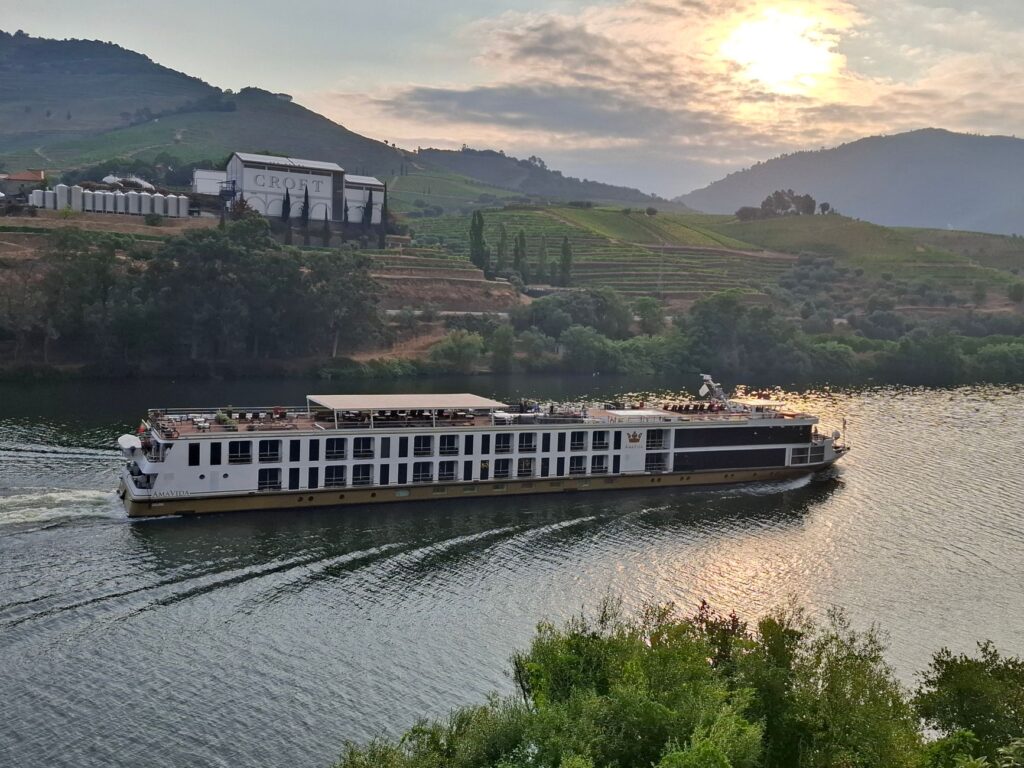
The Douro River is not only the axis of the wine landscape; it also offers a unique perspective on the region. River cruises departing from Porto and heading upstream to the Spanish border allow visitors to contemplate the terraces from the water, an experience that reveals the scale of human labor. In its Portuguese stretch, the Douro is navigable for about 200 kilometers, with locks that overcome the changes in elevation.
Along the river, traditional boats such as the barcos rabelos—once used to transport barrels of wine from the quintas to the cellars of Vila Nova de Gaia—can still be seen. Today, many have been restored and are preserved as a reminder of a river-going past.
Practical guide
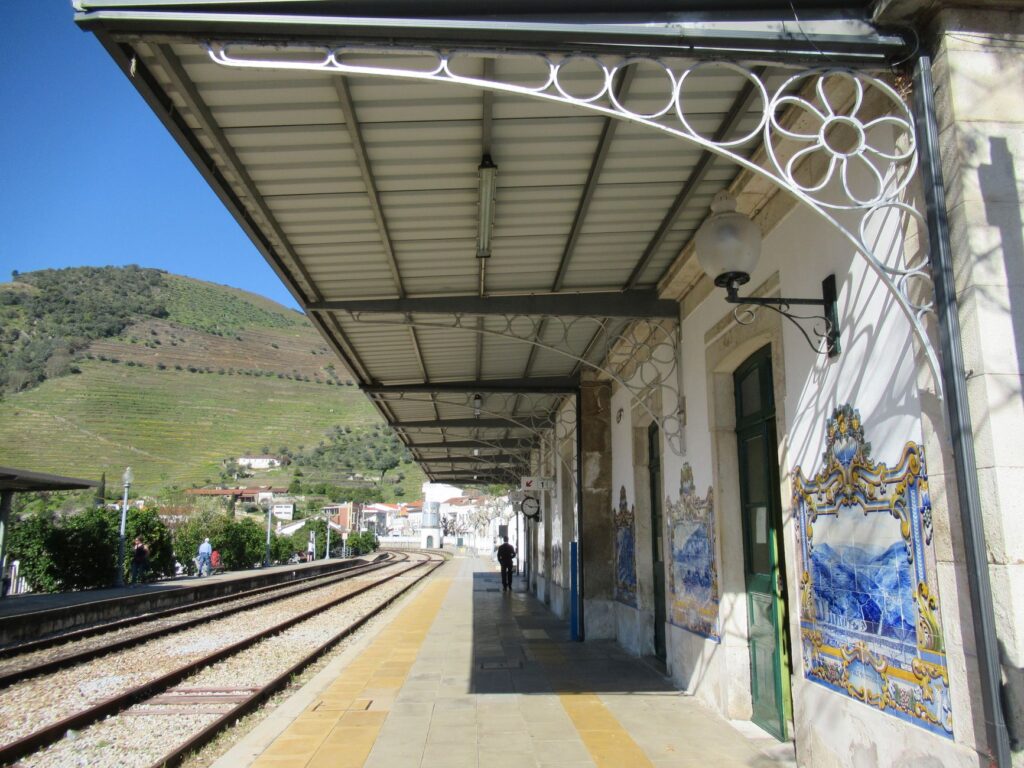
Getting there: The Alto Douro is in northeastern Portugal. The city of Porto, with an international airport, is the main gateway. From there, you can reach Régua or Pinhão by train on the Douro line, a scenic route that follows the river. There are also road connections.
When to go: Spring and autumn are the most pleasant seasons, with mild temperatures and fewer crowds. Summer can be very hot, with temperatures exceeding 35 degrees Celsius. The grape harvest, between September and October, is a particularly interesting time to visit.
What to see: In addition to the quintas, which offer tours and tastings, the viewpoints of São Leonardo de Galafura and Casal de Loivos are worth a stop, with panoramic views over the river. The villages of Pinhão, Régua, and Vila Nova de Foz Côa are common starting points. Near Foz Côa are the famous Paleolithic rock paintings, also a World Heritage Site.
Where to stay: The region offers a wide range of options, from luxury hotels in historic quintas to rural tourism houses and inns. Many quintas offer accommodation and wine tourism experiences.
What to eat: Local cuisine includes dishes such as bacalhau a la dourense, roast kid, and traditional sausages. The region’s wines, of course, take center stage. Don’t miss the conventual sweets, such as pastéis de Tentúgal or queijinhos do céu.
Tips: It is advisable to book winery visits in advance, especially in high season. To get around the region, a car is the most flexible option, though the roads are winding. The regional train between Régua and Pinhão offers spectacular views and is a comfortable alternative.
A heritage that endures
The Alto Douro is much more than a wine region. It is a cultural landscape that sums up two thousand years of history, effort, and wisdom. Its terraces, its quintas, its villages, and its people form a unique ensemble in the world, an outstanding example of how human activity can shape nature without destroying it, creating an environment of exceptional beauty and a sustainable economy.
To travel through the Alto Douro is to enter a territory where time seems measured in harvests, where every schist wall tells a story, and where the Douro River, silent witness, continues to flow between vineyards that are at once a work of art and a source of life.