
On the shaded slopes of northern León, where oak groves alternate with hay meadows and villages still keep granaries and slate roofs, the brown bear has returned to cross mountain passes its ancestors used a century ago. This is not a story of absolute triumph or permanent conflict: it is a coexistence negotiated each season among biologists, livestock farmers, beekeepers, and villagers who learned to read tracks in the mud before the headlines did.
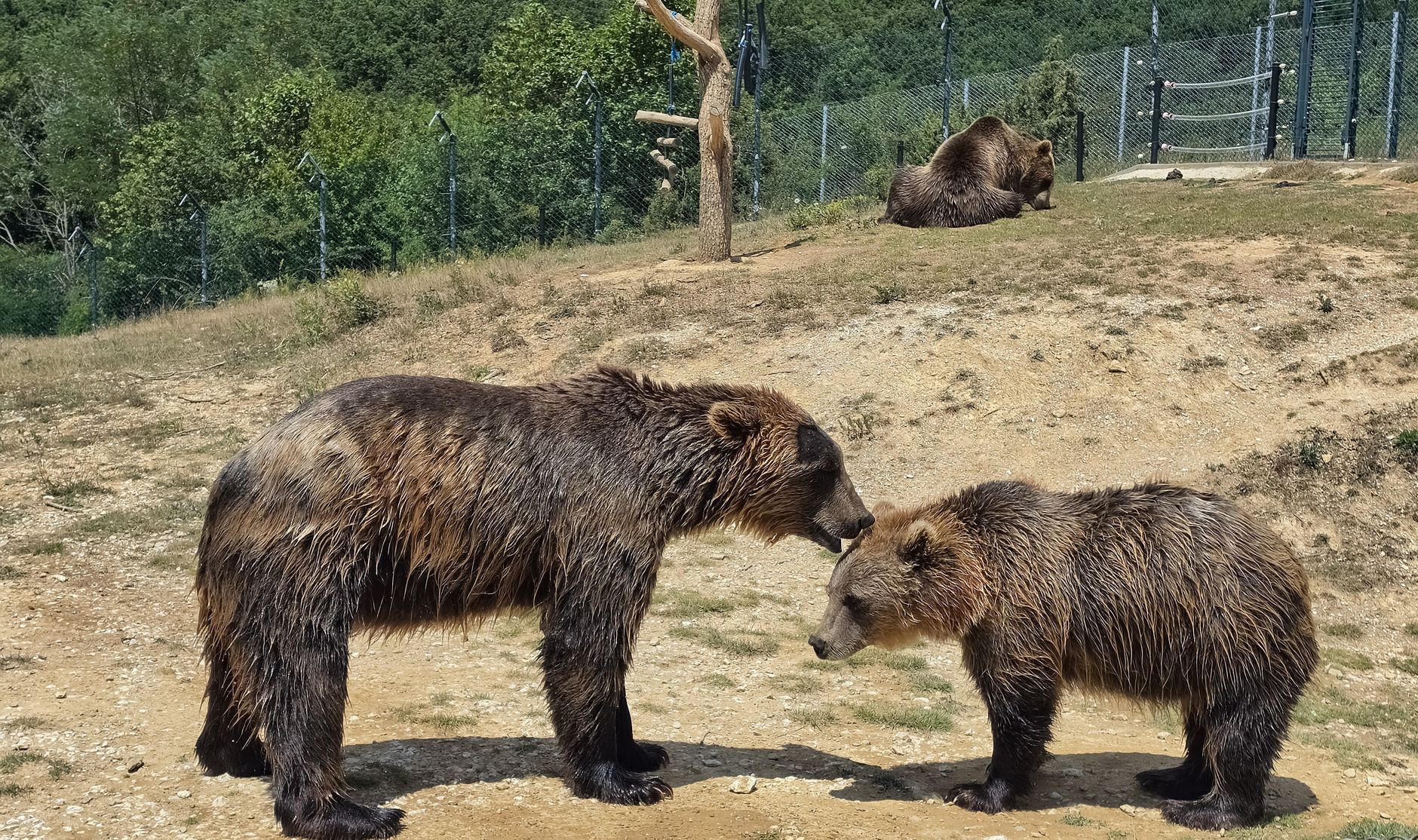
The Cantabrian Mountains, that arc of peaks separating the Castilian plateau from the sea, hold one of the only two brown bear populations surviving on the Iberian Peninsula. The other persists in the Pyrenees, reinforced with Slovenian individuals. The Cantabrian one, by contrast, is a case of native recovery: from barely sixty or seventy individuals in the early 1990s to a figure now exceeding three hundred, according to periodic censuses coordinated by regional administrations. The exact number varies with methodology, but the trend is unmistakable: the species is reclaiming valleys it had abandoned.
A territory of ancient oaks and broken mountains
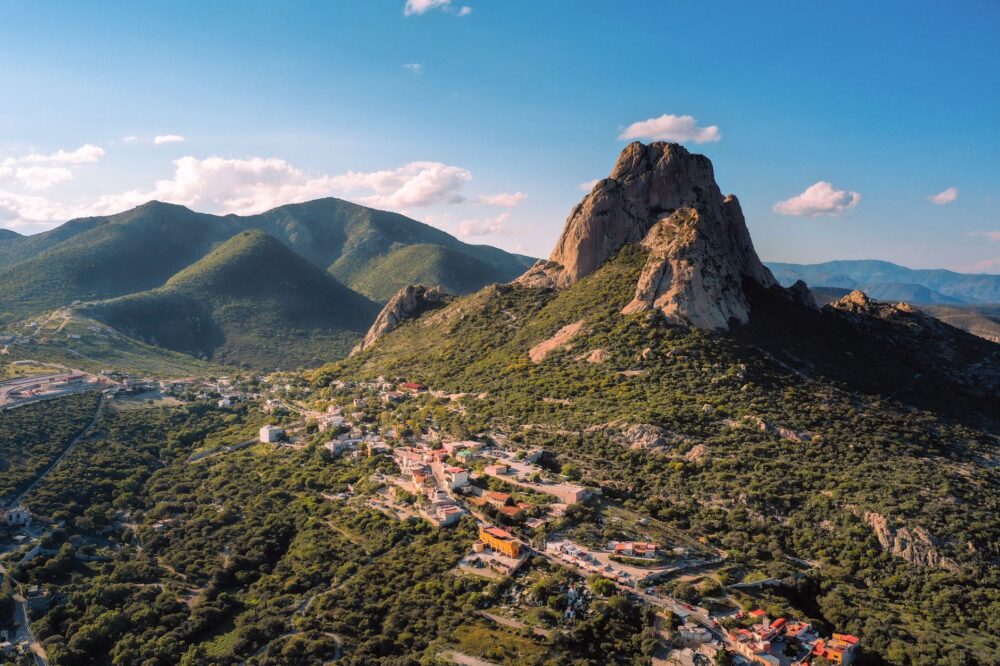
The landscape sustaining this population is not a theme park. It is a mosaic of Quercus pyrenaica and Quercus petraea oak groves, beech forests on the highest shaded slopes, abandoned chestnut stands, hay and grazing meadows, and heath and broom scrub colonizing degraded hillsides. Higher up appear mountain pastures and limestone outcrops where bears find cavities to den.
The Cantabrian Mountains are not a continuous, high ridge like the Alps. They are a fragmented system, with passes rarely exceeding two thousand meters and deep valleys that isolate populations. That fragmentation explains why the bear took so long to reconnect the western and eastern nuclei, and why wildlife corridors have become the conservation priority.

The recovery of the brown bear in the Cantabrian Mountains is not measured only in individuals: it is measured in mountain passes that once again bear tracks and in villages that once again speak of bears without the conversation turning to threat.
The corridor linking two worlds
For decades, the Cantabrian population was divided into two nuclei: the western one, in Asturias and León, and the eastern one, in Cantabria, Palencia, and León. Between them lay a strip of land where the bear had disappeared. The connection between the two nuclei was confirmed in the mid-2010s, when camera trapping and genetic analysis identified individuals crossing that zone.
That corridor is not a wildlife highway. It is a mid-mountain territory with secondary roads, quarries, eucalyptus plantations, and rural settlements. Connectivity depends on the bear finding resting forests, seasonal food, and routes with limited human presence. Conservation projects work on restoring hedgerows, planting native fruit trees, and marking wildlife crossings on the most conflict-prone roads.
The role of fruit trees and chestnuts
In autumn, when beechnuts and acorns grow scarce, abandoned fruit trees become a critical resource. Bears consume apples, pears, plums, and chestnuts on estates that often lack an active owner. Restoring those trees is not just a conservation measure: it is also a way to maintain the traditional agrarian landscape that shaped the mountains.
A population that grows and expands
The most recent censuses indicate that the Cantabrian population exceeds three hundred individuals, with a significant proportion of breeding females. Growth is not uniform: the western nucleus holds the highest density, while the eastern one advances more slowly. Expansion southward, into the Palencian and Leonese mountains, and eastward, into Cantabrian valleys, is one of the phenomena most closely watched by researchers.

That expansion has consequences. Where there were no bears before, damage now appears in apiaries, fruit orchards, and, to a lesser extent, livestock. The institutional response combines compensation, preventive measures, and monitoring. It is not always enough, and discontent among some rural sectors is a factor managers cannot ignore.
Extensive livestock farming and large carnivores
Extensive livestock farming is the activity that has most transformed the Cantabrian landscape. Valley cattle, sheep, and goats graze on meadows and high mountain pastures. Bears can prey on livestock, especially in spring, when young animals are in high pastures and bears emerge from dens needing protein.
Attacks are not frequent, but when they occur they generate social alarm. Administrations have promoted electric fences, the presence of mastiffs, and night penning of livestock. Results are uneven: in some valleys coexistence has stabilized, in others distrust persists.
Electric fences and mastiffs are not a magic solution: they are tools that work when the farmer has the time, resources, and support to apply them systematically.
Beekeeping and bears: a complex relationship
Apiaries are one of the most visible points of conflict. Bears have a weakness for honey and bee larvae, and a single individual can devastate several hives in one night. In areas with stable bear presence, beekeepers have adopted electric fences, raised platforms, and surveillance systems.

The damage is not only economic: it affects a traditional activity already facing generational turnover, competition from imported honey, and the effects of climate change on flowering. Compensation covers part of the cost but does not offset the loss of hives that take years to recover their production.
The case of migratory apiaries
Some beekeepers move their hives to mountain areas in summer, following the bloom. That transhumance exposes them to bear presence at peak activity. Coordination between beekeepers and administrations to mark routes and protect temporary settlements is one of the open fronts.
Wildlife watching tourism and its limits
The bear’s presence has generated growing interest in wildlife watching. Local companies offer guided outings with telescopes and hides, especially in spring and autumn. Nature tourism can be a conservation ally if managed with strict criteria: minimum distances, small groups, and a ban on baiting animals.

But it can also become a problem. Pressure on certain areas, the proliferation of photographers without permits, and the spread of precise locations on social media are risks managers try to control. Regulations vary by region and are not always easy to enforce across such an extensive territory.
The challenges of coexistence
The recovery of the brown bear in the Cantabrian Mountains is a biological success, but it does not by itself resolve social conflicts. Rural depopulation, aging farmers, and the lack of generational turnover are structural problems affecting coexistence. Without an active population in rural areas, preventive measures lose effectiveness.
Conservation projects have understood that protecting the bear is not enough: the communities living with it must be sustained. That means supporting extensive livestock farming, beekeeping, and rural tourism, and ensuring compensation arrives quickly and without excessive bureaucracy.
Research and monitoring
Scientific monitoring combines camera trapping, genetic analysis of scat and hair, and GPS collars on some individuals. That information reveals movements, diet, reproduction, and mortality. It also helps identify roadkill hotspots and plan wildlife crossings.
Practical guide
If you want to explore the brown bear’s territory in the Cantabrian Mountains, plan your visit with respect and prudence. The best season for indirect observation—tracks, scat, marked trees—is spring and autumn, when bears are most active and vegetation allows ground visibility. Summer, with heat and dense vegetation, reduces the odds.
- Where to go: the Leonese valleys of Laciana, Babia, and Omaña; the Asturian district of Somiedo; and the Cantabrian valleys of Liébana and Campoo. These are areas with stable presence and guide services.
- How to observe: with binoculars or a telescope, from long distances and without leaving trails. Hides managed by local companies offer guarantees of not disturbing the animals.
- What to avoid: using bait, chasing animals, sharing precise coordinates, and entering reserve zones without authorization.
- Accommodation: rural houses and hotels in villages such as Villablino, Pola de Somiedo, or Potes. The offer is varied and contributes to the local economy.
- Transport: a car is almost essential to move between valleys. Secondary roads are narrow and winding; take extra care at dawn and dusk, when wildlife crosses.
- Season: spring (April–June) and autumn (September–November). Winter is harsh and many access roads close due to snow.
Observing a brown bear is not guaranteed. It is an elusive animal with large home ranges and crepuscular habits. The visit should be understood as an immersion in a living landscape, not a photographic hunt.
A future written in the forests
The Cantabrian Mountains are today a laboratory of coexistence. What happens in its valleys—whether the population keeps growing, whether conflicts are managed effectively, whether rural areas find a future—will serve as a reference for other parts of Europe where large carnivores are returning. The brown bear is not just a protected species: it is an indicator of a territory’s health and of its inhabitants’ capacity to adapt to a changing world.
In the shaded oak groves, among century-old beeches and hay meadows, bear tracks once again mark the mud. They are not signs of threat: they are proof that a landscape mistreated for decades can recover part of its complexity. The question is no longer whether the bear will return, but how we want to live with it.