
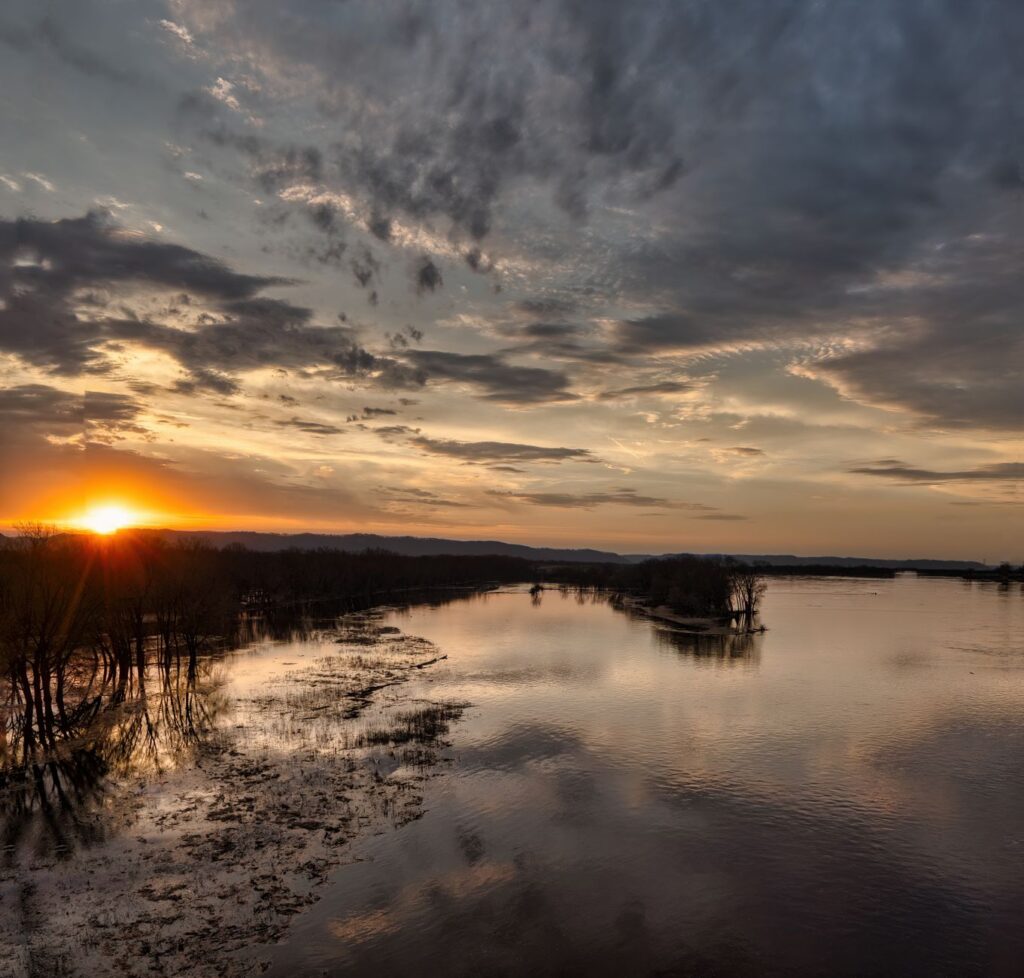
The Miño River crosses Ourense with a calm that can be misleading. Beneath its bed, a network of geological faults pushes water to temperatures exceeding sixty degrees Celsius, a phenomenon that makes this city in northwestern Spain one of Europe’s most unusual thermal destinations. There are no grand historic bathhouses on the riverbank, but rather natural pools and stone basins integrated into the fluvial landscape, accessible without prior booking and open throughout the year.
In recent years, Ourense has transformed that geological heritage into an urban wellbeing project: the Outariz thermal pools and the Burgas springs, located a few kilometres from the centre, function as a public thermal park that combines discreet architecture, wooden walkways and management that prioritises local use without excluding visitors. The result is an experience that does not depend on luxury or rigid schedules, but on the land itself.
A city built on hot water
Ourense is not a conventional thermal capital. Unlike other European destinations where the spa is an enclosed, paid facility, here thermal water emerges at various points across the municipality and has gradually been integrated into public space. The As Burgas fountains, in the heart of the old town, are the oldest testimony to that relationship: springs already used by the Romans that still steam beside the main square. The city has grown knowing that beneath its streets flows a resource that does not need to be invented.
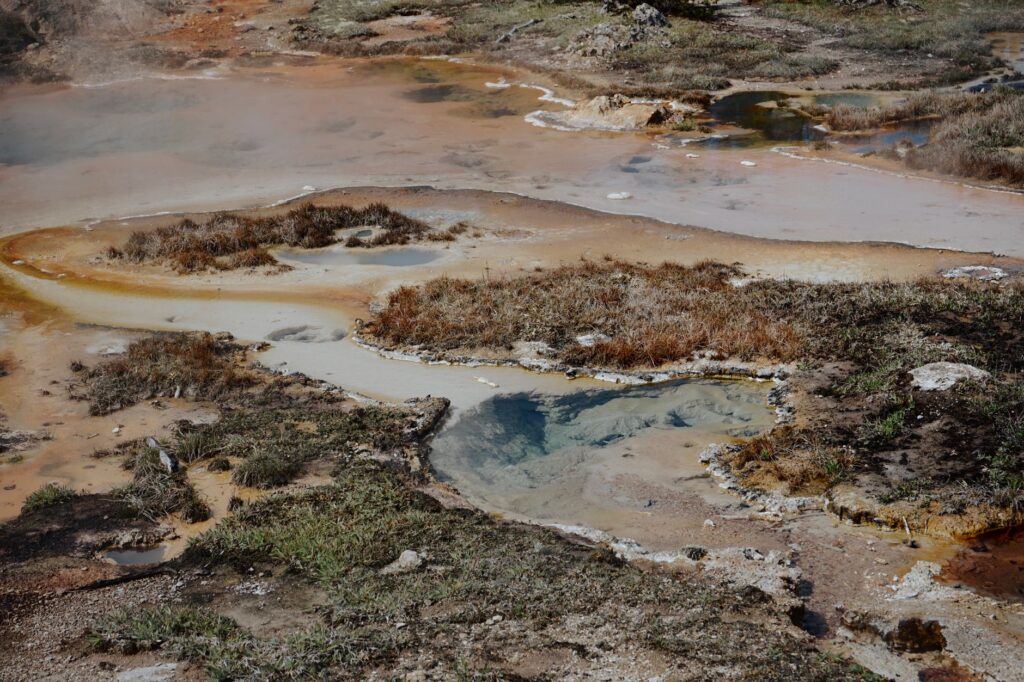
This geological condition stems from the region’s tectonic activity, which allows rainwater to filter deep underground, heat up in contact with subsurface rocks and return to the surface enriched with minerals. The result is bicarbonate and sulphate waters containing silica, among other components, traditionally associated with benefits for the skin and joints. These are not miraculous promises, but a hydrotherapy practice with centuries of history in Galicia.
The water is neither invented nor climate-controlled: it rises hot from the subsoil, and the city has learned to share it rather than lock it away.
Outariz: walkways, pools and the river as architecture
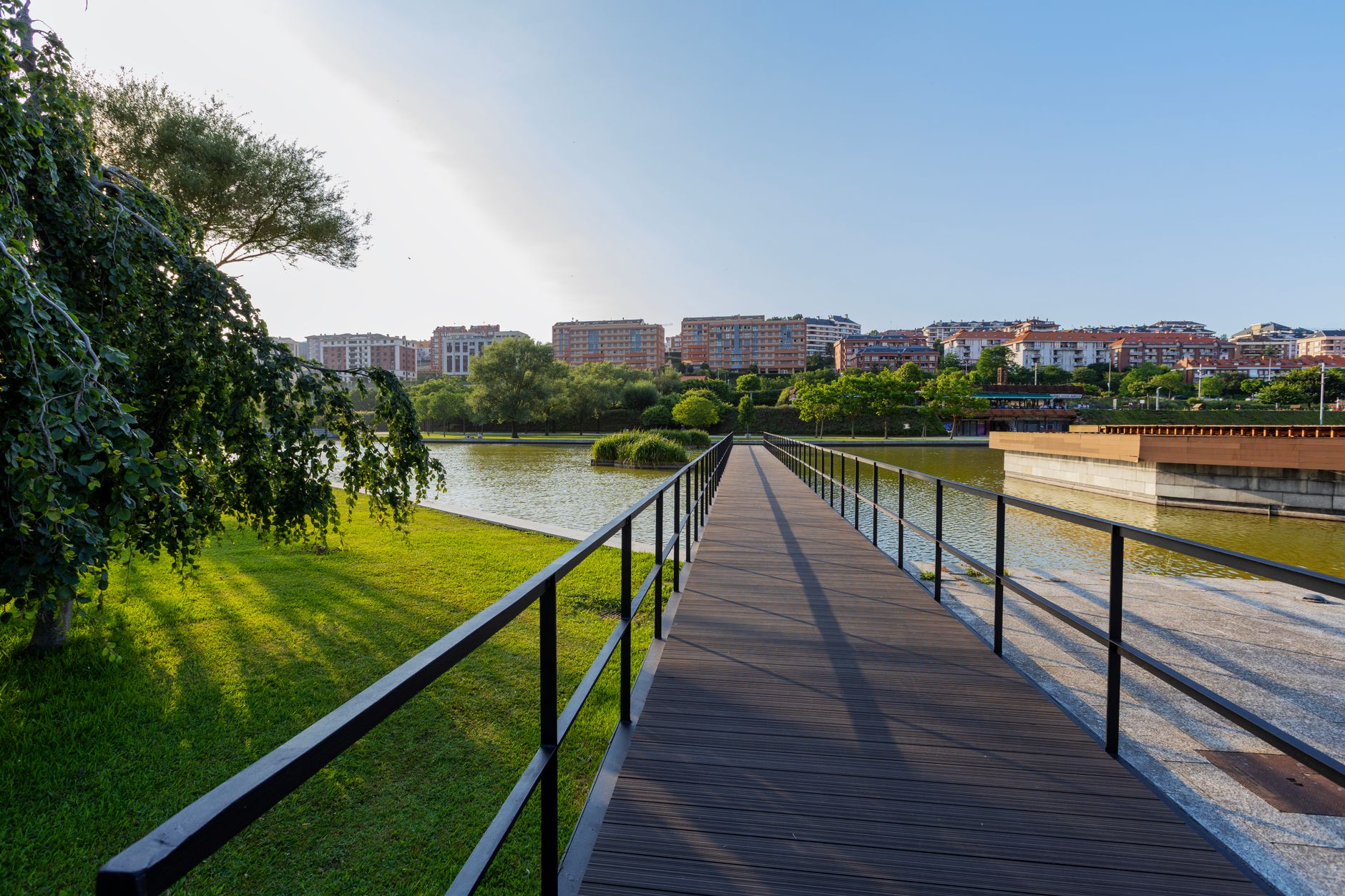
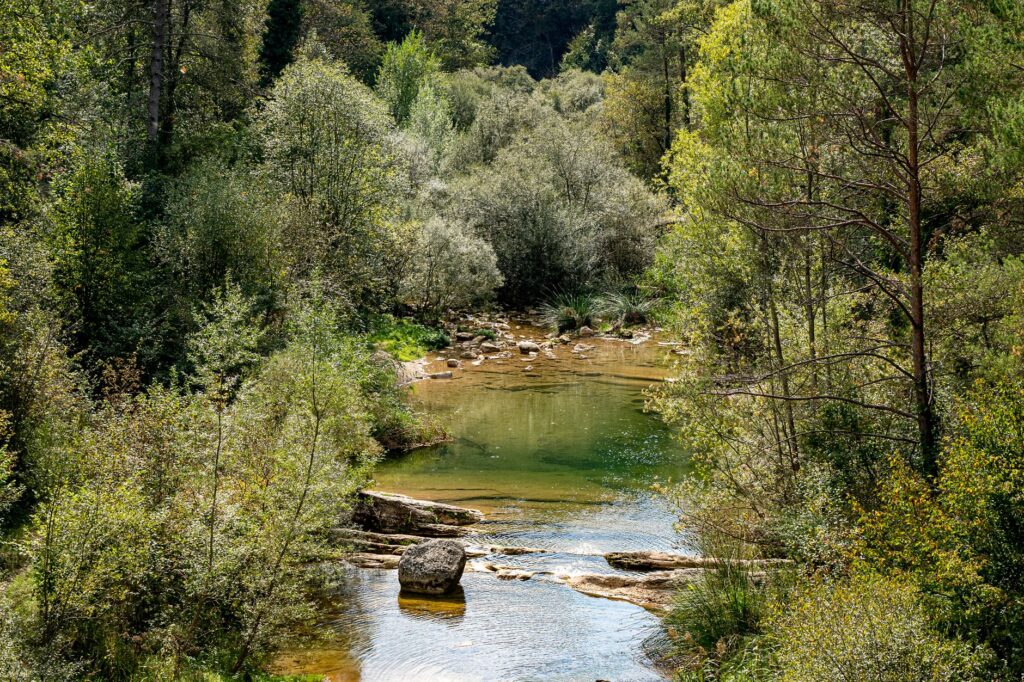
The Outariz complex, on the right bank of the Miño, is the most ambitious expression of that philosophy. It is reached via a pedestrian walkway that enters the riverside forest and descends to a series of stepped pools built in stone and wood. Each pool has a slightly different temperature because the water arrives directly from the springs and cools or mixes according to the flow. There are no tiles or marble: the dominant materials are local slate and treated wood, which age with the humidity and blend into the surroundings.
Visitors can move from a hot pool to a warm one within a few metres, with the sound of the river as a constant backdrop. In winter, the contrast between the steam and the cold air creates an atmosphere that many bathers describe as unreal; in summer, the vegetation and tree shade allow for longer soaks. Admission is free or symbolic depending on the season, and capacity is controlled to prevent overcrowding, a delicate balance between tourism and local use.
What it feels like to bathe in Outariz
The experience is not that of a conventional spa. There is no ambient music or complimentary towels. Bathers arrive with their own swimwear, find a free pool and immerse themselves. The water temperature can feel intense at first, but the body adapts within minutes. The silence is broken only by the murmur of the river and the low conversations of other bathers. It is a wellbeing that cannot be bought, only shared.
As Burgas: the urban origin of thermalism
If Outariz represents contemporary Ourense, As Burgas is its memory. Located in the heart of the old city, these springs flow above sixty degrees and have been used since Roman times. Around them, remains of pools and channels have been found, confirming centuries of continuous use. Today the site is protected and forms part of the city’s heritage route, with an interpretation centre explaining the geology and history of the place.
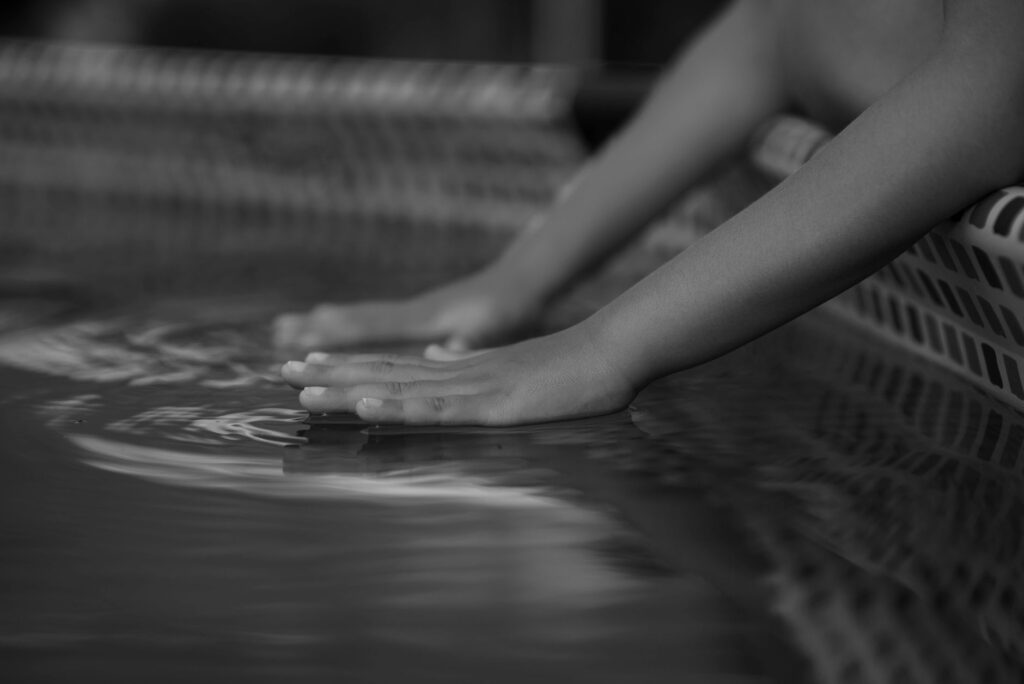
The water at As Burgas is not intended for recreational bathing, but for contact and observation. Locals come to fill bottles, visitors approach to feel the heat on their hands, and guides explain that this same water feeds the Outariz springs. The connection between the historic centre and the river park is one of Ourense’s great achievements: these are not two separate offerings, but a single geological phenomenon told at two scales.
Beyond Outariz: other pools and springs
The municipality of Ourense has other thermal points that complete the experience. The Burgas pools, beside the river, offer a more intimate and less crowded atmosphere. There are also springs in the A Chavasqueira and Muíño da Veiga areas, with stone pools and free access at certain times. Each has its own character: some are more family-oriented, others quieter, and all share the same volcanic origin and public management.
For travellers wanting to understand the whole picture, at least two days are recommended: one for the historic centre and As Burgas, another to explore the riverside pools. This is not a luxury circuit, but an immersion in a way of understanding wellbeing that has more to do with the territory than with the spa industry.
Hydrotherapy and wellbeing: what science says and what it does not
Tradition attributes anti-inflammatory, relaxing and skin-friendly properties to Ourense’s thermal waters. Research on hydrotherapy supports some of these effects, especially regarding temperature and muscle relaxation, but exaggerated promises should be avoided. What is documented is that bathing in hot mineral waters can improve peripheral circulation and reduce stress, provided it is practised in moderation and there are no medical contraindications.
In Ourense, context also matters: contact with nature, the silence of the river and the absence of commercial stimuli reinforce the sense of rest. It is a low-cost, highly available wellbeing that does not depend on bookings or personalised treatments. For many travellers, that simplicity is precisely what makes it valuable.
There is no ticket office or clock: the water sets its own time, and the traveller simply has to adapt to it.
When to go and how to plan a visit
Ourense has a continental climate with Atlantic influence. Winters are cold and humid, summers hot. The thermal pools operate year-round, but the experience changes with the seasons. In winter, steam and cold create a much sought-after contrast; in spring and autumn, temperatures are milder and the green surroundings are at their best. In summer, early morning or late afternoon is advisable to avoid heat and crowds.
Outariz can be reached by car, urban bus or on foot from the centre along the Miño riverbank, a walk of roughly one hour. Bear in mind that this is a natural space: there are no permanent lifeguards at all pools, and prolonged or solitary immersion is not recommended. Swimwear, a towel and non-slip footwear are sufficient.
Practical guide
- Getting there: Ourense has train and bus stations with direct connections from Madrid, Vigo and Santiago de Compostela. From the centre, you can walk along the Miño riverbank or take an urban bus to Outariz.
- Best time: year-round. Winter for the thermal contrast, spring and autumn for the landscape, summer for the early hours.
- What to bring: swimwear, towel, flip-flops or non-slip shoes, water and sun protection in summer. There is no towel rental service at the pools.
- Recommended duration: between 45 and 90 minutes per session, with breaks. Can be combined with a visit to the historic centre and As Burgas.
- Accessibility: some pools have adapted access, but not all. Check in advance if reduced mobility is a consideration.
- Rules: respect capacity limits, do not use soaps or oils in the water, and keep voices low. This is a space shared with local residents.
- Price: access is free or subject to a symbolic fee depending on the pool and season. No prior booking is required in most cases.
A wellbeing that belongs to the place
What sets Ourense apart from other thermal destinations is not the water temperature or the architecture of its pools, but the decision to keep them open and accessible. At a time when wellbeing tends to become a luxury product, this Galician city offers the opposite: a shared natural resource, without artifice, which works because the land allows it and the community sustains it.
Travellers seeking a transformative experience may not find it in the grandiloquent sense of the term. But they will find something harder to manufacture: the feeling of being in a place where hot water is not an attraction, but a way of life. And that, on the map of European thermal tourism, is increasingly rare.