
Introduction to Tasmania’s Western Outpost
At the remote edge of Australia, where roaring winds from the Southern Ocean relentlessly batter the cliffs of Western Tasmania’s coast, the territory unfolds as a bastion of impenetrable temperate rainforests, peaks sculpted by glacial erosion, and dark, tannin-stained rivers. In this landscape of untamed beauty, human mobility has historically been a test of endurance against environmental hostility. Transport infrastructure here does not respond to the logic of speed or mass commercial efficiency, but to pure survival and the articulation of isolated mining enclaves that only nineteenth-century engineering ingenuity managed to carve out of the mountain.
The axis upon which this singular connectivity hinges is the West Coast Wilderness Railway line, a technological marvel based on the Abt rack-and-pinion system that allows trains to overcome impossible gradients amid the dense thickets of the Spero-Franklin National Park. Far from serving merely as a contemporary tourist attraction, this rail route embodies the living memory of an era when steam locomotion was the sole umbilical cord capable of connecting Queenstown’s mineral deposits with the port of Strahan. Through this report, we will examine how extreme topography has conditioned track design, the impact of heritage restoration on the local economy, and the technical challenges of keeping a railway operational in one of the Southern Hemisphere’s most demanding climatic environments.
The Genesis of an Impossible Route
The history of railways on Tasmania’s west coast is, above all, a chronicle of technical audacity in the face of geographic impossibility. In the late nineteenth century, the discovery of rich copper and gold deposits in the mountainous interior posed an insurmountable dilemma for mining companies: how to evacuate the extracted ore across hundreds of miles of virgin jungle, impassable river gorges, and slopes exceeding a six percent incline. Dirt roads and primitive tracks were systematically buried under mud during frequent floods and torrential rains characteristic of the region.
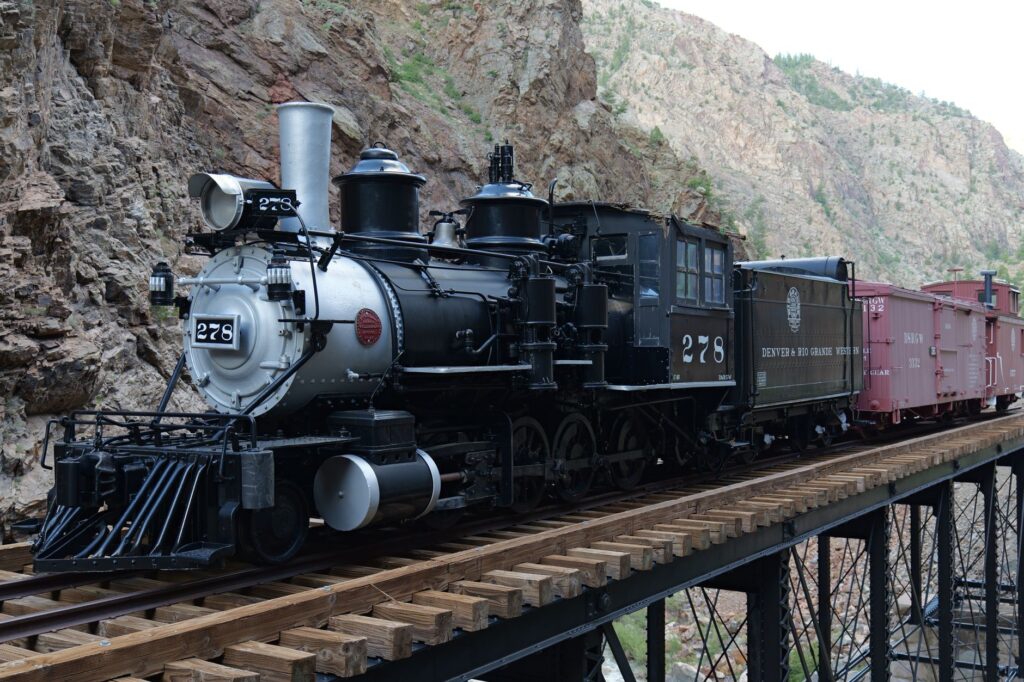
Facing this bleak scenario, engineers turned to Swiss Abt technology, a central rack mechanism that engaged with toothed wheels on locomotives to safely traction up the steepest inclines. Construction of the line, initiated in the 1890s, demanded the superhuman effort of labor crews who carved a path with dynamite and muscle power through basalt rock walls and impenetrable bogs. Every bridge made of native huon pine and every hand-excavated tunnel represented a pyrrhic victory over wild nature, setting a precedent in civil engineering applied to extreme topographies.
Rack Engineering and Fluvial Architecture
The daily operation of the West Coast Wilderness Railway reveals a seamless synergy between heavy mechanics and the fragility of the natural environment. The locomotives, originally manufactured by the prestigious firm Beyer, Peacock & Co., combine conventional adhesion cylinders for flat sections with cylinders dedicated exclusively to operating the rack mechanism on severe slopes. This technical duality prevents slipping on wet rails, a constant risk due to the extremely high rainfall received by the western Tasmanian mountain range year-round.
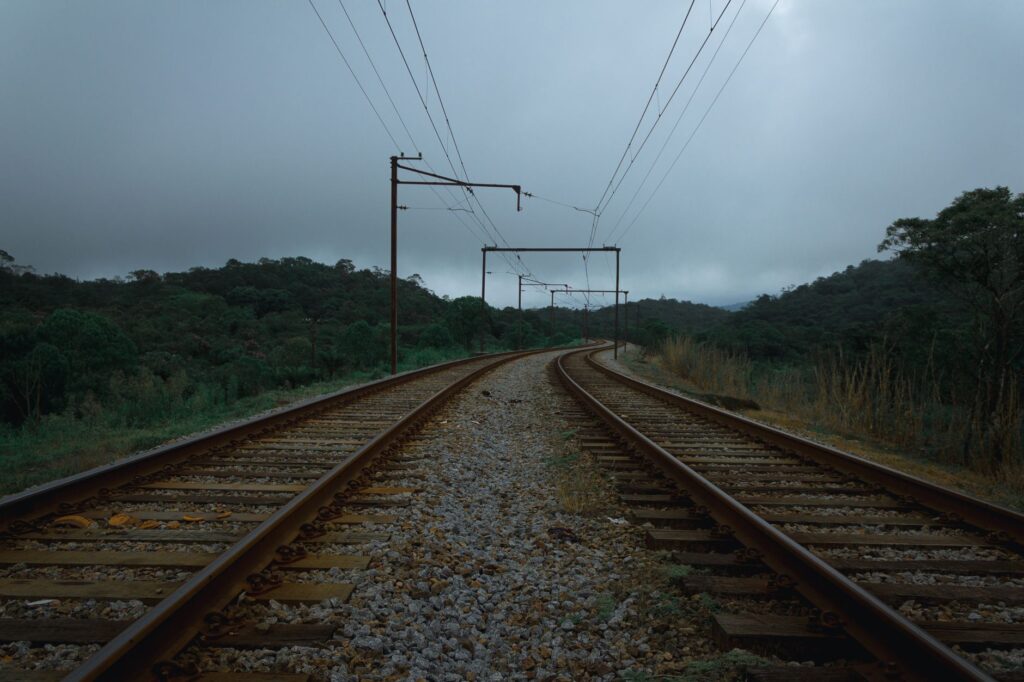
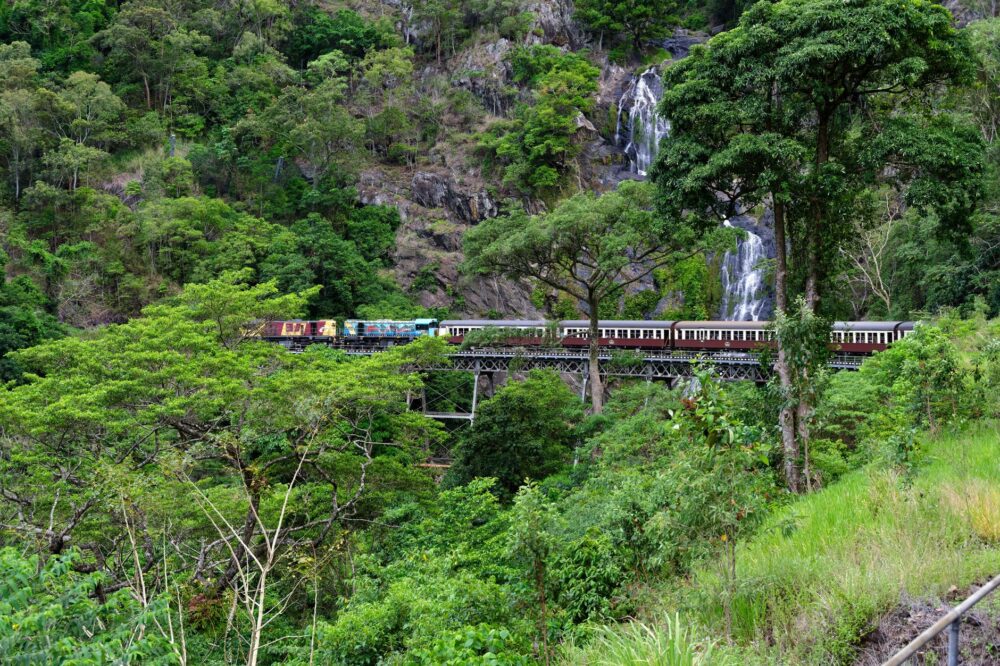
The railway trace winds alongside the King River, whose enclosed waters forced builders to design unique architectural solutions. Metal lattice bridges and wooden structures follow one another in a breathtaking visual rhythm, integrating with surprising respect into the gorge. The preservation of these structural elements requires continuous inspections and rigorous artisanal maintenance, as constant moisture accelerates steel corrosion and favors the rotting of centennial timbers, forcing conservation teams to replicate original carpentry techniques using high-resistance treated woods.
The Human Pulse at Frontier Stations
Along the thirty-plus kilometers separating Queenstown from Strahan, small intermediate stations like Lynchford, Rinadeena, and Dubbil Barril act as silent witnesses to the railway’s social history. In the past, these enclaves housed worker camps, coal sheds, and water tanks essential for supplying the steam-guzzling engines. Today, human presence is limited to specialized railway staff, heritage guides, and the few local residents who manage the logistics of infrastructure upkeep.
The relationship between west coast communities and the train is one of profound identity interdependence. For the residents of Queenstown—a town marked by the characteristic lunar landscape of hills eroded by historic mining and smelting fumes—the railway represents the primary symbol of their resilience. Local families have passed down technical knowledge regarding boiler management, repair metallurgy, and analog signaling from generation to generation, ensuring industrial heritage is not reduced to an inert museum piece, but retains the rhythmic sound and unmistakable smell of burned coal in deep valleys.
The Temperate Rainforest Ecosystem and Environmental Impact
Railway transit through Western Tasmania cannot be understood separately from the delicate ecosystem enveloping it. The track traverses one of the last large extents of temperate rainforest on the planet, a pluvial forest dominated by giant tree ferns, endemic mosses, and venerable huon pine and sassafras trees. This environment, protected under strict environmental regulations, imposes severe operational restrictions to prevent fires caused by steam locomotive sparks and to avoid contaminating surrounding river basins.
To mitigate any ecological alteration, modern railway management combines the occasional operation of restored powerful steam locomotives with the use of low-emission diesel units during periods of high bushfire risk. Likewise, invasive species control programs and local wildlife monitoring—including elusive marsupials like the Tasmanian devil and the quoll—form a routine part of the operating company’s duties, demonstrating that transport infrastructure and biodiversity conservation can coexist through rigorous and respectful planning.
Logistical Challenges and Resilience Against Extreme Weather
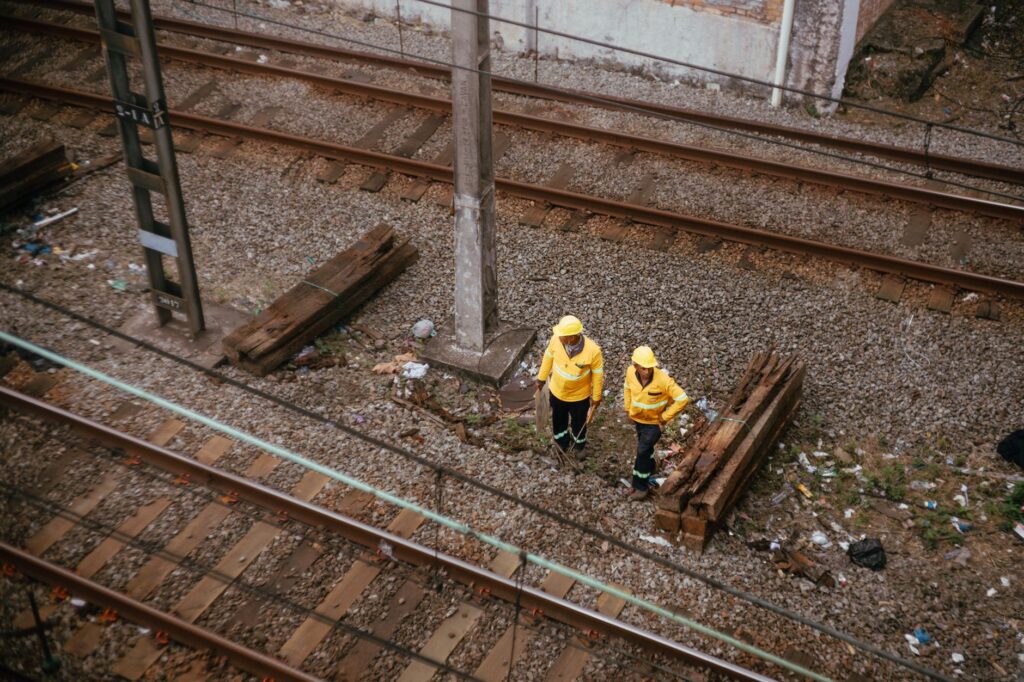
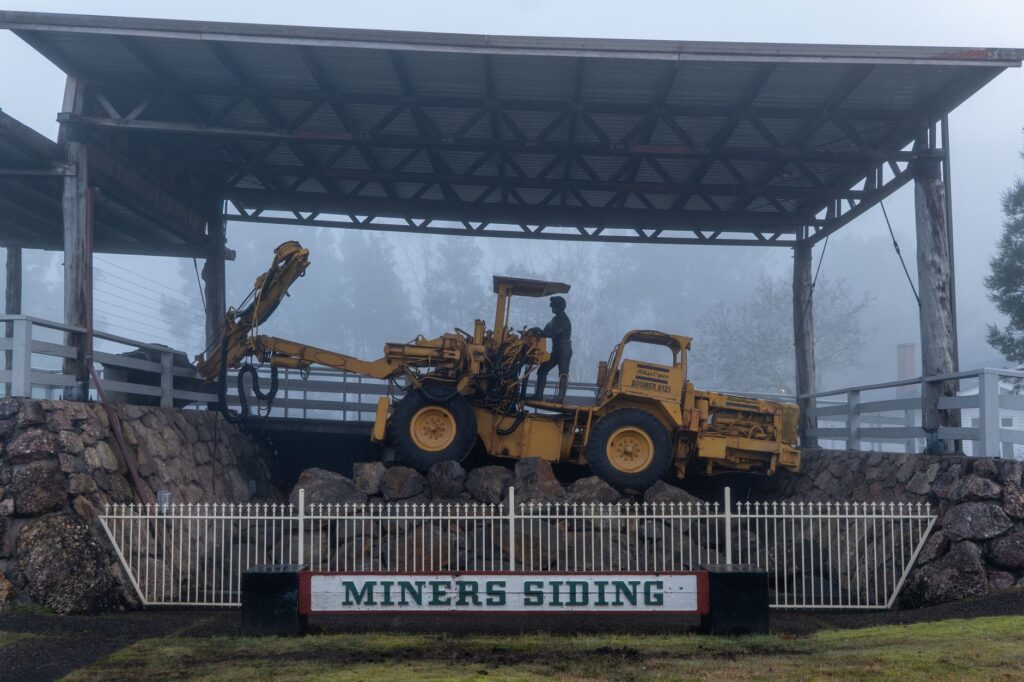
Keeping a heritage railway line operational in a territory battered by recurrent polar fronts constitutes a permanent logistical challenge. Gale-force storms frequently toppled large trees across the tracks, blocking access points and damaging analog catenary and communication lines. Furthermore, heavy flooding of the King River causes landslides on clay slopes, forcing emergency interventions with heavy machinery that must be transported via complicated road routes to the most inaccessible points of the gorge.
Funding for these maintenance operations relies on a delicate balance between government subsidies for historic heritage preservation and revenue generated by cultural tourism. Unlike urban mass transit networks, the West Coast Wilderness Railway operates under tight economic margins where any prolonged service interruption due to extreme weather events tests the financial soundness of the entire system. Rapid adaptive capacity and the technical skill of maintenance crews are consequently the true guarantors of territorial continuity in this southern outpost.
«The steam ascending Rinadeena’s rack is not merely a tribute to industrial heritage, but the mechanical heartbeat keeping Western Tasmania’s isolated communities bound together against the fury of the elements.»
Practical guide
How to get there and intermodal transport options
Accessing Tasmania’s western region requires rigorous planning due to driving distances and orographic complexity. The main route departs from Hobart or Launceston via rental vehicles or long-distance bus services traversing the Lyell Highway (A10), a winding four-to-five-hour journey traversing high plateaus and rugged mountain passes.
Timetables, reservations, and seasonality of the railway service
The West Coast Wilderness Railway operates with regular departures from main stations in Queenstown (Lynchford industrial park) and Strahan (Regatta Point region). Making reservations several months in advance is essential, particularly during the austral summer months (December to February) when international tourist demand peaks. Schedules may experience modifications or temporary suspensions without prior notice due to severe weather alerts for strong winds or extreme bushfire risk.
Equipment and safety tips for travelers
- Layered clothing: The western coast climate is notoriously fickle; high-quality waterproof gear and thermal layers are recommended even during summer months.
- High-traction footwear: Station platforms and access trails frequently present permanent moisture and slippery surfaces.
- Limited mobile connectivity: Cellular phone signals are nonexistent throughout much of the King River gorge; downloading maps and necessary logistical info in advance is advised.
Emotional Epilogue in Strahan’s Mists
When the locomotive’s final whistle slowly fades over the calm waters of Macquarie Harbour in Strahan, the traveler understands that this journey’s true dimension transcends mere technical curiosity or scenic recreation. Tasmania’s west coast railway reveals itself as a collective artwork sculpted with iron, wood, and human sweat, an eloquent testament to civilization’s tenacity in weaving threads of communication across the untamed tapestry of southern nature, reminding us that in the planet’s loneliest outposts, every railway track opened in the mist is, above all, a bridge cast toward memory and survival.