
Introduction to the Eastern Frontier of the Fijian Archipelago
At the easternmost edge of the Republic of Fiji, where the warm currents of the South Pacific dissolve conventional maps, lies the Lau archipelago. This chain of more than sixty volcanic islands and coral atolls represents one of the most isolated, fascinating, and geographically fragmented territories in Oceania. Unlike the bustling western islands of Viti Levu or Vanua Levu, the Lau group operates under an entirely different logic, where distance is not measured in standard nautical miles, but in the patience required to synchronize with tides, trade winds, and the infrequent schedules of cargo vessels.
Examining the connectivity of Lau is not simply a matter of reviewing coastal shipping routes; it is about unravelling a complex network of amphibious survival where maritime transport functions as the sole umbilical cord linking ancestral communities to the administrative hubs of Suva. In this remote territory, every journey aboard a mixed cargo vessel—locally known as an inter-island cutter—constitutes a masterclass in logistical endurance, naval engineering adapted to coral reefs, and dependency on an oceanic ecosystem increasingly vulnerable to climatic variability.
The Geography of Isolation: Coral Architecture and Oceanic Abysses
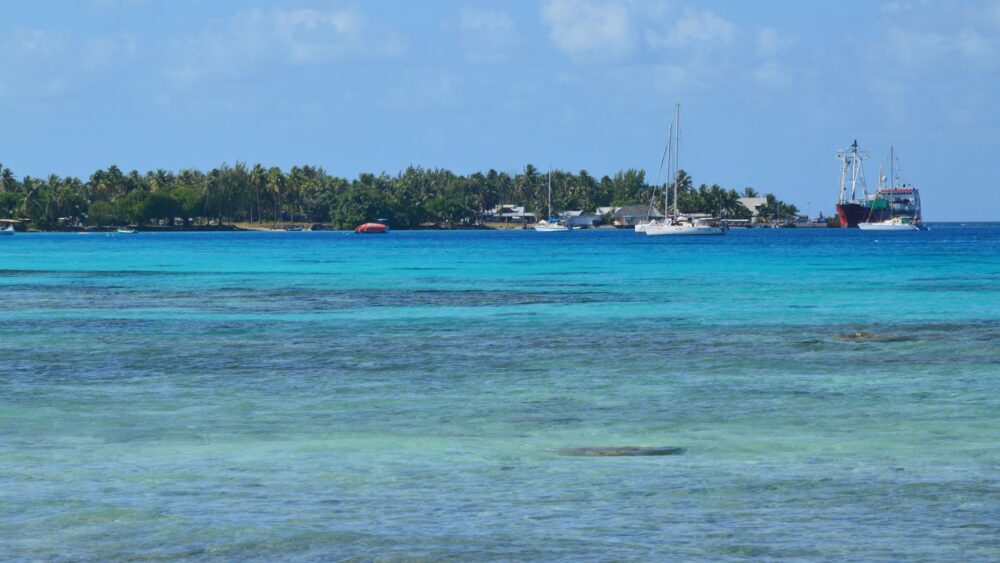
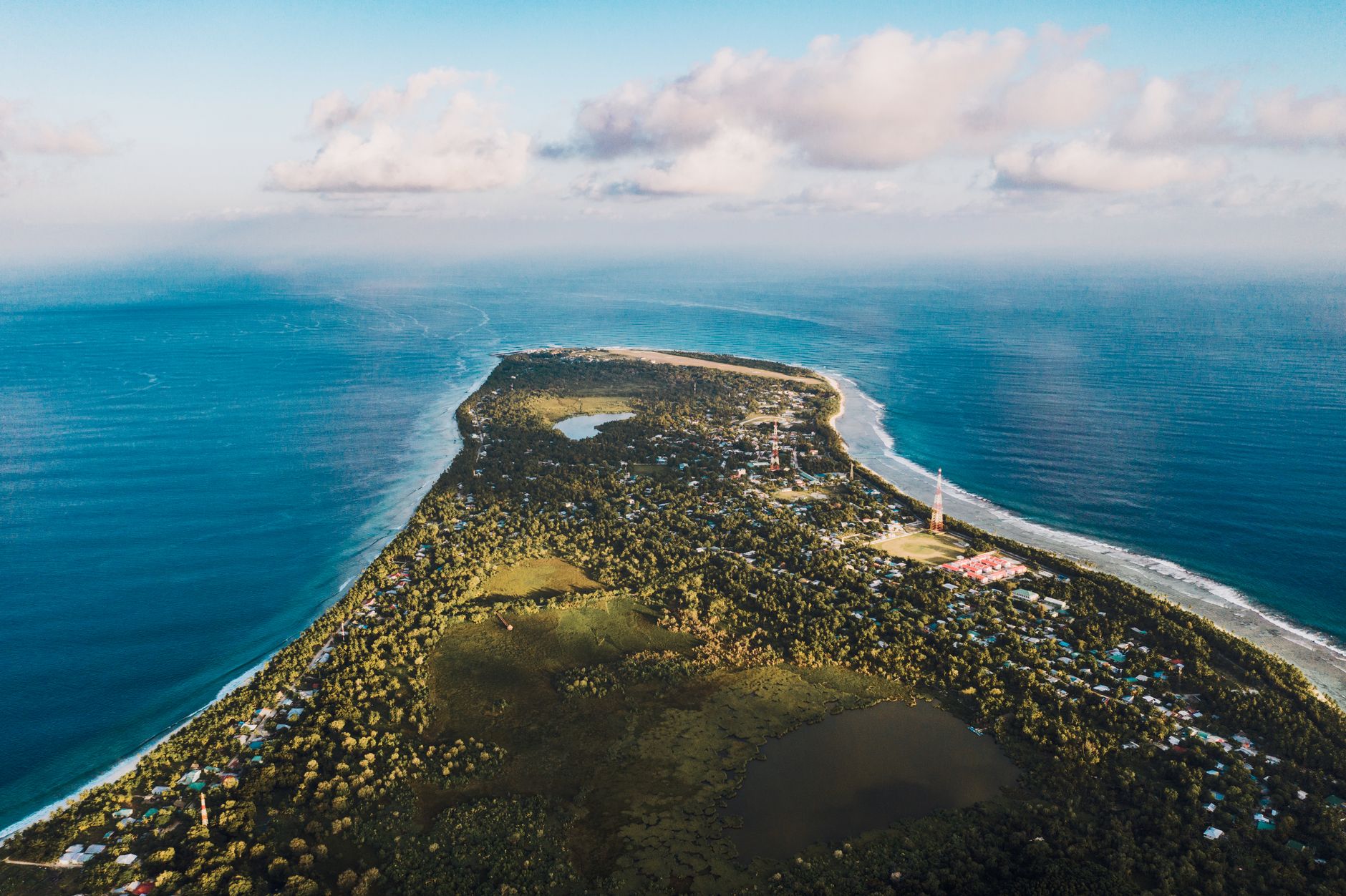
The spatial arrangement of the Lau Islands stems from ancient tectonic faults and volcanic evolution that have given rise to a double chain of islands. On one hand, volcanic formations feature steep peaks and fertile soils; on the other, limestone coral atolls barely rise a few meters above sea level. This morphological duality relentlessly dictates transport infrastructure: the total absence of natural deep-water anchorages in most atolls prevents large-draft vessels from approaching, forcing a highly complex transshipment system based on light barges and outrigger canoes.
The tides in the Koro Sea and the Lau Passage act as an unforgiving clock. The captains of the few ferries operating the route must calculate with millimeter precision the exact moment when high tide allows them to navigate the labyrinthine channels of the barrier reefs. A miscalculation of thirty minutes can leave a cargo vessel stranded for half a lunar cycle on live coral. This physical reality imposes a natural barrier that has preserved the traditional social structures of local clans, while simultaneously condemning inhabitants to extreme vulnerability in the face of any disruption in supply chains.
The Coastal Fleet: Mixed Cargo Vessels as Vital Arteries
The economic and social pulse of the Lau Islands relies almost entirely on an aging, modest fleet of multi-purpose vessels combining dry cargo, fuel drums, construction materials, and passengers on voyages lasting anywhere from several days to weeks, depending on port calls and open-sea weather conditions.
These ships, often built decades ago and subjected to constant repairs in Suva’s dry docks, operate as floating merchants where the main deck turns into an improvised market and collective dormitory. Conditions on board defy modern commercial navigation standards. Passengers must contend with persistent humidity, cross-swells of the Pacific, and a lack of formal berths, sleeping on traditional woven mats—known as tabane—spread directly over the steel deck plating.
The cargo ship is not merely a means of transport; it is the floating market, the post office, the emergency ambulance, and the kinship bridge holding together dispersed families across the outer islands and the capital.
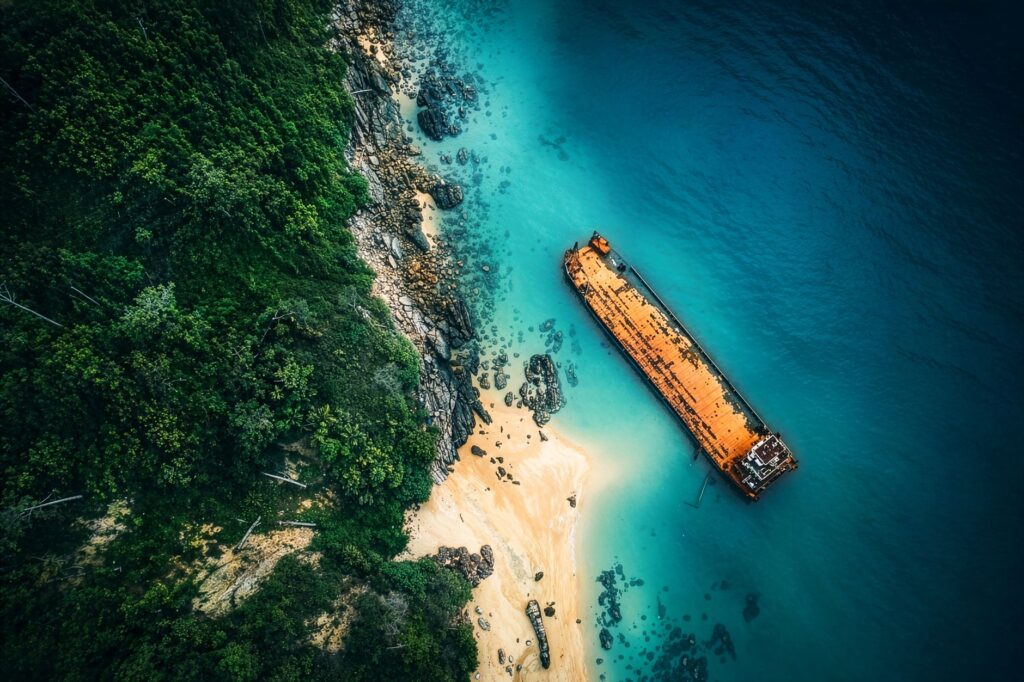
Managing cargo space is an exercise in empirical engineering. Stevedores must balance sacks of flour, diesel drums for insular electrical generators, propane gas cylinders, and off-road vehicles in extremely confined spaces. Any imbalance in the ship’s center of gravity can prove fatal when crossing the violent tropical squalls characterizing the South Pacific monsoon season.
Logistical Challenges and the Vulnerability of Port Infrastructure
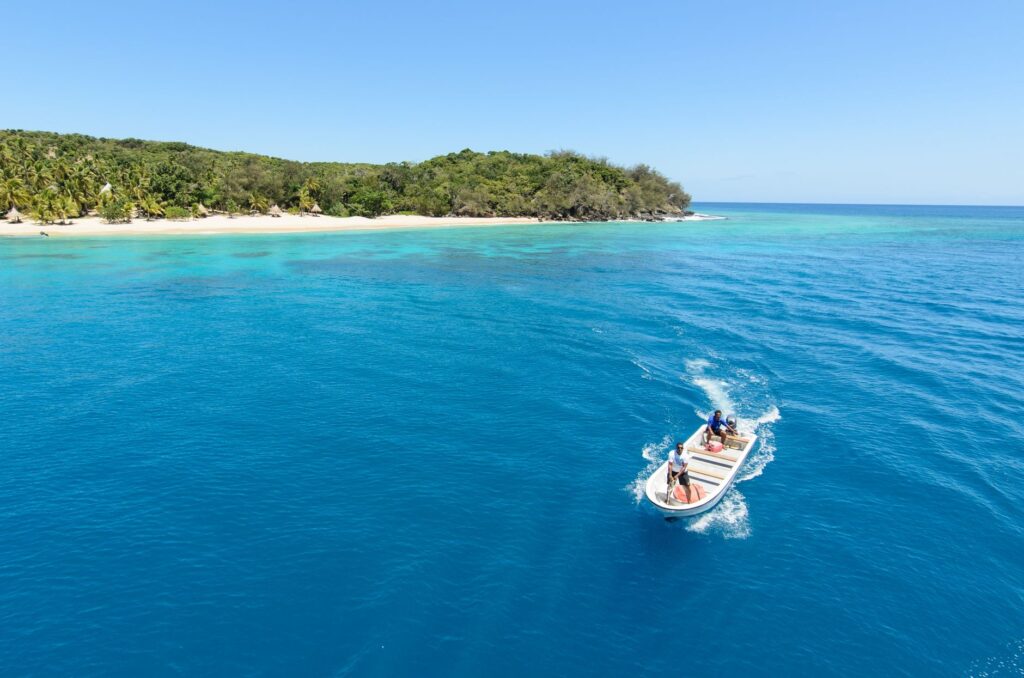
Unlike commercial deep-water ports on large continental landmasses, port infrastructure in the Lau Islands is rudimentary and, in many cases, nonexistent. Most islands lack formal docking piers. Loading and unloading operations are carried out via lighterage: the vessel drops anchor several hundred meters offshore, beyond the reef barrier, transferring cargo to small motorboats or flat-bottomed barges defying breaking surf to reach white-sand beaches or tiny concrete jetties.
This system depends critically on favorable weather conditions. An unexpected southeast gale can force a captain to suspend offloading operations and head out to open sea to prevent the vessel from striking the reef, taking with it cargo destined for an island that may have spent months awaiting essential provisions. This constant uncertainty directly affects food security and access to medicines in settlements farthest from the group.
Insular Air Transport: Grass Runways and Bush Aircraft
Given the slowness and risks of maritime transport, light aviation represents the fastest, though extremely limited, alternative for emergency connectivity. Some of the larger islands in the archipelago, such as Lakeba or Vanua Balavu, feature short grass or compacted gravel airstrips operated primarily by the national carrier Fiji Airways through its regional division.
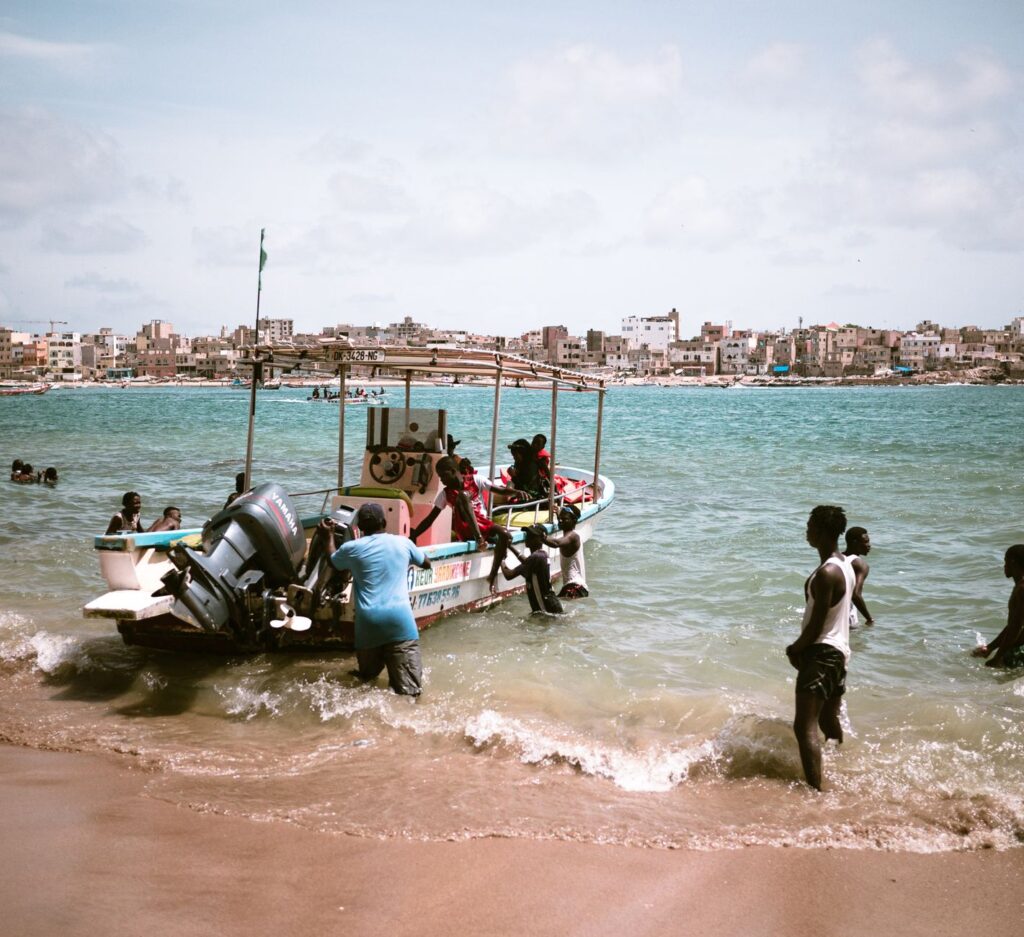
These airstrips lack complex night-beacon systems or advanced control towers; flights strictly depend on daytime visibility conditions and terrain firmness, which can become impassable after torrential rain episodes. The cargo capacity of these aircraft is drastically reduced, reserved almost entirely for priority passengers, medical personnel, and urgent mail, preventing air transport from replacing maritime cabotage in the mass supply of the islands.
Subsistence Economy Versus the Cost of Connectivity
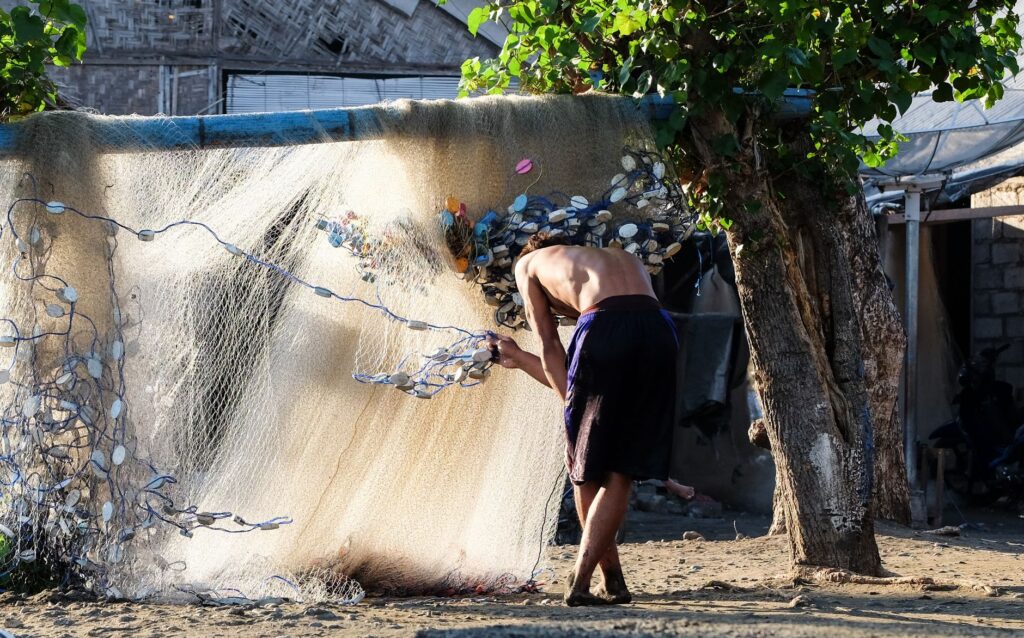
The high cost of maritime transport directly impacts the prices of essential goods in the Lau Islands. A kilo of imported rice, sugar, or flour can double or triple in price at local stores on a remote atoll compared to Suva markets. This economic distortion forces local communities to maintain a subsistence economy deeply rooted in artisanal fishing, the cultivation of cassava, taro, and coconuts, and marine foraging.
Food sovereignty in the Lau archipelago is not an ideological choice, but a direct adaptive response to the fragile and costly transport system connecting them to the rest of the world.
Fossil fuel dependency to mitigate insular energy isolation further aggravates the logistical equation. Each drum of diesel transported by cargo ships drives up the cost of local electricity generation and limits opportunities to mechanize local agricultural production or preserve fresh goods destined for export to Fiji’s urban centers.
Practical guide
How to get to the archipelago: Access to the Lau Islands is strictly through the port of Suva. There are no regular commercial air routes for independent travelers without prior coordination with specialized local operators.
Permits and authorizations: Most islands in the archipelago are under traditional communal ownership. It is a strict cultural requirement to present the traditional welcome tribute—known as Sevusevu, consisting of kava roots—to the local leader or Turaga ni Koro upon landing in any community.
Maritime travel conditions: Passenger and cargo ferries operate on highly flexible schedules subject to last-minute changes driven by sea states. It is recommended to allow a generous margin of at least two weeks in global travel planning.
Luggage and provisioning: Traveling with strictly lightweight and water-resistant luggage (such as dry bags) is essential. Conventional hotel infrastructure does not exist; accommodation is provided via community guesthouses or authorized camping.
Health and safety: The healthcare system in the outer islands is extremely basic, limited to small nursing posts with very restricted pharmaceutical supplies. Carrying a comprehensive personal first-aid kit and emergency medical evacuation insurance with oceanic coverage is mandatory.
The Amphibious Horizon of the Pacific
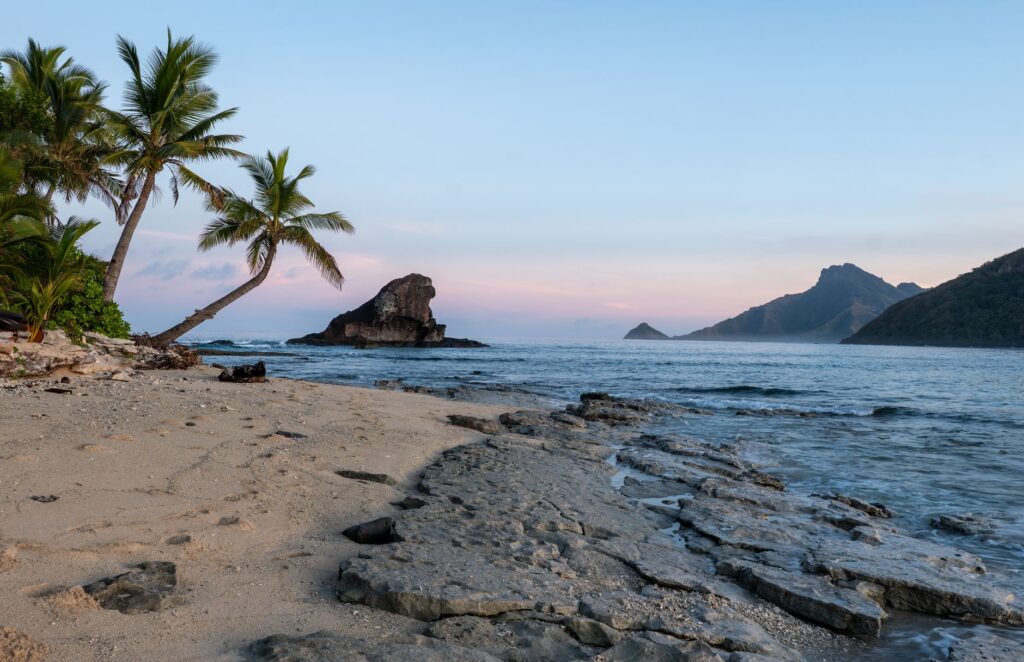
At dusk, when the volcanic silhouettes of the Lau Islands merge with the violet hue of the Koro Sea, the vulnerability and beauty of this Pacific frontier acquire an almost sacred dimension. Coastal cargo ships continue their silent route among atolls, guided by the ancestral knowledge of captains who read the secrets of treacherous reefs in the color of the water and the flight of seabirds. In a world hyper-connected by digital highways and massive air routes, the Lau archipelago remains an eloquent reminder that the true measure of human adventure and survival continues to depend on our ability to respect and understand the untamable rhythms of the ocean.