
Goldsmiths of Stone and Fire
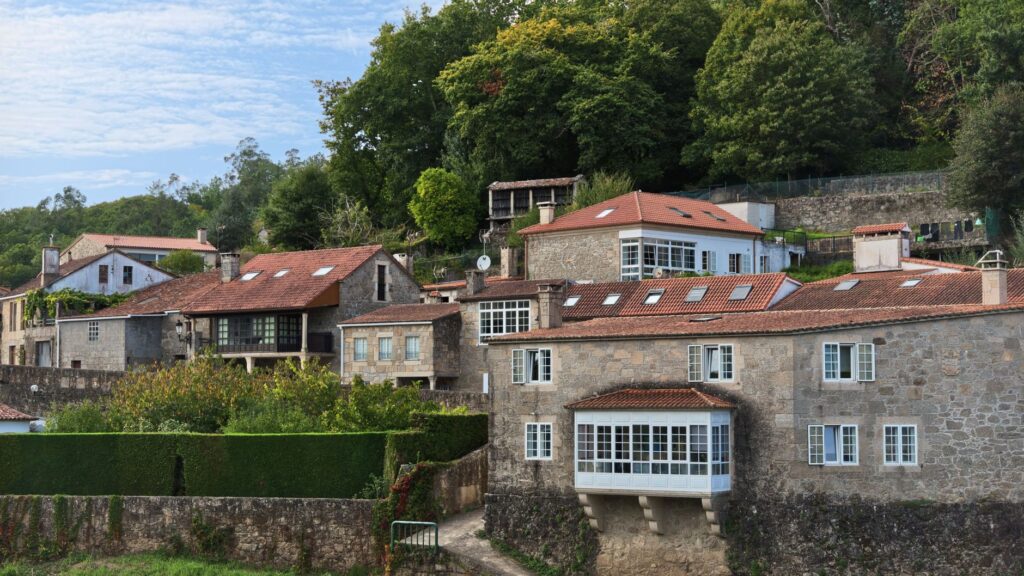
In the stony labyrinth of Ourense’s historic quarter, where the heat of thermal springs seems to exhale a constant vapor over granite alleys, an ancient pulse persists, defying the dizzying cadence of the contemporary world. Within the city’s traditional workshops, situated just a few meters from the Cathedral of San Martiño, time is measured not in seconds, but in millimeters of shaved silver, the precise rotation of a compass over gold sheets, and the thirsty crackle of charcoal responding to the blowpipe’s breath. Here, sacred and author goldsmithing is not merely an ornamental trade; it constitutes a form of material resistance that connects directly with the Celtic, Romanesque, and Baroque roots of the northwestern Iberian Peninsula.
Ourense’s urban geography has historically been marked by the coexistence of guilds and brotherhoods that found in the relative isolation of Galician valleys a propitious refuge for artisanal specialization. While other major European cities prematurely industrialized their production processes, Ourense workshops maintained an almost monastic fidelity to manual methods of lost-wax casting, pitch-chasing, and freehand chiseling. This persistence does not stem from a nostalgic or picturesque attitude, but from the deep conviction that certain expressive nuances can only be extracted from metal through the direct friction of human hands upon inert matter.
The Alchemy of the Workshop: Tools and Metals
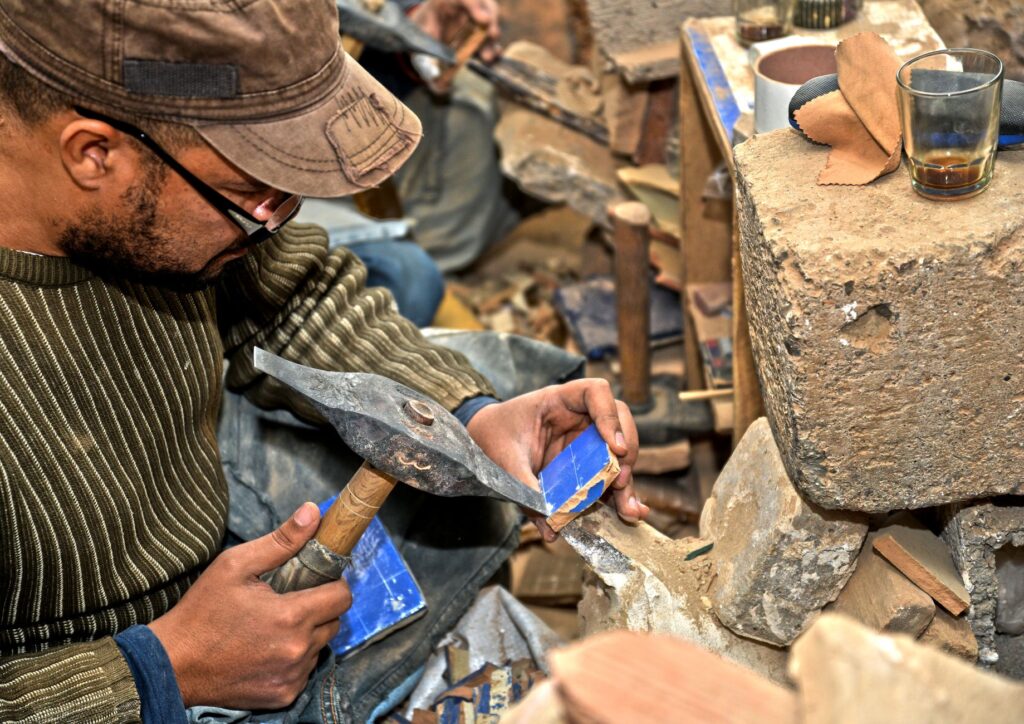
Crossing the threshold of any of these studios, visitors step into a unique sensory ecosystem where the pungent aroma of pickling acids mingles with the dense sweetness of beeswax and the cold perfume of polished metal. Across workbenches, traditionally known as lathes or burin desks, lie rows of tools that seem drawn from a medieval alchemy treatise: hardened steel stakes, ball-peen hammers with handles worn by decades of friction, fine-cut files, and agate burnishers capable of extracting a mirror finish from the roughest surface. Each instrument bears a biography of use, conforming millimetrically to the anatomy of the hand that wields it.
Metal is not a docile territory; it is a noble adversary that demands constant negotiation, infinite patience, and profound respect for its fatigue points.
The creation process of a unique piece always begins with the alloy. Master goldsmiths prepare ingots by combining exact proportions of fine silver and copper, or assay gold, adjusting the material’s hardness depending on whether it will undergo deep drawing or extremely delicate filigree work. The manual rolling mill, a cast-iron frame equipped with heavy steel rollers, is operated via a crank that requires both physical dexterity and clinical hearing: the dull sound of compressing metal tells the artisan whether the tension is homogeneous or if there is a risk of invisible micro-fissures that would ruin hours of subsequent labor.
The Language of the Chisel: Relief and Volume
Once the sheet reaches the desired millimetric thickness, the design springs to life through chasing and repoussé. This procedure demands absolute mastery of mental tridimensionality. The artisan fixes the metal plate onto a semi-elastic base composed of Spanish pitch, tar, and brick dust—a dense paste that absorbs the force of blows and allows the metal to yield without breaking. Using a set of hundreds of chisels with varied geometric shapes—stamps, grainers, nail punches, and tracers—the goldsmith pushes the metal from the reverse side to create the primary volumes and subsequently outlines details from the obverse, endowing the surface with textures imitating bird plumage, fish scales, or the impossible folds of liturgical vestments.
This work requires hours of absolute silence within the studio, interrupted only by the rhythmic tapping of the hammer against the chisel’s steel. The artisan’s eyes, frequently aided by high-magnification loupes, scrutinize every tenth of a millimeter in search of perfect tension. It is in this phase that the author’s personal imprint is most clearly manifested; two goldsmiths starting from the same flat plane and using identical tools will obtain radically different results, governed by the subtlety of their pulse and the memory accumulated in their joints. It is a calligraphy executed in noble metals that transcends mere utilitarian function to become sculptural testimony.
Fire and Patina: The Secret of the Finish
Mastery of fire represents another technical pinnacle of Ourense goldsmithing. Annealing—the operation whereby the piece is heated to a cherry-red tone to relieve internal stresses accumulated during rolling and hammering—is a maneuver of millimetric risk. Excessive temperature can melt the alloy in fractions of a second, destroying a piece requiring weeks of effort. The gas blowtorch, handled with a surgeon’s precision, bathes the metal in a luminous dance before plunging it into a bath of diluted sulfuric acid—the pickle—which restores gold and silver to their pristine brilliance.
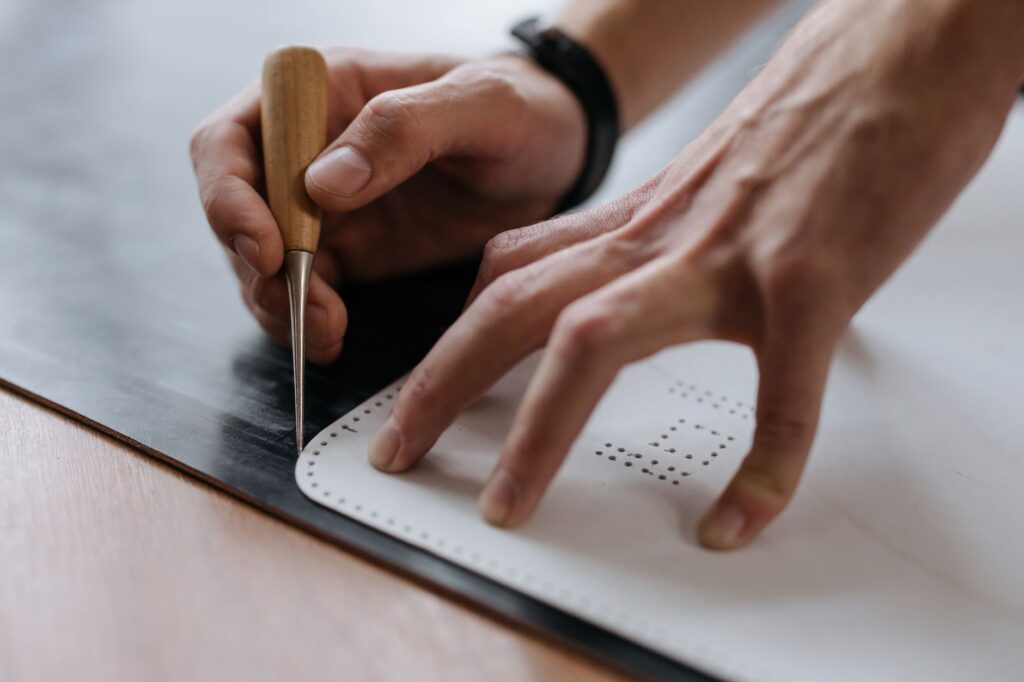
However, the blinding shine of metal straight from the acid is rarely the work’s final destination. Master goldsmiths excel in the art of patina, a controlled chemical process that artificially accelerates surface aging to enhance contrasts and confer three-dimensional visual depth. Through the application of specific sulfides and acids, followed by gentle buffing with pumice stone and natural oils on high-relief areas, the object is made to appear as though recovered from an archaeological excavation or preserved for centuries in an abbey treasury. It is the alchemy of time simulated through chemistry and touch.
Contemporary Challenges of the Traditional Workshop
On the threshold of the 21st century, Ourense’s workshops face a complex crossroads. On one hand, global market pressure and the proliferation of mass-cast pieces via zamak injection or resins with galvanic baths threaten to devalue public perception of artisanal work. On the other hand, a shortage of generational succession jeopardizes the survival of knowledge historically transmitted orally and directly from master to apprentice, without manuals or intermediary academies.
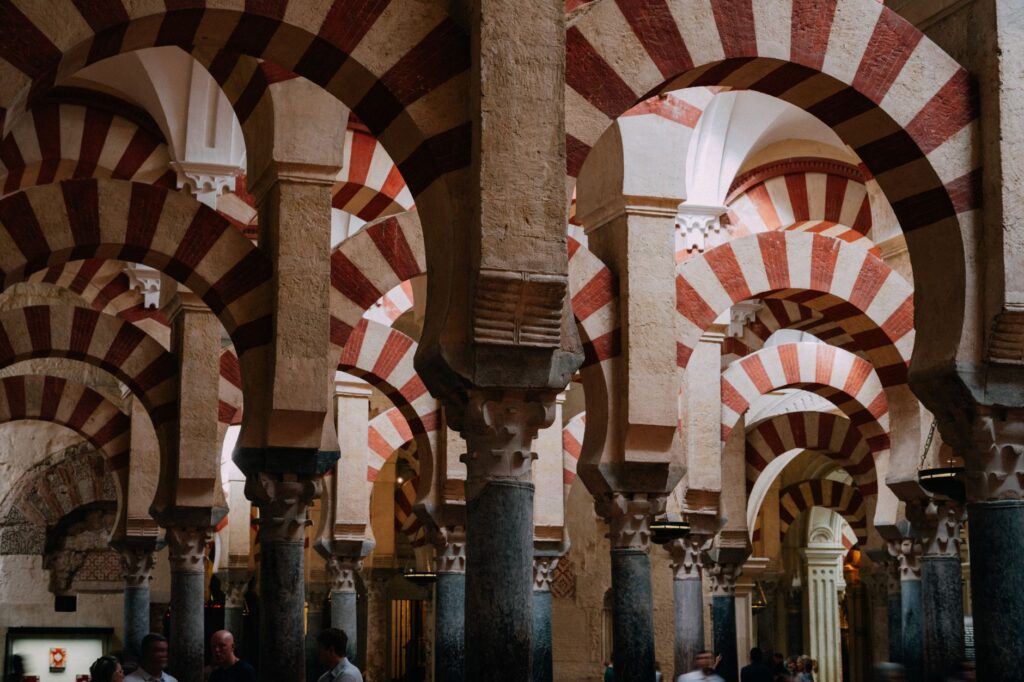
Facing this panorama, a new generation of creators trained in local art schools is reinterpreting traditional codes. Without abandoning the age-old techniques of chisel and burin, these young goldsmiths collaborate with contemporary designers, architects, and visual artists to transfer the precision of sacred metal to author jewelry, small-format sculpture, and interior design elements. Modernity is not opposed to tradition when both share rigor in the process and honesty in material usage. This symbiosis enables Galician workshops to continue receiving commissions from cathedrals, museums, and international collectors seeking excellence unattainable by industrial production.
Practical guide
Planning a visit to the goldsmith workshops in Ourense requires understanding the unhurried rhythms of a city where artisanal labor is not conceived as mass tourism entertainment, but as a living, daily activity. Most historic workshops are concentrated in the old quarter, on streets such as Lamas de Prado, San Miguel, and around Praza Mayor.
- How to get there: Ourense features excellent high-speed railway (AVE) connections from Madrid, Galicia, and northern Spain. The intermodal station is a fifteen-minute walk from the historic center. If traveling by private vehicle, parking in peripheral lots is recommended, as access to the old town is restricted to residents.
- Best time to visit: Spring months (May to June) and autumn (September to October) offer optimal temperatures for walking the city and enjoying open-air thermal baths without crowds.
- Workshop access: Except for select spaces operating as gallery-shops with regular commercial hours, most goldsmith workshops are active workspaces. Scheduling an appointment in advance through local artisan associations or direct contact is recommended to avoid interfering with delicate production phases.
- Workshop etiquette: Upon crossing a workshop’s threshold, keep mobile phones silenced, avoid touching tools or work-in-progress pieces without express authorization from the master artisan, and respect safety zones around torches and acid vats.
- Purchases and commissions: Artisanal goldsmith pieces require extended execution times. If you wish to acquire a work or commission a customized piece, note that delivery times can range from several weeks to months depending on design complexity.
The Echo of Metal in Galician Memory
At dusk, when the stone of Ourense Cathedral adopts ochre and toasted tones under the last rays of Atlantic sunlight, the city’s hustle quiets down and workshops gradually extinguish their torches. A floating sense of permanence then lingers in the air, the silent certainty that in the hands of these artisans rests an invisible thread connecting the present with generations who sculpted the first torcs and chalices of deep Galicia. Goldsmithing here is not merely a noble trade; it is the very breath of metal, tangible proof that beauty, when cultivated with patience and rigor, can survive the inexorable wear of epochs.