
Origins and Geography of Ancient Wood in Baeza
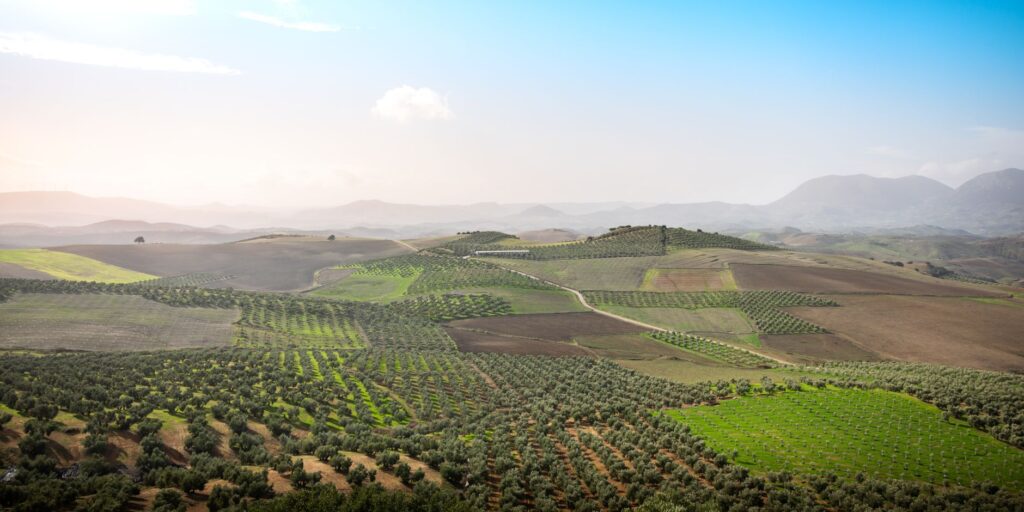
In the heart of Jaén province, where the sea of olive groves stretches out to merge with the horizon of the rolling countryside, the Renaissance stone of Baeza has conversed for centuries with a raw material just as living and persistent: olive wood. This tree, a silent witness to invasions, land grants, and eras of agricultural splendor, offers a dense, capricious, and deeply contrasted heartwood that local artisans have transformed into an object of functional worship. Unlike softer or more homogenous woods, ancient olive timber demands a reverent respect; each knot tells of a drought, and every dark grain traces the subterranean course of a forgotten spring.
The traditional workshops of Baeza sit quietly in the immediate vicinity of the historic center, sheltered by the murmur of convents and plateresque palaces. Here, far from industrial timber processing, time is measured by the natural seasoning of the logs, a process that can stretch across years before the steel of the gouge dares to touch the surface. The urban geography of the city, with its cobbled alleys and secluded squares, acts as a natural acoustic insulator that fosters the absolute concentration required by hand carving.
The Anatomy of the Olive Tree: Hardness and Vegetal Caprice
Working with olive wood is not a conventional task for just any cabinetmaker. Its timber is characterized by a light sapwood and heartwood patterned in tones ranging from golden amber to dark chestnut, almost black, crossed by sinuous lines that draw abstract landscapes. This aesthetic complexity entails severe technical difficulty: the grain, twisted by slow growth beneath the unforgiving Andalusian sun, presents internal stresses that can fracture the piece if the carver fails to anticipate the material’s reaction upon being released from its natural tension.
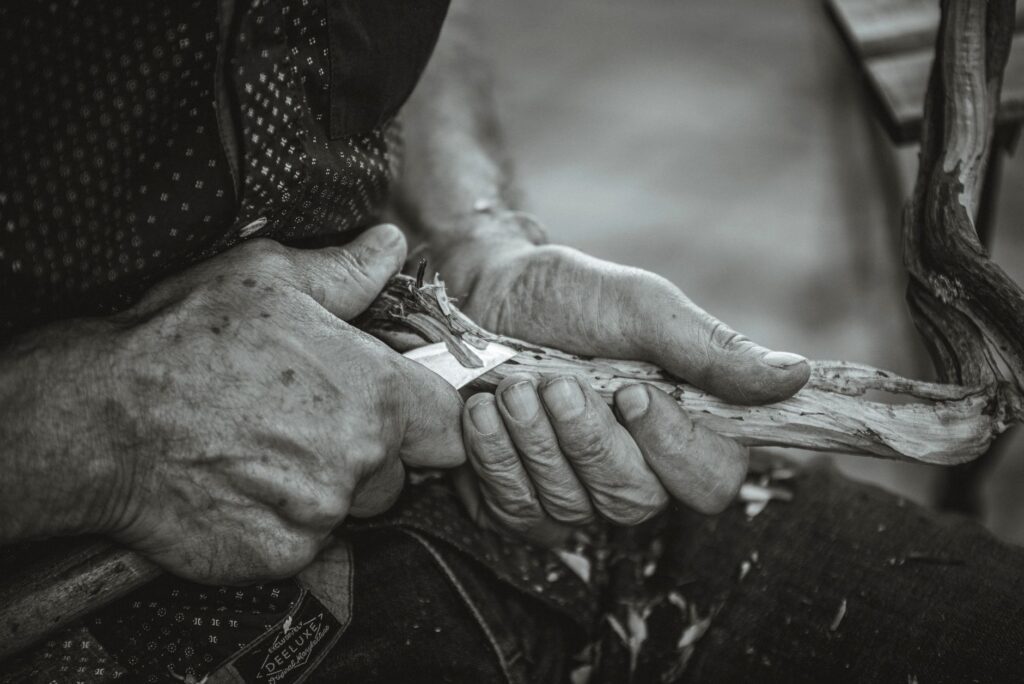
The master artisans of Baeza personally select each piece in the region’s estates, prioritizing century-old specimens that had to be replaced due to old age or declining agricultural yield. This spontaneous circular economy turns every utensil, low relief, or sculpture into an exercise in botanical memory. As an old local guild saying goes, olive wood is never dominated; one negotiates with it strike by strike, listening to the subtle creak that warns when the tool is getting too close to a rebellious fiber.
The Workshop Arsenal: From Forged Steel to Sharpening Stone
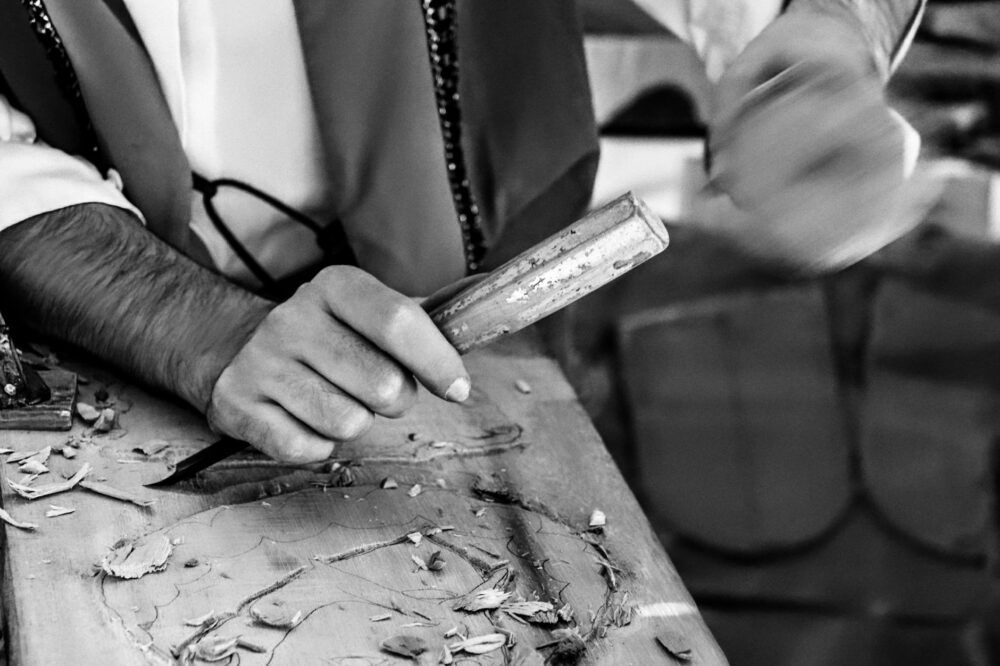
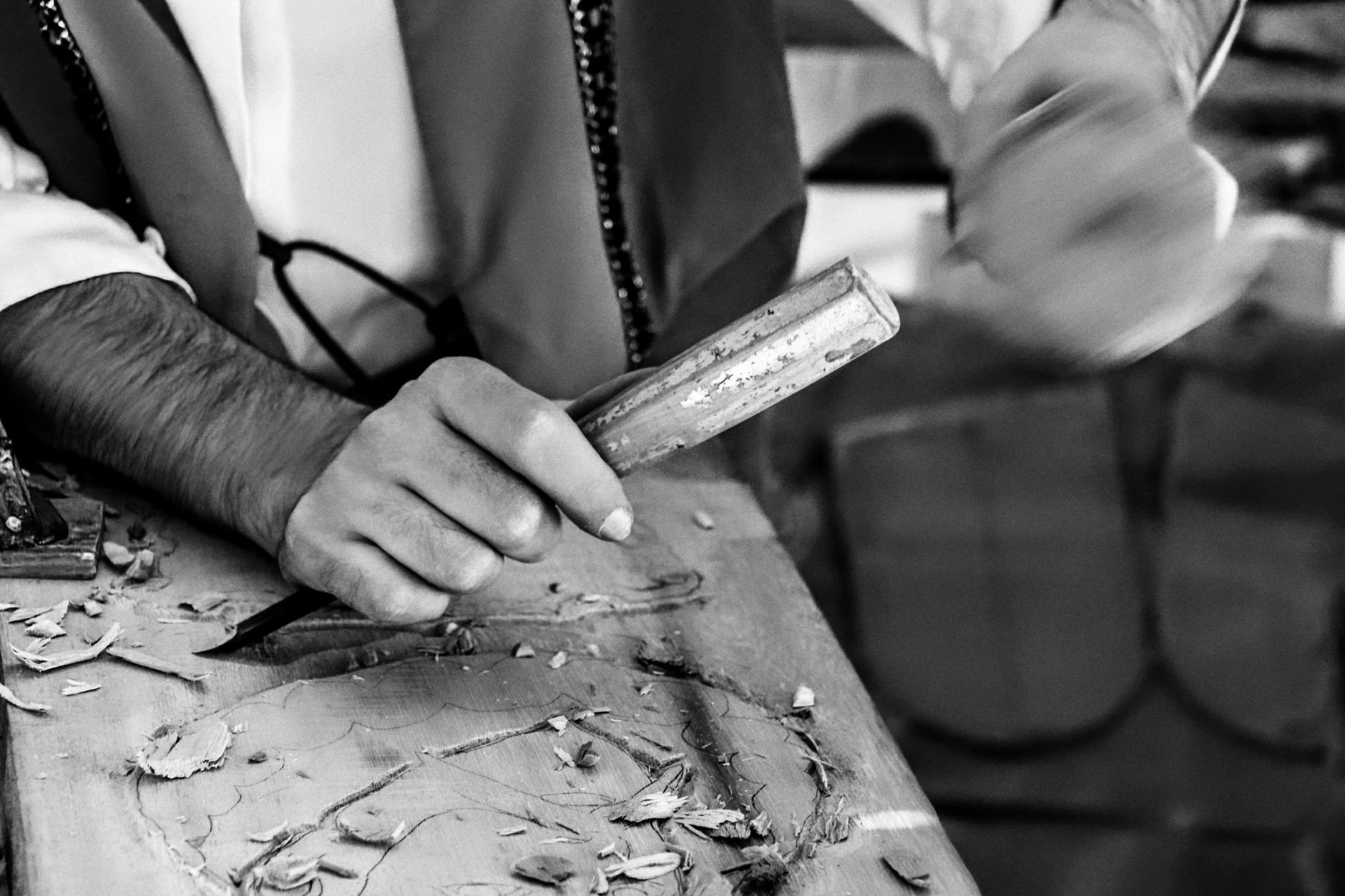
The arsenal of a Baeza carver is a catalog of surgical precision and endurance. Hollow gouges, flat-profile chisels, burins, and parting tools are often inherited implements, modified over decades in local blacksmith shops to adapt to the extreme density of olive wood. The edge of these tools must be kept immaculate; a slightly nicked blade tears the fiber instead of cutting it, ruining weeks of meticulous work on a unique piece.
Steel only obeys when pulse and patience align with the memory of the tree; rushing is breaking the silent pact with the forest.
Before beginning any workday, the workshop routine starts with the ritual of the sharpening stone and the leather strop. The masters spend long minutes sliding the steel with precise circular motions, testing the edge against the thumbnail. This obsessive dedication to tool maintenance reflects a philosophy where means and end share identical artistic dignity. No numerical control machine can replicate the subtle relief left by a freehand sharpened bevel upon the oily surface of the heartwood.
The Creation Process: From Sketch to Final Polish
The gestation of a work in the workshops of Baeza follows an immutable protocol beginning on brown craft paper. Geometric designs, often inspired by the Mudejar artesonado ceilings of the cathedral or native flora, are transferred to the wood via tracing or direct incisions with a drypoint. From there, roughing-out work eliminates excess volume through deliberate strikes of a wooden mallet on the back of the gouge.
As the form emerges, the pace of work changes radically. The mallet yields its prominence to manual pressure, where the palm of the hand pushes the tool with millimetric subtlety. This is the modeling phase, where volumes capture chiaroscuro. Finally, the process culminates with progressive sanding ranging from medium grit to the absolute fineness of felt, sealing the pores with pure extra virgin olive oil or natural beeswax, which enhances the dramatic contrast of the grains without altering the warm, organic feel of the wood.
Tradition and Generational Turnover in the Digital Age
The future of this ancient trade in Baeza walks a tightrope between cultural survival and the pressure of the global market for cheap souvenirs mass-produced from low-quality Asian woods. The few workshops holding out in the city combine institutional commission work—such as liturgical pulpits or marquetry elements for heritage restorations—with the creation of contemporary design pieces that attract a cultured, demanding traveler.
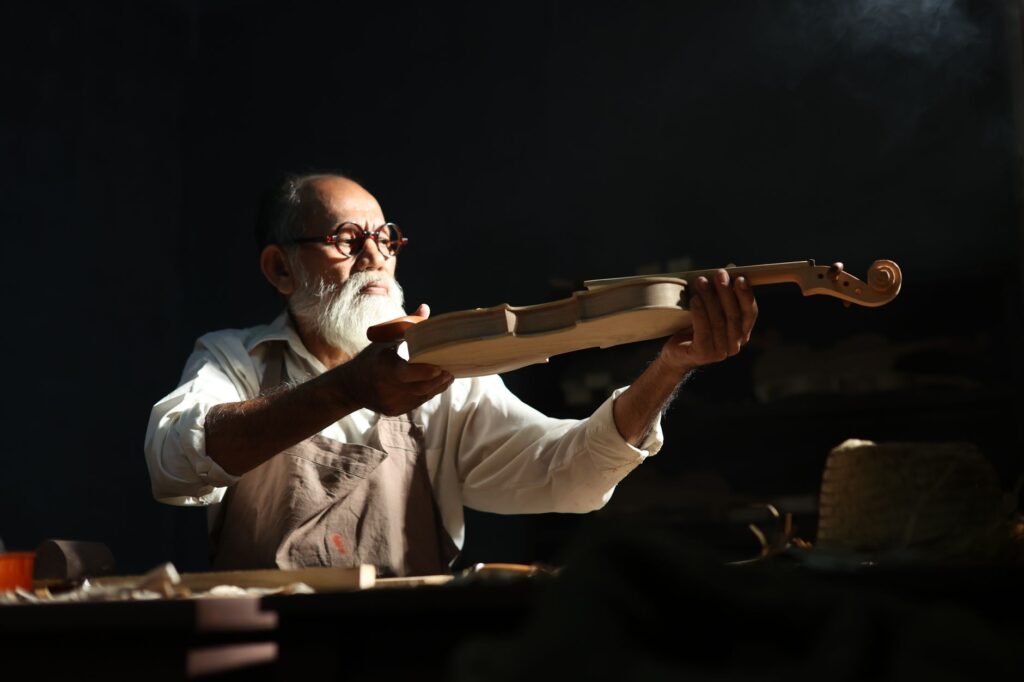
However, generational turnover remains the most complex challenge. Young people are scarcely drawn to a discipline demanding years of silent apprenticeship and modest initial economic compensation. Faced with this landscape, some local foundations and the regional art school itself have launched introductory training workshops, attempting to inoculate the virus of vocation into new cohorts of creators who understand the incalculable value of keeping alive the hands that carve the identity of their land.
The Invisible Landscape: The Imprint of the Olive Grove in Jaén’s Culture
It would be a mistake to consider olive wood carving in Baeza as an isolated artistic activity; it is, in reality, the aesthetic reflection of an entire socioeconomic and cultural ecosystem. The olive grove is not merely the economic sustenance of the province, but the mold shaping the sober, patient, and resilient character of its inhabitants. Each piece emerging from these workshops encapsulates the zenith light of Jaén’s summer and the morning moisture of winter fogs over the Guadalquivir Valley.
Carving the wood of the ancient olive tree is an act of domestic archaeology; we rescue from fire and abandonment the indomitable beauty of a landscape that outlives us.
Visitors who step into these studios discover that true contemporary luxury lies in slowness and in the perfect imperfection of the handmade. In an era dominated by planned obsolescence and digital ephemera, owning a bowl, a spoon, or a small sculpture of Baeza olive wood is equivalent to treasuring a tangible fragment of the geological and human history of Andalusia.
Practical guide
How to get there: Baeza lacks its own railway station; the best option is to take a train to the Linares-Baeza station and catch a direct regional bus connection (approximately 20 minutes). By private vehicle, the Andalusian Highway (A-4) connects directly to the A-316 toward the region.
When to go: Spring (from April to June) and autumn (from October to November) offer optimal temperatures for touring the historic center on foot and enjoying the studios without extreme summer heat.
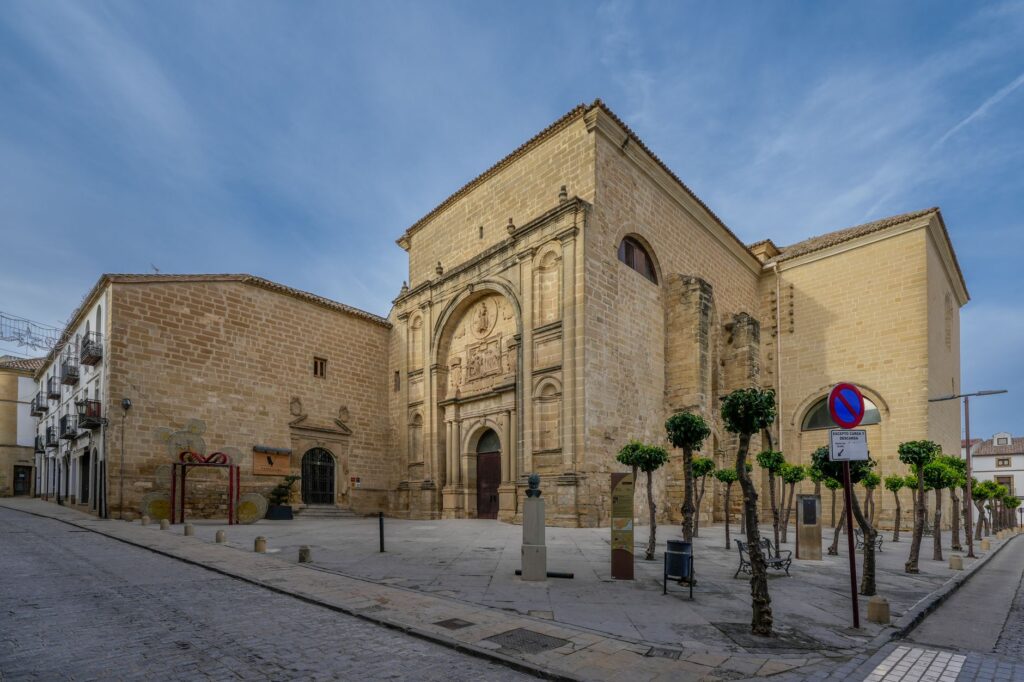
Where to find the workshops: Most traditional workshops are located on secondary streets near the Plaza del Pópulo and the Paseo de Arca del Agua. It is advisable to book an appointment in advance, as many masters work behind closed doors to avoid distractions during high-precision phases.
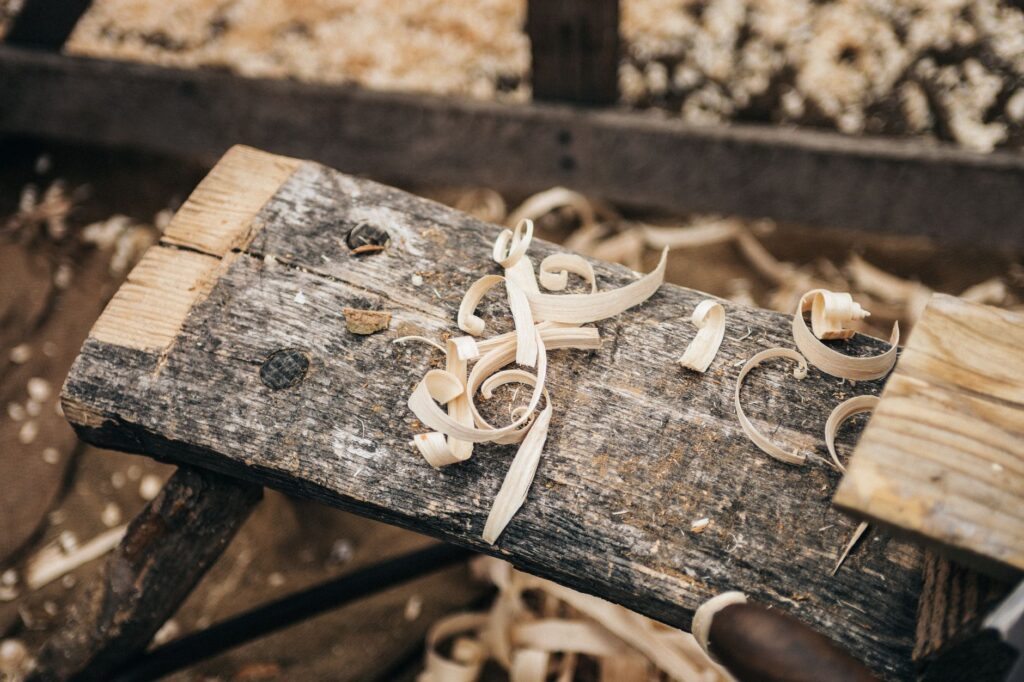
Etiquette guidelines: When visiting an active workshop, keep phones on silent, avoid touching tools without explicit permission, and respect woodchip and dust areas to prevent occupational accidents.
Accommodation and gastronomy: Opt for small hotels in rehabilitated 16th-century manor houses and do not leave the city without tasting early harvest extra virgin olive oil paired with local game and garden produce.
Epilogue: The Echo of the Blow in the Workshop’s Gloom
When evening falls over Baeza and the shadows of the Renaissance palaces stretch across the cobblestones, inside the small workshops time seems to come to a complete halt. The muffled echo of a mallet striking the wooden handle of an aged gouge still resonates. In that suspended moment, while the aroma of fresh sawdust and linseed oil permeates the room, one understands that the true wealth of these places does not lie in their golden stone monuments, but in the silent obstinacy of those who, with a piece of old olive wood between their hands, continue to sculpt the indestructible soul of a people.