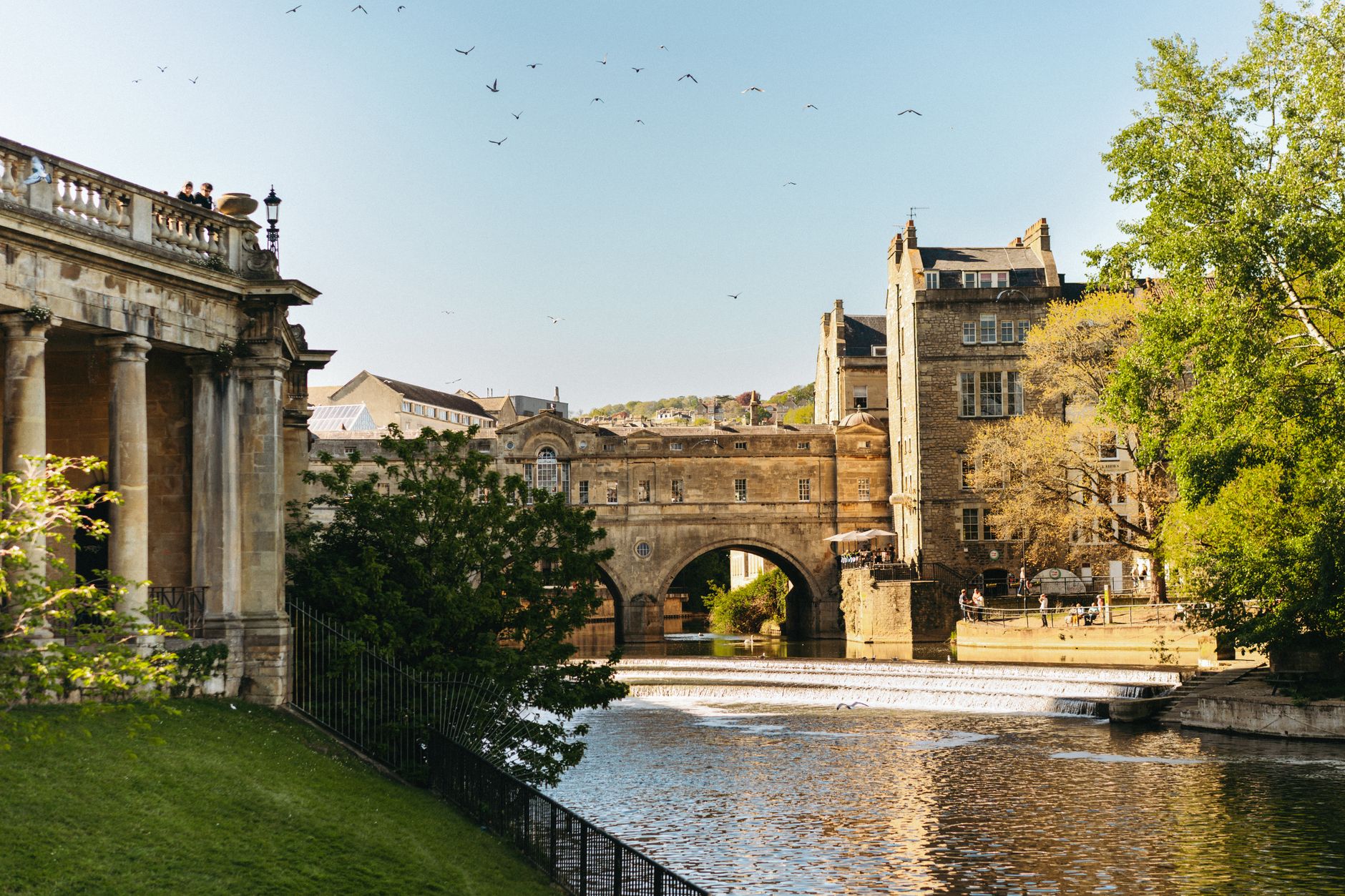

Deep within the Somerset valley, where the River Avon carves slow loops through hills of persistent verdure, a geological phenomenon defies the changing seasons: a steady flow of one million liters of hot water daily, surging at 46 degrees Celsius. This ancient heat, thrust from the Earth’s deep crust over ten millennia, not only gave name and purpose to the city of Bath but also shaped one of Europe’s most remarkable historical epicenters of well-being. Far from the stridency of modern resorts, ancient Aquae Sulis maintains an unshakeable pact between Roman engineering, the elegance of Bath stone, and a culture of rest that has evolved across centuries without ever losing its healing vocation.
The traveler arriving today in this UNESCO World Heritage jewel immediately notices that well-being here is no mere accessory, but the mortar binding architecture, history, and daily life together. The vapor rising lazily from the sacred springs wraps around golden ashlar facades, creating an atmosphere where time seems suspended. This report explores how British hydrotherapy has successfully preserved its classical legacy while embracing the contemporary demands of physical and mental equilibrium, offering a refuge where contemplation and immersion in mineral water act as antidotes against haste.
The Geology of the Miracle: Origin and Properties of Thermal Waters
To understand the soul of Bath, one must descend to its scientific foundations. The water feeding the baths does not originate from surface rivers, but from rainfall absorbed across the Mendip Hills decades earlier. This water infiltrates through geological fractures, reaching depths between 2,700 and 4,300 meters, where the Earth’s geothermal gradient heats it naturally before forcing its ascent through a network of tectonic faults.
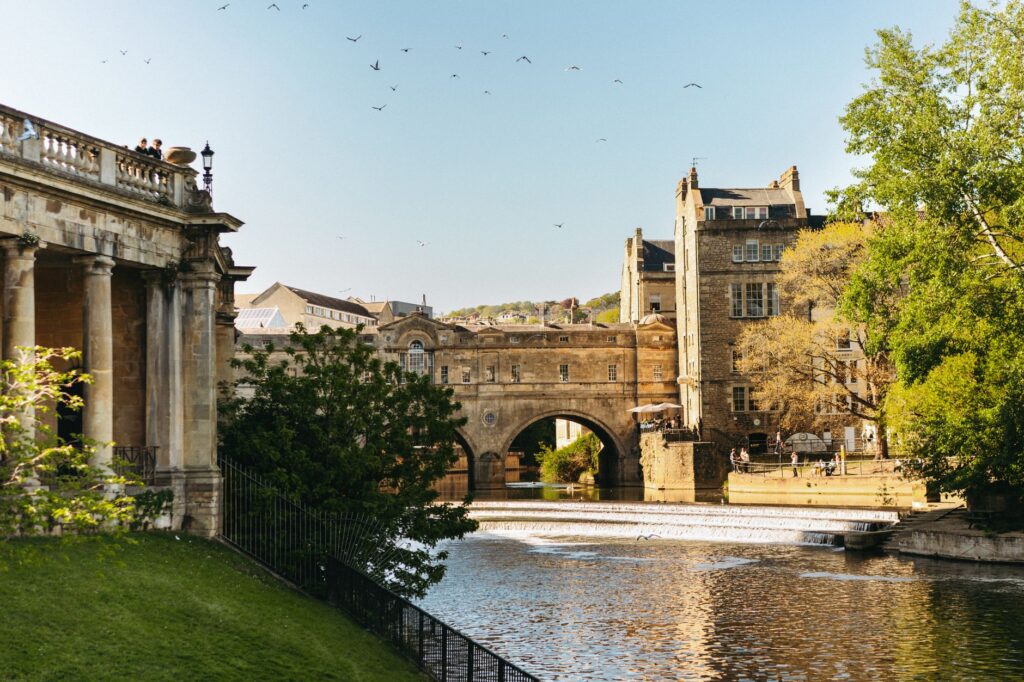
The result is a mineral cocktail unique to the British Isles. The liquid is saturated with 43 dissolved minerals, most notably sulfates, calcium, and chlorides. This composition endows the water with sedative and anti-inflammatory properties that already captivated the engineers of Roman legions in the 1st century AD. The purity and thermal consistency of the spring constitute an unrepeatable natural prodigy, a constant reminder that true disconnection requires the support of the earth’s deep rhythms.
Ashlar and Symmetry: The Georgian Footprint in the Urban Landscape
If geology provided the warmth, the 18th century bestowed upon Bath its monumental face. Under the visionary direction of architects like John Wood the Elder and his son, the city underwent a radical metamorphosis grounded in Palladianism and the extensive use of oolitic limestone quarried locally in Combe Down. This limestone, possessing a characteristic honey hue that shifts subtly with the evening light, grants the urban ensemble a stylistic unity rarely found elsewhere in Europe.
Iconic spaces like the Circus and the Royal Crescent are not mere exercises in architectural vanity, but stages designed to encourage leisurely strolls and restrained social life. Curved facades, flanked by classical columns and wrought-iron balconies, invite a deliberately slow cadence of footsteps. In this setting, the walker experiences an early form of aesthetic well-being, where visual harmony acts as a balm for the senses as effective as thermal immersion.
The Temple of Sulis Minerva: Archaeology and the Cult of the Body
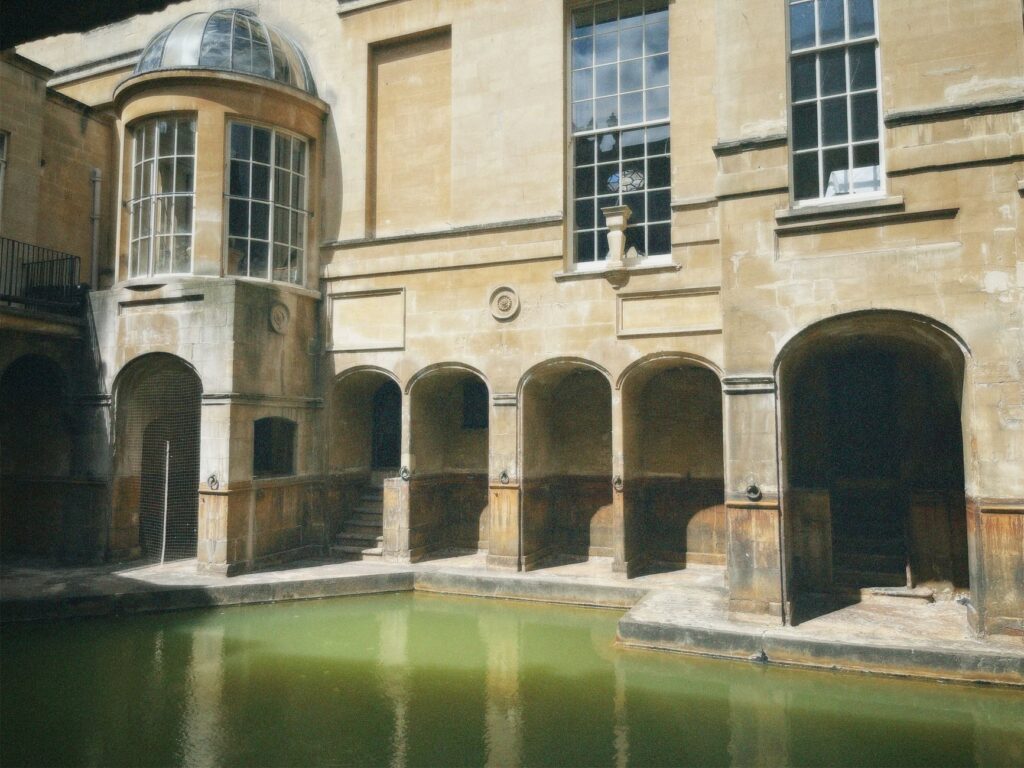
The beating heart of the city continues to pulse within the Roman Baths complex, situated upon the original water table. Here, past and present touch through steam. The Great Bath, an open-air pool framed by nineteenth-century pillars and sculptures, exhales a perpetual mist that pervades the colonnaded courtyard. This space was conceived by the Romans not merely as a hygienic hub, but as a sanctuary dedicated to the goddess Sulis Minerva, a syncretic deity blending Celtic healing wisdom with Roman acumen.
Archaeological excavations have recovered thousands of curse tablets (defixiones) cast into the waters by citizens demanding justice or healing from the divinity, proving that the pursuit of physical wellness has always been entwined with the need for spiritual peace. Respect for silence and introspection remains the unwritten rule among the stone pilasters supporting the vaulted roof of the historical caldarium.
Contemporary Wellness: From Historical Ruin to Glass-Walled Spas
Bath’s evolution into the 21st century culminated with the opening of Thermae Bath Spa, a complex designed by the Grimshaw architectural firm that allows visitors to bathe in natural thermal water outdoors for the first time in decades. Located near the ancient baths, the building marries glass, steel, and ubiquitous limestone, establishing a bold dialogue between architectural avant-garde and historical heritage.
The crown jewel of this space is the rooftop pool (along with the Cross Bath), from which bathers gaze upon the towers of Bath Abbey and the Georgian rooftops while floating in 33-degree water. The offering is rounded out by holistically inspired treatments, aromatic saunas, and relaxation rooms lined with chromotherapy. Far from turning thermal bathing into an aquatic amusement park, the facility strictly limits capacity to preserve an atmosphere of almost monastic recollection.
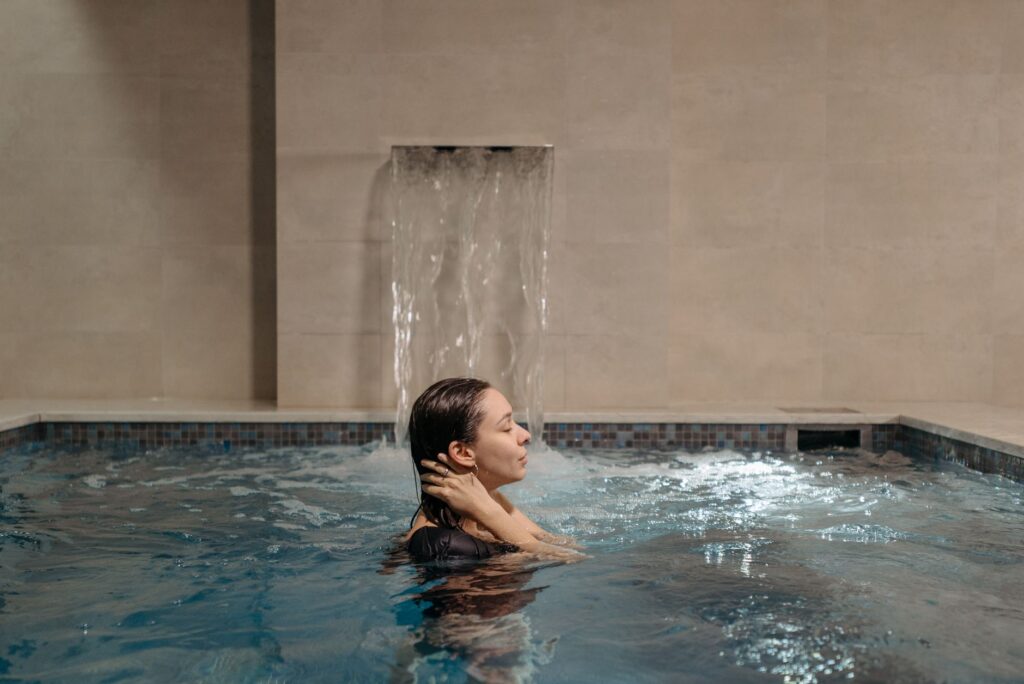
The Green Pulse: Parks, Riverbanks, and Botanical Walks
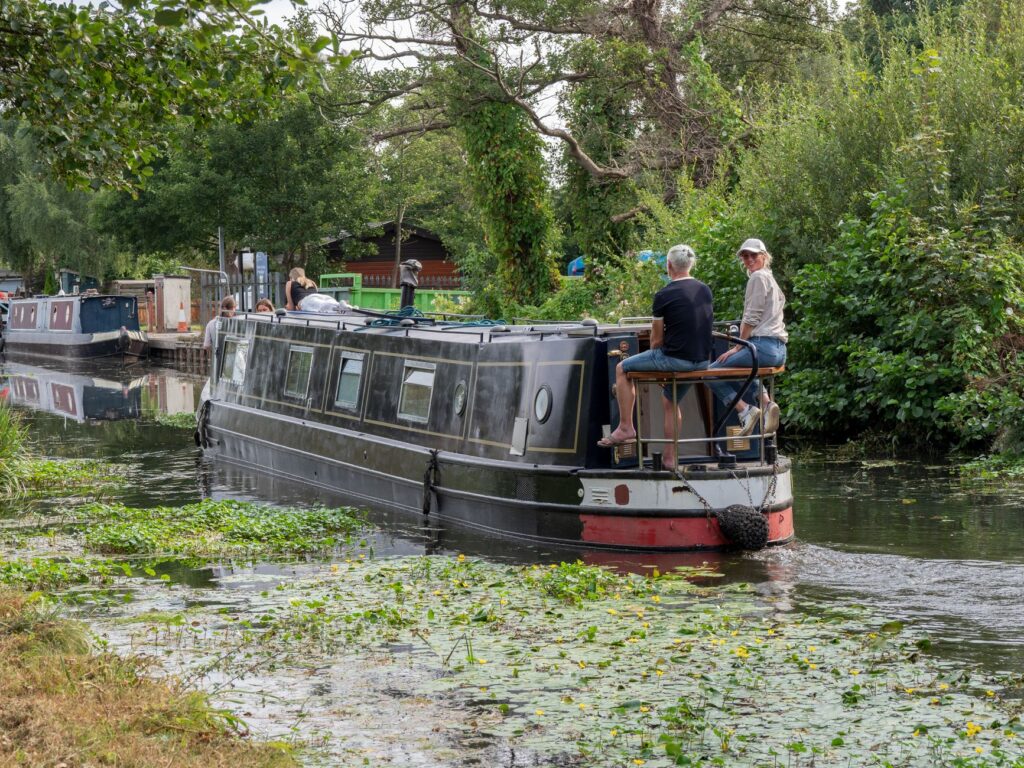
Well-being in Bath extends far beyond enclosed spaces. The city’s topography, nestled in a valley ringed by steep hills, fosters a network of pedestrian trails and public parks that connect urban bustle with wild nature within minutes. The Kennet and Avon Canal towpath, flanked by traditional narrowboats and weeping willows, offers an ecological corridor ideal for morning walks where the only sound is the lap of water and waterfowl song.
Similarly, Parade Gardens and Royal Victoria Park act as meticulously tended green lungs. These botanical spaces not only house centuries-old species but perpetuate the nineteenth-century tradition of the promenade, understood as an exercise in preventive health. Wandering aimlessly through these wooded paths resets the traveler’s natural biorhythm, drawing them away from digital stress and reconnecting them with the seasonal cycles of the British landscape.
Bath’s thermal water is not a mere recreational resource; it is a liquid archive of the earth that reminds human beings of their own fragility and profound dependence on the natural environment.
The experience concludes with a local culinary offering rooted in the farm-to-table concept, where farmers’ markets supply organic produce from the surrounding valleys. From the classic afternoon tea paired with artisan scones to light dinners centered on seasonal vegetables, Bath’s cuisine prioritizes unhurried digestion and respect for pure flavors, completing the circle of a stay designed for comprehensive regeneration.
Practical guide
How to get there: Bath boasts excellent rail connections from London Paddington station, with direct journeys taking approximately 85 minutes. Bristol International Airport lies 30 kilometers away, connected via regular express bus services.
When to go: Spring months (April to June) and autumn (September to November) offer mild temperatures ideal for walking and lower tourist crowds, allowing visitors to enjoy the baths with greater tranquility.
Where to bathe: Thermae Bath Spa is the obligatory reference for modern thermal bathing. Booking tickets several weeks in advance is strongly recommended, especially for sunset slots in the rooftop pool.
Etiquette and rules: Thermal spaces strictly prioritize silence and moderation in speaking tones. Electronic devices are prohibited in bathing areas to protect user privacy and relaxation.
Accommodation: For a complete immersion in local aesthetics, hotels housed within restored Georgian buildings in the Great Pulteney Street area offer the ideal balance of historical heritage and contemporary comfort.
Epilogue: Vapor as the Ultimate Refuge
When evening falls over Bath and cast-iron streetlamps cast an amber glow upon limestone pavements, the city recovers its most intimate pulse. In that moment, watching the vapor continue to rise from hidden underground vents equates to witnessing an ancient ritual that outlives empires and trends. Submerging oneself in these waters is not a superficial luxury, but an act of concord with oneself—a reunion with that essential pause that modern life systematically steals away. Leaving the Somerset valley, the traveler understands that Bath’s true secret lies not solely in its mineral quality, but in its unyielding capacity to teach the world the forgotten art of stopping time.