
The Track That Tames the World’s Driest Desert
Northern Chile is a territory sculpted by wind, salt, and copper ore. In this unforgiving setting, the iron track laid down in the late 19th century stands as one of the greatest milestones of South American civil engineering. The railway connection between Calama and Antofagasta was never conceived merely as a whim of industrial modernity, but rather as a vital artery designed to extract and transport mineral wealth from the heart of the mountains directly to the steamships waiting on the Pacific Ocean.
Spanning over two hundred kilometers, the railway overcomes a brutal geographical elevation change. The trains do not simply roll; they climb and descend, defying gravity through a landscape where water is exceptionally scarce and temperatures swing violently between day and night. This historic route continues to operate as both a silent witness and an active participant in the global logistics network that linked the massive Chuquicamata deposits with international shipping lanes.
Understanding this route requires looking far beyond rusted rails and modern locomotives. It demands deciphering the titanic effort of laborers who punched through solid rock using primitive tools and dynamite, braving high-altitude sickness and absolute isolation. The railway infrastructure of Chile’s northern territory is a monument to human persistence in one of the planet’s most hostile environments.
Extreme Topography: From Mineral Wealth to Sea Breeze
Departing from Calama places both the traveler and the observer on a high plateau sitting more than two thousand meters above sea level. From this starting point, the descent toward the coast is an exercise in geometric precision. The British and Chilean engineers who mapped the original route had to calculate every curve and grade with exactitude to prevent fatal derailments and ensure continuous, secure freight operations.
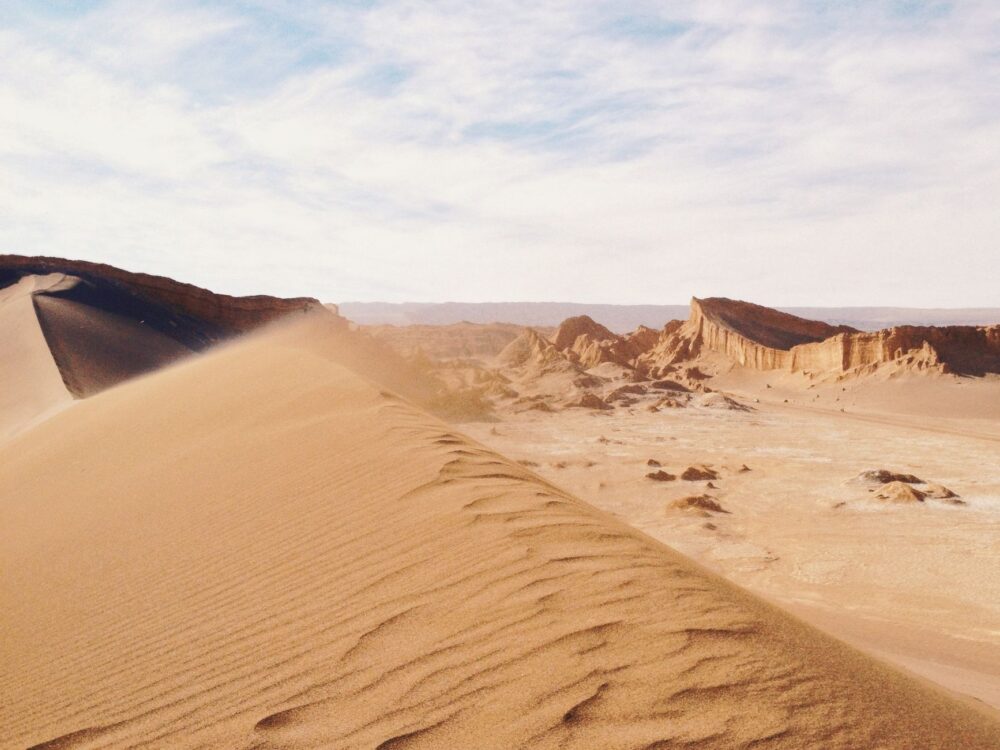
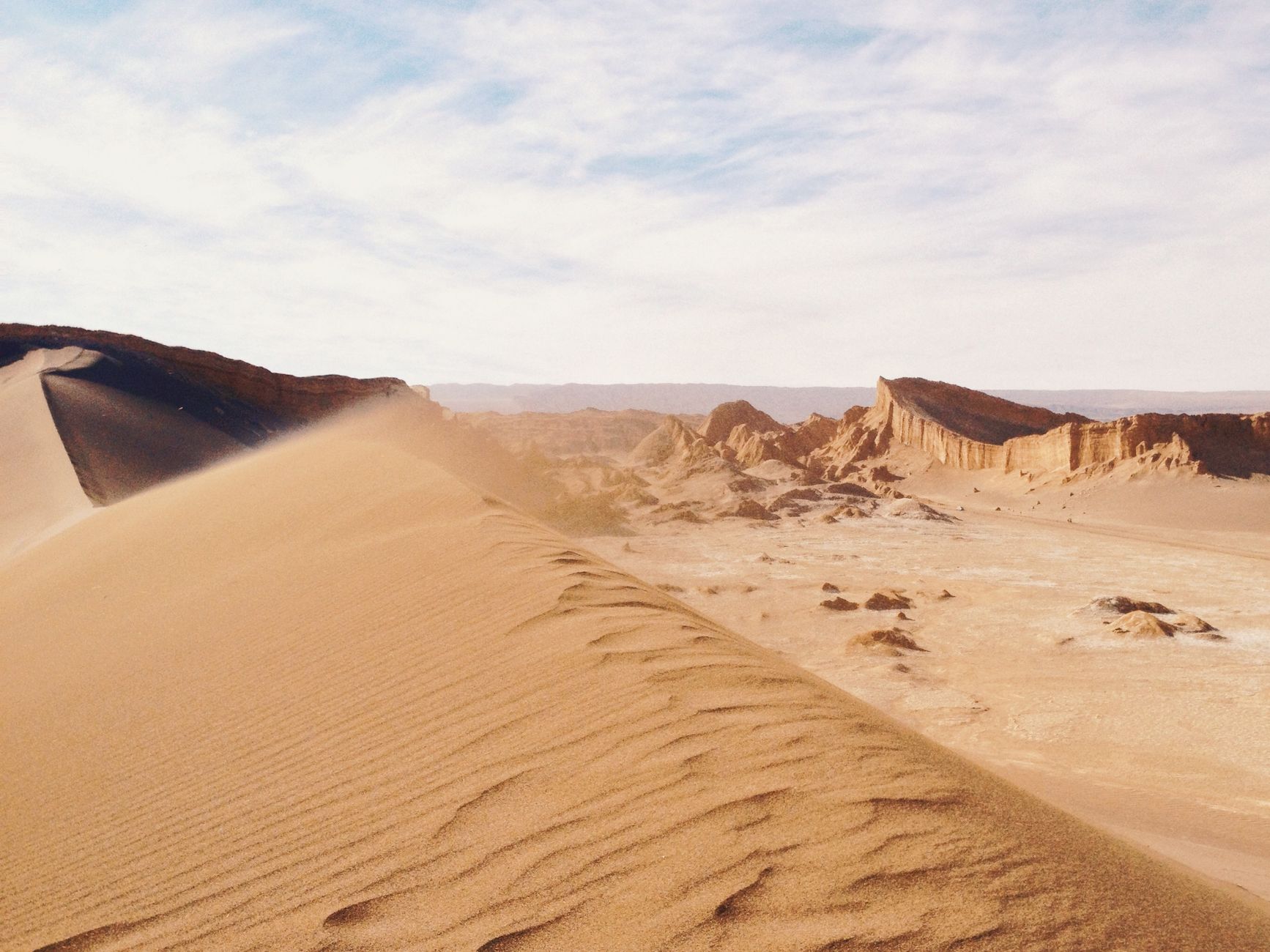
As the track winds down toward the central depression, the landscape undergoes a dramatic transformation. Rock formations and salt flats yield to the open pampa, an absolute desert where morning mists, known locally as camanchaca, provide the only visible moisture. Intermediate stations, now reduced to ghost-town vestiges, recall a prosperous past when every small settlement depended entirely on the arrival of the train.
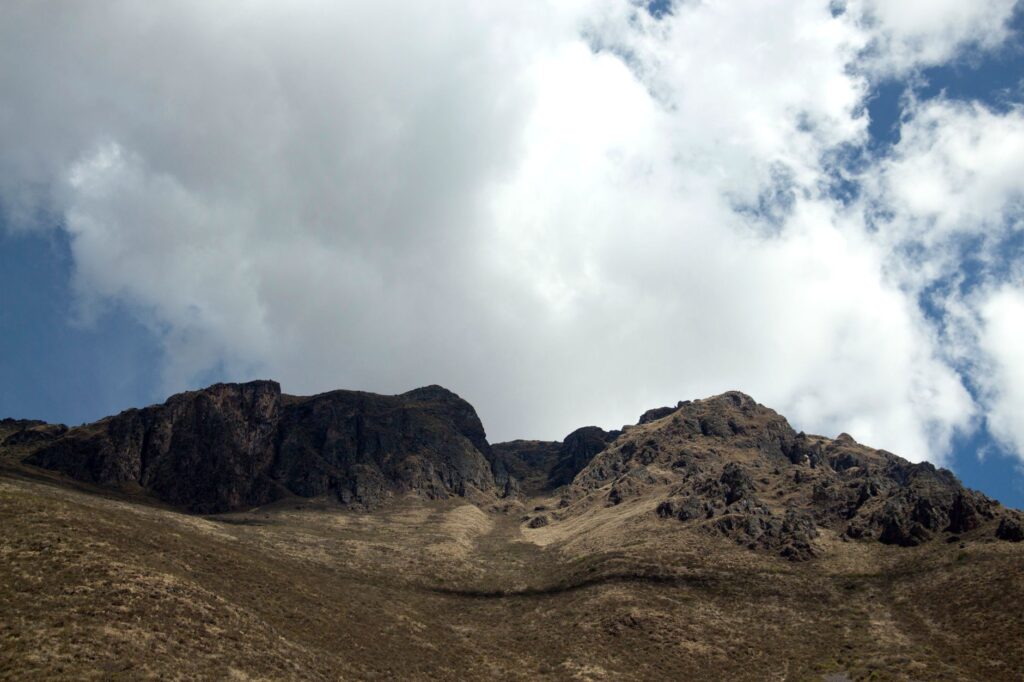
blockquote>The Atacama Desert forgives no miscalculations; every wooden sleeper along this track serves as a lesson in profound respect for a topography that relentlessly challenges human audacity.
The final stretch toward Antofagasta reveals the port’s industrial scale. Freight trains roll directly onto historic piers, where copper ore is transferred with an efficiency refined over centuries, preserving the region’s enduring export vocation.
British Engineering and South American Labor
The construction of this railway in the 19th century was defined by European technological transfer paired with the sacrifice of thousands of local workers, including Peruvians, Bolivians, and Chileans. The scarcity of potable water forced the installation of complex piping networks and pumping stations that constituted true technical feats in the middle of nowhere.
Metal bridges and viaducts, imported piece by piece from shipyards and ironworks in Glasgow and Liverpool, still stand today. Their assembly required meticulous structural calculations to support not only the weight of historic steam locomotives but also the constant vibration of today’s heavy freight trains.
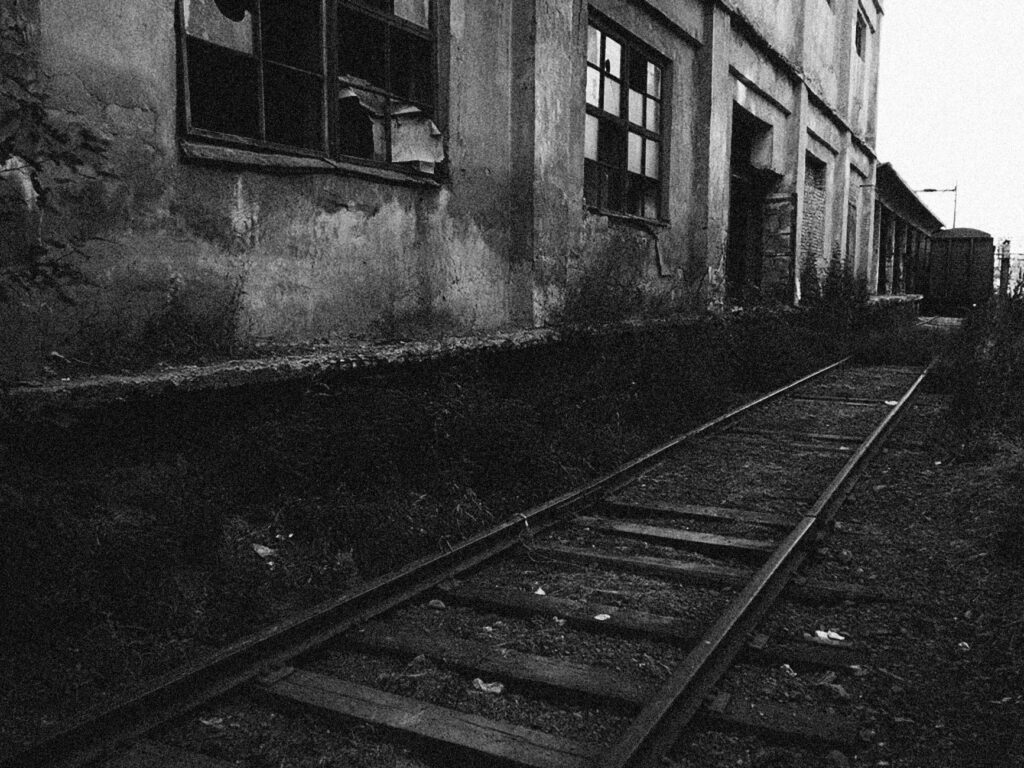
This industrial heritage is actively studied by historians and architects specializing in railway archaeology. Unlike urban transit lines, the isolation of the desert has acted as a natural preservative, safeguarding workshops, stations, and storehouses from urban corrosion and vandalism.
The Logistics Transformation of the 21st Century
Today, the railway corridor linking Calama to Antofagasta plays a strategic role in the global copper economy. Although technology has evolved radically since the steam era—incorporating high-power diesel locomotives and satellite control systems—the physical route follows precisely the same path mapped out more than a hundred and thirty years ago.
Private and state-owned mining corporations coordinate a complex logistics chain where every railcar must be optimized to maximize tonnage without compromising the integrity of the century-old infrastructure. Maintenance workshops located at both ends of the line operate around the clock, ensuring that the mineral flow never stops.
This dynamism proves that Latin American railway heritage is far more than a nostalgic relic; it remains an indispensable component of contemporary economic development and international regional competitiveness.
The Human Pulse of Forgotten Stations
Behind the cold statistics of copper tonnage lies the memory of the communities that inhabited and continue to inhabit the desert. Veteran railway workers share stories of fierce sandstorms, the profound solitude of track-switching cabins, and the unwavering solidarity demanded by life on the pampa.
Although many stations have lost their original function and residents have migrated toward major coastal cities like Antofagasta or modern mining hubs, local cemeteries and adobe foundations preserve the footprints of a society built entirely around the rhythm of the train.
Working-class memory remains alive in photographic archives and oral histories passed down through generations, serving as a reminder that every rail laid across the desert exacted sweat, tears, and profound social transformation.
Industrial Architecture Under the Atacama Sun
The route’s architectural inventory includes Oregon pine warehouses, metal water towers, and administrative housing displaying distinct Victorian influences adapted to the arid climate. Characterized by gabled roofs and wide shaded verandas, these buildings represent an unusual dialogue between British industrial aesthetics and the harsh realities of northern Chile.
Conserving these structures presents severe climatic challenges. Thermal amplitude causes constant expansion and contraction of building materials, while extreme solar radiation punishes paints and timber. Despite this, several key enclaves have been designated national monuments to halt irreversible decay.
blockquote>The architecture of this railway is a living fossil of the Industrial Revolution in Latin America, where iron and timber converse with the vastness of the desert.
Exploring these spaces allows visitors to appreciate human scale within a monumental undertaking, where every construction detail answered the imperative to make a hostile environment habitable.
Practical Travel and Railway Observation
For industrial heritage enthusiasts and travelers fascinated by railway geography, following the route via parallel highways offers a unique perspective. It is essential to understand that much of the rail line operates within restricted zones due to mining property rights, meaning observation must be conducted from authorized vantage points.
The finest panoramic views are found where the track crosses deep canyons or plunges into the nitrate pampa. Travelers are advised to plan trips using vehicles suited for rough terrain, carry abundant drinking water, and strictly obey industrial safety signage.
The experience is rounded out by a visit to the Antofagasta Railway Museum, which displays historical artifacts, original blueprints, and restored locomotives that technically explain the true magnitude of this South American engineering feat.
Practical guide
How to get there: The primary hub and starting point for logistics along the route is the city of Antofagasta, accessible via daily flights from Santiago de Chile. Calama features its own airport and lies approximately 210 kilometers inland toward the mountains.
When to travel: The autumn and spring months (March to May and September to November) offer moderate daytime temperatures and a lower probability of high-altitude Andean storms, locally known as the Bolivian winter.
Accommodation: Antofagasta provides a diverse range of international-standard hotels, while Calama offers functional lodging geared toward corporate and mining tourism.
Recommendations: Due to Calama’s high altitude and the extreme aridity of the desert, constant use of sunscreen, UV-filtering sunglasses, and rigorous hydration throughout the journey are mandatory.
Visual Epilogue on the Arid Coast
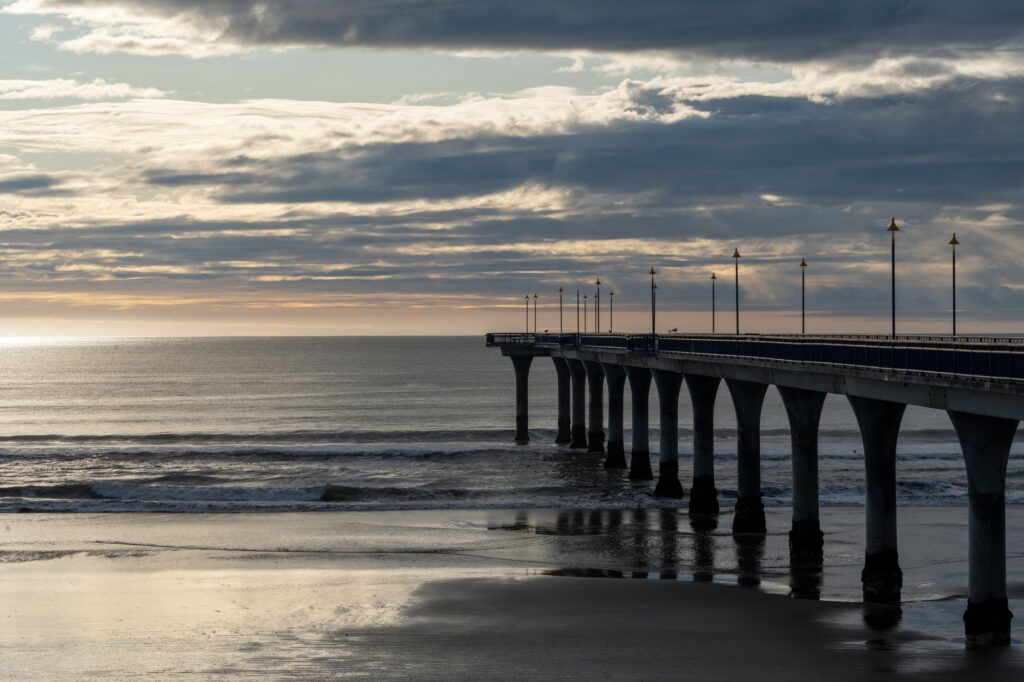
As the sun begins to sink over the Pacific Ocean in Antofagasta, the final rays illuminate the metal structures of the loading pier and the tracks that quietly end at the edge of the sea. It serves as the perfect conclusion to a journey through time and space, where engineering and nature merge into an horizon of infinite sobriety.
In that fleeting moment, the railway ceases to be a simple transport line and transforms into a metaphor for human endeavor—an iron scar cutting across the desert to unite the hidden wealth of the cordillera with the vastness of the world.