
The alpine spring is an exercise in chromatic patience and resistance. While the valleys of Salzburg began to stir under a cold, translucent light, an international production crew touched down in Austria with a mission as precise as it was demanding: to capture the heavy silhouettes, virgin wool coats, and rich velvets of the autumn-winter collections. Far from the aseptic studios of Paris or Milan, the magazine chose the raw, untamed nature of the Salzkammergut lakes, a region where geography itself dictates the shutter speed and challenges the relentless pace of the fashion industry.
This report documents the symbolic friction between urban elegance and the alpine wilderness. Over five grueling days, stylists, photographers, assistants, and models choreographed a logistical ballet where every double-breasted coat and leather boot had to withstand the morning moisture of Lake Hallstatt and the biting breeze of the limestone massifs. Fashion, understood here not as a static display, but as a living organism reacting to its surroundings, found in the Austrian monumental landscape its finest and most unforgiving backdrop.
The Logistics of Cold: When Luggage Exceeds Pavement Limits
Transporting forty trunks of haute couture along secondary roads covered in damp gravel requires far more than a simple roadmap. The operational base was set in a restored former coaching inn on the shores of Lake Wolfgang, a strategic enclave providing access both to dense coniferous forests and high-altitude viewpoints. Meticulous coordination between local teams and editors dispatched from Madrid prevented sudden light shifts—exceptionally brief during the transition months—from catching the crew mid-dress change in the middle of an alpine meadow.
Hauling autonomous lighting kits and clothing racks demanded all-terrain vehicles and a fleet of vans equipped for persistent snow in the upper elevations. Each dawn began at five in the morning with a review of the weather forecast: fine rain and low fog, far from being obstacles, became the primary aesthetic allies in pursuing a desaturated palette that enhanced the season’s earthy tones and deep burgundies.
Natural Scenography: Water as a Mirror for High Fashion
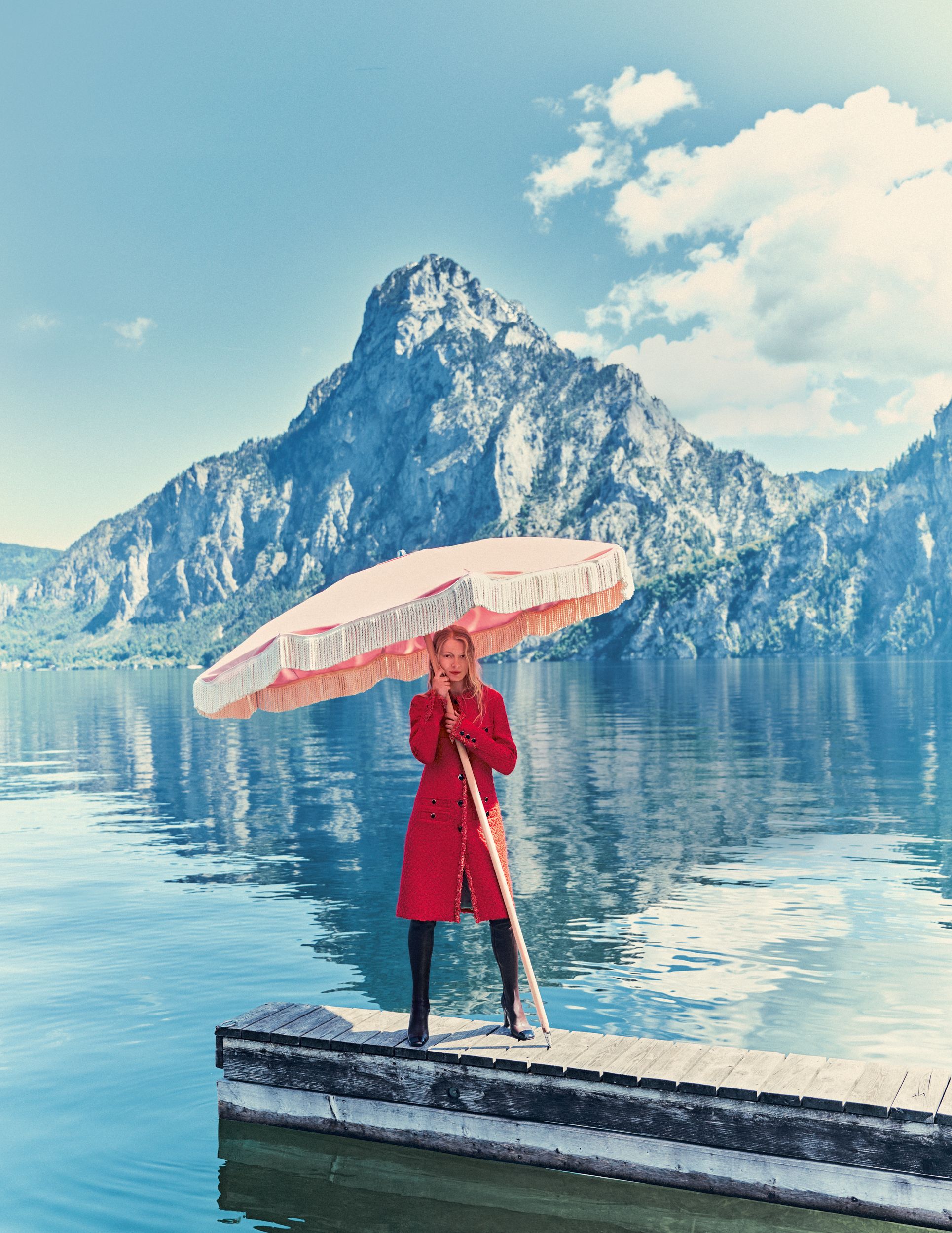
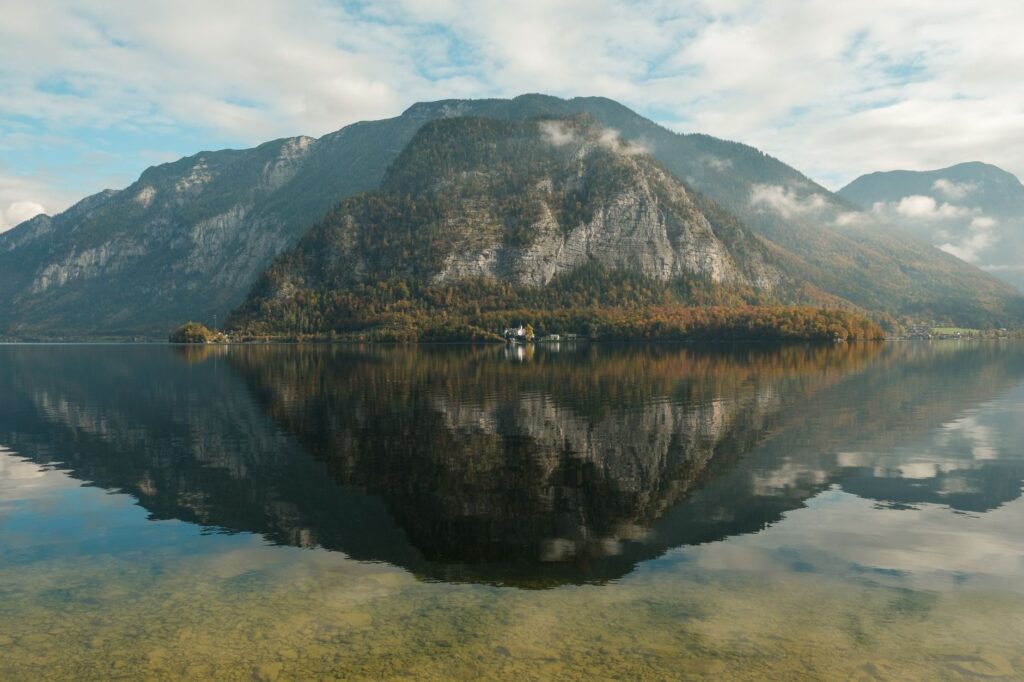
The landscape of Salzkammergut does not act as a mere passive background; it plays an absolute starring role. The calm, dark waters of the lakes mirror historical facades and steep peaks, doubling the sense of immensity. For one of the most ambitious sequences, the team moved a floating platform to the center of Lake Traunsee to place the model clad in a metallic taffeta dress. Technical precision at this juncture was vital to prevent oscillations that could compromise the stability of the costly designs and the safety of the crew.
Natural reflections made it possible to dispense with large artificial diffusers during the early morning hours. Light bounced directly off the water’s surface, bathing faces in a diffuse, melancholic clarity that fit the desired editorial imagery. The interaction between the synthetic textures of contemporary garments and the organic rawness of the wooden docks anchored much of the visual discourse of this series.
On-the-Road Casting: Selecting the Faces That Defied the Wind
Choosing the right models for an alpine outdoor editorial involves evaluating much more than photogenic qualities or slenderness. The production sought profiles capable of conveying inner strength, clean-featured faces that would not disappear beneath the volume of astrakhan hoods or chunky knit turtlenecks. The two models selected for the occasion hailed from European agencies with prior experience in shoots under adverse weather conditions.
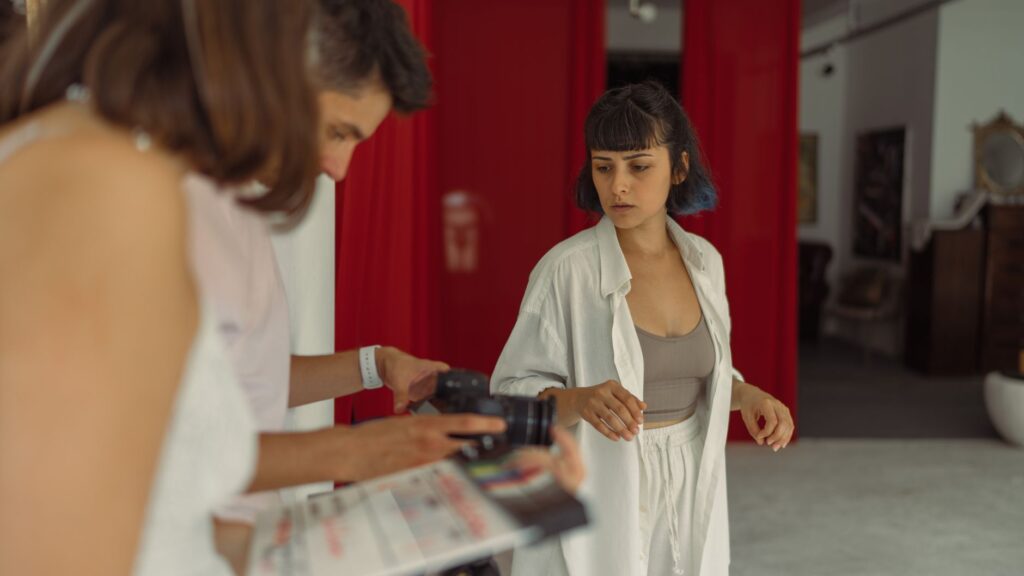
Physical endurance was decisive during shifts exceeding twelve hours on uneven surfaces, ranging from slippery rocks to damp wooden piers.
Outdoor fashion is an exercise in athletic discipline disguised as glamour; the body suffers, but the expression must remain imperturbable and sophisticated before the camera.
The constant support of makeup artists, touching up faces every few minutes to combat windburn, was the secret to maintaining aesthetic flawlessness until the final shot.
Suspended Wardrobe: Textures Against the Elements
The selection of garments sent by major European maisons posed a technical challenge for the wardrobe department. Heavy fabrics, such as virgin wool cloth, waxed leather, and high-volume faux furs, had to remain spotless despite mud and ambient humidity. Craftsmanship care for each piece required setting up a dedicated dry room in the hotel exclusively for vertical steaming and hem checks before every outdoor excursion.
The chosen silhouettes pursued a deliberate contrast with the region’s imperial architecture. While Salzburg’s palaces and timber-framed villages breathe classic symmetry and restrained baroque elements, the fashion proposal embraced geometric cuts, asymmetrical layerings, and a color palette dominated by lead grays, bottle greens, and golden flashes reminiscent of lichen on alpine rocks.
Behind the Scenes: The Kitchen of an Editorial Team Under Creative Tension
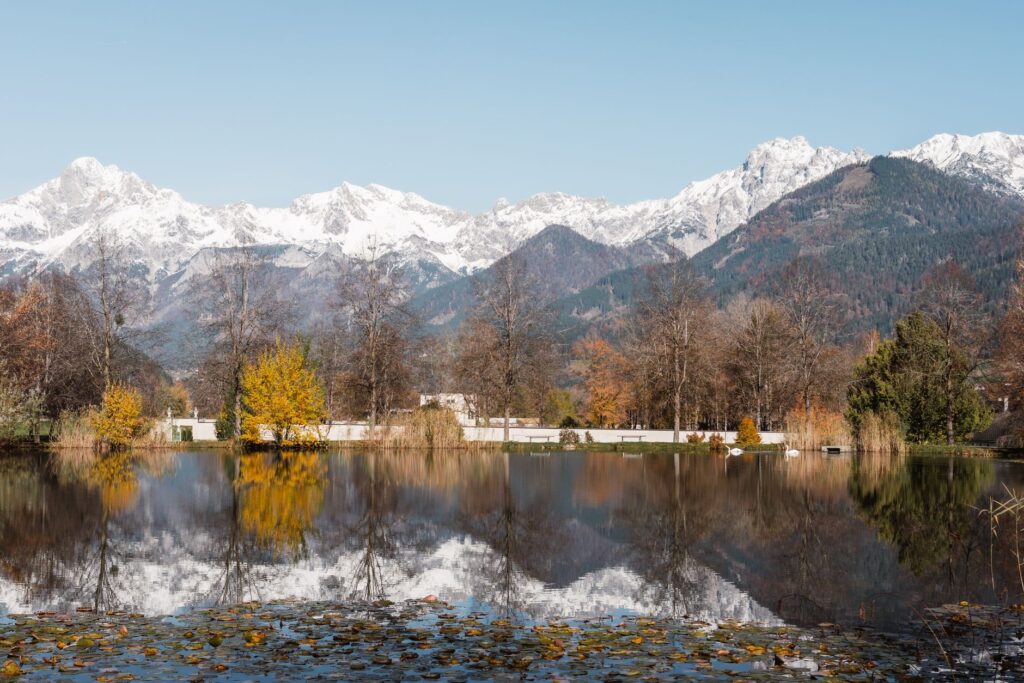
The backstage of such a production is a mechanism where controlled chaos coexists with rigorous professional standards. Inside the improvised set within a fisherman’s shed temporarily converted into a dressing room, steaming cups of coffee mixed with pins, carpenter’s clamps used to adjust waistlines, and constantly buzzing walkie-talkies. Communication between the photographer, positioned fifty meters up on a promontory, and the stylist, crouching to adjust a skirt hem, was reduced to quick gesture codes.
These high-pressure working dynamics forge a unique camaraderie that usually crosses over into the screen.
Every crew member understood that visual excellence did not depend on studio technical perfection, but on the ability to improvise upon the sudden appearance of a sunbeam through the Dachstein clouds.
That constant creative tension infuses the magazine’s pages with an organic vibration that no digital editing can replicate.
Testimonials from the Set: The Pulse of Artistic Creation
Conversing with the team at dusk, once the material had been downloaded onto hard drives, revealed the magnitude of the effort. The lead photographer noted how Salzkammergut’s color palette acts as an emotional catalyst: «You don’t invent anything here; the landscape dictates the chromatic range and you simply have to find the exact point of tension between clothing and nature». Meanwhile, the fashion director emphasized the courage of betting on such unconventional locations for luxury collections.
Far from seeking the complacent tourist postcard, the goal was to build an almost cinematic narrative where the woman claims the territory as her own. The cobbled alleys of the lakeside villages, moss-covered stone staircases, and silent forests served to weave a complex visual narrative that shuns seasonal clichés and elevates fashion to the category of cultural chronicle.
Practical guide
How to get there: Salzburg Airport (SZG) features regular connections from major European capitals. To access the Salzkammergut lake region, the most efficient method is renting a vehicle directly at the terminal and taking the A1 motorway toward Vienna/Linz, exiting onto the B158 secondary roads toward Bad Ischl and Hallstatt.
When to travel: Although summer attracts mass tourism, the months of April and May (alpine spring) or late September and October (early autumn) offer exceptional diffuse light and fewer crowds, ideal for photography and unhurried travel.
Recommended accommodation: The area surrounding Lakes Wolfgang and Hallstatt stands out for its historic hotels and traditional gasthofs converted into charming boutique stays. Booking several months in advance is strongly advised if traveling during peak seasonal periods.
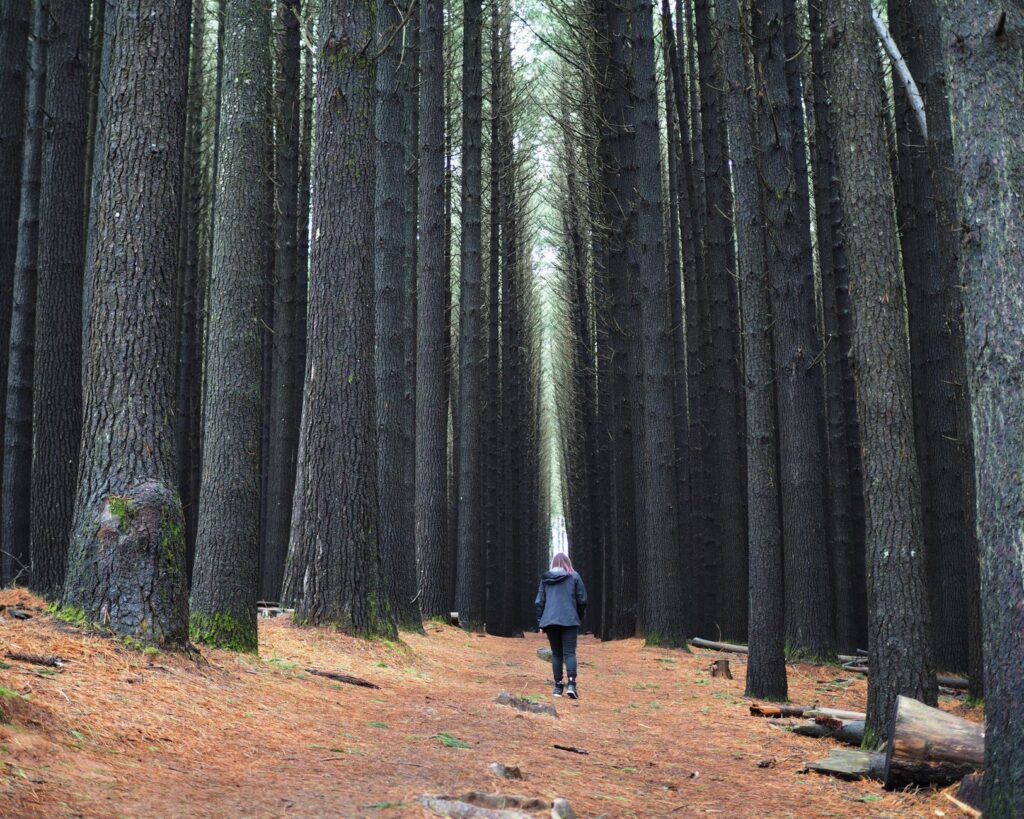
Photographic tips: If visiting the area with professional gear, keep in mind that morning humidity near the lakes is extremely high. Use protective rain covers and always carry spare batteries, as the cold drastically reduces their performance.
Visual Epilogue Between Peaks and Lakes
When the last ray of light faded behind the limestone ridges of the Salzburg Alps, the crew packed up in silence, with the satisfaction of having completed an unrepeatable work. Computer screens displayed images where haute couture and wild nature seemed destined to meet in that exact corner of Europe. Fashion, immortalized against the eternal mirror of the lakes, thus closed its most beautiful and challenging seasonal cycle.
Source in EN: Condé Nast Traveler Spain