
The Backbone of an Elongated Territory
Spanning over seventeen hundred kilometers of winding geography, Vietnam’s primary railway network, historically known as the Trans-Vietnam Railway or the Reunification Line, represents one of the most complex and fascinating engineering achievements in Southeast Asia. Constructed fragmentarily during the French Indochina period and completed after decades of military conflict and titanic reconstruction efforts, this metric-gauge line—featuring a one-meter track width—is not merely a means of passenger and freight transport, but the vital thread stitching together the profound cultural, climatic, and economic divides between the country’s north and south.
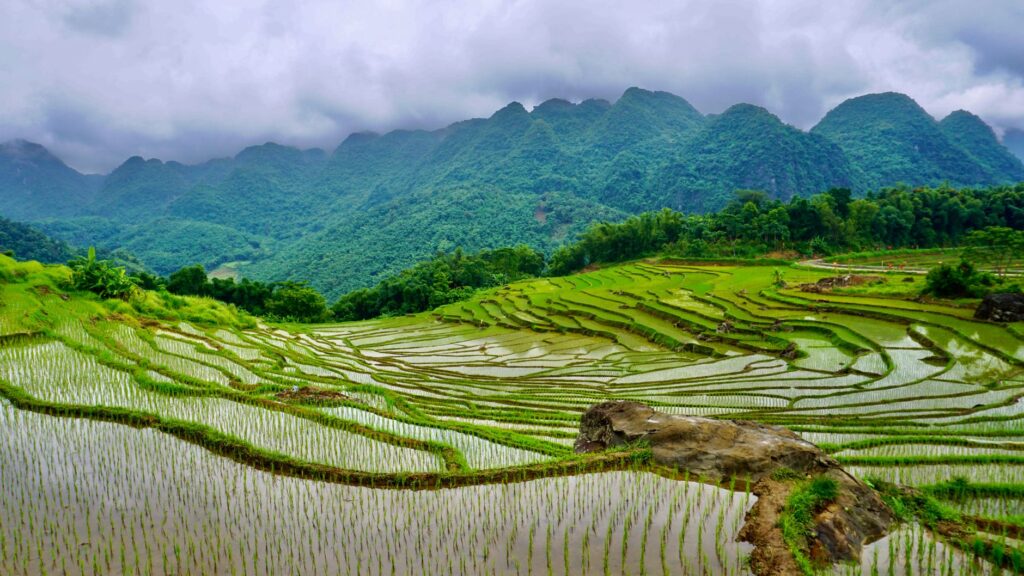
Analyzing the trajectory of this corridor requires understanding the infrastructure’s resilience against the onslaught of nature and the heavy weight of contemporary history. From the departure at Hanoi Station, where French colonial architecture coexists with the urban frenzy of the Old Quarter, to the arrival in modern, vertiginous Ho Chi Minh City—formerly Saigon—the train serpentines through a shifting mosaic of river deltas, limestone karsts, rugged mountain ranges plunging into the South China Sea, and vast expanses of ancestrally cultivated rice paddies.
The uniqueness of this journey lies in the narrowness of Vietnam’s territorial strip. At its most constricted point, the nation narrows to less than fifty kilometers wide, wedged tightly between the Annamite Range and the ocean. This extreme topography compelled colonial engineers of the late 19th and early 20th centuries to design an audacious layout, laden with tunnels blasted through living rock, steel bridges spanning torrential rivers, and mountain passes where diesel locomotives battle steep gradients under severe meteorological conditions dictated by the monsoon regime.
Colonial Legacy and the Original Metric-Gauge Layout
The genesis of Vietnam’s railway system dates back to the 1880s under the French colonial administration, which envisioned the railroad as an indispensable tool for extracting natural resources—such as the coal from the Quảng Ninh basins and rubber from the highlands—and for exerting military and administrative control over the colony. The first operational section, inaugurated in 1885, connected Saigon with My Tho, but the ambition to unify the entire territory under a single continuous line required decades of colossal public works marked by harsh tropical conditions and high mortality rates among local and foreign laborers.
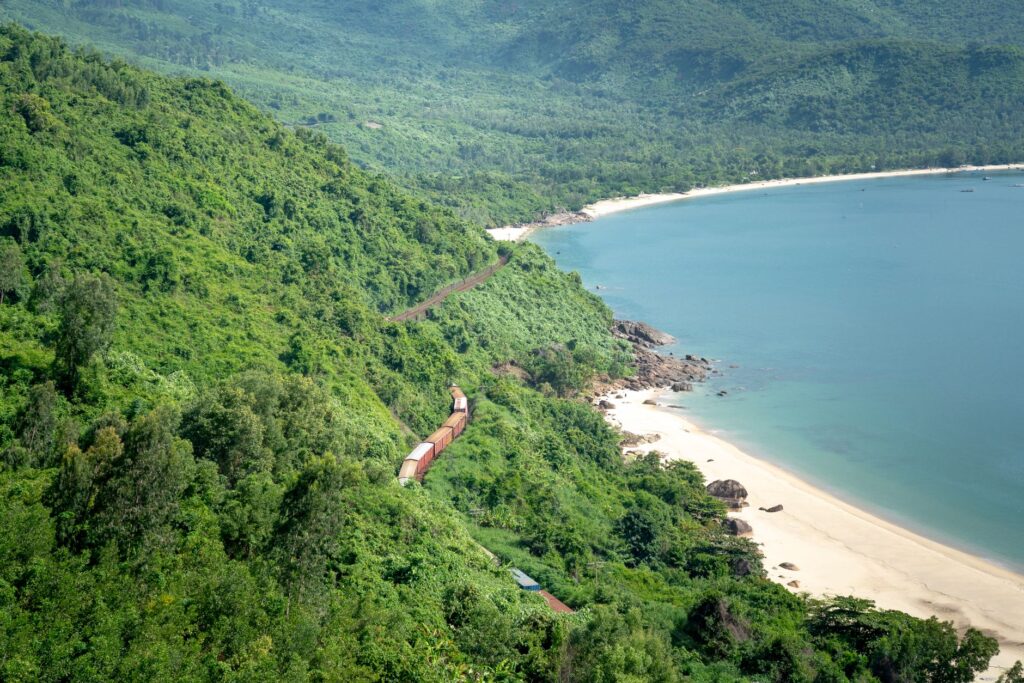
The primary technical challenge consisted of regional network integration between the north (Tonkin), the center (Annam), and the south (Cochinchina). It was not until 1936, with the completion of the section linking Tourane—present-day Da Nang—to Huế via the Hải Vân Pass, that the so-called Trans-Indochina Railway was formally inaugurated. This infrastructure marked a milestone in civil engineering of the era, deploying thousands of tons of imported steel and mobilizing a massive workforce under extremely adverse sanitary and climatic conditions.
Nevertheless, the history of this railway is inseparable from the armed conflicts of the 20th century. During the First Indochina War and subsequently the Vietnam War, the railroad became a prime strategic military target. Systematic bombings destroyed fundamental bridges, entire stations, and kilometer-long stretches of track, isolating entire regions. The resilience of Vietnamese railway workers, who repaired damage almost in real time under enemy fire, forms part of the national collective memory and cemented the line’s symbolic status as the vital artery of the country’s sovereignty and unity.
Coastal Pass Engineering and Relief Geology
Overcoming the physical barrier imposed by the Annamite Range foothills where they meet the sea required engineering solutions of great topographic boldness. The most elusive and celebrated example of this mountain railway architecture is the Hải Vân Pass, historically known as the Pass of the Clouds. At this point, the track winds upward along precipitous slopes, offering dizzying views of the Gulf of Tonkin and forcing train compositions to employ specific traction configurations to overcome considerable height differences in very confined spaces.
Platform stability is another major logistical challenge faced by the current railway administration, managed by the state-owned enterprise Vietnam Railways (Đường sắt Việt Nam). Heavy precipitation associated with seasonal typhoons and northeast monsoons regularly causes landslides, embankment erosion, and flooding in low-lying delta areas. Maintenance teams operate continuously to ensure drainage, consolidate slopes with concrete retaining walls, and replace wooden sleepers with reinforced concrete elements capable of withstanding tropical humidity and the constant pounding of heavy trains.
Likewise, the metric-gauge track width, while initially dictated by cost economy and ease of layout in rugged terrain during colonization, imposes strict limitations on commercial speed and freight capacity compared to standard international gauge. Despite these constraints, Vietnamese engineers have optimized the alignment through the modernization of signaling systems, the automation of level crossings in dense urban areas, and the gradual incorporation of rolling stock equipped with improved suspensions to ensure safety and comfort on a journey lasting approximately thirty-two hours from end to end.
Contemporary Logistics and Connectivity in the Southeast Asian Economy
In Vietnam’s current economic landscape, characterized by accelerated industrial growth and deep integration into global supply chains, the Trans-Vietnam Railway fulfills a complementary yet strategic role alongside the absolute dominance of road transport. Although modern highways absorb the bulk of short- and medium-distance heavy freight traffic, the train remains indispensable for hauling bulk raw materials, fuel, and agricultural products between northern production centers and southern export ports.
For logistics operators, the national railway network offers a predictable and environmentally friendly alternative, aligned with government policies to reduce carbon emissions in the transport sector. Nonetheless, the modernization of the infrastructure faces significant bottlenecks stemming from obsolete maintenance workshops, congestion in the urban terminals of Hanoi and Saigon, and the urgent need to dual-track single-line segments to increase frequencies and reduce travel times for mixed services.
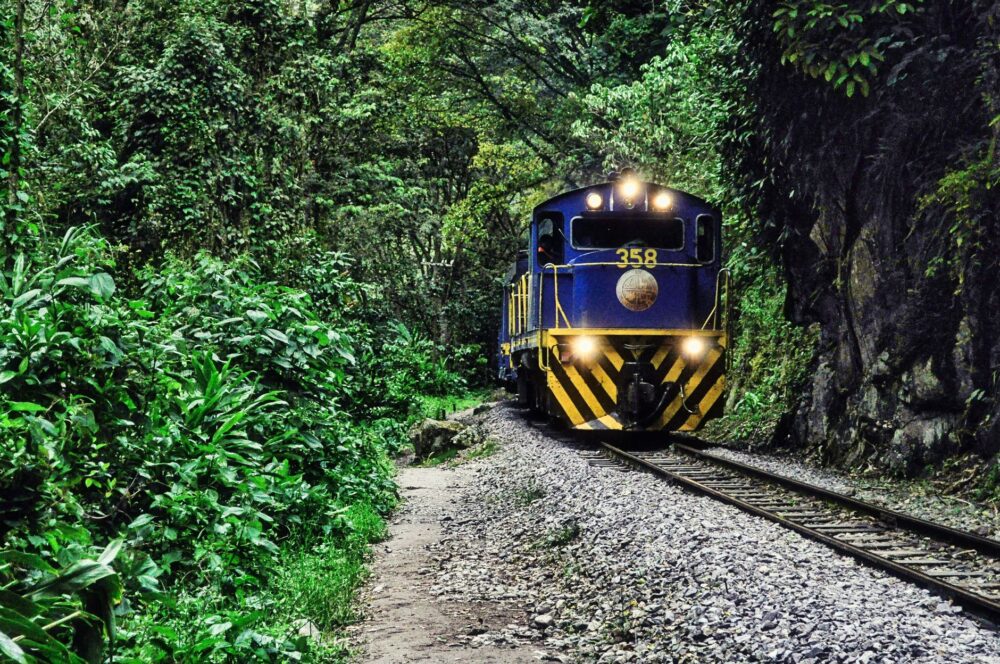
Concurrently, rail tourism has experienced a notable renaissance in recent years. International and domestic travelers choose the train not merely as an economical means of transportation, but as a leisurely travel experience that allows them to contemplate rural landscapes without the filter of high-speed expressways. Private operators run upscale passenger carriages coupled to regular trains, offering a superior standard of service featuring hardwood cabins, regional gastronomy on board, and large panoramic windows specifically designed to enjoy the visual parade of rice paddies and coastline.
Life Along the Tracks: Railway Communities and Settlements
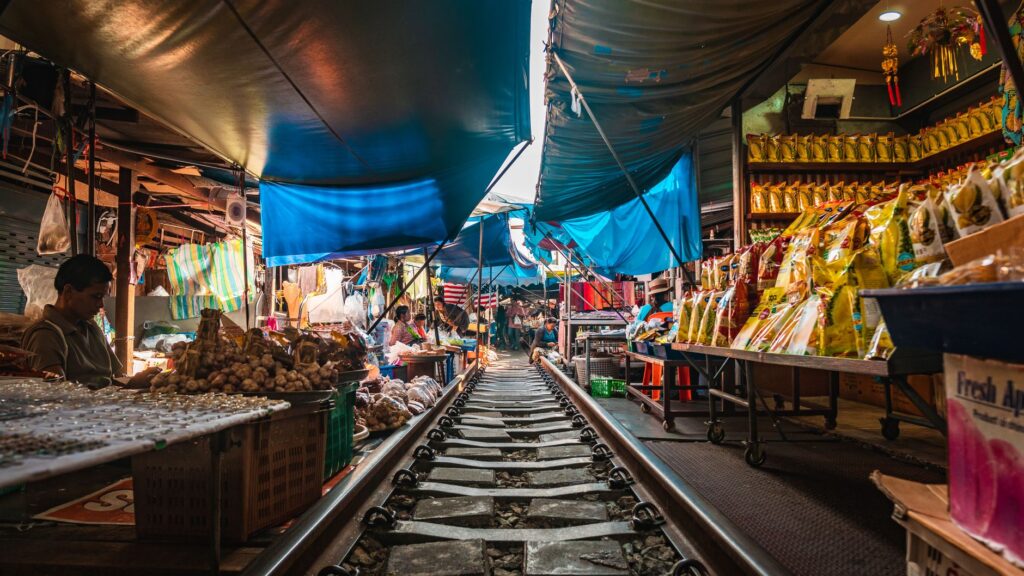
The social impact of the Trans-Vietnam Railway manifests uniquely in the numerous human settlements that have grown symbiotically around the tracks. The most paradigmatic case is Hanoi’s famous Train Street, where cafés and residences line up within centimeters of the rails, forcing residents to pull back tables and household items minutes before the convoy passes. This daily coexistence, though recently regulated for public safety reasons, reflects the deep integration of the train into the everyday urban fabric.
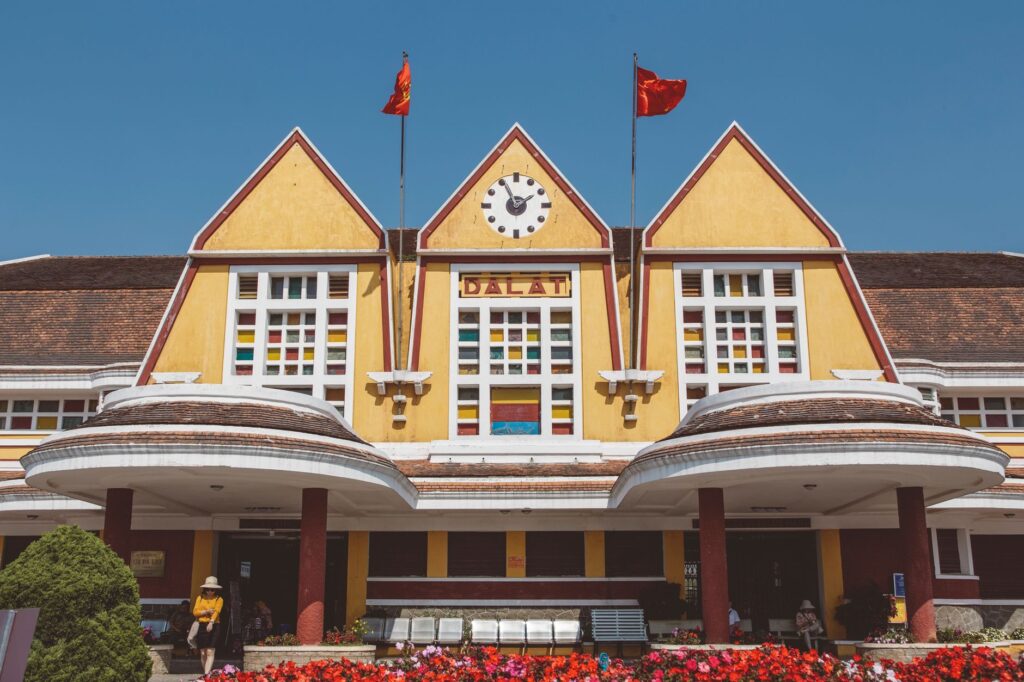
Outside major urban centers, the railway acts as the backbone for countless rural and fishing communities. Local stations, many retaining their French colonial architecture with red tile roofs and wooden shutters, function as commercial meeting points where local farmers offer fresh produce, from tropical fruits to regional culinary specialties such as *bánh mì* or Vietnamese coffee filtered with condensed milk.
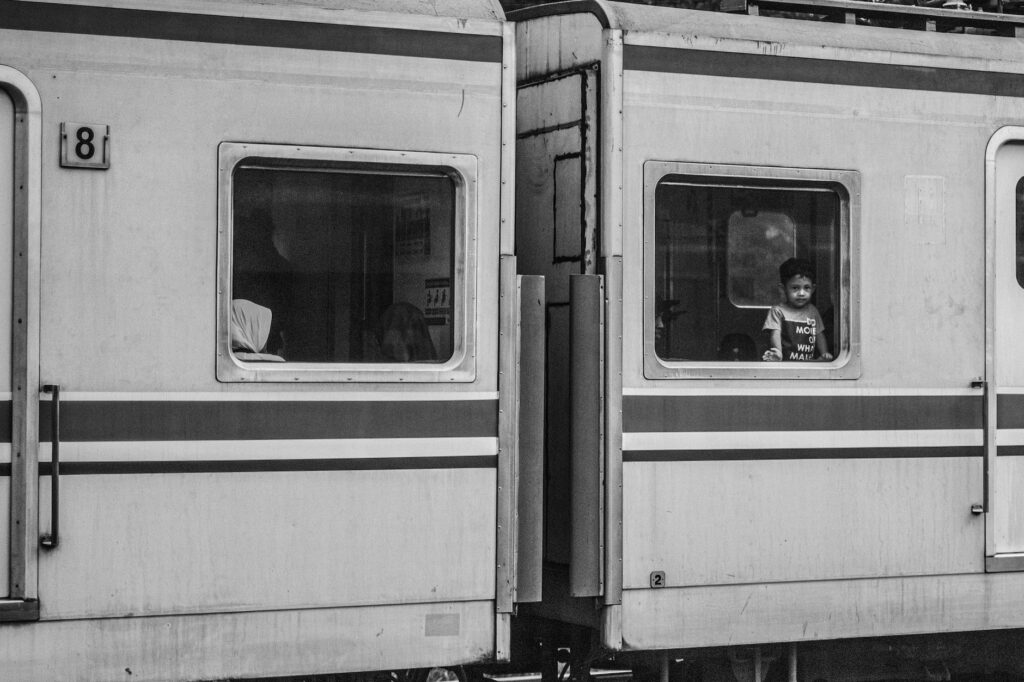
This constant interaction between travelers and local communities endows the journey with an exceptional anthropological dimension. Aboard the sleeper cars, in second and third class, a miniature micro-society is woven where entire families, merchants, students, and backpackers share space during marathon journeys. The rhythmic sound of rail joints and the sharp whistle of the locomotive as it approaches level crossings form the unmistakable soundtrack of a journey that is, in essence, a deep immersion into the daily life and resilience of the Vietnamese people.
Future Challenges and the North-South High-Speed Megaproject
The future of Vietnam’s railway system is dominated by the debate surrounding the construction of a new standard-gauge high-speed corridor connecting Hanoi with Ho Chi Minh City. This monumental megaprojecct, evaluated for years by national authorities with advice from international experts, aims to reduce travel time between the two metropolises from over thirty hours to less than six, utilizing trains capable of operating at speeds exceeding three hundred kilometers per hour.
The implementation of this new infrastructure poses monumental challenges in financing, technology transfer, and land expropriation along a densely populated route. While financial viability and execution timelines for the future high-speed line are debated, the central administration continues investing in upgrades to the existing metric-gauge network, mindful that both infrastructures must coexist to fulfill differentiated functions: high-speed rail for business passengers and medium-distance travel, and the classic line for regional traffic, leisurely tourism, and heavy freight.
This dual approach ensures that the historical heritage of the Trans-Vietnam Railway is not relegated to a museum piece, but evolves to adapt to the demands of a country undergoing rapid economic transformation. Current engineers and planners bear the responsibility of preserving the architectural and landscape heritage of the historic line while integrating modern traffic management and railway safety technologies.
Practical guide
How to get there and plan the journey: The primary international gateway is Nội Bài International Airport (HAN) in Hanoi and Tan Son Nhat International Airport (SGN) in Ho Chi Minh City. Both cities offer easy access to central railway stations via official taxis or ridesharing apps.
Onboard service categories: Vietnam Railways operates several daily trains between Hanoi and Saigon (known as the SE1 through SE8 trains). Accommodations vary: hard seats (not recommended for long journeys), soft seats with air conditioning, six-berth sleeper compartments, and four-berth wood-paneled sleeper compartments ideal for overnight comfort.
Reservations and tickets: It is highly advisable to book tickets weeks in advance through the official Vietnam Railways website or authorized local agencies, especially during national holidays such as Tết (Lunar New Year), when ticket demand multiplies exponentially.
Travel tips: Travelers should bring drinking water and light snacks, although trains feature a trolley service and simple hot meals. It is essential to strictly follow railway staff instructions when walking near active tracks and historical stations.
Visual Epilogue on Rails and Mists
When the twilight light begins to dye the endless mirror-like water surfaces of the Mekong Delta rice paddies in ochres and violets, the train seems to merge with the horizon in perpetual motion. In that crepuscular instant, the metallic rattling of the metric gauge becomes a tangible reminder that traveling through this corridor is not merely a geographical displacement, but a journey through the open veins of a nation that has successfully transformed the iron of its past into the firmest bridge toward its future.