
A Landscape Carved into the Peaks of Sichuan
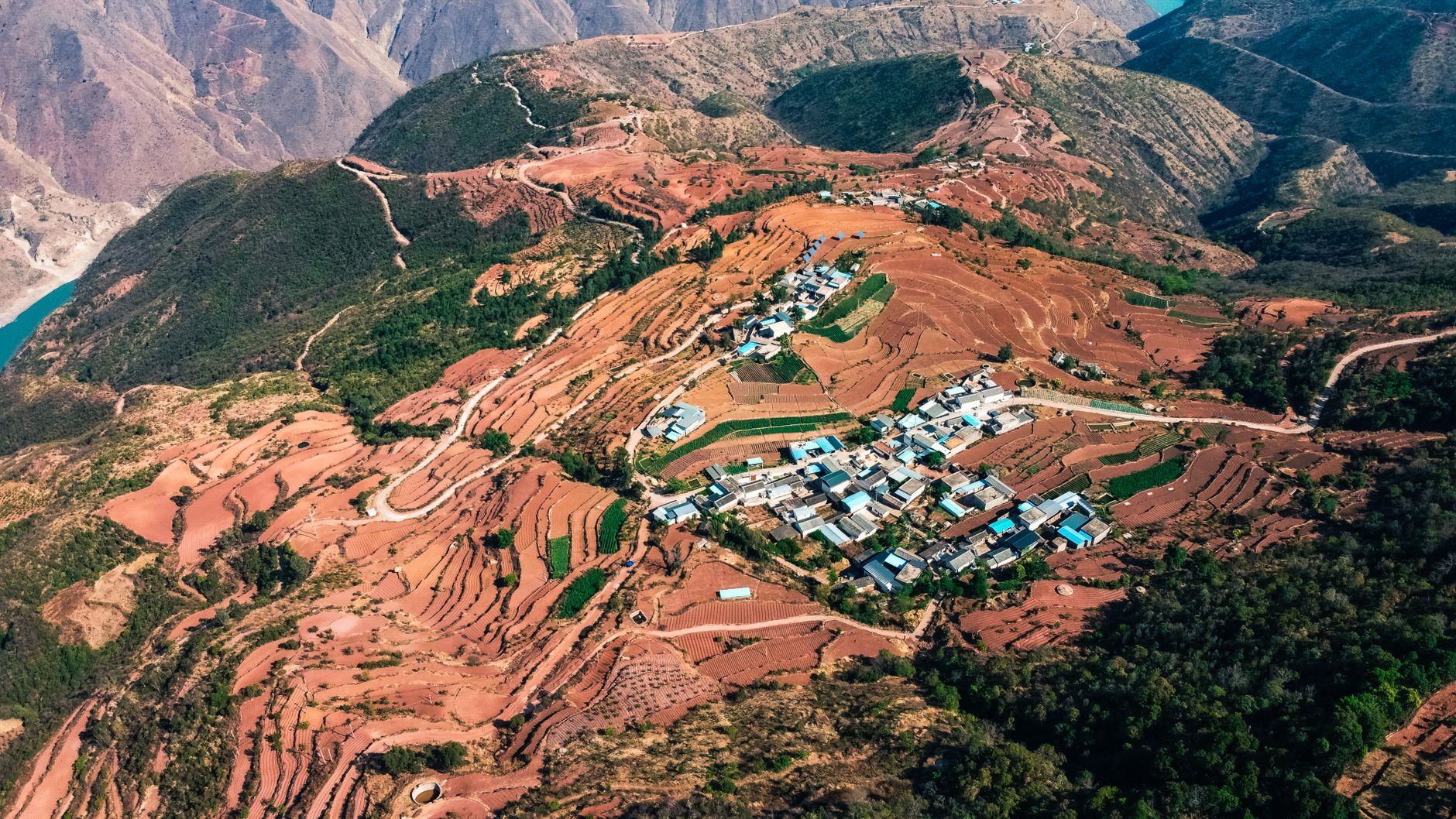
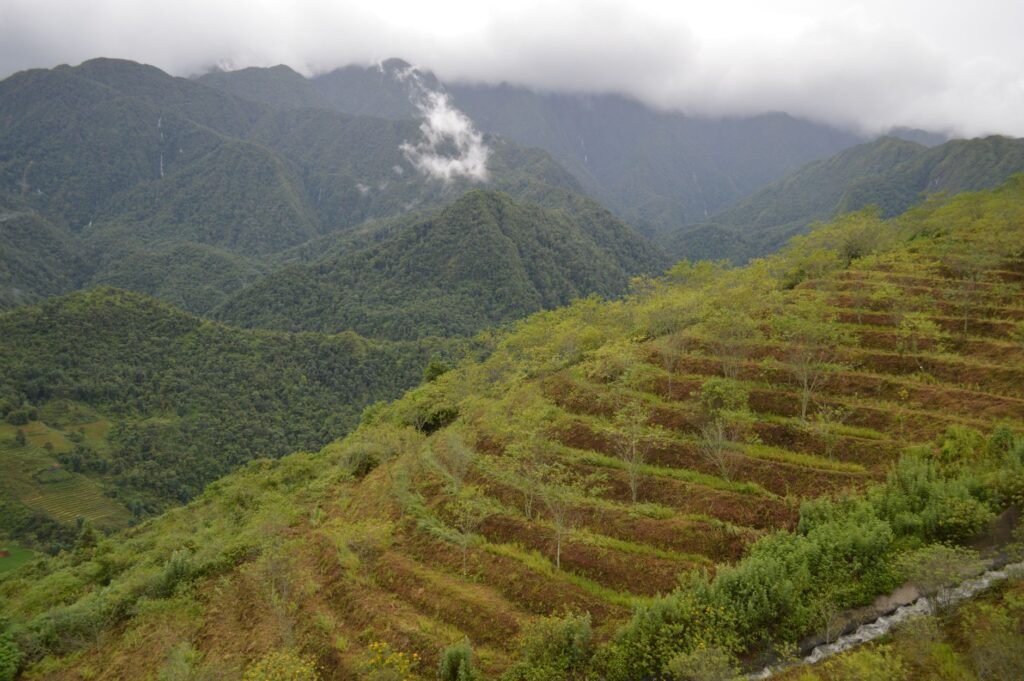
The high peaks of northern Sichuan hold an ancient secret that extends far beyond their renowned turquoise waters and dense conifer forests. In the Jiuzhaigou Valley, human intervention has not always meant destruction; for centuries, Tibetan and Qiang communities sculpted the steep mountain slopes using intricate dry stone terracing systems. These agricultural terraces not only enabled survival in an environment of impossible gradients, but they also created a natural shield against erosion, regulating the flow of spring snowmelts and protecting the fragile valley soils. Today, this architectural and ecological heritage is experiencing a renaissance thanks to an ambitious community restoration program aimed at curbing the impact of mass tourism and restoring balance to the water cycle.
For decades, the uncontrolled growth of tourist influxes challenged the region’s geological stability. The weight of modern infrastructure and the gradual abandonment of traditional farming practices threatened to collapse the ancient retaining walls. Faced with this scenario, national park managers, in direct collaboration with local village elder councils, spurred a paradigm shift. The thesis is as simple as it is revolutionary: the best infrastructure to protect a fragile alpine ecosystem is the one built by its former inhabitants using local materials and deep meteorological knowledge.
The Invisible Engineering of Dry Stone
The heart of this transformation lies in the dry stone technique, an ancestral construction method declared Intangible Cultural Heritage by UNESCO that dispenses with any type of mortar or cement. Each slab of limestone is selected and fitted by hand by local master artisans, allowing rainwater and snowmelt to filter naturally through the structure without generating hydrostatic pressures that cause landslides. This porous framework acts as a giant sponge, retaining moisture in the upper soil layers and steadily feeding the underground streams that flow into the valley’s calcareous lakes.
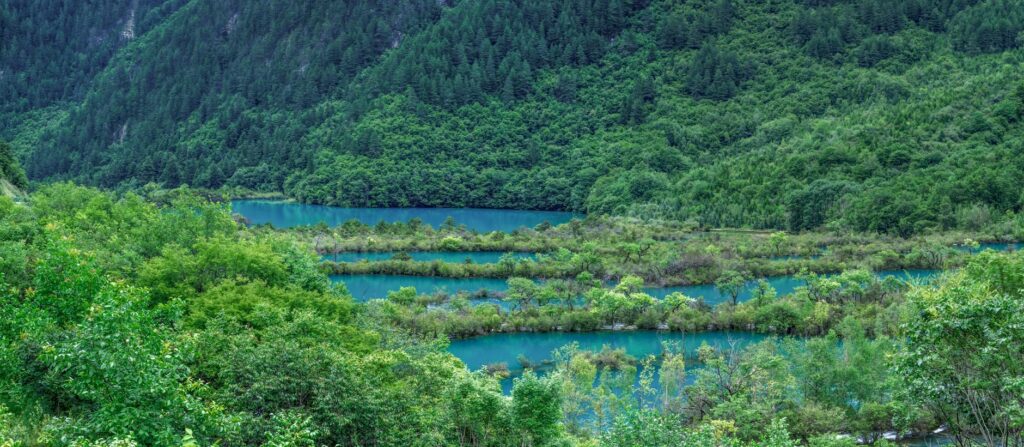
For environmental engineers working in the area, the recovery of these terraces represents a direct alternative to the costly and aggressive concrete retaining walls proliferating in other Asian tourist hubs. The technical advantages are unquestionable: dry stone absorbs minor seismic movements—frequent along this stretch of the Longmenshan fault—without fracturing, while maintenance interventions can be carried out by the rural inhabitants themselves without heavy machinery that damages the vegetation cover.
Territorial Custody and Shared Governance
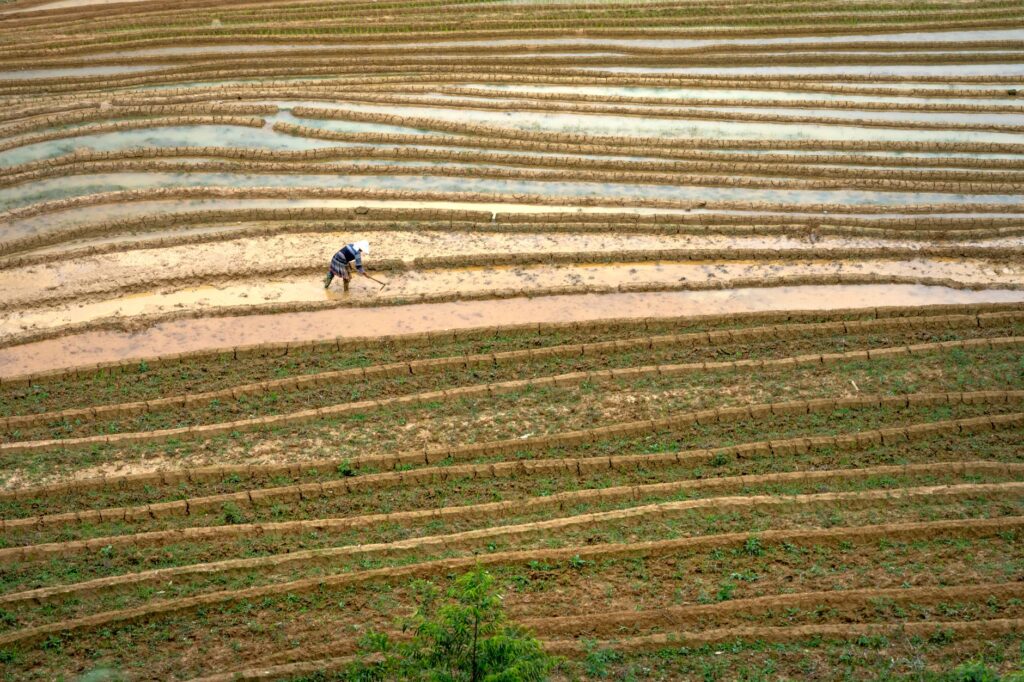
The success of the initiative is measured not only in cubic meters of restored stone, but in the depth of the social fabric supporting it. Through territorial custody programs, local families receive direct compensation for maintaining and repairing terraces along the park’s approach routes, combining this work with regenerative agricultural practices and the sowing of native high-altitude barley varieties. This prevents the rural exodus that has depopulated other mountain regions in China and ensures economic benefits from tourism directly reach those guarding the landscape.
Real conservation of a protected natural area begins when local communities cease to be mere spectators and become the remunerated guardians of their own cultural heritage, notes the reserve’s annual management report. This participatory governance also extends to visitor flow control, setting strict daily quotas and redirecting part of the tourist influx toward traditional terrace trails, where farmers themselves act as guides and landscape interpreters.
The Role of Botany and the Hydrological Cycle
Beyond their structural function, the restored terraces host a unique plant biodiversity acting as a carbon sink and habitat for endemic species like the takin and the giant panda. Recovering the original terracing of slopes has drastically reduced surface runoff phenomena that traditionally dragged sediments into lakes, clouding crystal-clear waters and altering delicate aquatic ecosystems. Hydrological studies over the last three years confirm that sectors with active terraces exhibit water retention rates up to forty percent higher than degraded slopes.
This meticulous water management is vital amid climate variability where monsoon and snowmelt patterns have become unpredictable. The terraces act as small cascading natural reservoirs, slowing down water velocity during summer storms and slowly releasing it during seasonal dry periods. It is a palpable reminder that advanced technology often consists of rescuing accumulated generations of ingenuity in adapting to the environment.
Economic Challenges and the Pressure of Global Tourism
Despite evident progress, the Jiuzhaigou model faces complex challenges derived from its own international popularity. Attracting millions of annual travelers without compromising the physical integrity of the terraces demands continuous monitoring efforts and ongoing investment in training new stone artisans. Many village youths are tempted by salaries in large industrial metropolises, forcing local authorities to dignify and make traditional masonry trades visible through tax incentives and specialization scholarships.
True sustainable tourism does not mean closing doors to the world, but preparing the territory to welcome it without losing its soul, emphasize the rural development project coordinators. To achieve this, strict protocols have been implemented banning vehicle access to historic terrace zones, requiring visitors to traverse paths on foot or via clean-energy shuttle bus fleets connecting main interpretation centers.
Vernacular Architecture and Zero-Kilometer Materials
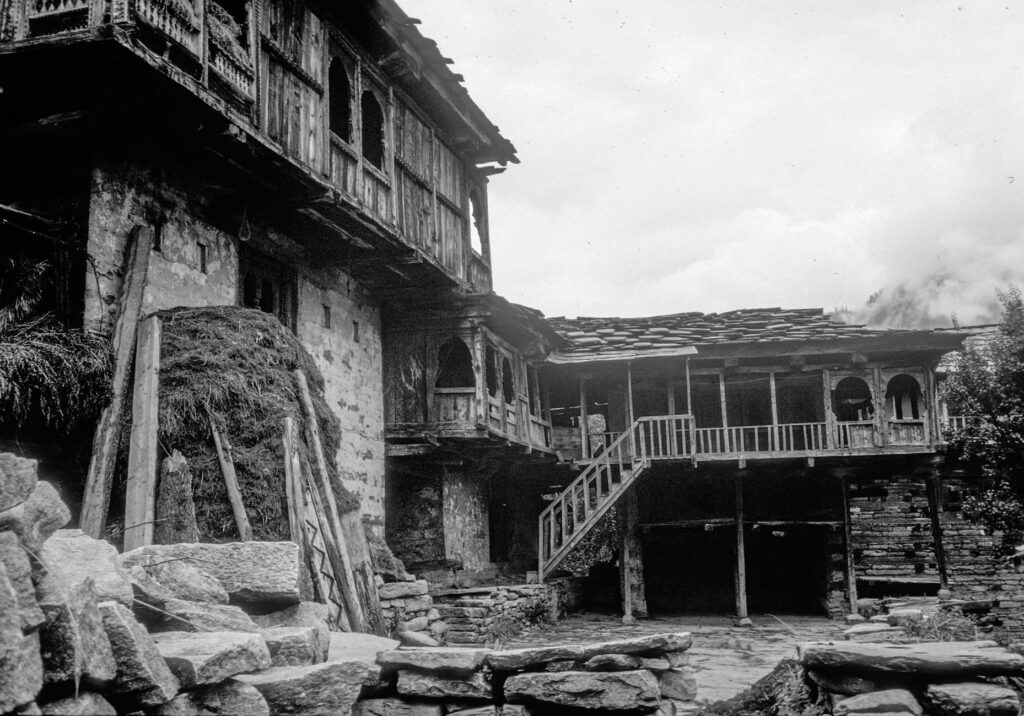
The commitment to sustainability in Jiuzhaigou transcends landscape restoration and permeates all recent architectural interventions in valley villages. New visitor reception infrastructure and interpretation centers exclusively use timber recovered from sustainably managed forests and stone extracted from abandoned local quarries. This zero-kilometer approach drastically reduces the carbon footprint associated with construction material transport while ensuring buildings visually blend with the natural environment and traditional gable-roofed Tibetan dwellings.
Design architects have revived traditional bioclimatic elements, such as optimal solar orientation and high thermal mass masonry walls, capable of keeping building interiors warm during harsh mountain winters without intensive heating systems. Thus, the traveler’s experience becomes a coherent immersion in the values of frugality, respect, and efficiency defining local community lifestyles.
Environmental Education and the Legacy of Field Schools
A fundamental pillar for the long-term survival of the project is transmitting technical knowledge to new generations. In collaboration with Sichuan University, a field school for masonry and alpine ecology has been established where youths from various provinces learn the secrets of dry stone construction and watershed management. These open-air classrooms combine scientific theory with practical teachings from local master artisans, creating an essential intergenerational bridge ensuring heritage is not relegated to a museum piece.
The future of our mountains is not written in big-city offices, but with the calloused hands of those who know how to place every stone in its exact spot to withstand the test of time, reflects a local teacher during a practical session. The workshops attract architecture, anthropology, and environmental science students worldwide every year, turning Jiuzhaigou into a global living laboratory benchmark for socio-ecological restoration.
Practical guide
How to get there: Primary access to Jiuzhaigou is via Jiuzhai Huanglong Airport, connected by regular flights from Chengdu and Chongqing. From the airfield, authorized tourist buses and shared transport services operated by local cooperatives cover the remaining 88 kilometers to the valley entrance in about an hour and a half.
When to go: Optimal months to visit the region and understand its agricultural and landscape dynamics are May through June and September through October. In spring, snowmelt showcases terraces in full hydrological activity, while autumn offers exceptional chromatic landscapes with deciduous forests at their peak.

Visit regulations: Park access requires mandatory advance booking via its official platform, with limited daily quotas to protect the environment. Stepping off marked trails, walking on dry stone walls, or littering is strictly prohibited. Drone use inside the reserve is subject to special research authorizations.
Accommodation and gastronomy: Overnight stays are recommended in traditional villages situated on the park’s periphery (such as Shuzheng or Heping), where local families manage community tourism rural lodgings. Gastronomy relies on local high-altitude produce, highlighting Tibetan barley soup, yak butter teas, and stews made with terrace-grown vegetables.
A Horizon Carved in Stone and Memory
At dusk, when the final sunbeams ignite the calcareous peaks and stream murmurs blend with forest silences, the Jiuzhaigou Valley regains its most intimate pulse. On the restored slopes, dry stone terraces shine with silent dignity, reminding us that a landscape’s true beauty lies not only in pristine nature, but in the secular capacity of its inhabitants to converse with it without altering it. Here, every hand-fitted slab is a promise of continuity, a statement of principle proving that future tourism can only flourish if rooted in firm foundations of memory and respect for the earth.