
The Vertical Conquest of the Himalayan Foothills
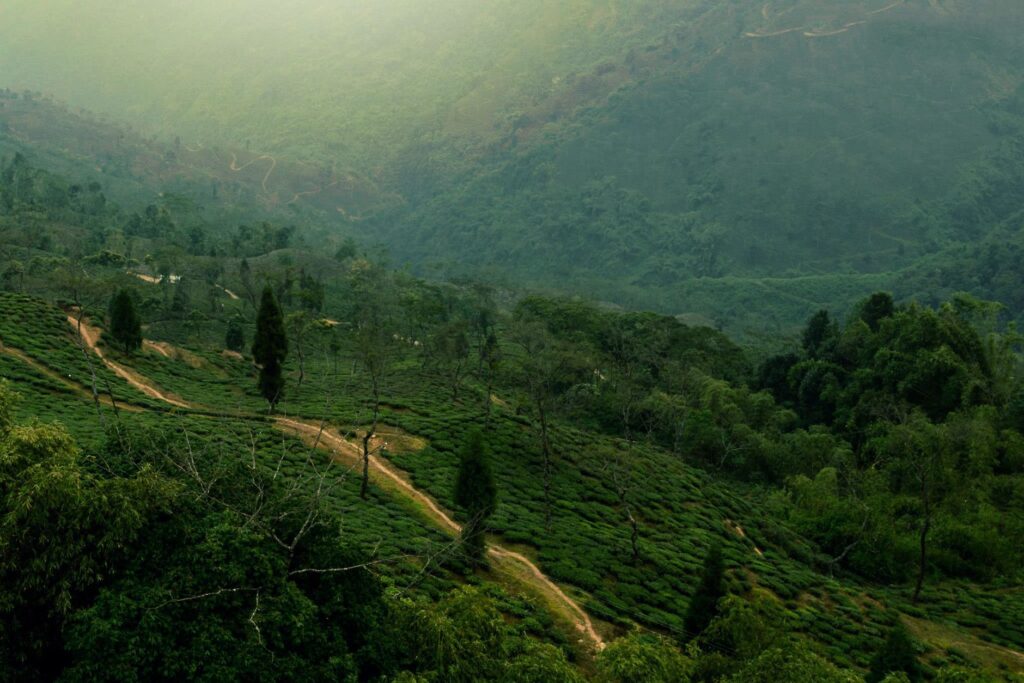
Clinging to the rugged slopes of West Bengal, the Darjeeling Himalayan Railway—affectionately known as the «Toy Train»—has defied the physical limits of high-altitude steam traction since the late 19th century. This narrow-gauge line, with a track width of just two feet, is not merely a nostalgic mode of transport; it is a masterpiece of civil engineering designed to conquer steep inclines without resorting to costly rack-and-pinion systems. Connecting the plains of Siliguri with the misty tea plantations of Darjeeling at over two thousand meters of altitude, the route represents the perfect symbiosis between British industrial audacity and the extreme topography of the Asian mountain range.
The genesis of this route responded to the strictly logistical and administrative needs of the British Empire. During the summer months, the highest echelons of the colonial government fled the suffocating heat of Calcutta, taking refuge in the cool valleys of Darjeeling. The initial journey, undertaken on the backs of oxcarts and stagecoaches along winding bridle paths, proved slow, hazardous, and deeply inefficient. The railway solution, projected by engineer Franklin Prestage and realized under the direction of the state company in the late 1870s, completely transformed regional connectivity and opened a vital artery for the tea trade.
The Geometric Ingenuity of Loops and Reverses
Overcoming a vertical climb of more than two thousand meters across barely eighty kilometers of track required radically innovative topographical solutions. British engineers faced clayey terrain prone to landslides triggered by monsoons, which made it impossible to lay linear gradients exceeding the adhesion limit of small steam locomotives. The response consisted of designing a series of spiral loops and reversals, known locally as loops and reverses, which gain height gradually through 180-degree turns and switchback maneuvers.
The most famous example of this railway architecture is the renowned Batasia Loop, located a few kilometers from Darjeeling. At this point, the track describes a perfect circle upon itself, allowing the convoy to pass beneath its own alignment while descending slightly to soften the overall gradient. From this natural viewpoint, passengers contemplate not only the complex geometry of the rails but also the imposing snow-capped silhouette of Mount Kanchenjunga. Every meter of track won from the abyss is the result of precise calculation where inertia, coal weight, and boiler pressure combine in a delicate mechanical balance.
Century-Old Locomotives and the Art of Manual Firing
The soul of the Darjeeling Himalayan Railway resides in its legendary Class B steam locomotives, built primarily by the Scottish firm Sharp, Stewart and Company in the late 19th and early 20th centuries. These compact machines of just a few tons feature inclined cylinders and a long boiler that enables them to negotiate extremely tight curves with a radius of barely twenty meters. Despite dieselization and electrification attempts over the decades, the backbone of the line continues to rely on these iron veterans, which demand artisanal maintenance in the historic Tindharia workshops.
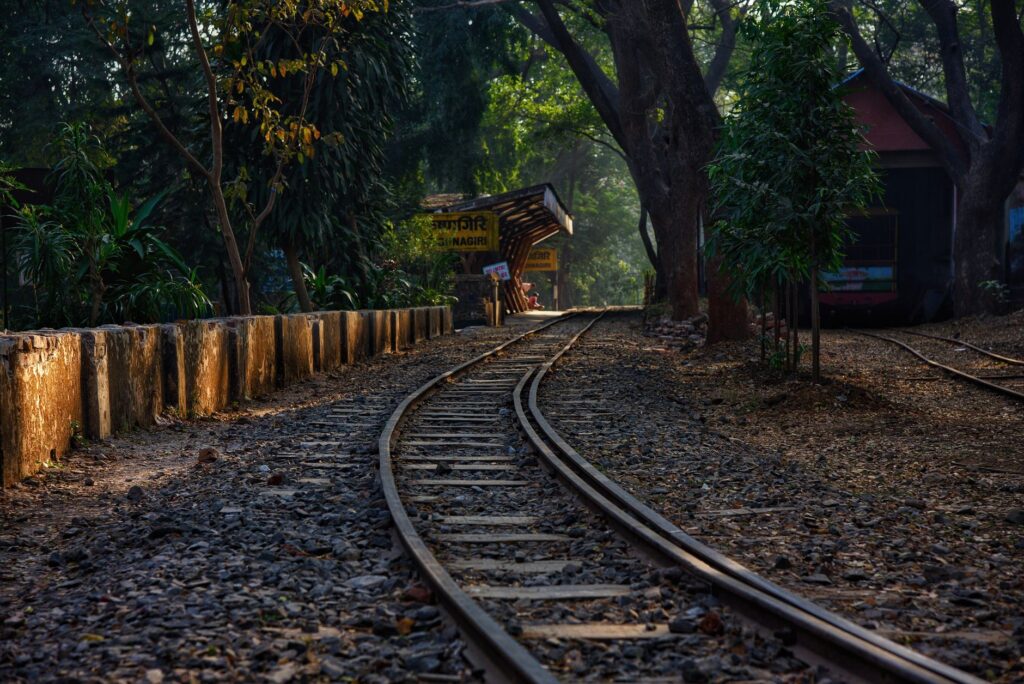
Driving one of these locomotives under Himalayan weather conditions is an exercise in craftsmanship and sensitivity. Drivers and firemen must constantly regulate coal combustion and water supply according to track moisture, wind, and slope inclination. There are no computer-assisted systems; everything is governed by the rhythmic sound of the steam exhaust, the pressure gauge, and the accumulated experience of generations of local railwaymen. This human bond with the machine turns every journey into a living demonstration of industrial heritage in operation.
The steam rising among the giant ferns is not merely the residue of a century-old combustion, but the visible breath of an engineering practice that refuses to yield to the world’s verticality.
The Tea Economy and the Lifeline of Local Communities
Beyond its contemporary tourist appeal, the train was born as a tool for economic integration for the mountainous settlements of Bengal. Before the arrival of the railway, transporting Darjeeling’s valuable tea harvests to export markets depended on porters and pack animals, a system vulnerable to inclement weather. The rail line allowed a steady flow of goods, tools, food, and mail, becoming the true umbilical cord supplying dozens of villages perched on mountain ridges.
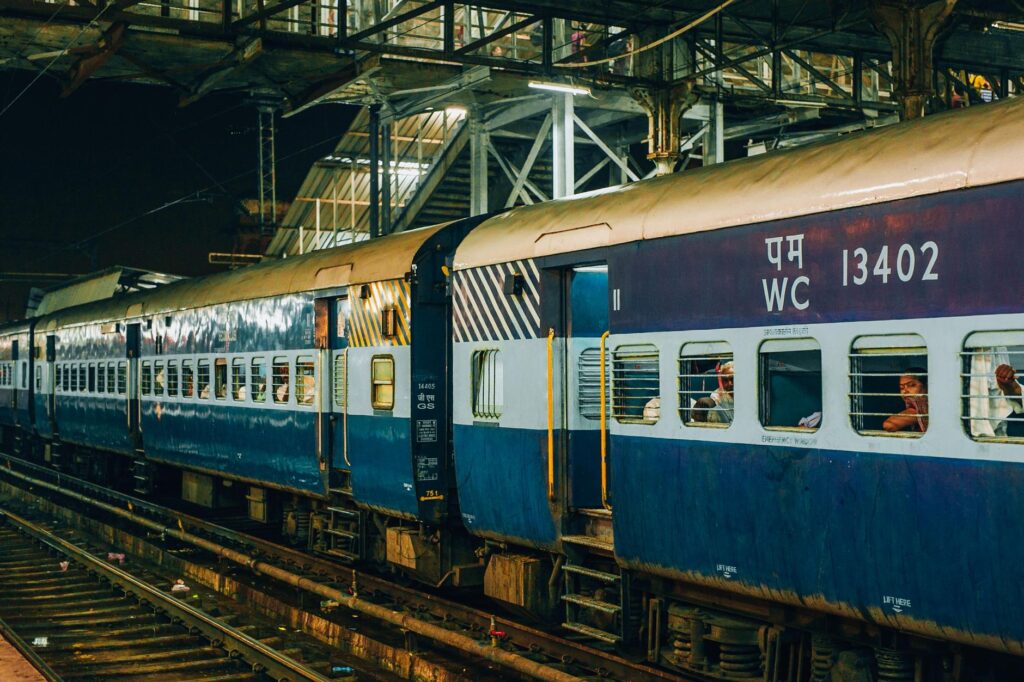
Today, local communities continue to use the mixed-service carriages to travel to regional markets, attend educational centers, or market agricultural products. The intermediate stations, with their corrugated metal roofs and flower-filled walls, function as social hubs where plantation workers, residents, and international travelers converge. This daily coexistence ensures that the railway maintains an active social function and is not reduced to a mere decontextualized attraction for seasonal visitors.
The Geological Challenge of Monsoons and Constant Erosion
Keeping a century-old railway line operational in one of the wettest regions on the planet constitutes a titanic daily battle against the elements. During the monsoon season, between June and September, torrential rains saturate mountain slopes, triggering landslides, rockfalls, and embankment washouts. In numerous sections, tracks remain literally suspended in mid-air or buried under tons of clayey mud, interrupting traffic and forcing intense manual repair efforts.
Track maintenance crews, equipped with traditional tools and deep expertise in slope containment, work ceaselessly to ensure the stability of the ballast and wooden sleepers. This ongoing effort reflects the vulnerability of historic infrastructure in the face of climate change and the intensification of extreme weather events. Every time a convoy crosses a restored bridge after the rains, the resilience of a network that has survived world wars, economic crises, and natural disasters materializes.
World Heritage and the Preservation of Identity
In 1999, UNESCO inscribed the Darjeeling Himalayan Railway on its World Heritage List, highlighting its exceptional value as an outstanding example of the application of railway technology to a rugged alpine environment. This international recognition marked a turning point for its conservation, attracting global attention and funds destined to protect both the rolling stock and the historic infrastructure against the pressures of urban development and mass tourism.
However, the declaration has also opened a complex debate on how to balance heritage authenticity with commercial modernization demands. Line managers face the challenge of preserving the characteristic rattling of wooden carriages, period platforms, and the Tindharia workshops without neglecting the safety and comfort demanded by current standards. The key to this preservation lies in keeping traditional technical knowledge alive, ensuring that new generations of turners, fitters, and machinists inherit the necessary skills to maintain the iron heartbeat of the Himalaya.
Practical guide
Planning a trip to the Darjeeling Himalayan Railway requires understanding the operational and logistical characteristics of a mountain line subject to weather unpredictability.
- How to get there: The main rail starting point is New Jalpaiguri (NJP) station, connected by long-distance trains with Calcutta, Delhi, and other major Indian cities. From NJP or the nearby city of Siliguri, the ascent toward the mountains begins.
- Main routes: The entire route between New Jalpaiguri and Darjeeling spans approximately eighty kilometers and can take about seven hours due to the low average speed. The most popular and stable tourist sections are concentrated between Darjeeling and Ghum, the highest point on the line.
- Best time to travel: It is recommended to avoid the monsoon season (from June to September) due to the constant risk of landslides. Spring (March to May) and autumn (October to December) offer clear skies and better panoramic views of snow-capped peaks.
- Tickets and reservations: Seats for historic steam-traction services are limited and sell out weeks in advance. Booking through the official Indian Railways portal (IRCTC) or at authorized ticket counters in major stations is essential.
- Accommodation and services: Darjeeling features a wide range of accommodation ranging from old colonial-era hotels to family-run guesthouses. Warm clothing is strongly advised, as temperatures drop noticeably at dusk, even during warm months.
The Echo of Steam in the Memory of the Summits
When the last twilight fades behind the ridges of the Himalaya and the sharp whistle of the locomotive merges with the valley breeze, the Darjeeling Railway reveals its most intimate dimension. It is not merely a mechanical artifact moving on steel rails, but a connecting thread uniting the colonial past with the daily pulse of mountain communities. In every millimeter curve of the Batasia Loop and every burst of coal fire in Tindharia endures the certainty that travel, when undertaken with respect for the human scale and the territory, remains the noblest way to inhabit the world.