
Crete does not surrender easily to a first glance. With its thousand kilometers of coastline, jagged limestone gorges and high plateaus where time seems measured by the cycle of olive trees, this territory operates as an independent Mediterranean microcosm—a world that has always looked inward before contemplating the sea. While mass tourism routes concentrate their flows in specific enclaves, the true identity of Crete pulses in its silences, in the stubborn hospitality of its mountain villages and in a network of small artisans, cooks and hoteliers who have chosen to protect their inherited heritage without falling into folkloric caricature.
In this feature, four voices deeply rooted in the Cretan landscape—committed to preserving its architectural memory, biodiversity and cuisine—act as singular guides to explore the island beyond postcard clichés. Through their recommendations, the journey moves past simple vacation transit to become a rigorous immersion in a culture where Minoan heritage, Venetian legacy and contemporary harshness coexist in a balance as fragile as it is fascinating.
The Geography of Isolation: Beyond Tourist Circuits
Understanding Crete requires accepting its monumental scale. This is not a minor archipelago of whitewashed houses and blue domes, but an insular mass of over eight thousand square kilometers whose mountains exceed two thousand meters in altitude for much of the year. This extreme orography has historically functioned as a protective shield, allowing entire communities to preserve musical traditions, dialects and trades that have already vanished elsewhere in the Aegean. The routes connecting the Chania region with the wild south meander through colossal gorges where human presence shrinks to small herds of wild goats and the constant murmur of subterranean streams.
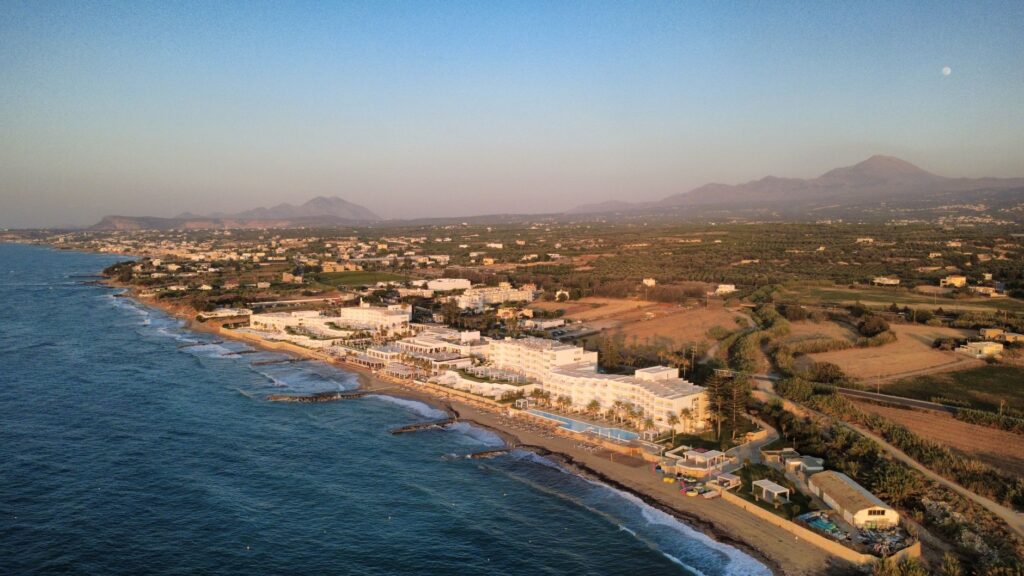
Locals insist that true Cretan character is not found on coastal avenues, but in the arid interior and agricultural valleys where the sacred triad of the Mediterranean diet is cultivated: wheat, olive and vine. Here, the landscape is humanized by dry-stone walls built over generations, a physical testament to peasant patience. The earth demands effort and rewards with authenticity, local farmers remind us, warning against the temptation to seek an accelerated experience in a geography designed for slowness.
Vernacular Architecture and Stone Refuges
Crete’s traditional architecture strictly responds to the need for shelter against an unforgiving climate and a history marked by corsair raids. The rural dwellings of the white villages in the Lefka Ori, or White Mountains, are structured around fortified interior patios, using local masonry in ochre and gray tones that blend organically with the slopes. In recent years, a movement of respectful renovation has transformed former olive mills and stately manors into small independent lodgings that prioritize original materials: chestnut beams, hydraulic floor tiles and whitewashed walls.
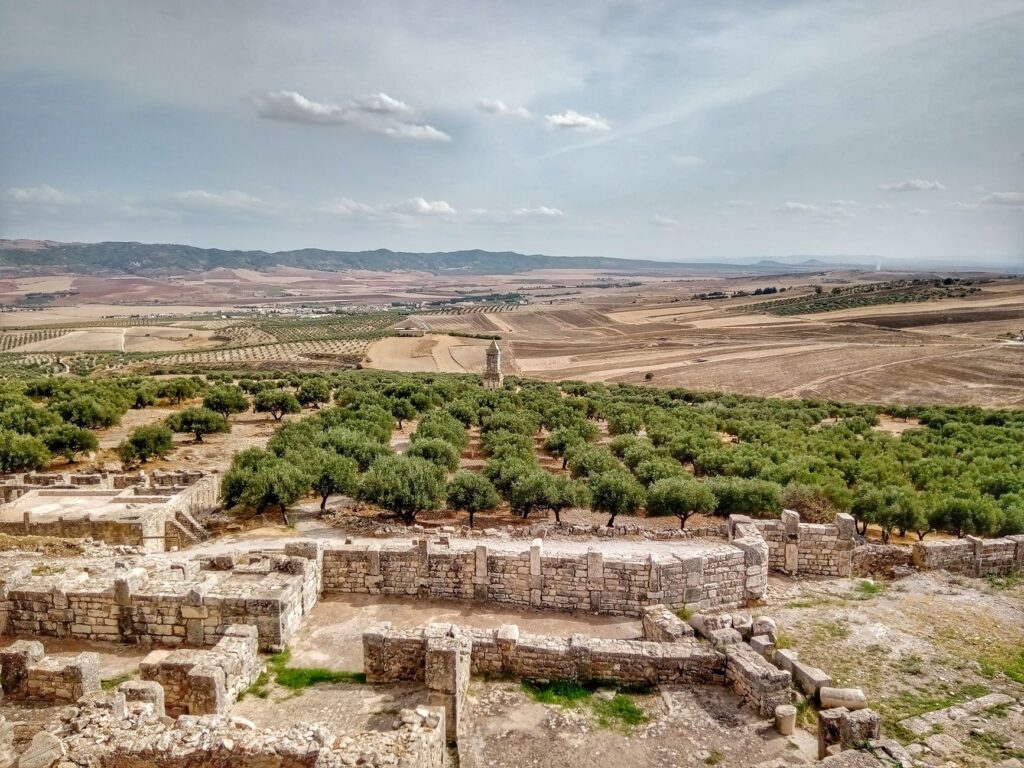
Staying in these highland retreats implies joining a vital rhythm conditioned by sun and wind. Unlike the large-scale hotel complexes colonizing the northern coast, these spaces champion digital disconnection and direct contact with the community. Luxury in the interior of Crete is not measured by excess amenities, but by absolute silence and the purity of the air descending from the peaks. Local architects leading this recovery argue that restoring built heritage is the only way to prevent the depopulation of rural communities.
The Invisible Cookbook: The Cuisine of Memory and Resistance
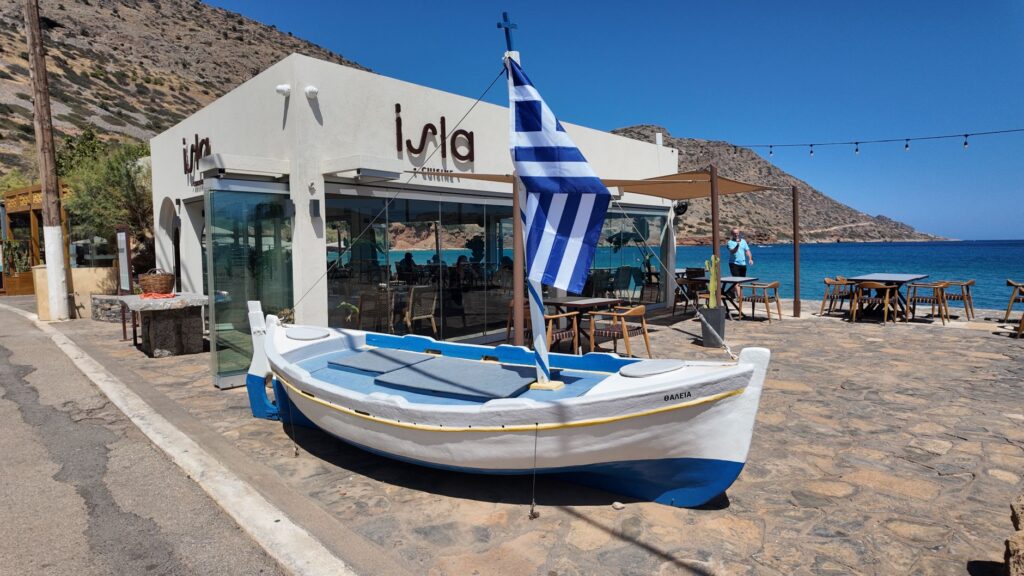
Cretan gastronomy constitutes one of Europe’s richest intangible heritages, grounded in frugality and the absolute utilization of wild resources. Far from standardized haute cuisine, the tavernas recommended by local residents operate with zero-kilometer produce from private gardens or direct agreements with area shepherds. Wild greens such as stamnagathi, goat cheeses matured in high-mountain caves like graviera, and meats slowly roasted over wood fire configure a menu where each dish tells a story of survival and celebration.
Extra virgin olive oil is not a mere condiment, but the guiding thread of the entire culinary experience. Local producers explain that the koroneiki variety, cultivated on terraced plots exposed to sea breezes and intense sun, generates a unique organoleptic profile, slightly pungent and low in acidity. Sitting at a communal table in a village like Vamos or Anogia means understanding that food in Crete is an unbreakable social act, where hospitality toward the traveler is a moral norm as old as the earth itself.
Living Craftsmanship: Trades That Refuse to Disappear
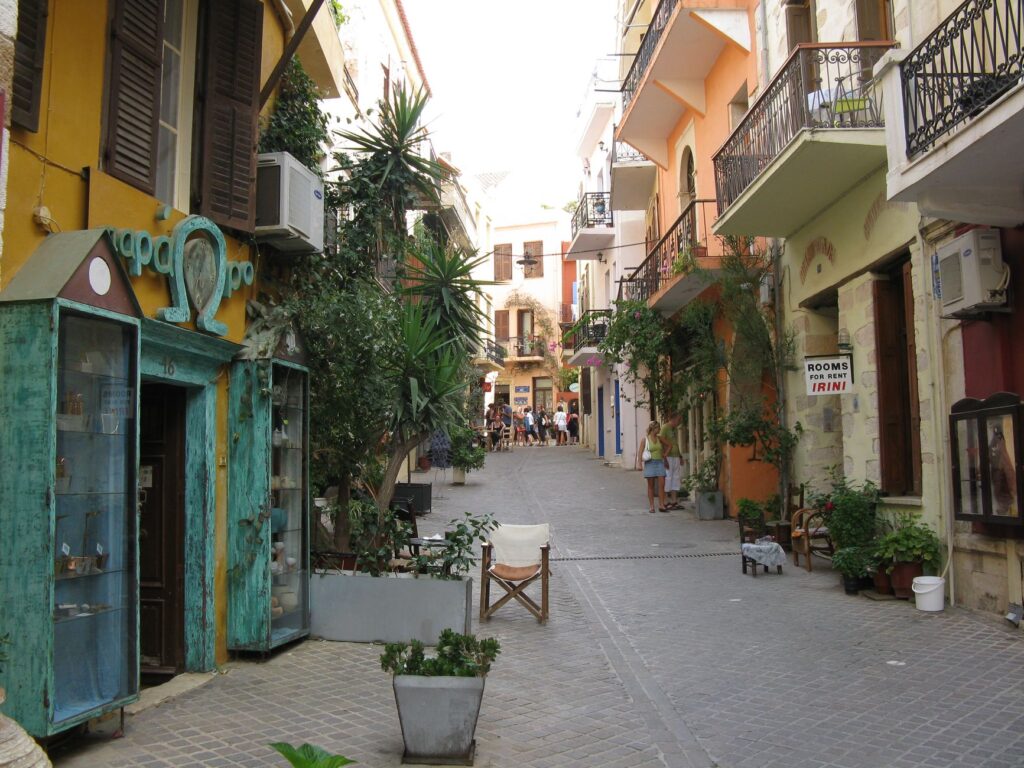
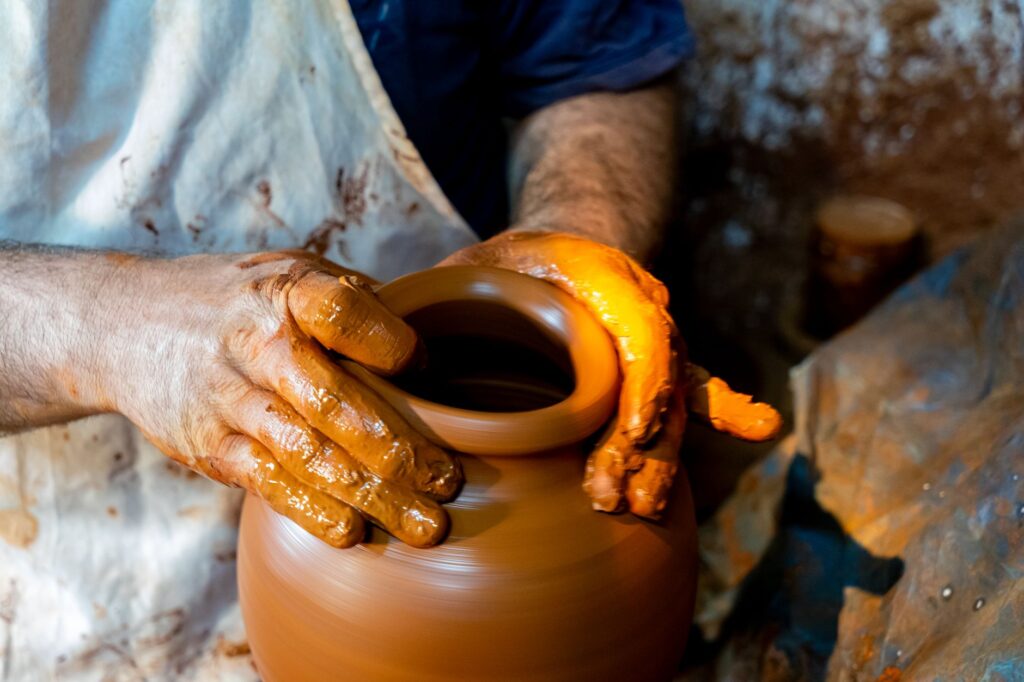
In the cobblestone alleys of Venetian historic centers and the hidden workshops of the highlands, a new generation of artisans revives trades once doomed to oblivion. From the manual making of traditional leather boots to utilitarian ceramics fired in wood-burning kilns, contemporary Cretan craftsmanship dialogues with modern design without losing its practical function. These creators do not seek to supply the mass market of disposable souvenirs, but to produce durable objects reflecting the geological and cultural identity of the island.
Visiting these workshops reveals a level of technical mastery transmitted almost exclusively through oral tradition. Local ceramists and weavers emphasize that working with regional raw materials—local clays, indigenous wools and plant dyes extracted from Cretan flora—is an act of cultural resistance against global homogenization. A territory’s true sovereignty lies in its capacity to continue manufacturing what it needs with the hands of its inhabitants, master artisans note in their workspaces.
The Secret Coastline: Steep Coves and Unaltered Waters
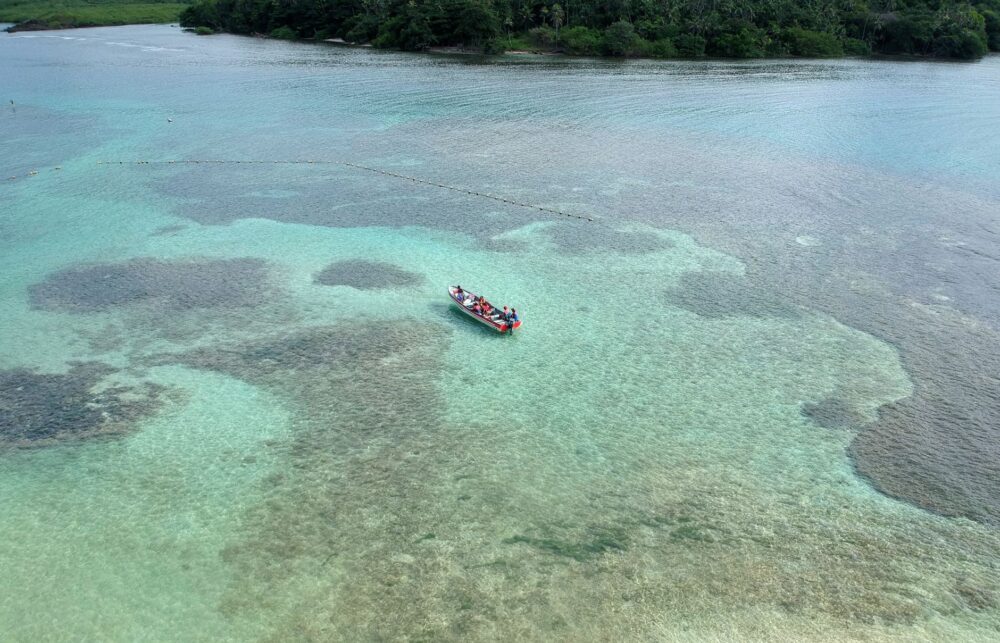
Although mass tourism tends to concentrate on the organized beaches of Heraklion and Agios Nikolaos, southern and western Crete conceal a string of pristine shores and wild coves accessible only on foot via mountain trails or small local boats. Beaches such as those on the Gramvousa peninsula or the cliffs of the southern coast offer a geological spectacle where turquoise waters contrast with white stone and endemic vegetation. These environments are strictly protected by environmental regulations preventing any invasive construction.
Local environmental defenders insist on the need for extreme caution when visiting these fragile ecosystems, recalling that uncontrolled tourism pressure threatens dune flora and nesting areas for protected species such as loggerhead sea turtles. Enjoying these waters implies adopting a low-impact ethic, respecting established limits and leaving no trace of human presence in landscapes that retain their primordial beauty intact.
Practical guide
- Getting There: Heraklion International Airport (HER) and Chania Airport (CHQ) operate regular flights from Athens and major European capitals year-round. Daily ferry connections also operate from the port of Piraeus to the island’s main coastal enclaves.
- Interior Transportation: Renting a robust vehicle, preferably medium or high clearance, is essential to safely navigate secondary mountain roads and access southern beaches. Public bus lines connect major cities but prove inefficient for exploring rural areas.
- Accommodation: Prioritizing independent small boutique hotels in Venetian historic centers or restored rural houses in the interior of Chania and Lasithi regions is recommended to directly support the local economy.
- Gastronomy and Shopping: Seek out family-run tavernas away from commercial waterfront promenades and purchase goods directly from local producers in traditional markets such as Chania’s, prioritizing olive oil, thyme honey and textile crafts.
The Pulse of Dusk: When the Island Recovers Its Essential Rhythm
As golden afternoon light begins to slide over stone roofs and Byzantine bell towers, Crete recovers a solemn quietude that seems to erase the tensions of the contemporary world. In village squares, beneath the ancient shade of plane trees, residents gather to share a Greek coffee or a glass of tsikoudia, observing the horizon with the certainty of those who inhabit a territory that has reinvented itself a thousand times without losing its soul. It is in that exact instant, when daytime bustle fades and sea breeze blends with the aroma of sage and rosemary, that the traveler understands the true essence of the island is not a destination to visit, but a deep cadence to assimilate forever.
Source in The New York Times