
Introduction to the Last Frontier of Europe’s Most Endangered Feline
The silence in the Mediterranean woodland of Sierra Morena possesses a dense, almost tactile quality, broken only by the dry crackle of rockroses under the western wind. In this territory of gentle hills, ancient holm oaks, and dense thickets, the survival of one of the planet’s most unique predators plays out daily on the margins of firebreaks and shady slopes. The Iberian lynx (Lynx pardinus), once condemned to the very brink of biological extinction, today represents one of the most complex and fascinating case studies in contemporary conservation biology. Far from the romantic clichés that often surround its return, the reality of its habitat in Jaén is an intricate tapestry where game management, fragmented demography, and rigorous scientific monitoring converge.
Understanding the current dynamics of lynx populations in the mountains of Jaén requires abandoning a purely contemplative gaze in order to delve into radio-tracking protocols, spatial ecology, and the availability of its key prey: the European rabbit (Oryctolagus cuniculus). Throughout this report, we will analyze how the recovery of this feline is not merely a matter of adding individuals to a census, but of rebuilding the ecological corridors connecting populations once isolated by human infrastructure, intensive agriculture, and exclusion fences.
Geological Origins and Mediterranean Scrubland Ecology
The topography of Sierra Morena is the result of a Paleozoic basement deeply altered by differential erosion, generating a rounded relief of primary mountains descending in glacis toward the Guadalquivir valley. This siliceous substrate, composed mainly of slates, quartzites, and granites, determines the chemical poverty of soils where vegetation has had to develop complex adaptation strategies. The Mediterranean sclerophyllous forest, dominated by holm oaks (Quercus ilex), cork oaks (Quercus suber), and gall oaks in the more humid gullies, merges with a dense, impenetrable understory of gum rockrose (Cistus ladanifer), mastic, heather, and strawberry tree.
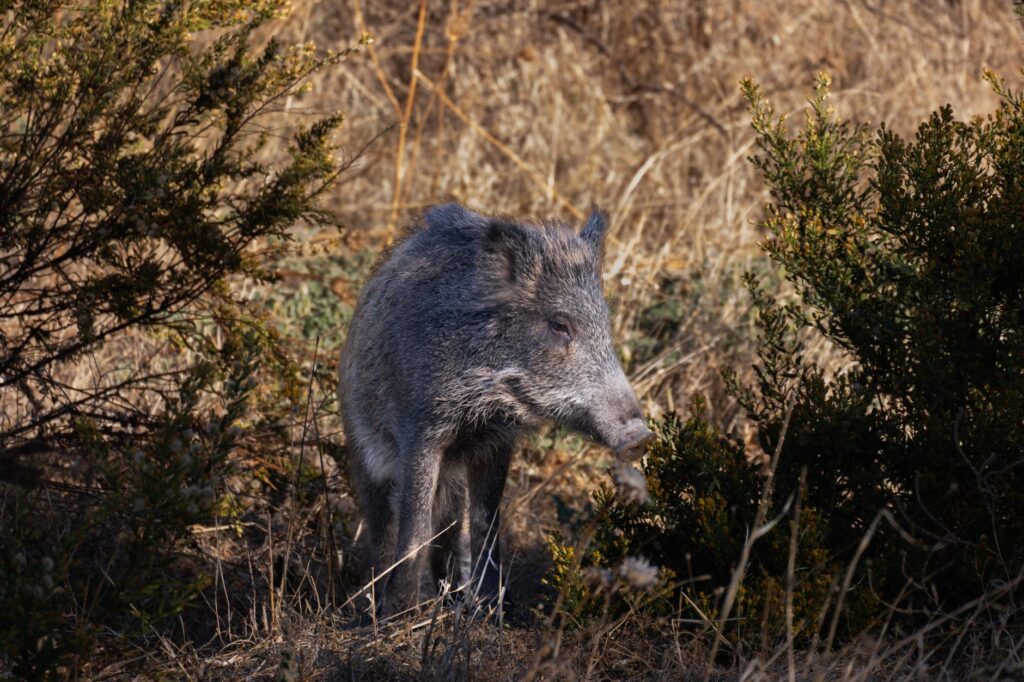
This plant mosaic is not a static backdrop, but a highly complex tridimensional structure that the Iberian lynx utilizes as vital substrate. Unlike the Eurasian lynx, which favors more forested and mountainous habits, Lynx pardinus has evolved in close dependence on ecotones: the transition zones between closed brushwood—where it finds secure shelter for reproduction and daytime rest—and open pastures or dehesas, where rabbit populations thrive. The historical fragmentation of these habitats, accelerated during the second half of the twentieth century by agricultural transformation and land consolidation, divided feline populations into isolated and genetically vulnerable nuclei.
Trophic Dynamics: The Absolute Dependence on the Wild Rabbit
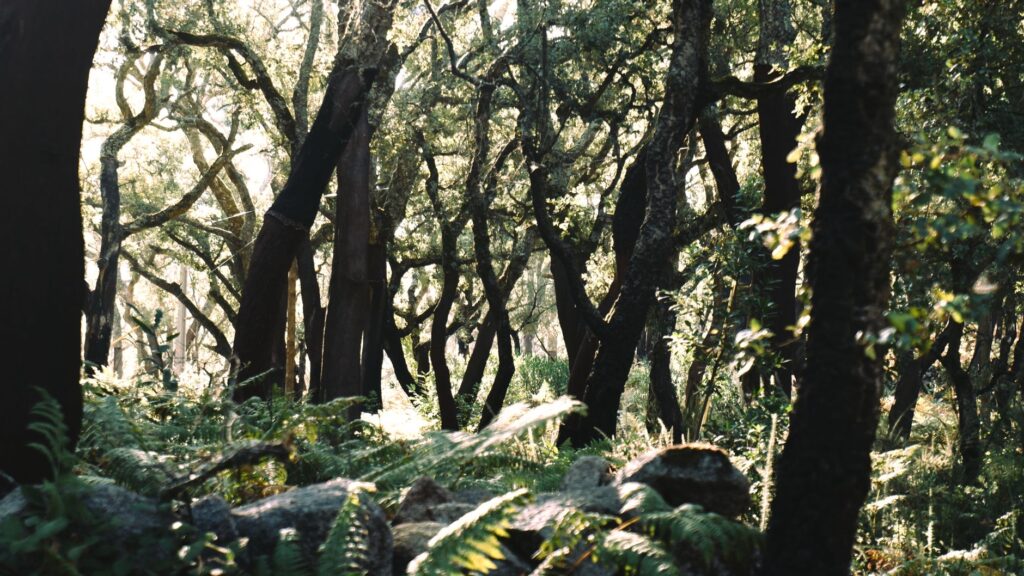
No analysis of Iberian lynx demography can ignore its extreme trophic specialization. While other generalist top predators can alternate food resources with relative ease, the Iberian lynx is a hyper-specialized consumer whose diet depends for more than eighty percent on a single species: the wild rabbit. This reliance turns the feline into a biological hostage of its prey’s demographic fluctuations, a factor that has multiplied the species’ vulnerability to viral disease outbreaks such as myxomatosis and rabbit hemorrhagic disease (RHD).
Across the estates of Sierra Morena, game management of the rabbit has become the cornerstone upon which lynx conservation pivots. Population support programs include constructing artificial warrens, installing strategic watering holes, and planting supplemental crops to maintain minimum lagomorph densities capable of sustaining breeding females and their litters. Temporary rabbit scarcity not only reduces birth rates, but drastically increases juvenile mortality through starvation and forced dispersal in search of new hunting territories.
The conservation of the Iberian lynx does not rest on protective decrees on paper, but on the microscopic health of rabbit populations and the integrity of low-scrub corridors.
Demography and Dispersal: The Challenges of Spatial Connectivity
During the most critical decades of the conservation crisis at the end of the last century, the total population of Iberian lynxes was reduced to fewer than a hundred individuals fragmented into two uncommunicated Andalusian nuclei: Doñana and Sierra Morena itself. This critical situation pushed the species to the verge of inbreeding depression, with an alarming loss of genetic variability manifesting as cardiac pathologies, low fertility, and increased susceptibility to infectious diseases. Current censuses, which well exceed one thousand free-ranging individuals distributed across the Iberian Peninsula, reflect unprecedented success but also reveal new challenges associated with demographic density.
As traditional territories in Sierra Morena saturate, subadult individuals—especially young males—are forced to embark on long dispersal journeys in search of vacant areas to establish their own home ranges. These juvenile movements represent true ecological fire tests. Lynxes must cross high-speed roads, industrial parks, and vast expanses of intensive crops where the risk of vehicle collision or poaching is high. Landscape permeability has thus become the key indicator for measuring the maturity of conservation programs.
Mitigating Non-Natural Mortality and Habitat Restoration
Non-natural mortality remains the primary anthropogenic threat to the Iberian lynx. Roadkill on the secondary and tertiary road network crossing Sierra Morena continues to claim the lives of breeding individuals every year, despite the continuous efforts of administrations and conservation organizations to fence blackspots and construct specific wildlife overpasses and underpasses. These structures, designed with native vegetation and devoid of artificial lighting, simulate continuous woodland, allowing fauna to cross without the luminous or acoustic stress of vehicular traffic.
Concurrently, habitat restoration projects funded by European grants have transformed thousands of hectares of monospecific eucalyptus or pine plantations into mixed stands of Mediterranean forest. These actions not only benefit lynxes and rabbits, but also increase general ecosystem biodiversity, favoring wild ungulates, threatened raptors such as the Spanish imperial eagle, and rich entomofauna associated with dead wood and mature scrub. Hydrological-forest restoration of minor riverbeds also ensures water availability during increasingly long and severe summers driven by climatic shifts.

Population Genetics and the Impact of Reintroduction Programs
The genetic rescue of the Iberian lynx has been a surgical precision operation coordinated by multidisciplinary teams of geneticists, veterinarians, and field biologists. Through the ex-situ conservation program centered at the El Acebuche breeding center and other collaborative facilities, a rigorous studbook has been managed to maximize allelic diversity and prevent consanguineous matings. Captive-born individuals undergo a strict protocol of minimal imprinting and acclimatization to wild conditions prior to release in new reintroduction areas.
These reintroductions are not limited to reinforcing Sierra Morena, but have enabled the colonization of historical territories in the Montes de Toledo, the Guadiana valley, Extremadura, and Portugal. Each translocation of individuals requires prior analysis of the receptor ecosystem’s carrying capacity, social acceptance by local stakeholders—especially hunters and farmers—and the establishment of land stewardship agreements with private estate owners. Peaceful cohabitation between traditional human activity and the presence of a superpredator continues to demand constant, transparent educational outreach.
The Human Factor: Extensive Livestock, Hunting, and Land Stewardship
No long-term conservation strategy can consolidate itself while ignoring the rural communities that inhabit and economically exploit Sierra Morena. Historically perceived by some sectors as direct competition for small game or as a regulatory nuisance, the Iberian lynx has gradually transformed into an asset of regional pride and, in specific cases, an engine for sustainable economic development through specialized nature tourism and associated agri-environmental subsidies.

Land stewardship agreements with hunting and livestock estate owners are the most effective tool to safeguard feline habitat without requiring public expropriations. In exchange for economic incentives and free technical advice, private managers commit to maintaining environmentally friendly practices, limiting harmful agrochemicals, preserving shrub hedges, and moderating hunting pressure during critical seasons. This participatory governance model demonstrates that biodiversity conservation is fully compatible with the economic viability of traditional Mediterranean woodland uses.
Practical guide
Planning a respectful and rigorous visit to the Iberian lynx influence zones in Sierra Morena requires understanding the ecological and legal limitations of a highly sensitive protected area.
- Best Time to Visit: Autumn months (October to December) and early spring (February to April) offer moderate temperatures and greater crepuscular wildlife activity, coinciding with the lynx mating season.
- Getting There: Main access is from Jaén or Andújar via the A-6177 road, which winds through the heart of the Sierra de Andújar Natural Park. Private vehicles or light four-wheel-drive cars are recommended for authorized forestry tracks.
- Sustainable Accommodation: Small rural hotels and accommodations certified with sustainable tourism labels operate in Andújar and Villanueva de la Reina, collaborating directly with local conservation projects.
- Responsible Observation: Directly sighting a free-roaming lynx is an extraordinary and fortuitous event. Leaving authorized paths, using acoustic lures, or approaching closer than two hundred meters to any specimen is strictly prohibited.
- Recommended Equipment: High-luminosity binoculars (8×42 or 10×42), a spotting scope with a tripod for long-distance observation from official viewpoints, neutral-toned clothing, and sturdy mountain footwear.
- Ethical Considerations: Wildlife photography must always prioritize the welfare of wild animals over obtaining a picture. Sharing precise specimen locations on social media can attract harmful overcrowding that disrupts their tranquility.
Visual Epilogue: The Amber Gaze in the Oak Forest Twilight
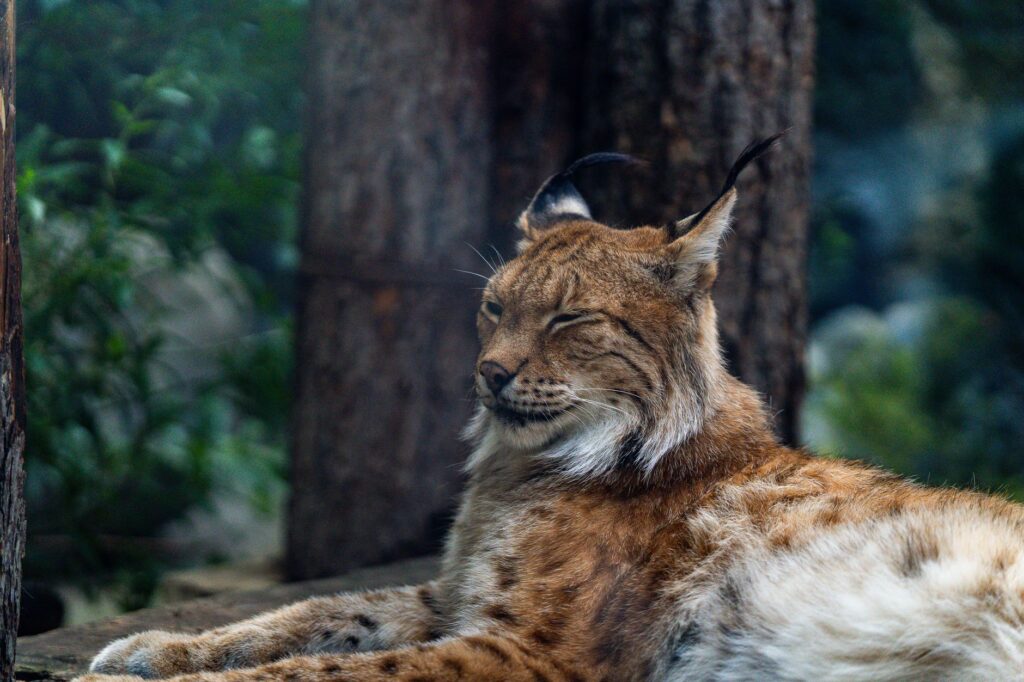
As evening falls, when the last horizontal sun rays pierce the twisted branches of holm oaks and cast elongated shadows across the slate ground, the Mediterranean woodland recovers its most intimate heartbeat. It is in this silent twilight that the Iberian lynx fleetingly reveals its presence: a compact silhouette with tufted ears and short tail, blending into the texture of the scrub before vanishing into darkness. It is not merely the numerical recovery of an endangered species being celebrated in these valleys of Jaén, but the restoration of an ancient ecological order, tangible proof that scientific patience and respect for the rhythms of the earth can reverse even the deepest abysses of oblivion.