
Navigating the Living Laboratory of the Pacific
The Colón Archipelago, universally known as the Galápagos, represents far more than a picturesque postcard destination; it is an intricate volcanic system where the laws of evolution continue to be written in real time beneath the ocean surface. Located some six hundred miles off the continental coast of Ecuador, this geological isolation gave rise to an endemic biodiversity that once challenged Charles Darwin’s scientific convictions aboard HMS Beagle. Today, traversing these waters aboard a research schooner requires understanding that the voyage is not a conventional cruise, but a miniature scientific expedition where every heading decision is dictated by the confluence of colossal water masses.
The geographical singularity of the Galápagos lies in its status as an oceanographic crossroads. Here, the cold Humboldt Current from the south, the warm Panama Current from the north, and the powerful subsurface Cromwell Current converge, upwelling on the western side to bathe the islands with essential nutrients. This dynamic generates drastic temperature and salinity contrasts within a matter of nautical miles, conditioning both marine fauna behavior and navigational stability. Planning an itinerary across this insular board demands absolute mastery of local nautical cartography, strict adherence to National Park regulations, and a crew capable of reading subtle shifts in the trade wind regime.
The Science of Currents and Insular Dynamics
Understanding the oceanography of the Galápagos is the inescapable first step for any captain or navigator intending to anchor in its protected coves. Unlike other tropical archipelagos where waters remain warm and calm, the equatorial Pacific around these islands acts as a biological turbine. The interaction between deep upwellings and the steep profiles of submerged volcanic cones creates high-energy cross currents capable of deflecting smaller vessels if not anticipated with mathematical precision. Semidiurnal tides, with ranges exceeding two meters in certain areas, complicate access to the narrow channels separating islands such as Isabela and Fernandina.
During the garúa months, from June to December, the thermal inversion layer saturates the air with low mist and fosters phytoplankton proliferation. This phenomenon, while reducing surface visibility, triggers a trophic explosion that attracts humpback whales, hammerhead sharks, and colonies of Galápagos penguins—the only Spheniscidae species inhabiting north of the equator. Conversely, the warm season from January to May offers crystal-clear waters and a calmer sea, ideal for technical diving and seabird observation during peak nesting season. The choice of temporal window entirely defines the nature of the voyage, compelling navigators to balance meteorological conditions with the biological cycles of the fauna.
Naval Architecture and Logistics of a Scientific Schooner
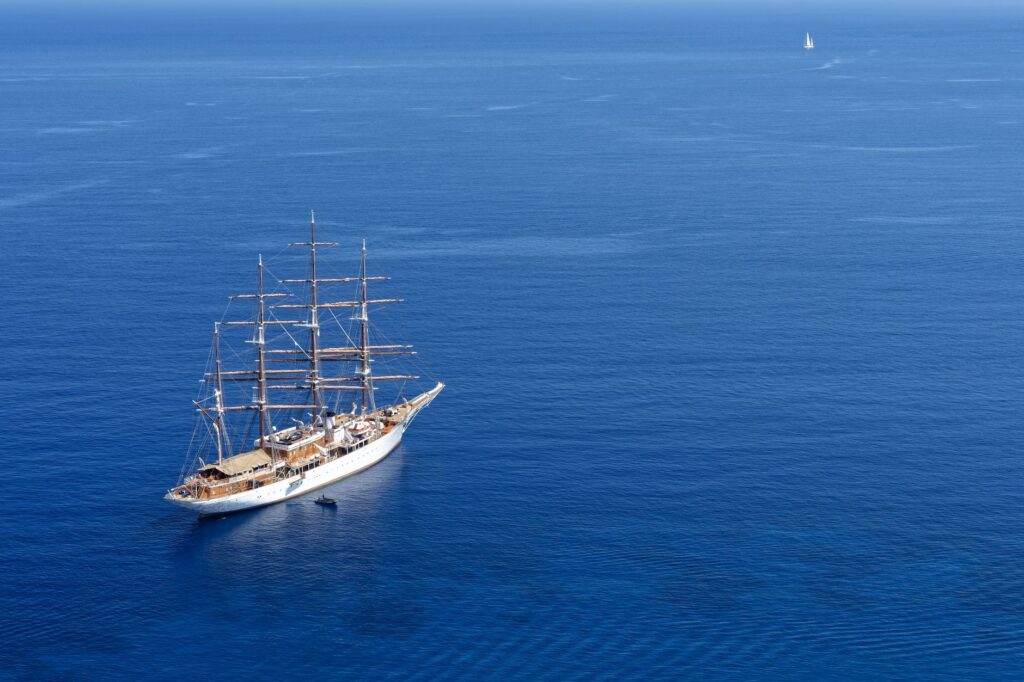
Unlike large commercial cruise ships operating under rigid schedules and standardized routes, transit aboard a research schooner prioritizes flexibility and low environmental impact. These vessels, typically rigged with classic designs and equipped with high-efficiency hybrid auxiliary engines, allow access to the most remote anchorages without disrupting fragile underwater acoustics. Space management on board is an exercise in meticulous engineering: from the distribution of freshwater tanks to the storage of scientific samples and autonomous diving gear.
Logistical autonomy is a critical factor in a territory where external provisioning infrastructure is non-existent outside the main ports of San Cristóbal and Santa Cruz. Each voyage must accurately calculate fuel consumption, seawater desalination capacity, and comprehensive waste management under the strict zero liquid or solid discharge rule. Energy self-sufficiency thus becomes the operational standard, utilizing marine solar panels and heat recovery systems that minimize the expedition’s carbon footprint in one of the planet’s most closely monitored ecological sanctuaries.
The sea is not simply a medium to be crossed; it is the living archive where the Earth records its own evolutionary history, demanding an attitude of absolute respect and attentive listening from the navigator.
The Rhythm of the Deck and Life on Board
The daily routine aboard a scientific schooner in the Galápagos is governed by the compass of the sun and the tides. The first lights of dawn find the crew reviewing navigation instruments and planning the inter-island jump before thermal winds reach peak intensity. Naturalists and scientists on board establish watches combining ornithological observation with oceanographic monitoring, recording surface water temperature, salinity, and the presence of climate change indicator species. Each anchorage is an opportunity to disembark in low-profile zodiacs for study dives or landings at points designated by park authorities.
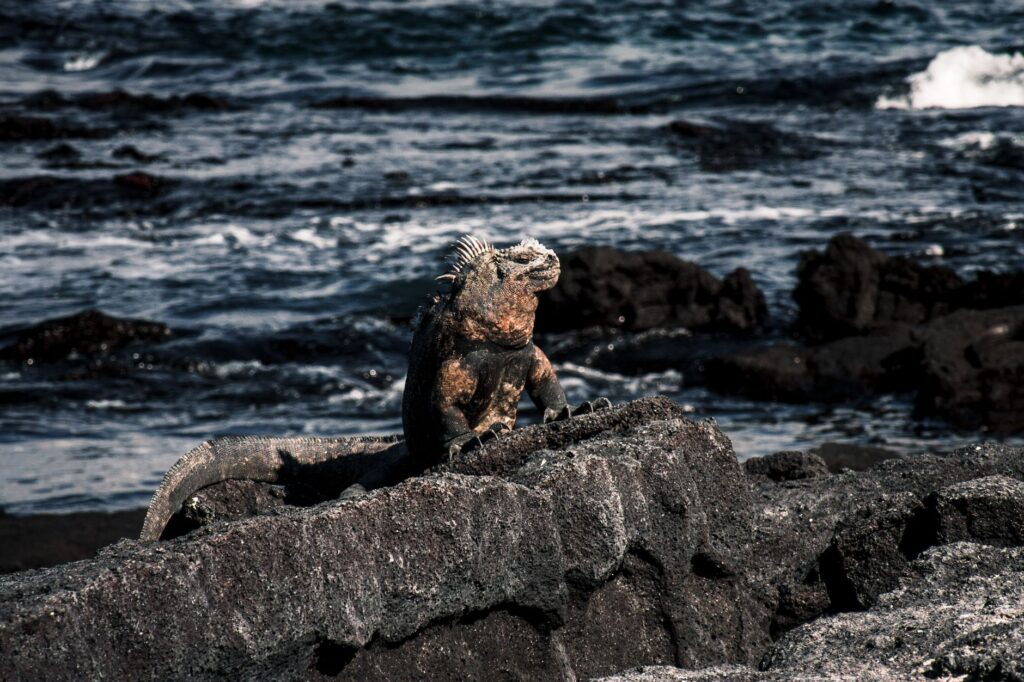
Living in confined quarters fosters a unique camaraderie among sailors, researchers, and experienced travelers. Nighttime conversations on the main deck, beneath an austral sky free of light pollution, revolve around the geology of underwater seamounts and theories of sympatric speciation observed in finches and marine iguanas. There is no room for ostentatious luxury; the true privilege lies in exclusive access and the opportunity to witness firsthand an ecosystem functioning beyond the pressures of the industrialized world. Onboard gastronomy, based on sustainable local produce from inhabited islands, reinforces the bond with the archipelago’s community economy.
Ports of Call and Regulation of Insular Traffic
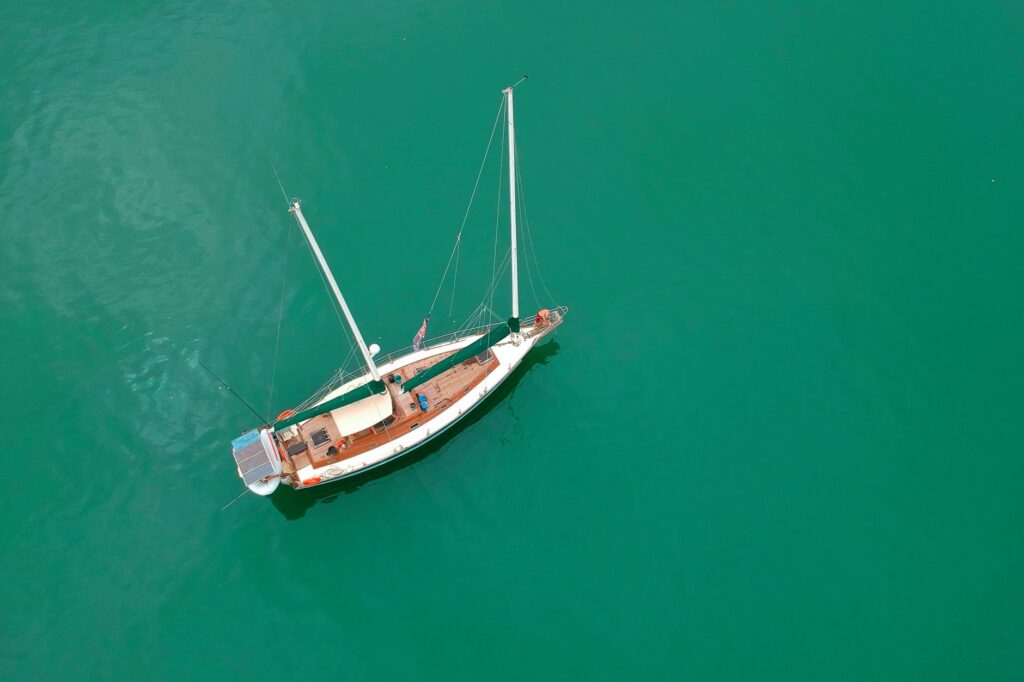
Maritime traffic control in the Galápagos is centralized by the Galápagos National Park Directorate and the Port Captaincy, agencies enforcing compliance with the authorized visitor regime. No vessel may anchor in prohibited areas or exceed the daily visitor quota at terrestrial visitor sites. Landing points are carefully rotated to allow local flora and fauna to recover. Puerto Baquerizo Moreno, on San Cristóbal Island, serves as the administrative hub and official port of entry for most scientific expeditions, offering customs, immigration, and technical provisioning services.
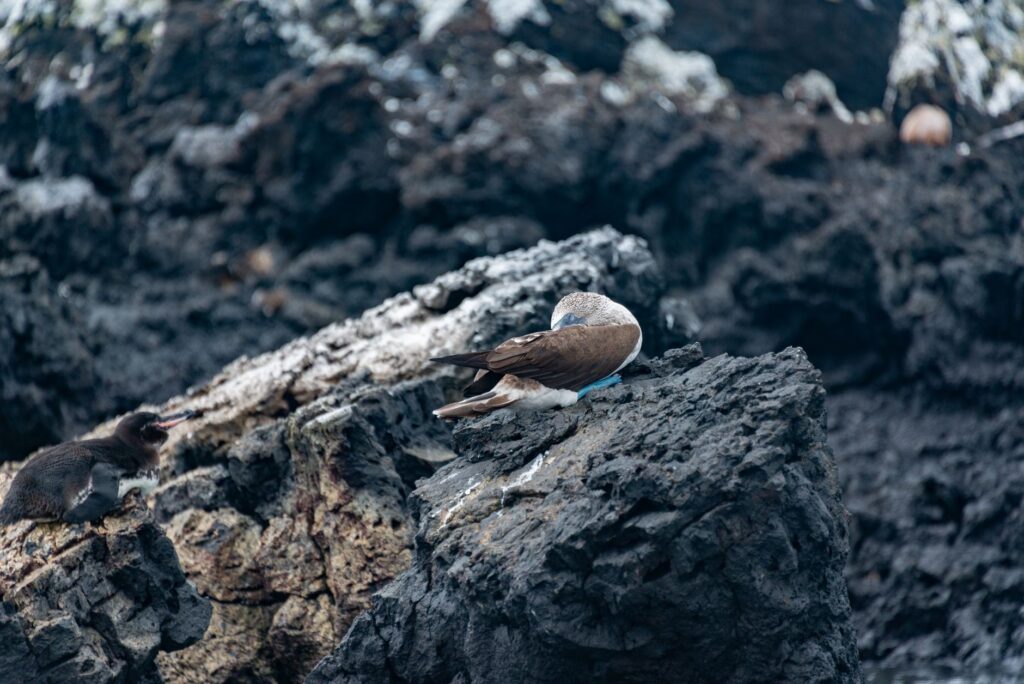
Navigating westward, the archipelago becomes progressively wilder and uninhabited. The passage toward the channel between Isabela and Fernandina requires extreme caution due to intense submarine volcanic activity and the constant presence of unpredictable tidal currents. In these confines, historical anchorages used by whalers and pirates in past centuries now serve as temporary refuges subject to strict research authorizations. Knowing the approach regulations for sea lion colonies, blue-footed boobies, and flightless cormorants is as important as mastering the use of the sextant or onboard radar.

Conserving an oceanic archipelago does not mean prohibiting access, but regulating it with scientific rigor so that human presence becomes a testimony of respect rather than a cause of alteration.
Practical guide
How to get there: Flights to the archipelago operate daily from Quito and Guayaquil, landing at Baltra (GPS) or San Cristóbal (SCY) airports. Acquiring the Transit Control Card (TCT) at the continental airport and paying the National Park entry fee upon arrival is mandatory.
Navigation requirements and permits: Operating a vessel or contracting a private scientific or advanced adventure expedition requires processing permits months in advance through authorized tour operators certified by the Ministry of Tourism and the Galápagos National Park Directorate.
Best time for the traverse: From June to December (cool or garúa season), ideal for active marine fauna observation and cold currents; from January to May (warm season), recommended for transparent waters, snorkeling, and bird nesting.
Recommended equipment: Quick-drying technical clothing, waterproof windbreaker, high-traction footwear for hikes over basaltic lava, photographic equipment with waterproof housing, and analog navigation elements as redundant backup to electronic systems.
The Final Echo at the Edge of the Islands
When the schooner shuts down its main engines on the final night of the expedition and lets itself be gently rocked by the swell in a sheltered bay of Santiago Island, the silence of the Pacific acquires unusual density. In the darkness, the blows of distant whales and the faint murmur of sea lion colonies on the shore recall the persistence of a world prior to human intervention. This journey across the archipelago is measured neither in nautical miles covered nor in ports visited, but in the capacity to tune into the deep pulse of nature. The Galápagos, viewed from the deck of a schooner that respects its rhythms and laws, leave an indelible mark on the navigator’s spirit, reminding them that the true luxury of modern exploration consists in preserving the wonder of the unknown.