
The Invisible Architecture of Wood and Tin
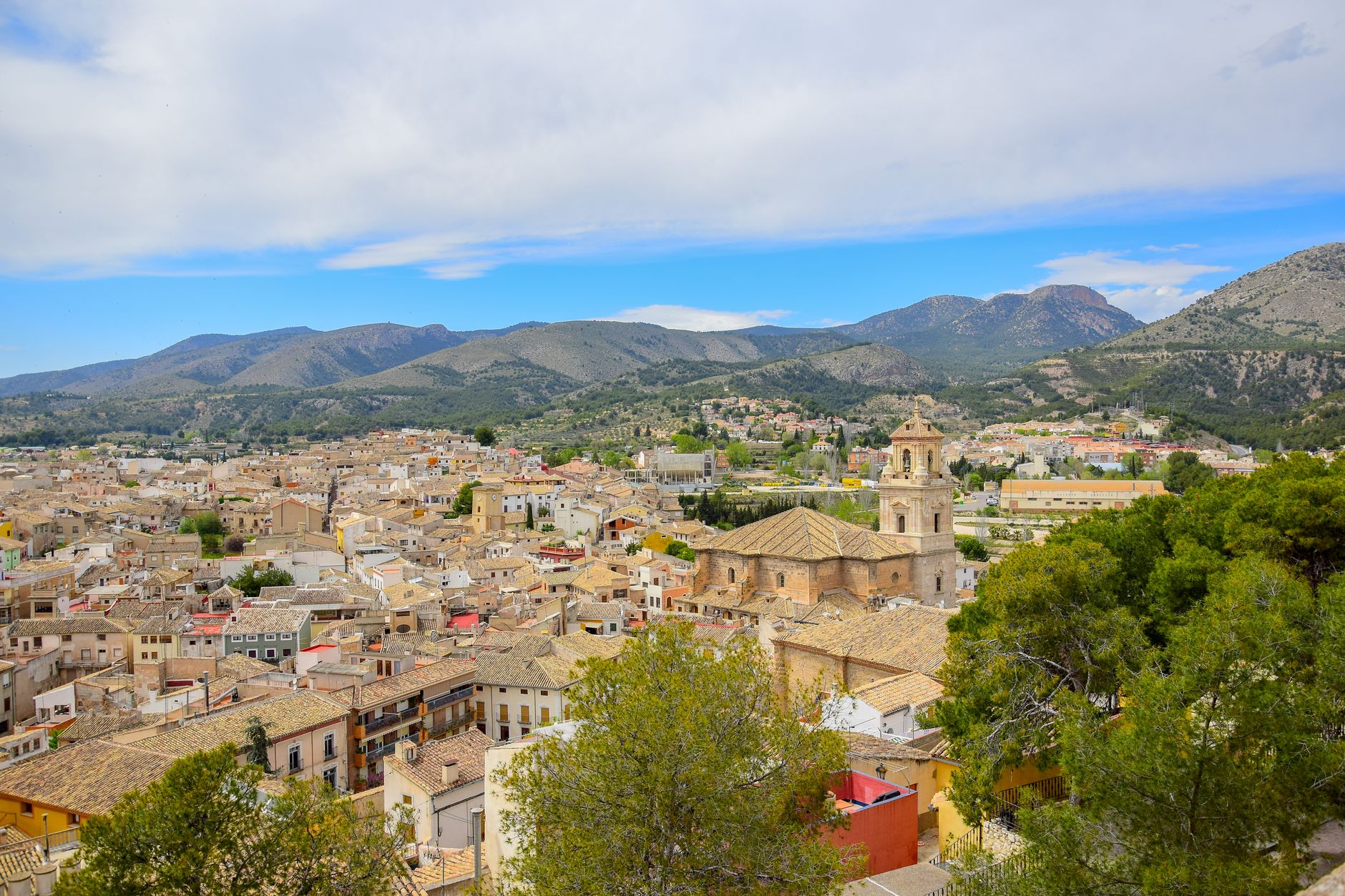
In the heart of the high Castilian plateau, where river gorges carve the limestone with a geological patience identical to that of the artisan, time is measured not in seconds, but in vibrations. Cuenca, a city perched on the abyss of its own monumental history, guards an acoustic secret in its depths that is rarely brought to the light of day. Far from the tourist bustle that traverses the walkways of its hanging houses, organ-building workshops continue to operate with the same unhurried rhythms that governed medieval guilds. Here, oak wood, molten tin, and lambskin are transformed into a complex, living machinery: the pipe organ.
To understand the magnitude of this living heritage, one must delve into workshops where compressed air takes on melodic form. A pipe organ is not merely a musical instrument; it is a portable cathedral, a supreme synthesis of mechanical engineering, carpentry, acoustics, and artistic casting. Each piece is unrepeatable, conceived exclusively for the architectural space it will inhabit. The acoustics of a Gothic church or the sobriety of a Renaissance ambulatory impose inescapable physical laws that the master organ builder must decipher before drawing the first blueprint on the workbench.
The organ-building tradition in Cuenca traces its roots back to the centuries of cathedral splendor, when the diocese required instruments capable of lifting liturgical chant up to the ribbed vaults. Today, the few workshops that hold their ground in the province combine absolute fidelity to traditional techniques with scientific research applied to heritage restoration. This is not a task of mere museum preservation, but an exercise in permanent technical updating that returns a voice to centuries-old instruments silenced by dust, woodworm, or unfortunate past interventions.
The Alchemy of the Pipe: When Metal Sings
The creation process of an organ begins long before the first sound resonates in the temple nave. Everything starts in the foundry, a space where heat and millimeter precision go hand in hand. The alloys of lead and tin, poured in secret proportions over sand or cloth tables, determine the definitive timbre of each stop. A higher percentage of tin provides brilliance and harmonic clarity, while lead imparts roundness and depth to the lower registers. The master founder calculates the thickness of the metal plates with a tactile sensitivity granted only by decades of practiced craftsmanship.
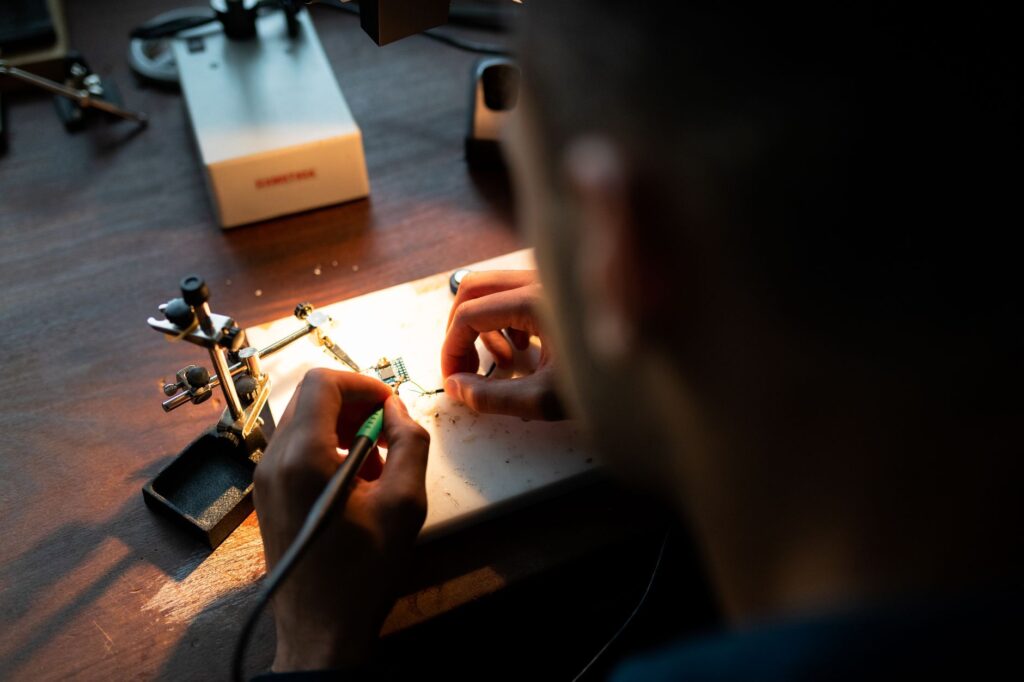
Once the metal has cooled, the plates are cut, shaped into cylindrical or conical forms, and soldered by hand using pure tin solder. This procedure, repeated thousands of times for a single instrument, demands absolute concentration. An error of a tenth of a millimeter in the diameter of a pipe’s upper lip can alter the tuning or turn a crystalline sound into a useless breath. The geometry of the pipe is, in essence, a mathematical equation translated into noble matter.
The organ is the only instrument capable of simulating human respiration through wood and metal, transforming sterile wind into collective emotion.
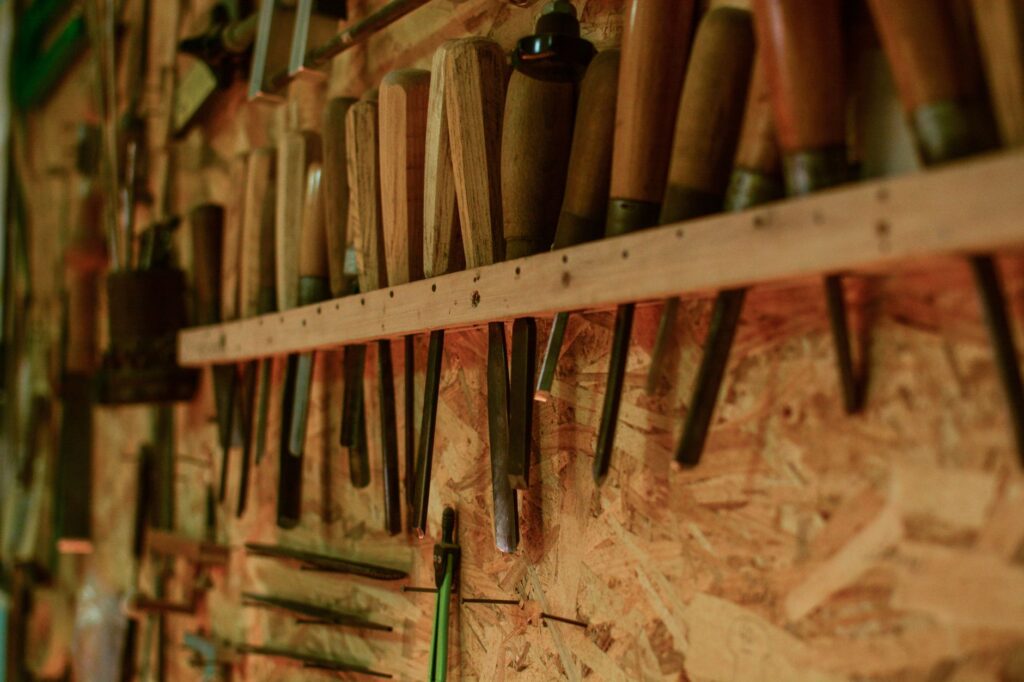
Added to this metallic phase is precision carpentry, responsible for shaping the console, keyboards, soundboards, and the windchest. The windchest is precisely the hidden heart of the instrument: a compartmentalized wooden box with valves that distribute air from the bellows to the corresponding pipes when the organist depresses a key. The wood used must be seasoned naturally for years, protected from abrupt drafts and drastic changes in humidity, to prevent even the slightest deformation from ruining the system’s airtightness.
The Geometry of Wind: The Windchest and the Console
The design of the windchest requires absolute mastery of precision mechanics. In the workshops of Cuenca, wind channels are assembled from stable woods such as cedar or fir, sealing the joints with animal skins and traditional glues. Any air leak in this intricate network of conduits results in a pressure loss that weakens the sound of the pipes. Therefore, airtightness is verified through exhaustive manual tests before final assembly at the destination site.
In front of the windchest sits the console, the command bridge from which the musician dialogues with the sonic mass. The keyboards—traditionally veneered in bone and noble wood—draw stops, and pedals configure an ergonomic interface perfected over centuries. Today, artisans combine historical aesthetics with advanced mechanical solutions that lighten key touch, allowing for more fluid execution without sacrificing the classic feel of pure mechanical action. This balance between heritage respect and contemporary ergonomics defines the excellence of the current school.
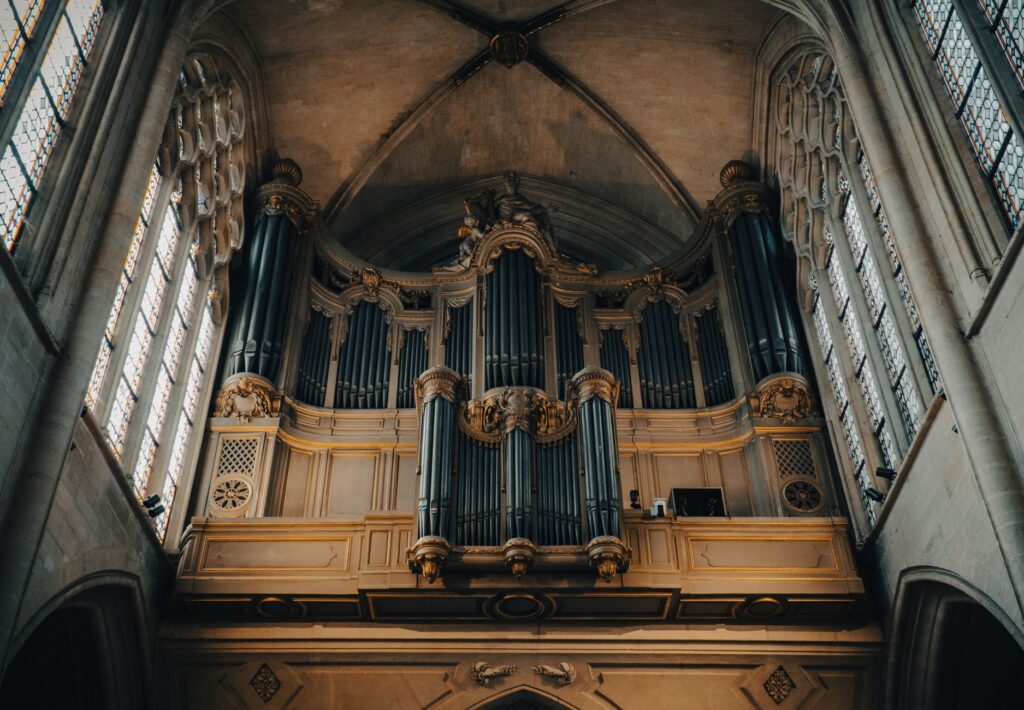
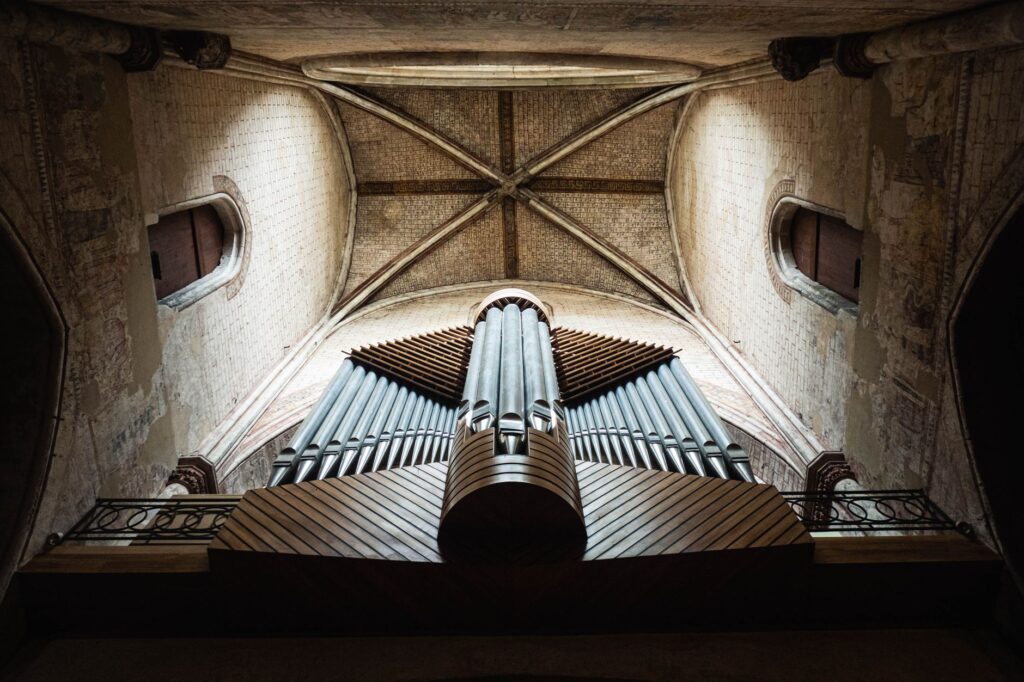
The spatial arrangement of the pipes on the instrument’s facade responds to both aesthetic and acoustic criteria. The larger stops, such as the sixteen- or thirty-two-foot bourdons, are distributed along the sides or at the back, while the higher-pitched pipes occupy the visual front line. This visual architecture, known as the pipe case or facade layout, turns the organ into an authentic monumental sculpture presiding over the liturgical or concert space.
Restoration as Sonic Archaeology
One of the most delicate chapters in the work of organ-building workshops is the recovery of historical instruments. Working on a baroque or renaissance organ demands an exercise of humility and archaeological respect comparable to pictorial restoration. Every notch in the metal, every trace of ink on the pipes, and every modification introduced by previous generations constitutes a historical document that must be analyzed before making any decision on disassembly or replacement.
The process begins with an exhaustive metric and photographic survey. Samples of the original materials are extracted to analyze metal alloys and glues in a laboratory. When a piece is irremediably damaged by woodworm or oxidation, it is reproduced mimetically using the same tools and techniques of the original construction era. The introduction of modern synthetic materials that could alter the physical and hygroscopic behavior of the instrumental ensemble is avoided at all costs.
Technical Documentation: Metric, photographic, and acoustic analysis prior to any material intervention.
Ultrasonic Cleaning: Removal of accumulated dust and surface oxides without altering the historical patina of metals.
Pipe Reconstruction: Manual fabrication of missing pipes mimicking original alloys and thicknesses.
Tempered Tuning: Restoration of historical tuning systems, such as meantone or unequal temperaments.
This meticulousness turns every restoration into a journey through time. When the restored pipes sound once again, the instrument recovers the exact timbre heard by 17th- and 18th-century composers, offering contemporary performers the opportunity to execute early music with the sonic parameters for which it was originally conceived.
The Role of New Generations and Training Centers
The future of this ancient art faces an inescapable generational challenge. The scarcity of generational turnover and the technical complexity of training—requiring knowledge of music, acoustic physics, fine cabinetry, and metal chemistry—force a rethinking of apprenticeship models. Current masters in Castilla-La Mancha combine their productive work with mentoring young apprentices from art schools and superior conservatories.
Far from viewing digitalization as a threat, contemporary workshops integrate computer-aided design tools to model complex pipe geometries and air channels, optimizing calculation times without losing an iota of manual execution. However, the final tuning and voicing phase depends entirely on the human ear, that transferable sensitivity acquired only after years of attentive listening in highly reverberant spaces.
Cultural and academic institutions are beginning to recognize the urgency of protecting this intangible heritage through specialization grants and rigorous cataloging of the historical instrument inventory. However, the true guarantee of survival lies in the passion of those who decide to consecrate their hands and days to keeping the breath of bronze alive.
Practical guide
Planning a visit to approach the organ heritage of Cuenca requires understanding that many of these instruments are located inside religious buildings subject to strict liturgical or conservation schedules. The best way to enter this universe is to combine an urban tour with attendance at specialized concert cycles.
How to Get There: Cuenca is exceptionally well connected to Madrid and Valencia via AVE and Avant high-speed trains, situated less than an hour from both capitals. To tour the churches of the mountain range and province, renting a private car is the most recommended option.
When to Go: Spring and autumn months offer ideal weather for cultural tourism. Additionally, sacred and early music festivals are held during summer and autumn, allowing visitors to hear the restored organs in prime acoustic conditions.
Key Visit Points: The Cathedral of Santa María and San Julián houses important historic organs and constitutes the epicenter of Cuenca’s musical tradition. Likewise, various parish churches in the province preserve specimens of great baroque value, accessible by appointment with local tourism offices.
Respect Guidelines: During visits to artisanal workshops, booking in advance is essential, as masters work under extreme conditions of silence and concentration. In religious temples, respect for worship must be maintained, and flash photography should be avoided in heritage-value areas.
The Perennial Echo of the Silent Cathedral
When evening falls over the gorges of Cuenca and workshop lights flicker out one by one, the certainty remains that art is not only what is beheld, but what is breathed. Deep inside a tin pipe, in the straight grain of an oak plank seasoned for decades, and in the steady pulse of the artisan smoothing a joint with a hot iron, beats a form of resistance against the transience of the modern world. There is no rush in these workshops; only the subtle urgency of capturing the wind and turning it into eternity.
The master organ builders of this Castilian land continue to tune the silence, weaving with invisible threads of music and metal the sonic memory of entire generations. Approaching their work is understanding that the most valuable heritage is not that which rests motionless in a display case, but that which, at the slightest touch of a key, is able to fill space with the intact vibration of beauty.