
The Thermal Roots of the Eastern Empire
On the northwestern edge of Shikoku Island, where the Seto Inland Sea laps against the slopes of Ehime Prefecture, stands one of Japan’s oldest and most jealously guarded cultural treasures. Dōgo Onsen is not merely a bathing complex; it is a millennial institution whose existence is documented in the Nihon Shoki, one of the nation’s oldest classical texts, dated to the year 720. For centuries, emperors, wandering poets, and pilgrims have traveled the steep paths of Matsuyama to immerse themselves in these pure waters, seeking not only physical relief but a direct communion with the volcanic nature pulsing beneath the archipelago.
The region’s geology explains the persistence of this liquid miracle. Unlike other volcanic enclaves where waters emerge laden with corrosive sulfur or aggressive minerals, the subsoil of Dōgo avoids all harshness. Here, water wells up completely naturally at a constant temperature between 42 and 46 degrees Celsius, requiring no mechanical pumping or artificial heating systems. It is an alkaline liquid, soft to the touch, free of heavy sulfur components, and rich in mineral salts that relieve muscular tension and promote cellular regeneration. This exceptional hydrogeological balance has allowed the facilities to maintain uninterrupted activity across the centuries.
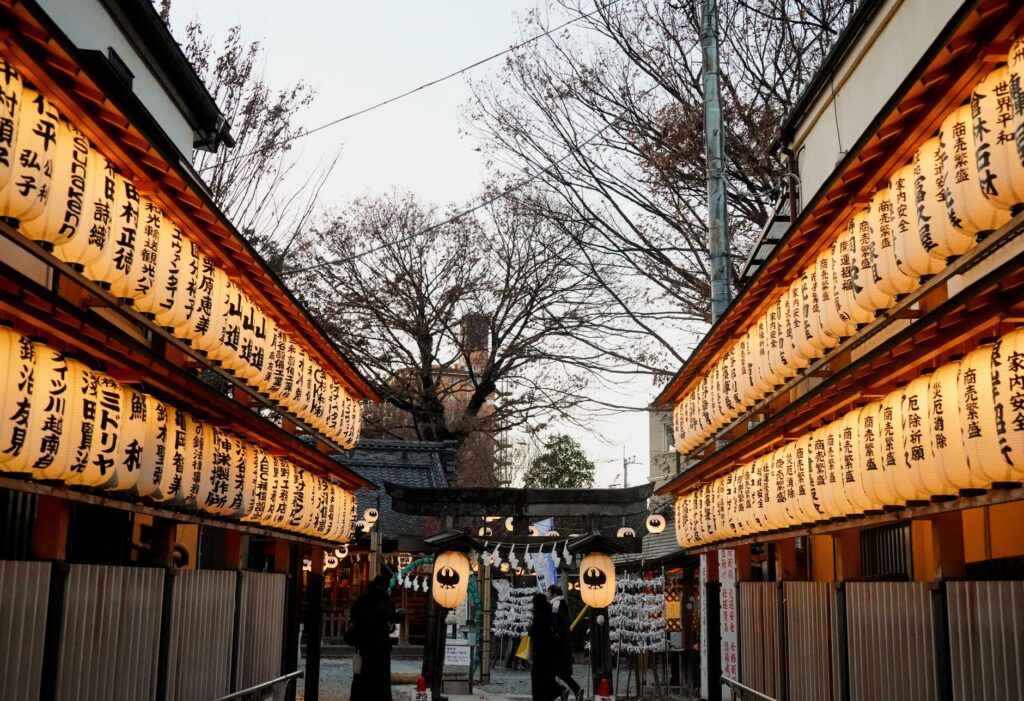
The contemporary traveler arriving at Matsuyama station immediately perceives a shift in rhythm. The hustle and bustle of Honshu’s massive industrial metropolises fades away, replaced by the leisurely pace of wooden trams winding toward the heart of the thermal district. Approaching the baths is not a mere logistical errand, but a mental transition. The surrounding streets, flanked by paper lanterns and traditional shops selling chestnut sweets and green tea, prepare the visitor for a ritual of stripping away. In Dōgo, external modernity is left at the door alongside shoes and everyday garments.
The Architecture of Memory and Timber
The nerve center of this universe is the main building of Dōgo Onsen Honkan, a masterpiece of traditional Japanese carpentry erected in 1894. This three-story colossus, built entirely of cedar wood without visible structural nails, defies the passage of time with sober and monumental elegance. Its silhouette, crowned by the Yushin-den tower—which houses a ceremonial drum whose beats announce midday and dusk to the entire neighborhood—is an exercise in vernacular architecture prioritizing harmony with the urban and natural landscape over any ostentatious pretension.
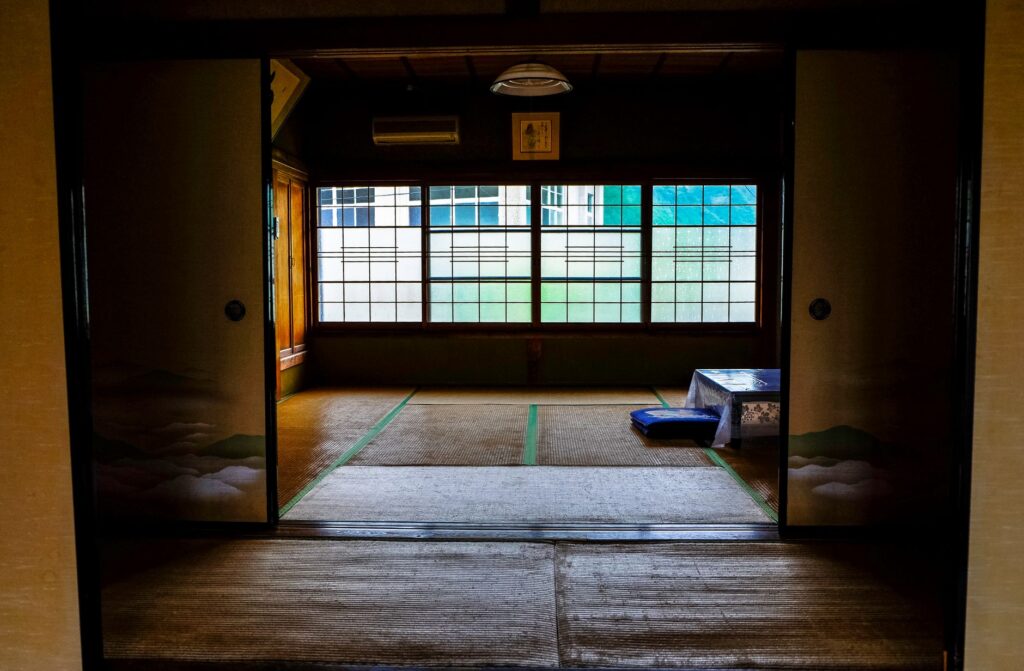
Stepping inside the Honkan is crossing a temporal threshold. The hallways, their planks darkened by the polish of millions of bare feet, creak with a characteristic musicality. Wooden lattice screens, known as *shōji*, filter natural light into amber and mahogany tones, while the labyrinthine staircases invite visitors to lose themselves in a journey where every floor reveals resting rooms lined with natural reed tatami mats. No two corridors are alike, nor two rooms identical; the building has grown through successive expansions that respect the original structure, generating an organic and deeply human labyrinth.
The public baths on the ground floor, strictly divided between the Kami-no-Yu (Bath of the Gods) and Tama-no-Yu (Bath of the Spirits) areas, are temples of functional simplicity. The bathing basins are sculpted from local rock, resisting the constant erosion of thermal water while reflecting rising steam against exposed high wooden ceilings. Here, superfluous luxuries do not exist; absolute prominence falls upon the act of collective, silent immersion. Bathers, seated on small wooden stools with metal buckets for the preliminary ritual of bodily purification, share a space of radical equality where the social statuses of the outside world are completely dissolved.
The true wealth of a journey is not measured by the distance covered in kilometers, but by the depth with which we are able to stop time and listen to the heartbeat of the earth beneath our feet.
The Cultural Pulse of Matsuyama and the Literary Legacy
Dōgo’s appeal far transcends its architectural and hydrothermal value; the area functions as a genuine cultural catalyst that has shaped Japan’s literary identity. In the late 19th century, renowned novelist Natsume Sōseki lived in Matsuyama working as a secondary school teacher. His deep fascination with the public baths was immortalized in his celebrated novel *Botchan*, a foundational work portraying with irony and affection the idiosyncrasies of provincial Japan facing the rapid westernization of the Meiji era. Today, visitors can walk the same paths that inspired the author and visit the original room within the thermal complex where he used to relax after classes.
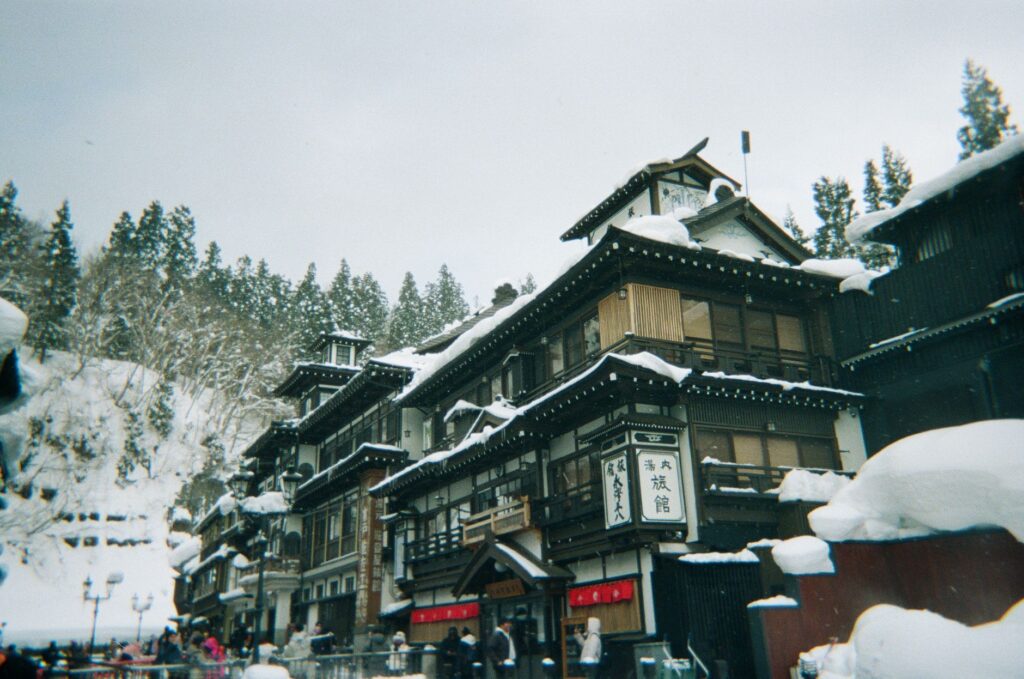
This cultural influence also extends to the contemporary visual universe. The iconic façade of the Honkan served as a direct source of inspiration for Hayao Miyazaki and the Studio Ghibli team when designing the fantastical bathhouse in the Oscar-winning film *Spirited Away*. Observing the main façade at dusk, when gas and electric lanterns light simultaneously and steam begins to escape through curved tiled roofs, is to immediately comprehend the genesis of that animated universe where everyday life constantly brushes against the supernatural and sacred.
However, Dōgo’s dynamism is not limited to the museum-like veneration of its past. In recent years, the town has promoted bold initiatives such as the contemporary art festival *Dōgo Onsen Art*, which invites renowned international creators to intervene in the historic building’s rooms with ephemeral installations, sculptures, and light projections. This daring coexistence between the millennial tradition of master carpenters and global aesthetic avant-gardes proves that Japan’s thermal heritage is not a sterile museum piece, but a living organism in permanent dialogue with contemporary concerns.
The Invisible Geography of the Surroundings
Beyond the walls of the Honkan, the district invites exploration on foot or via traditional rickshaws pulled by local porters. A few meters away stands Asuka-no-Yu, a modern annex inaugurated to expand the complex’s capacity without altering the neighborhood’s traditional aesthetic. Designed with a strong artisanal vocation, this building pays homage to Asuka-era architecture through traditional tiled roofs and landscaped interior courtyards where water and volcanic stone establish a constant, relaxing dialogue.
An essential stroll leads to Hōnen-ji temple and the vicinity of Dōgo Park, a green lung where blooming cherry blossoms in spring and red maples in autumn frame the ruins of ancient Matsuyama Castle, visible from the hilltop. The contrast between the fortified feudal citadel and the thermal vapors rising in the plain underscores the region’s historical duality: a territory where military defense and spiritual rest secularly coexisted under the tutelage of local clans.
Furthermore, local gastronomy plays a fundamental role in the immersion experience. In the narrow alleys of the covered market Dōgo Haikara-dōri, travelers can taste specialties such as *Tai-meshi* (rice cooked with a fresh whole sea bream caught in the Seto Inland Sea) and *Botan Miso*, accompanied by green tea cultivated on the mountain slopes of the prefecture. Each bite, much like every immersion in thermal water, responds to a philosophy of proximity and respect for seasonal cycles that defines the excellence of Japanese hospitality, known throughout the country under the ancestral concept of *omotenashi*.
Practical guide
- Getting there: Matsuyama Airport connects directly with Tokyo (Haneda and Narita) and Osaka (Itami) via regular domestic short-haul flights (between 60 and 90 minutes). From the airport terminal, a shuttle bus connects to the city center in approximately 30 minutes.
- Local transport: Matsuyama’s urban tram network is operated by Iyotetsu. The main line connects the central station to the Dōgo Onsen district in under 15 minutes. The historic tourist train *Botchan Ressha*, powered by a restored steam locomotive, offers a highly recommended scenic ride.
- Accommodation: For a complete experience, staying in a traditional *ryokan* with its own thermal waters, such as the historic *Funaya* or *Dōgo Prince Hotel*, is highly recommended. Stays include multi-course *kaiseki* dinners and the provision of *yukatas* for strolling the district.
- Bathing rules: Swimsuits are strictly prohibited in traditional onsens. Access is completely clothing-free. A small complimentary towel is provided for pre-wash hygiene at the showers and for discreet coverage when walking through dry areas, but it must never be submerged in the thermal water pools.
- Tattoos: Although tattoos have historically been associated with organized crime in Japan (*yakuza*), Dōgo Onsen Honkan and Asuka-no-Yu currently permit visitors with small tattoos, provided aesthetic adhesive patches are used to cover them if they exceed moderate dimensions.
- Best time to visit: Spring (March to May) and autumn (October to November) offer the most pleasant weather conditions for combining urban walks with warm thermal waters, avoiding the region’s humid summer heat and heavy rains.
Epilogue: The Vapor That Dissolves Borders
When the sun finally sets behind the forested peaks of Shikoku and red lanterns cast their glow over the dark wooden roofs of the Dōgo Onsen Honkan, time seems to suspend its inexorable march. The thermal waters, sprung from the very bowels of the earth millennia ago, continue to flow with the same silent constancy that witnessed emperors, wandering poets, and anonymous pilgrims. In that instant of absolute stillness, wrapped in warm vapor and the subtle scent of cedar wood, the traveler understands that the true distance they have traveled is not measured in thousands of transoceanic kilometers, but in the capacity to strip away the non-essential and reconnect with what truly matters.