September in Matarraña is a suspended moment in time. When the heavy tourism of August recedes, this region in the province of Teruel recovers its geological and human pulse. Amid limestone ravines, crystal-clear rivers, and medieval villages where time seems to slow down, this corner of eastern Aragon offers a much-needed pause. It is not merely about observing landscapes, but about inhabiting them through experiences that connect the territory with memory, contemporary artistic creation, and respect for ecosystems where the griffon vulture dictates the rhythm of the skies.
This report covers ten rigorous proposals to understand Matarraña beyond postcard clichés. From former railway infrastructure transformed into greenways to flour mills converted into sustainable design lodgings, the region proves that inland tourism can be avant-garde without abandoning its agricultural and livestock roots. September also delivers golden light and propitious weather for discovery on foot or on two wheels.
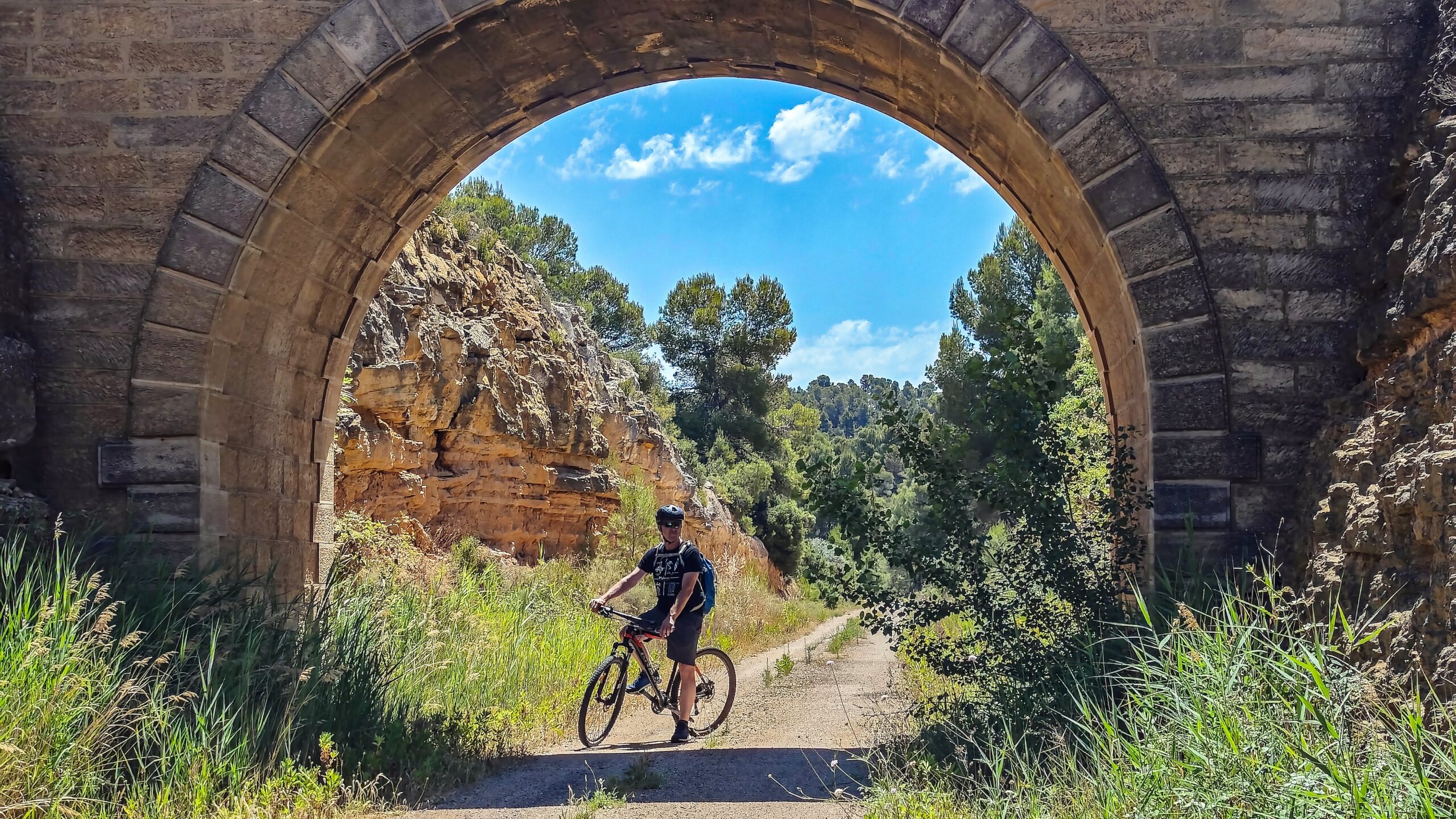
Pedaling along the old Val de Zafán railway route
The Val de Zafán Green Way stands out as one of the finest examples of industrial heritage regeneration in Spain. The section crossing Matarraña utilizes the railway layout that was never officially inaugurated, creating a secure corridor for cyclists and walkers. The route descends gently among vineyards, centennial olive groves, and restored stone stations that now serve as information points or rest areas.
Along the way, travelers cross numerous illuminated tunnels and metal viaducts spanning deep river ravines. The experience reveals the titanic scale of civil engineering projected at the beginning of the twentieth century. September offers the advantage of tackling central daylight hours without summer thermal stress, enjoying clear panoramic views toward the Ports of Beceite and surrounding valleys.
Walking among contemporary sculptures on the Solo Sculpture Trail
Contemporary art engages in a radical dialogue with the Mediterranean landscape along the Solo Sculpture Trail, an open-air route promoted by the Solo Foundation near Cretas. This wall-free museum integrates works by top-tier international creators into an environment of Mediterranean forest, holm oaks, and abandoned terraced fields.
The integration of sculptural pieces demands attentive observation, as many emerge directly from the terrain’s topography or play with the changing twilight light. Far from imposing themselves on the natural environment, artistic interventions invite visitors to rethink the relationship between humans, nature, and human modification in a territory historically inhabited and altered by dryland farming.
The circular flight of large raptors over limestone canyons recalls that this territory preserves an untamed and complex biodiversity, far removed from urban tempos.
Sleeping within the industrial memory of an old paper mill
Matarraña’s industrial architecture conceals remarkable surprises, such as the conversion of former flour mills and paper factories into unique lodgings. In towns like Beceite or Valderrobres, these stone structures located along riverbanks have recovered their vital pulse through respectful architectural rehabilitation projects.
Staying in these facilities allows guests to constantly hear the murmur of water, the element that structured the local economy for centuries. The conservation of original elements—such as sluice gates, wrought-iron machinery, and masonry walls—turns each stay into a living lesson in industrial archaeology, combined with high contemporary comfort standards and gastronomy based on zero-kilometer local produce.
Looking out over cliffside abysses and vulture nesting sites
Matarraña and the neighboring Maestrazgo region form one of the most significant faunistic strongholds in the Iberian Peninsula for scavenger birds. The imposing canyons carved by the Matarraña River and its tributaries shelter substantial colonies of griffon vultures, whose presence dominates the skies with soaring, silent flight.
Several natural viewpoints, accessible via low and medium-difficulty trails, allow visitors to observe the roosting habits and dynamics of these large raptors without disturbing their biological cycles. The contemplation of vultures gliding over rocky precipices transmits a sense of untamed nature that contrasts with the apparent pacification of the surrounding agricultural landscape.
Getting lost in the Gothic maze of Valderrobres
The administrative and historical capital of the region, Valderrobres is structured around a hill crowned by its imposing castle and the church of Santa María la Mayor. Crossing the medieval stone bridge over the Matarraña River marks the threshold of a historic quarter declared a Site of Cultural Interest, where steep streets wind upward between noble stone mansions and porticoed passages.
Visiting the monumental complex of the castle and episcopal palace clarifies the geopolitical and ecclesiastical importance of the area during the Middle Ages and the Renaissance. The maintenance of exposed stonework, the absence of distracting signage elements, and the preservation of the original urban layout turn an evening stroll through Valderrobres into a first-rate aesthetic experience.
Immerse yourself in the river pools of Beceite
Water serves as Matarraña’s liquid soul, concentrated most intensely in the narrow gorges and river cascades surrounding Beceite. In its upper course, the Matarraña River cuts through vertical rock walls, forming transparent pools popularly known as tolls, such as the renowned Toll de Vidre.
During September, river flows are generally favorable for aquatic walks or hiking routes tracing upstream under the shade of poplars and willows. Strict respect for the carrying capacity of these fragile natural spaces remains essential to preserve the ecological quality of waters nourishing the entire Ebro basin.
Discovering the monumental silence of Calaceite
Located in the northern sector of the region, Calaceite stands out for its civil architecture from the seventeenth and eighteenth centuries, characterized by sober ashlar stone, crafted wooden eaves, and defensive entrance portals. Historically, the town has served as a refuge for intellectuals, artists, and writers drawn by its timeless atmosphere.
Strolling through the Plaza de España or visiting the Juan Cabré Museum offers insight into Iberian archaeology and the tradition of millenarian olive trees surrounding the municipality. Air quality and the tranquility of its streets in September encourage leisurely reading and unhurried conversations with locals beneath the arcades.
Tasting the border pantry of Aragon, Catalonia, and Valencia
Matarraña’s cuisine stems from its border condition, a meeting point among Aragonese, Catalan, and Valencian culinary traditions. Pork products, extra virgin olive oils from the empeltre variety, winter black truffles, and Calanda peaches define a hearty recipe book tied firmly to the land.
Local tables highlight game dishes, lamb stews from sheep pastured in regional hills, and artisan pastries where cocas de recapte and flaones filled with cottage cheese or almonds stand out. Dining in Matarraña means engaging in direct dialogue with local producers who keep traditional crops alive in the face of rural depopulation.
Observing nighttime skies free from light pollution
Low population density and the scarcity of large urban centers make Matarraña a premier natural astronomical observatory. As night falls, the absence of light pollution reveals a pristine firmament where the Milky Way crosses the horizon with absolute clarity.
Several rural lodgings and municipal authorities promote stellar tourism, providing binoculars, celestial charts, and adapted spaces for nocturnal observation. Raising one’s gaze toward the Teruel sky in September, accompanied by the fresh breeze of the Mediterranean woodland, provides a fitting finale to a day immersed in nature and local culture.
The nocturnal darkness of the region, protected from metropolitan glare, restores the traveler’s capacity for wonder before the vastness of the cosmos.
Practical guide
How to get there: Matarraña lies in eastern Teruel, accessible mainly by road via the N-420 and N-232 highways. The nearest airports are Zaragoza, Reus, and Valencia, all situated approximately one and a half to two hours away by car.
When to go: September offers an ideal balance between pleasant temperatures, lower tourist influx, and the beginning of traditional agricultural tasks related to the grape harvest and fruit gathering.
Where to stay: Accommodations prioritize heritage restoration, featuring boutique hotels in former convents, repurposed paper mills in Beceite, and rural houses featuring traditional architecture in Valderrobres, Cretas, and Calaceite.
Gastronomy and shopping: Acquiring extra virgin olive oil with a designation of origin and local wine is essential. Restaurants in historic quarters combine traditional inland cuisine with cutting-edge proposals based on proximity produce.
Source in EN: El Viajero in EL PAÍS