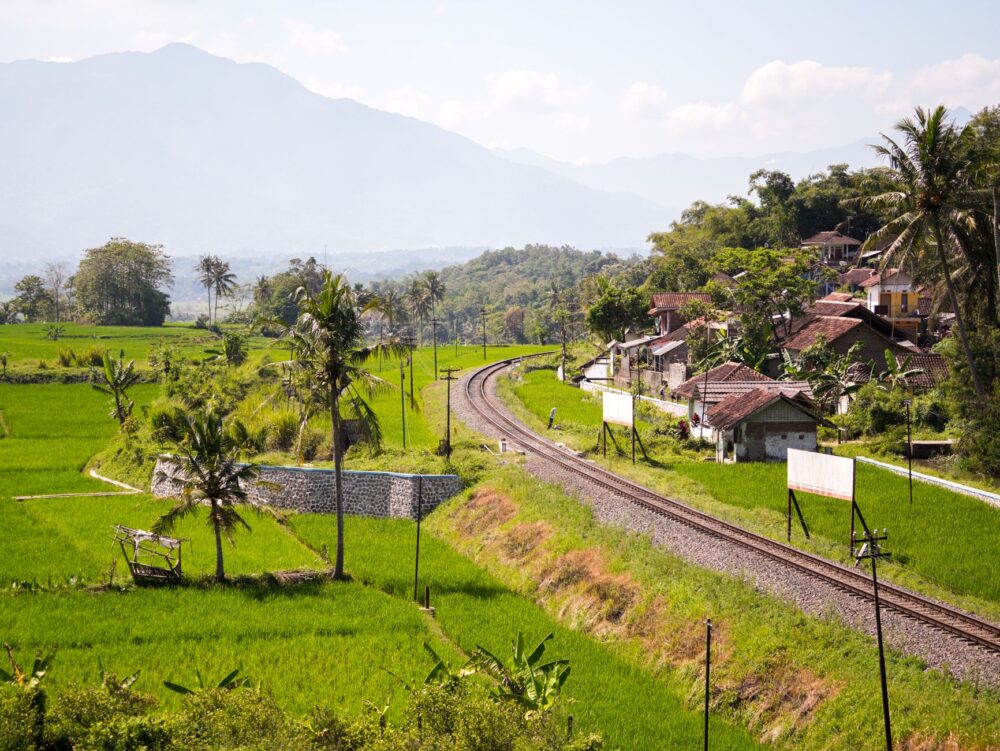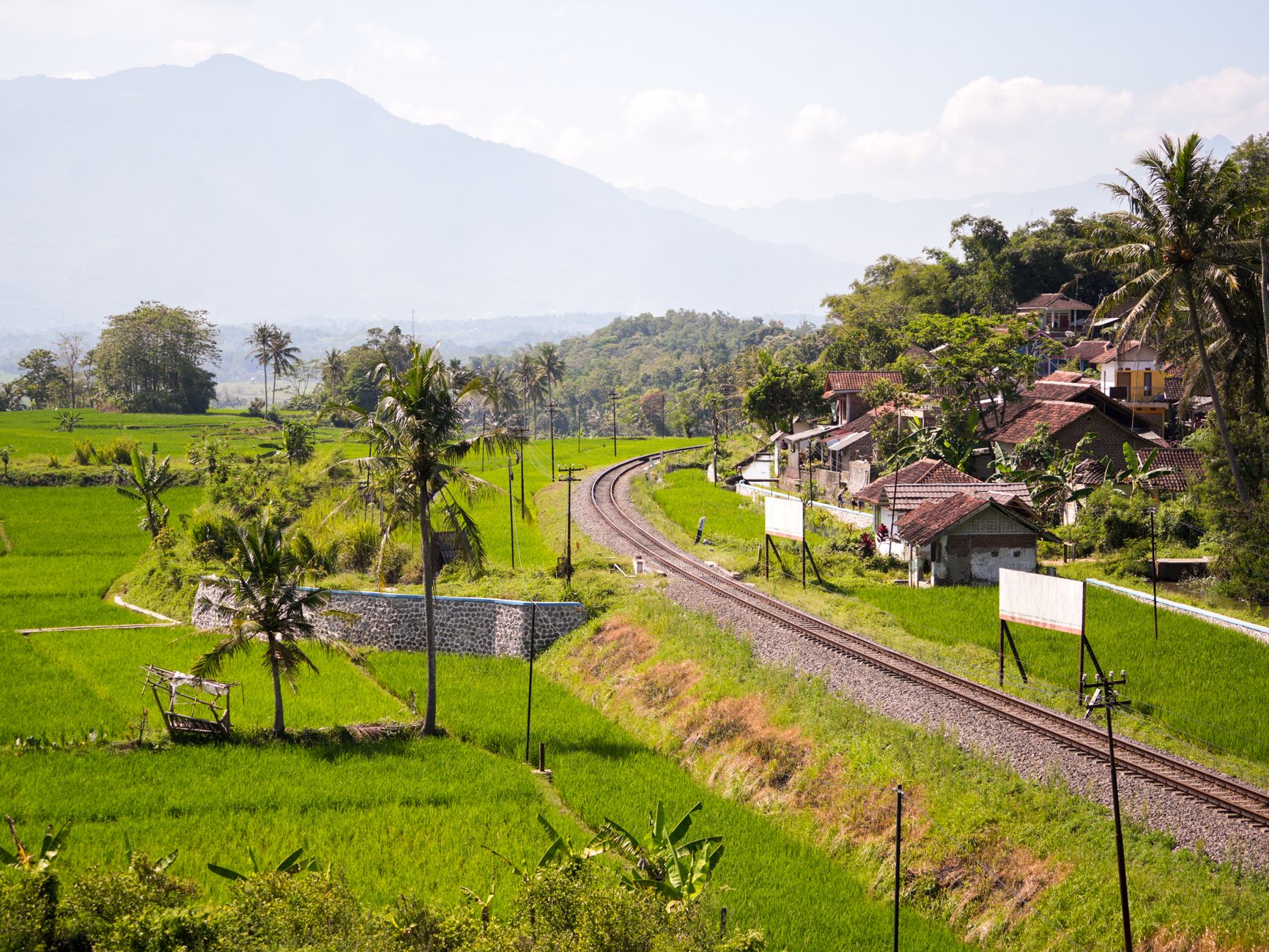

The backbone crossing the island of Java from west to east is far more than a simple transportation route; it stands as a masterpiece of nineteenth-century engineering adapted to one of the most geologically dynamic and complex reliefs on the planet. The railway system connecting Jakarta, the dense national capital on the northwestern coast, with Surabaya, the principal industrial port in East Java, represents the triumph of colonial logistical planning and its subsequent evolution into a contemporary high-efficiency network. Spanning over seven hundred kilometers of track, this rail corridor defies volcanic mountain chains, deep river valleys, and dense tropical rainforests.
Understanding the magnitude of this artery requires examining both its historical heritage and its current role in Indonesia’s economy. The locomotives traversing this route today not only carry millions of annual passengers but also sustain a vital intermodal supply chain for the archipelago. From century-old maintenance workshops to modern centralized traffic control centers, the Trans-Java Railway emerges as a fascinating case study in infrastructural resilience, maintenance under extreme climatic conditions, and regional connectivity.
Colonial Origins and Java’s Orographic Challenge
The genesis of the Javanese railway system dates back to the second half of the nineteenth century under Dutch colonial rule. The need to extract and export high-value agricultural commodities such as coffee, sugar, and tobacco cultivated in the fertile interior highlands prompted the colonial administration to seek alternatives to slow river transport and impassable overland roads during the monsoon seasons. The first section, inaugurated in 1867 between Semarang and Tanganggung, laid the foundations for what would later consolidate as an interconnected network under the state-owned Staatsspoorwegen company.
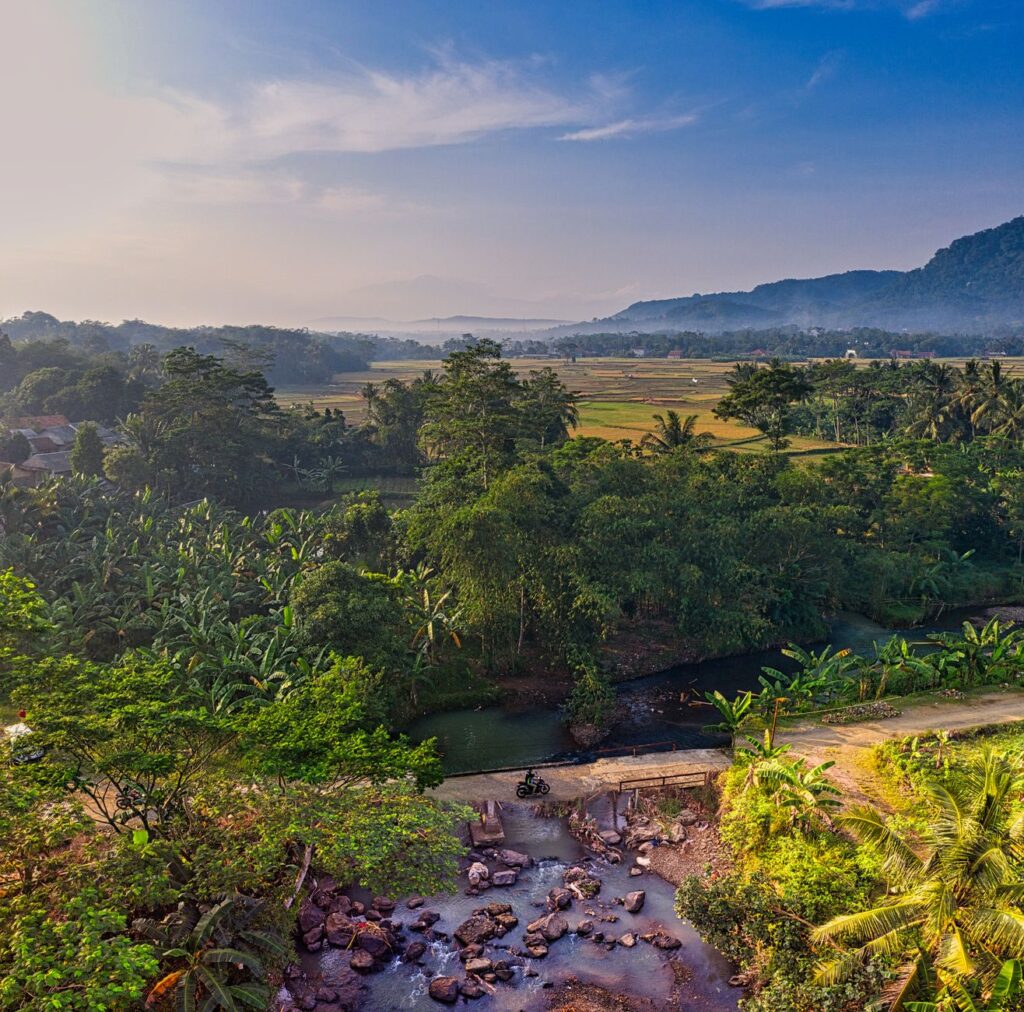
However, laying railway tracks across Java meant confronting formidable topographic barriers. The island is traversed by a central volcanic axis flanked by alluvial plains. Engineers of the era had to design winding paths, tunnels excavated in unstable basaltic rock, and high-altitude metal viaducts to bridge abrupt elevation changes, especially in the mountainous region separating Bandung from Yogyakarta. These iron and masonry monuments still stand, harmoniously integrated into a landscape where tropical nature exerts constant pressure on the built infrastructure.
Civil Engineering Against Volcanic Fury
One of the greatest technical challenges facing the Trans-Java Railway is its coexistence with the Pacific Ring of Fire. Constant seismic activity and the presence of active volcanoes such as Merapi, Semeru, and Bromo impose rigorous safety and maintenance protocols. The tracks must not only withstand the mechanical wear caused by heavy trains but also the accumulation of corrosive volcanic ash and landslides triggered by torrential monsoonal rains sweeping the region between November and April.
To mitigate these risks, the national operating company, Kereta Api Indonesia (KAI), maintains a permanent deployment of geotechnical inspection teams. Advanced early warning systems have been installed at critical bridges and landslide-prone slopes, capable of interrupting catenary power supply or warning train drivers of any structural anomaly. Modern engineering has replaced old steel lattice bridges with prestressed concrete structures at vulnerable points, ensuring service continuity even after extreme weather events.
Passenger and Freight Logistics in the Northern Corridor
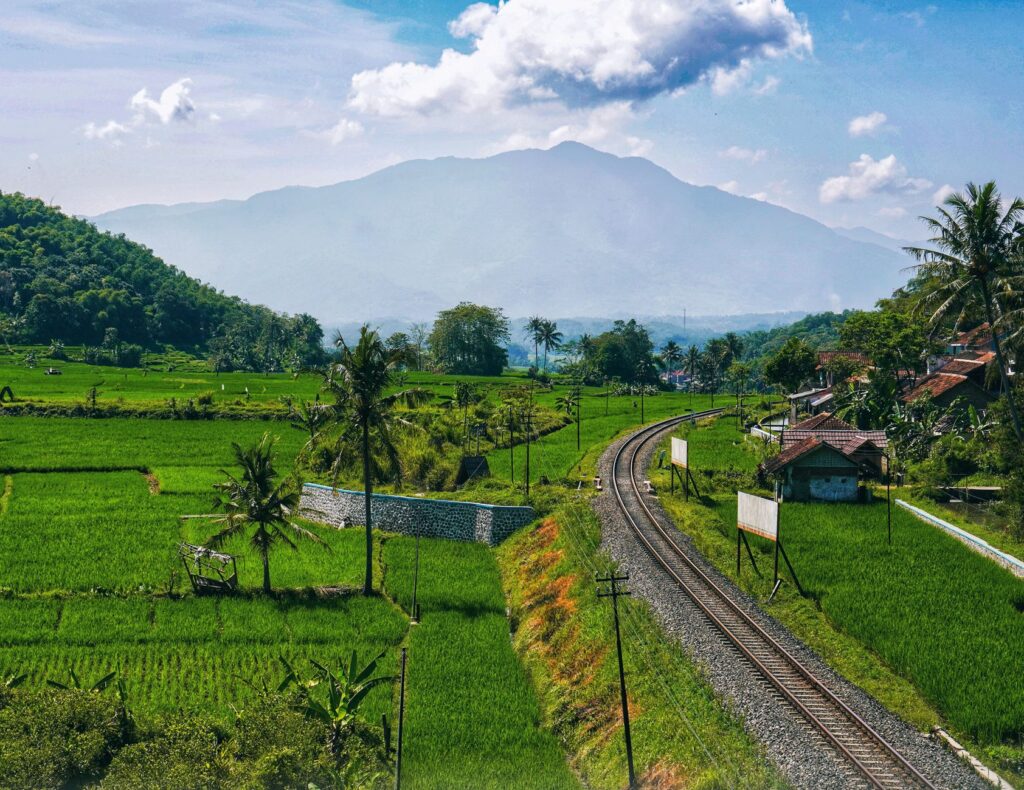
The main route running along Java’s northern strip—known as the northern arterial line—handles the highest traffic volume in the country. Unlike the southern route, characterized by sharp curves and steep gradients in mountainous terrain, the northern route offers a flatter profile that has enabled double-tracking and partial electrification, facilitating the circulation of express passenger trains achieving competitive commercial speeds against air and road transport.
Logistically, the railway plays an irreplaceable role in decongesting Java’s saturated highways. Container trains directly connect the Port of Tanjung Priok in Jakarta with inland logistics terminals and the Port of Tanjung Perak in Surabaya. This modal shift significantly reduces the carbon footprint of freight transport in one of the world’s most populous islands, optimizing transit times for Indonesia’s manufacturing industry and agro-export sector.
Railway Architecture and Industrial Heritage
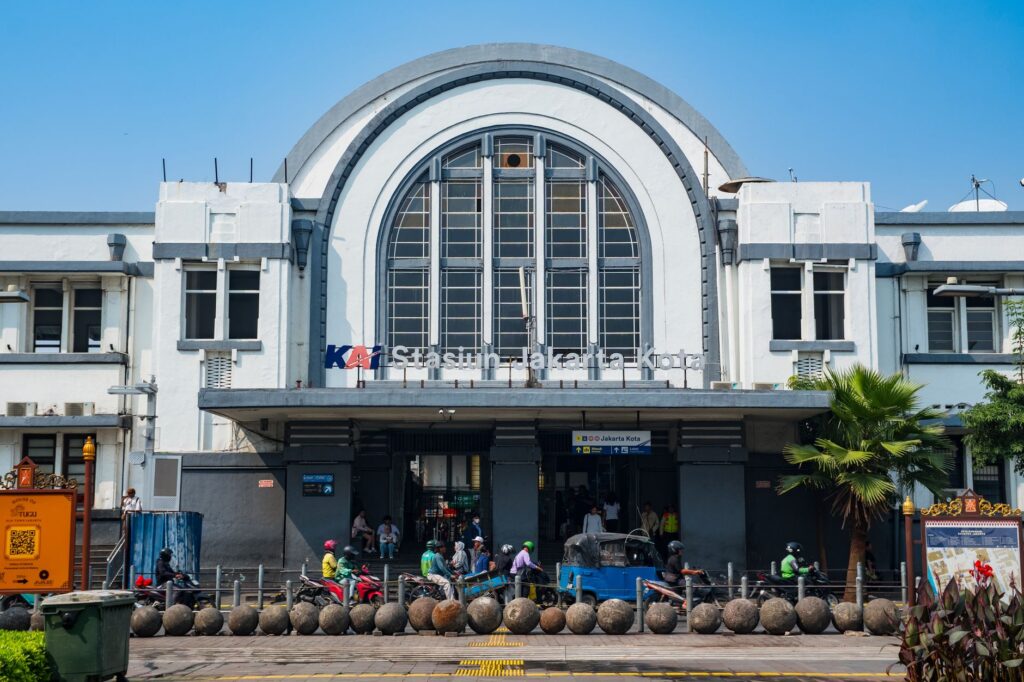
Railway stations along the Trans-Java line are not merely functional infrastructure; they are true architectural milestones reflecting the fusion of European colonial styles with solutions adapted to the tropical climate. Facilities such as Gambir Station in Jakarta, Surabaya Gubeng, or the emblematic Bandung Station feature facades with wide eaves designed to protect travelers from torrential rains and intense solar radiation, alongside high vaulted ceilings that promote natural ventilation.
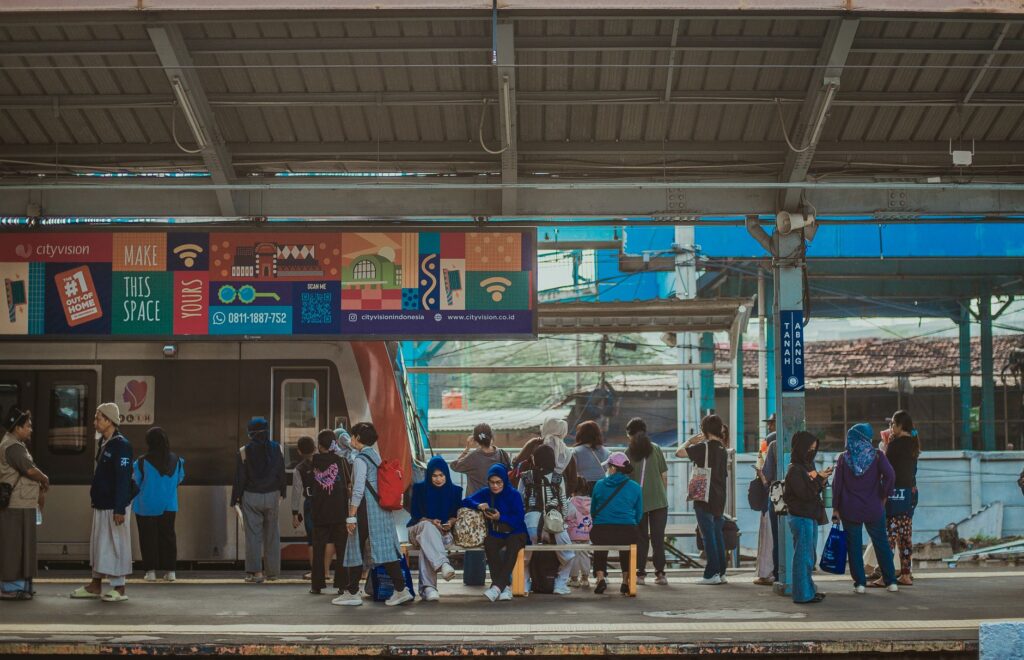
The preservation of railway heritage in Java demonstrates that modern functionality can coexist with respect for the industrial historical memory of Southeast Asia.
Additionally, the Manggarai and Yogyakarta railway workshop complexes continue to operate as heavy maintenance centers where century-old mechanical components are restored alongside next-generation bogies. This living industrial heritage testifies to a deeply rooted rail culture in Indonesian society, where generations of workers have passed down specialized technical expertise under demanding climatic and operational conditions.
Technological Modernization and Advanced Signaling
Over the past two decades, the Indonesian railway system has undergone an accelerated process of technological modernization aimed at increasing network capacity and safety standards. The adoption of digital signaling systems based on automatic block signaling and centralized traffic control (CTC) has reduced headway intervals between convoys, optimizing capacity on a network saturated by high regional mobility demand.
Concurrently, the renewal of the rolling stock fleet with electric multiple units (EMUs) and energy-efficient locomotives has transformed the travel experience. Public and private investments have focused on eliminating dangerous level crossings through the construction of overpasses and underpasses, drastically reducing accidents and improving traffic flow for both rail and road transport in the densely populated urban areas crossed by the corridor.
Environmental Sustainability and Energy Transition in the Network
Faced with the global challenge of climate change, the national railway operator has implemented strategies aimed at reducing greenhouse gas emissions associated with its operations. Although a significant portion of the long-distance fleet still relies on diesel traction due to the network’s extent and the complexity of full electrification, aerodynamic improvements, low-fuel-consumption engines, and lower-sulfur fuels have been introduced.
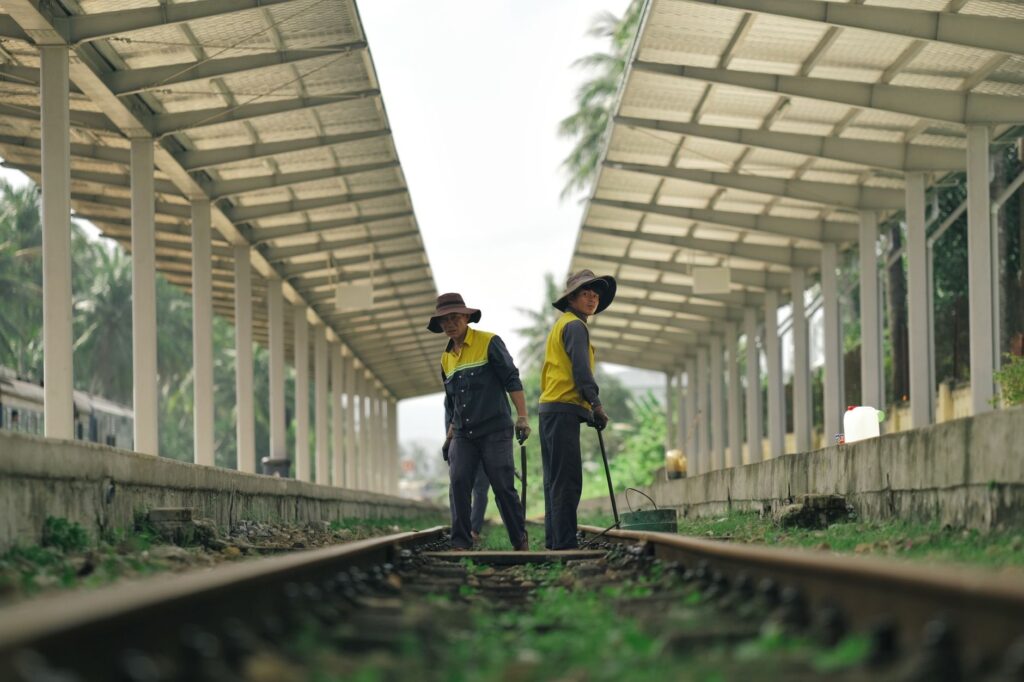
Furthermore, various stations along the corridor are incorporating rooftop solar panels to supply clean energy for lighting and auxiliary services in terminal buildings. These initiatives seek to establish the railway as Indonesia’s most sustainable mass transit mode, aligning with international commitments to decarbonize the transport sector in emerging economies.
Practical guide
Planning a journey or a logistical analysis along the Trans-Java Railway requires understanding certain fundamental operational aspects to ensure an efficient and seamless experience.
- Ticket Reservation: Tickets for long-distance trains (classified into executive, business, and economy classes) must be purchased weeks in advance via the official KAI Access application or authorized platforms, especially during national holidays such as Lebaran.
- Intermodal Connectivity: Major terminal stations—such as Jakarta Gambir, Cirebon, Semarang Tawang, and Surabaya Pasar Turi—feature integrated connections with urban buses, ride-hailing private transport services, and commuter rail networks.
- Luggage and Restrictions: Each passenger is permitted a hand luggage allowance of up to 20 kilograms at no extra charge. Arriving at the station at least 45 minutes prior to departure is recommended to complete mandatory identity checks via digital boarding passes.
- Onboard Climate Control: Executive and business class carriages feature high-power air conditioning, so carrying light warm clothing is advised during long-distance overnight journeys.
Epilogue on Rails Amid Mists and Volcanoes
At dusk, when golden tropical light filters through palm fronds and bathes the slopes of terraced rice paddies, the passage of a train through the heart of Java evokes a persistent sense of timelessness. The steel tracks winding between volcanic cones silhouetted against the horizon are not only the tangible testimony of nineteenth-century engineering feats but the dynamic pulse keeping diverse communities connected across hundreds of kilometers. In this vast archipelago where the earth trembles and the jungle constantly reclaims its space, the train continues moving forward with a firm step, defying abysses and distances under the watchful gaze of an unfathomable landscape.