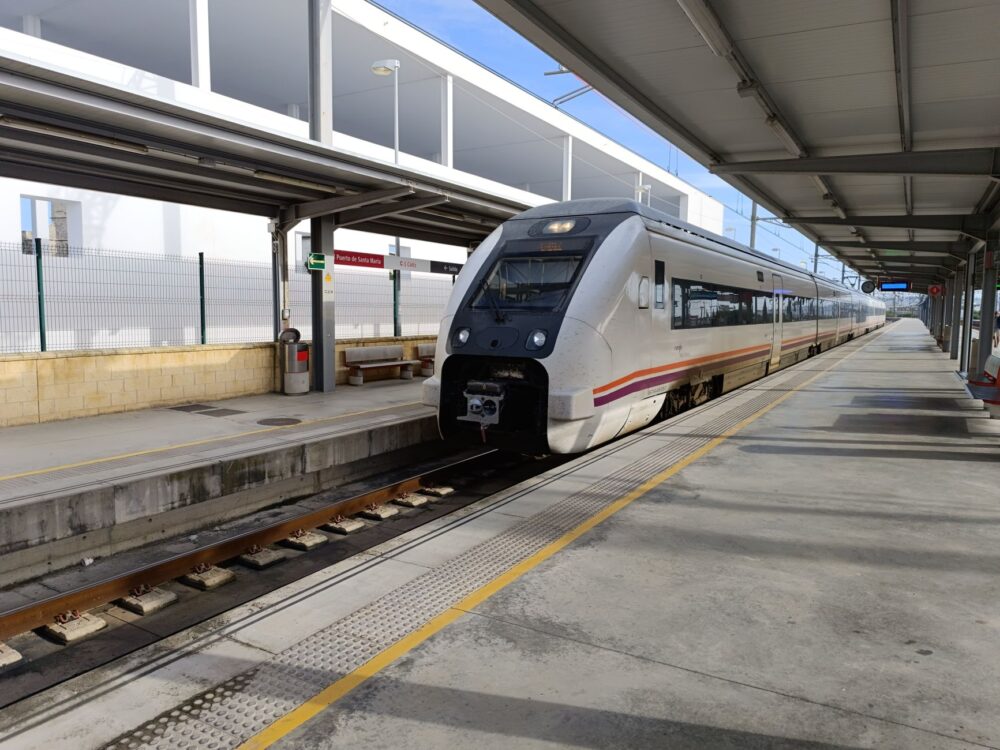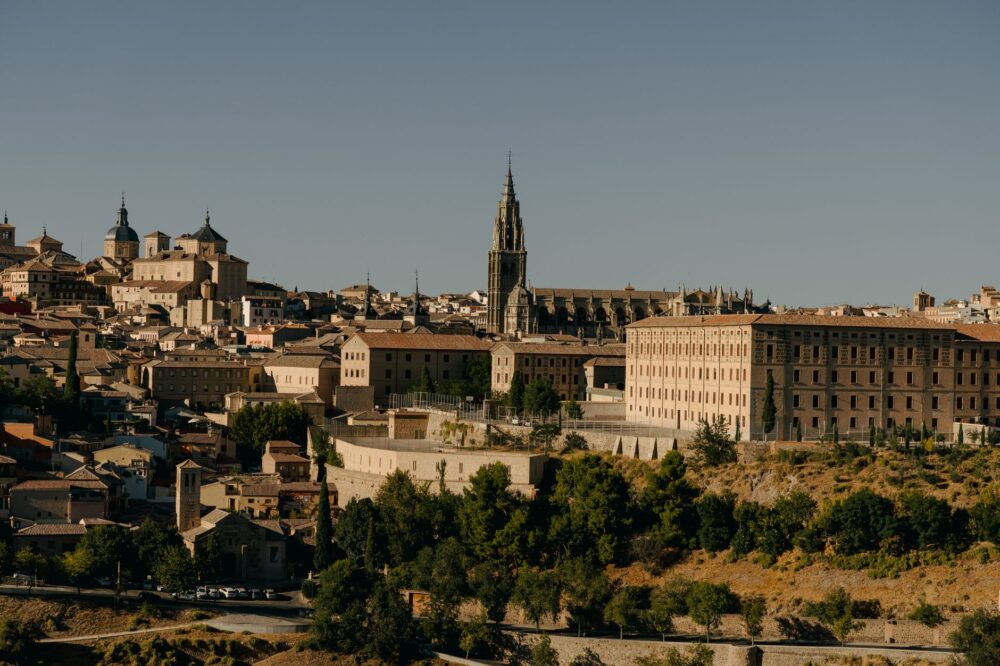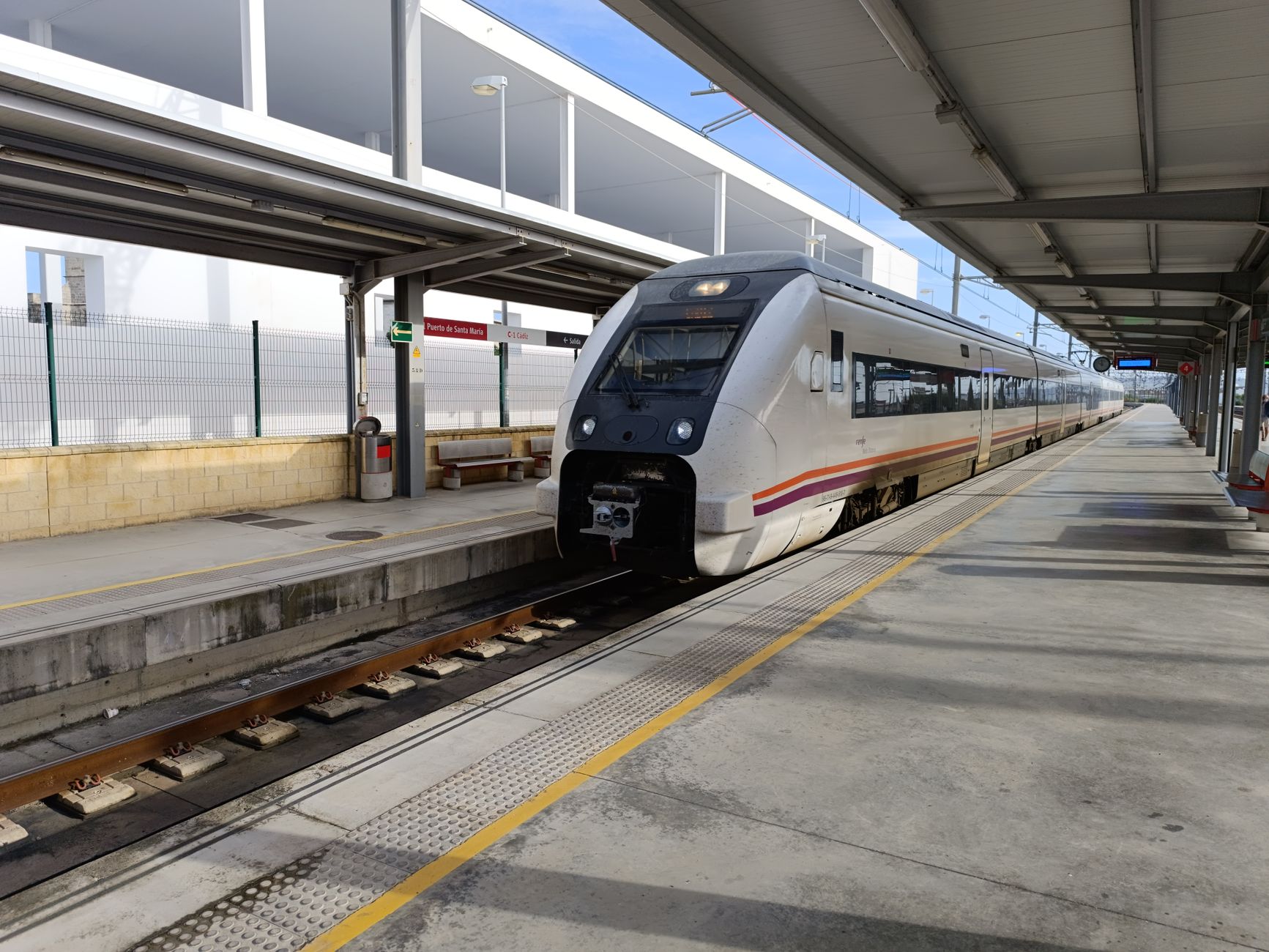

Aquitaine’s historic railway layout preserves far more than a mere transit utility; it functions as a rolling archive connecting the Atlantic with the planet’s most prestigious wine terroirs. As the carriage departs the bustling Bordeaux-Saint-Jean station, the urban fabric rapidly dissolves into an endless sea of impeccably aligned vines. Inaugurated in the mid-nineteenth century, this iron artery not only facilitated the commercial export of Bordeaux’s liquid gold toward northern European ports but also solidified a mode of travel where slowness becomes a contemporary luxury. The tracks meander alongside the Gironde and Garonne estuaries, tracing an invisible yet firm boundary between brackish wetlands and the limestone hills where Merlot and Cabernet Sauvignon grapes ripen.
Traveling along this route demands an understanding that geography dictates the pace, not modern haste. Nineteenth-century engineers had to navigate treacherous wetlands and construct titanic earthworks using local stone and foundational techniques that defy the ravages of time today. Each stop at modest masonry halts reveals utilitarian railway architecture imbued with a sober French elegance, where vintage enamel signs still preserve their original typography. Along this journey, the traveler is not a passive spectator, but a privileged witness to a millenary synergy between human labor and the capricious chemistry of the Atlantic climate.
The Iron Architecture of the Gironde Wetlands
The initial stretch of the route toward the Médoc rests upon a colossal hydraulic engineering feat. Engineers of the Second Empire faced waterlogged terrain that threatened to swallow any heavy structure. The solution involved driving thousands of submerged oak piles into the mud to support a metallic lattice framework that still bears the daily weight of regional railcars. This industrial skeleton harmoniously contrasts with the marshland vegetation and the distant silhouettes of wine châteaux emerging through the morning mist.
Walking along the platforms of these forgotten stations is equivalent to stepping into an open-air museum. The controlled corrosion of wrought iron, combined with the patina of lichens deposited over limestone, grants the structures an unmatchable aesthetic dignity. There are no ornamental excesses; every rivet and lattice girder responds to strict structural necessity, prioritizing durability over fleeting aesthetics. It is here that nineteenth-century civil engineering dialogues directly with peasant patience.
The Sacred Subsoil: The Barrel Cathedrals of Saint-Émilion
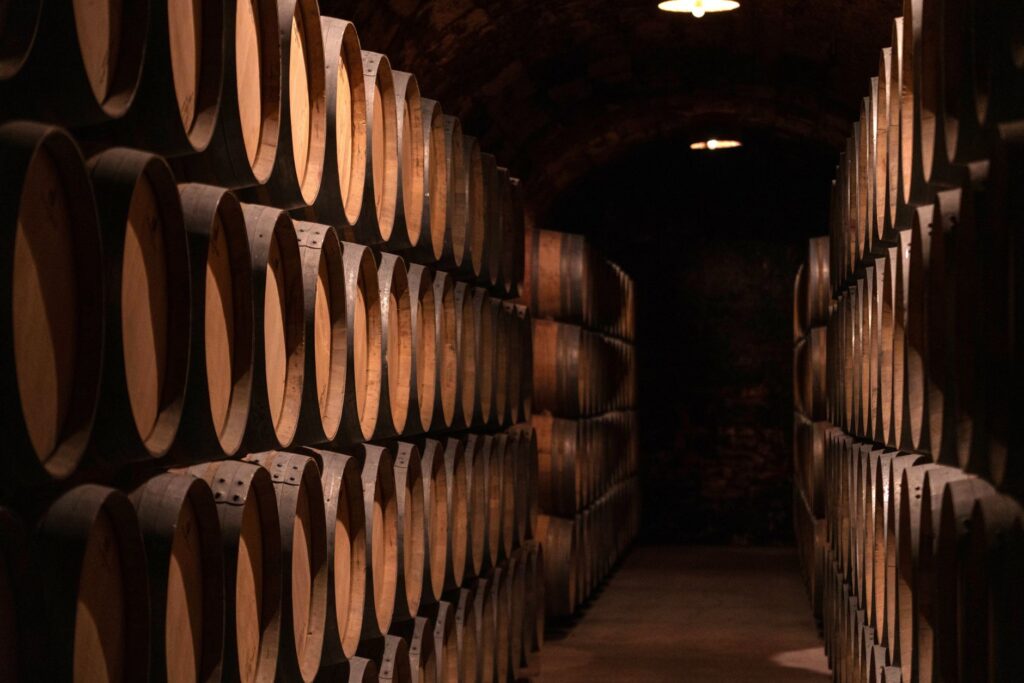
Leaving the left bank behind and crossing eastward, the train enters the jurisdiction of Saint-Émilion, a cultural landscape sculpted by stone and wine. Beneath the foundations of the medieval village and surrounding vineyards lies a labyrinthine network of underground galleries excavated over centuries to extract limestone for local construction. Today, these deserted quarries serve as natural aging cellars, where thousands of French oak barrels rest in constant gloom, embraced by millimeter-precise humidity.
Temperatures in these depths fluctuate almost imperceptibly between winter and summer, creating the perfect microclimate for wine maturation. The silence reigning within these catacombs is broken solely by the subtle whisper of wine evaporating through wood—a phenomenon poetically known as the angels’ share. Local winemakers descend bearing low-intensity lanterns, inspecting staves with methodical gestures and checking the clarity of the liquid through barrel tastings that escape mass tourism circuits.
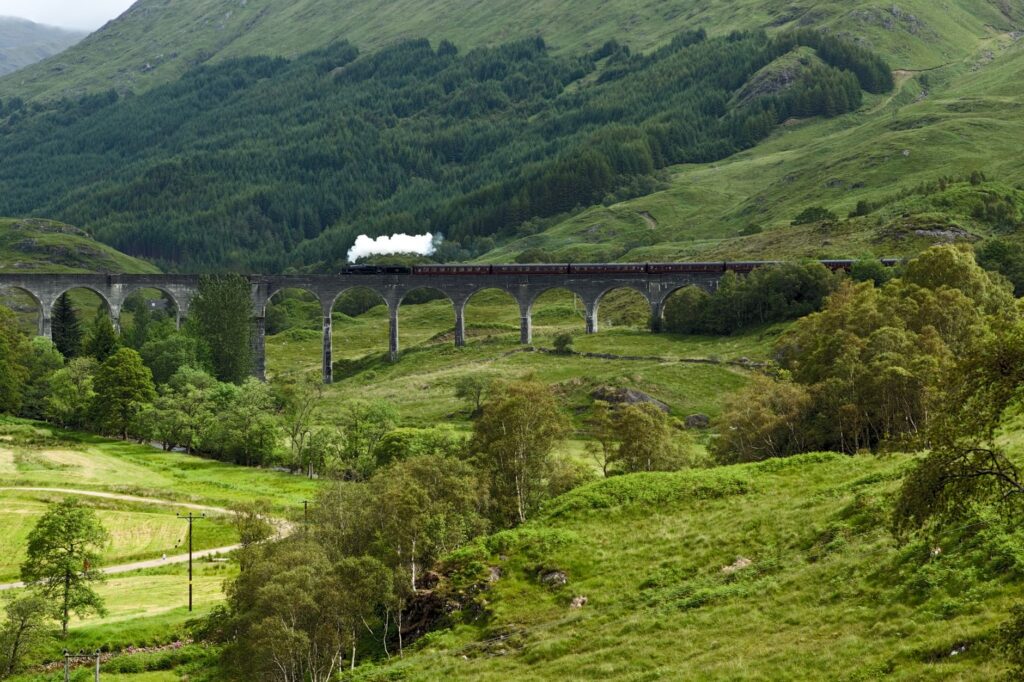
True luxury in Aquitaine lies not in superficial ostentation, but in the capacity to listen to the ancient silence binding stone, vine, and railway track together.
The Invisible Geography of the Estuary and Its River Ports
The journey’s third major thematic block unfolds along the banks of the Gironde estuary, the largest estuary in Western Europe. Here, Atlantic tides push far inland, altering water salinity and forging a unique ecosystem where elver fishermen and alluvial soil winemakers coexist. Former fluvial loading stations, now converted into leisure boat docks or abandoned to the melancholy of rust, recall an era when train and ship formed an indivisible logistics network.
Observing the sunset from one of these small piers reveals the territory’s human scale. Dry-stone containment dikes, constructed to protect agricultural parcels from winter floods, structure a geometric landscape that contrasts with the capricious freedom of the marshes. At this point, regional trains run so close to the water that passengers can spot the low flight of gray herons and the coming and going of traditional lateen-sailed barges.
Terroir Gastronomy: The Ritual of the Aquitaine Table
No exploration of Bordeaux’s viticultural pulse would be complete without addressing its culinary culture, deeply tied to the cycles of land and sea. In traditional country inns flanking the railway lines, cooking is governed by strict seasonality. Local markets in Libourne or Langon offer provisions seemingly designed to accompany the region’s robust tannins: Pauillac lamb raised on salt-marshes, wild mushrooms foraged from the Landes pine forests, and iconic canelés, whose caramelized crust conceals a tender interior infused with rum and vanilla.
Local restaurateurs champion a zero-kilometer philosophy driven not by commercial fads, but by a self-sufficiency rooted in the province’s agricultural history. Seating oneself at a historic dining car or a converted railway station inn is taking part in a ritual where each dish explains a fraction of the territory. The harmony between food and wine is not the result of chance, but of centuries of empirical experimentation passed down through generations.
The Modern Transition: Speed and Sustainability in the Vineyard
In recent decades, high-speed rail lines have reshaped southwestern France’s transport map, separating rapid passenger flows from traditional freight and observational travel. Yet far from rendering secondary routes obsolete, this modernization has elevated slowness as a rising value. Regional trains threading through the vineyards have adapted to transport bicycles and curious visitors seeking soft mobility experiences, integrating ecotourism with industrial heritage preservation.
Local authorities and winemakers have launched joint initiatives to reduce carbon footprints in winemaking, even reinstating barrel transport via secondary rail lines during specific seasonal windows. This coexistence between historic railway technology and contemporary ecological demands proves that the territory is not a static museum, but a living organism capable of reinventing itself without abandoning its roots.
Practical guide
Getting there: The primary gateway is Bordeaux-Merignac Airport (BOD), connected to major European hubs. From there, the urban tramway leads directly to the central Bordeaux-Saint-Jean station, departure point for regional TER trains heading toward the Médoc, Saint-Émilion, and Graves vineyards.
When to go: Ideal months are September through October, coinciding with the grape harvest and foliage color change, or spring (May and June), when weather is temperate and tourist crowds remain moderate.
Transport tips: Purchase the regional TER train pass for unlimited flexibility on secondary routes. Renting bicycles at major stations is strongly recommended for exploring paved rural paths running parallel to the railway tracks.

Accommodation: Opt for former switchman cottages restored as rural guesthouses or small boutique hotels housed in historic stone townhouses in Saint-Émilion and Pauillac.
Local regulations: Wine tastings at most historic châteaux require strict advance reservations. Respect private vineyard property; rural paths are open to pedestrians and cyclists, but crop parcels must not be entered.
Emotional Epilogue Among Centenary Vines and Steam Tracks
As the day’s final light fades over Aquitaine’s clay slopes, the landscape takes on an almost pictorial texture. The elongated shadows of the vines merge with the dark profiles of steel rails, creating a visual score seemingly performed by the Atlantic wind. Seated on a wooden bench at an unattended rural station, one understands that this corner of France does not offer itself stridently to the traveler, but reveals itself with the deliberation of fine wines: demanding time, silence, and an attentive disposition to be transformed by the memory of the land. The distant whistle of a night train crossing the horizon confirms that travel, in its deepest sense, never truly ends, but settles within consciousness as an eternal sediment.