
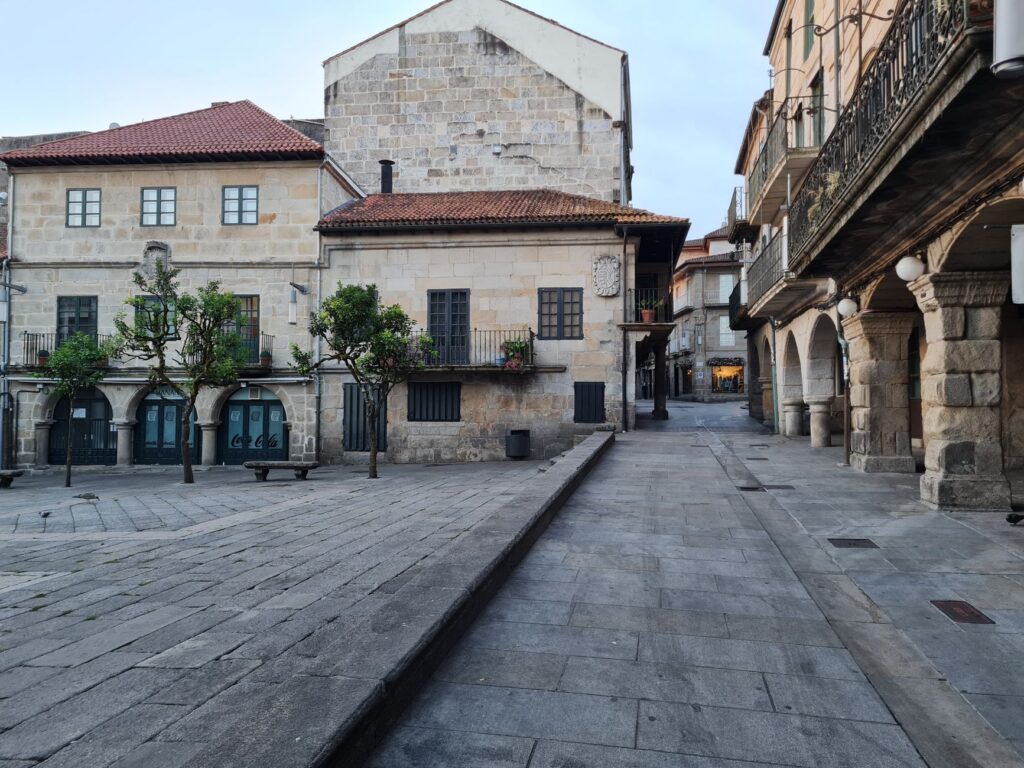
Under the canopy of a fine mist that locals call orballo, Santiago de Compostela reveals itself not only as the final destination of a millenary faith but as the epicenter of a different kind of devotion: that of the table. In the heart of the old town, where granite seems to absorb the humidity of centuries, the Mercado de Abastos stands as the city’s second most visited site after the Cathedral. It is not merely a commercial center; it is a civic temple of Romanesque-style naves where time stands still amidst the scent of saltpeter and the earthy aroma of freshly cut turnip tops. Here, stone is not just a support; it is the silent witness to a daily liturgy that connects the wildest Atlantic with the deep, green interior of the Land of Santiago.
To enter the market on a Thursday or Saturday morning is to participate in a ritual of cultural resistance. While the world accelerates, the vendors in the outer stalls, the ‘paisanas,’ continue to offer the surplus from their gardens with the same unhurried pace their grandmothers did a century ago. It is a dialogue of calloused hands and honest products: a bunch of greens, a dozen free-range eggs, or those potatoes with traces of soil that hold the secret of Galician flavor. In this space, gastronomy is stripped of artifice to show itself in its purest state, reminding us that in Galicia, luxury is not sophistication but absolute proximity and radical seasonality dictated by the gray sky.
The Pulse of Granite: Where Stone Breathes
The current building, inaugurated in 1941 and designed by architect Joaquín Vaquero Palacios, is a masterpiece of functionalist architecture that deeply respects its monumental surroundings. Its five granite naves, with vaulted ceilings evoking the sobriety of Benedictine monasteries, organize the apparent chaos of trade. Each nave has its own identity: the meat hall, where Galician veal and lacón (pork shoulder) hang like votive offerings; the fish hall, where the shimmer of scales competes with the light filtering through the windows; and the cheese hall, where the lactic aroma of Tetilla and Arzúa-Ulloa envelops the visitor.
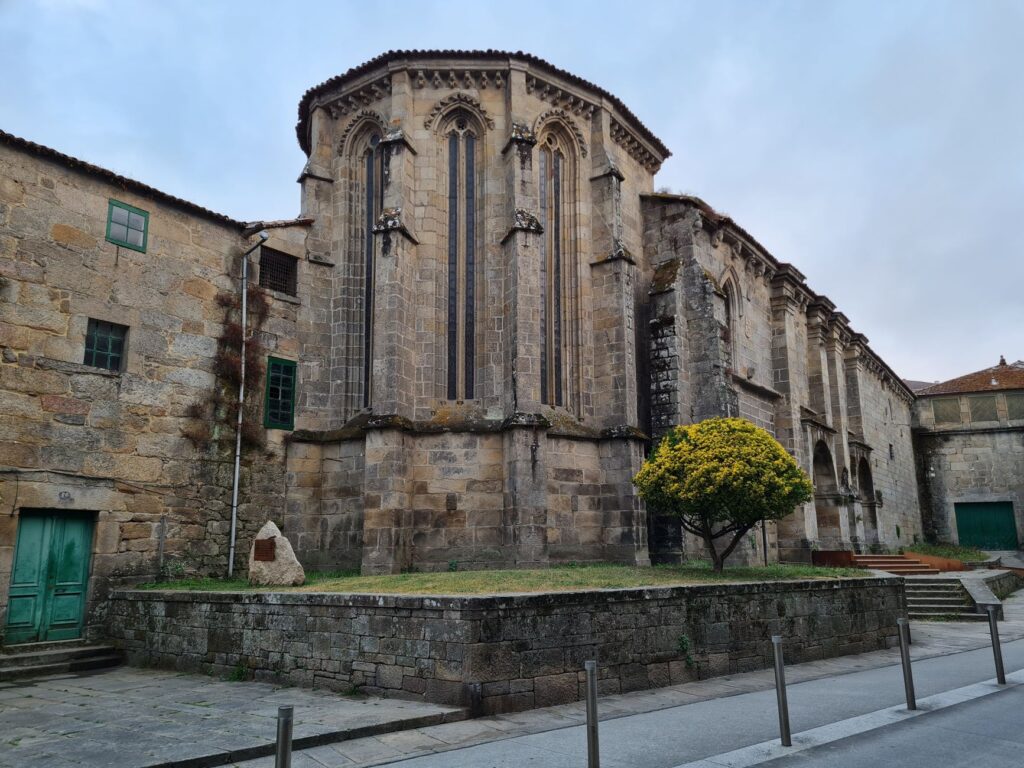
The market’s architecture is not only aesthetic but climatic. The granite maintains a constant temperature that favors the preservation of fresh products in a city where humidity is the norm. Walking through its corridors is to feel the cold touch of stone while observing the hustle and bustle of carts. There are no harsh noises; the murmur of negotiations and the sound of knives against wooden boards create an organic soundtrack. It is a place where the city recognizes itself, far from the tourist throngs that saturate Rúa do Franco—a refuge of authenticity where the Compostelan exercises their right to daily excellence.
«The market is not a supermarket made of stone; it is the living archive of Galician biodiversity and the last bastion of food sovereignty born in smallholdings and ending on the plate.»
The Liturgy of Shellfish Gatherers and the Ritual of the Sea
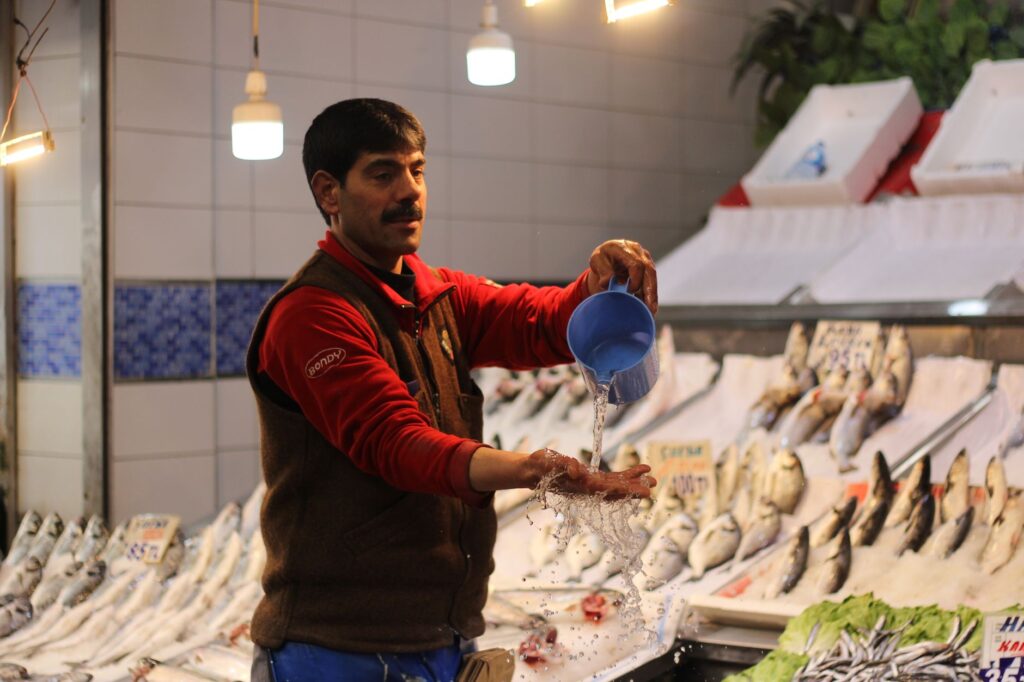
In the fish hall, the spectacle is overwhelming. Here, the tide seems to have risen into the city center. The shellfish gatherers from the Ría de Arousa and Muros-Noia bring with them the treasures of the rocks and sandy shores. The goose barnacle (percebe), black and defiant, is presented in clusters that smell of the open ocean; Carril clams, Fisterra razor clams, and Noia cockles are piled in wooden boxes, still alive, expelling water in a final marine breath. The Galician relationship with the sea is mystical, and in Santiago’s market, this connection is felt in the precision with which fishmongers clean a line-caught hake or open a spider crab.
One cannot speak of the market without mentioning octopus. Although pulpo á feira originates from the interior, the lands of O Carballiño, its presence in Santiago is fundamental. Near the market, the pulpeiras keep alive the copper cauldrons where the cephalopod is dipped three times to ‘scare’ it before the final cooking. It is a hypnotic process: the cutting with scissors, the generous drizzle of virgin olive oil, the dusting of pimentón (paprika) and coarse salt over the wooden plate. It is the taste of celebration and encounter, a dish that summarizes Galicia’s ability to transform simplicity into something sublime.
The Orchard of Rain: The Miracle of Galician Smallholdings
Outside the naves, in the porticos and outer passages, sit the women who bring products directly from the land. This is the kingdom of the Kennebec potato, of Padrón peppers (those where some are hot and others are not), and above all, of cruciferous vegetables. Grelos (turnip tops) and nabizas are the kings of the Compostelan winter, essential ingredients of the Galician broth (caldo gallego) that comforts the pilgrim’s soul. These vendors represent the minifundio system: small plots worked with care where crop rotation and organic fertilizer remain the norm. There are no ‘bio’ labels because everything here has always been biological out of necessity and tradition.
Seasonality is a sacred law here. In spring, tear-shaped peas appear; in summer, garden tomatoes that taste of sun and earth; in autumn, chestnuts from the mountainous areas of the province and mushrooms that sprout in pine and eucalyptus forests. This variety is what nourishes the city’s restaurants, from the humblest taverns to Michelin-starred establishments. Chefs come here at dawn to select the product that will define their menu of the day, establishing an unbreakable link between the rural producer and urban haute cuisine.
Cheese and Memory: The Scent of Ulloa and Arzúa
Cheese in Galicia is a matter of lactic identity. In the nave dedicated to livestock derivatives, the immaculate white of the pieces stands out against the gray granite. Tetilla cheese, with its characteristic conical shape, offers a creamy texture and a mild flavor reminiscent of fresh milk. But it is perhaps the Arzúa-Ulloa that best defines the local pantry: a soft-paste cheese, almost melting, that spreads when cut and encloses the entire essence of the green pastures of the Land of Santiago. It is the inseparable companion of Cea bread or broa, made with corn.
We also find less known but equally valuable gems here, such as O Cebreiro cheese, with its chef’s hat shape and acidic touch, or San Simón da Costa, smoked with birch wood. Each cheese tells a story of transhumance, of shepherds, and of extensive livestock farming that has shaped the Galician landscape for centuries. By buying a piece of cheese at the market, one is acquiring a fragment of the emotional geography of a region that has made milk its white gold.
«Galician cuisine is not invented, it is unearthed; each ingredient is a layer of geological and cultural history that fire simply reveals.»
Treasures of the Land of Santiago: The Green Interior
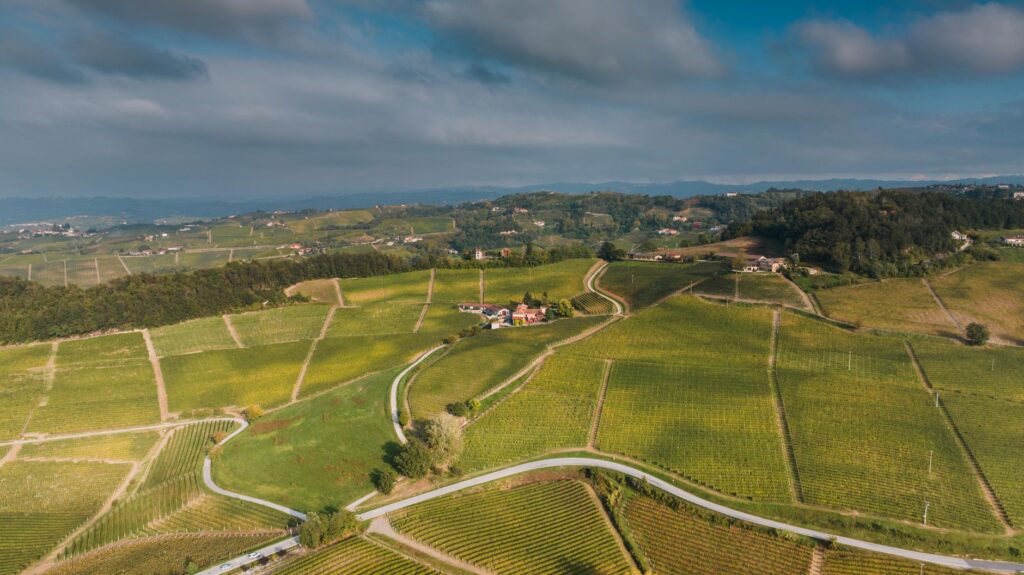
Leaving the city, the region of the Land of Santiago unfolds in a fan of valleys and hills where water is the unifying element. Towns like Padrón, famous for its peppers and for being the birthplace of poet Rosalía de Castro, or Arzúa, a crossroads and cheese capital, are natural extensions of the market’s pantry. In these lands, vine cultivation also claims its space. Although the Albariño from Rías Baixas is the most international, the local wines, often produced for home consumption or in small wineries, offer a vibrant acidity that pairs perfectly with pork fat and the power of seafood.
The landscape is dotted with hórreos—stone and wood structures raised on pillars to protect grain from humidity and rodents. They are monuments to peasant foresight, symbols of a subsistence economy that is valued today as a model of sustainability. Visiting the villages near Santiago is to understand that the market is not an isolated event but the showcase of a vibrant ecosystem where the village and the city maintain a pact of mutual aid that neither modernity nor globalization has managed to fully break.
Nave 5: Market Kitchen and the Immediate Feast
One of the most successful innovations of Santiago’s Mercado de Abastos is the possibility of consuming freshly bought products. In Nave 5, several stalls take charge of cooking, for a modest fee, what the visitor has previously purchased at the fishmongers or butchers. It is the democratization of the banquet. Seeing how razor clams that were on the counter ten minutes ago are grilled with a touch of garlic and parsley is an unparalleled sensory experience. There are no intermediaries, no cold rooms; only fire and absolute freshness.
This space has become a cosmopolitan meeting point. Pilgrims who have just arrived at the Plaza del Obradoiro mix with locals doing their daily shopping and gourmet travelers from all over the world. Here, hierarchies are broken. Tables are shared, toasts are made with wine served in ceramic bowls (cuncas), and the miracle of food is celebrated. It is the place where the market ceases to be a place of transit to become a destination in itself, a space of coexistence where gastronomy acts as the universal language uniting all who reach Compostela.
Practical guide
- Location and Hours: The market is located between Plaza de San Fiz and the Faculty of Geography and History. It opens Monday to Saturday, generally from 8:00 AM to 2:00 PM. The best days to see the ‘paisanas’ in all their glory are Thursdays and Saturdays.
- How to Shop: Don’t be afraid to ask. The vendors are experts and will advise you on the best product of the day. If you want your purchase cooked, go directly to the stalls in Nave 5.
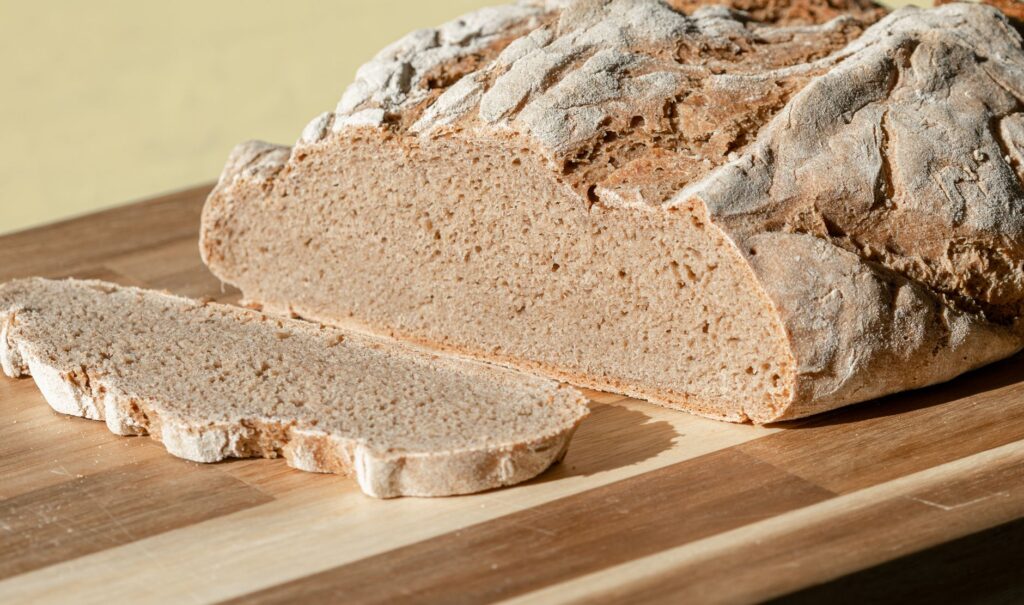
- Essentials: Don’t leave without trying the local cheeses, Galician bread (with its crunchy crust and honeycombed crumb), and, if in season, authentic Padrón peppers (from May to October).
- Wines: Look for local whites or a good Ribeiro served in a cunca for a fully traditional experience.
- Surroundings: Spend an afternoon visiting Padrón (20 minutes away) to see the Botanical Garden and the Rosalía de Castro House-Museum, thus connecting gastronomy with Galician literary culture.
At the end of the day, when the shutters of the stalls go down and the sound of rain becomes the protagonist once more, a feeling of gratitude remains in the air. Santiago de Compostela, with its stone market and its treasures of the land, teaches us that the journey does not end at the apostle’s tomb, but at the shared table. It is in the shimmer of oil over octopus or in the creaminess of a cheese where the true spirituality of this land resides: a faith that is chewed, savored, and remembered forever under the gray sky of Galicia.
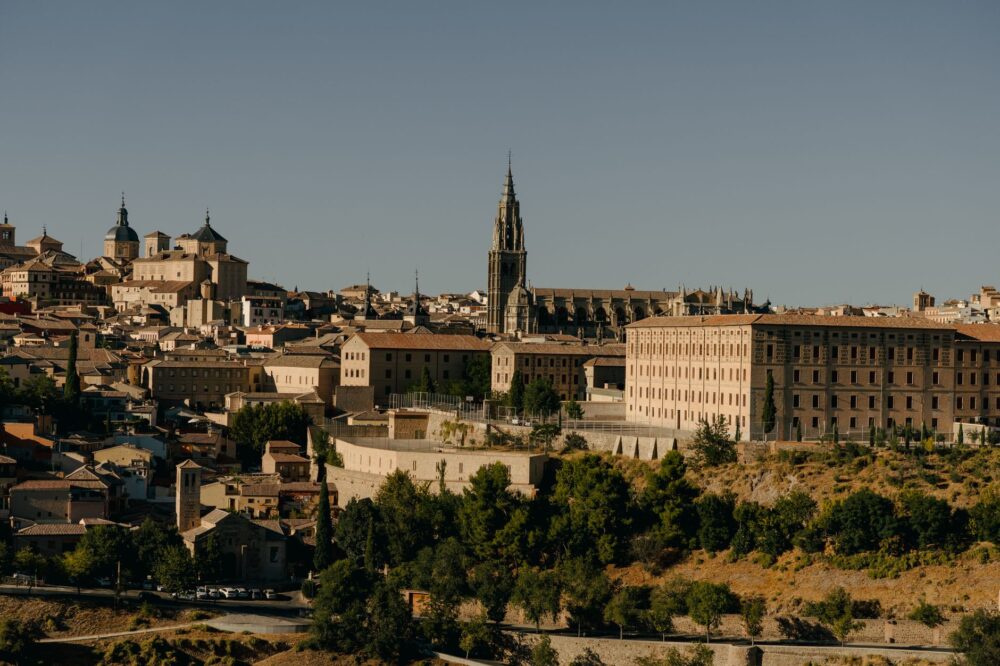
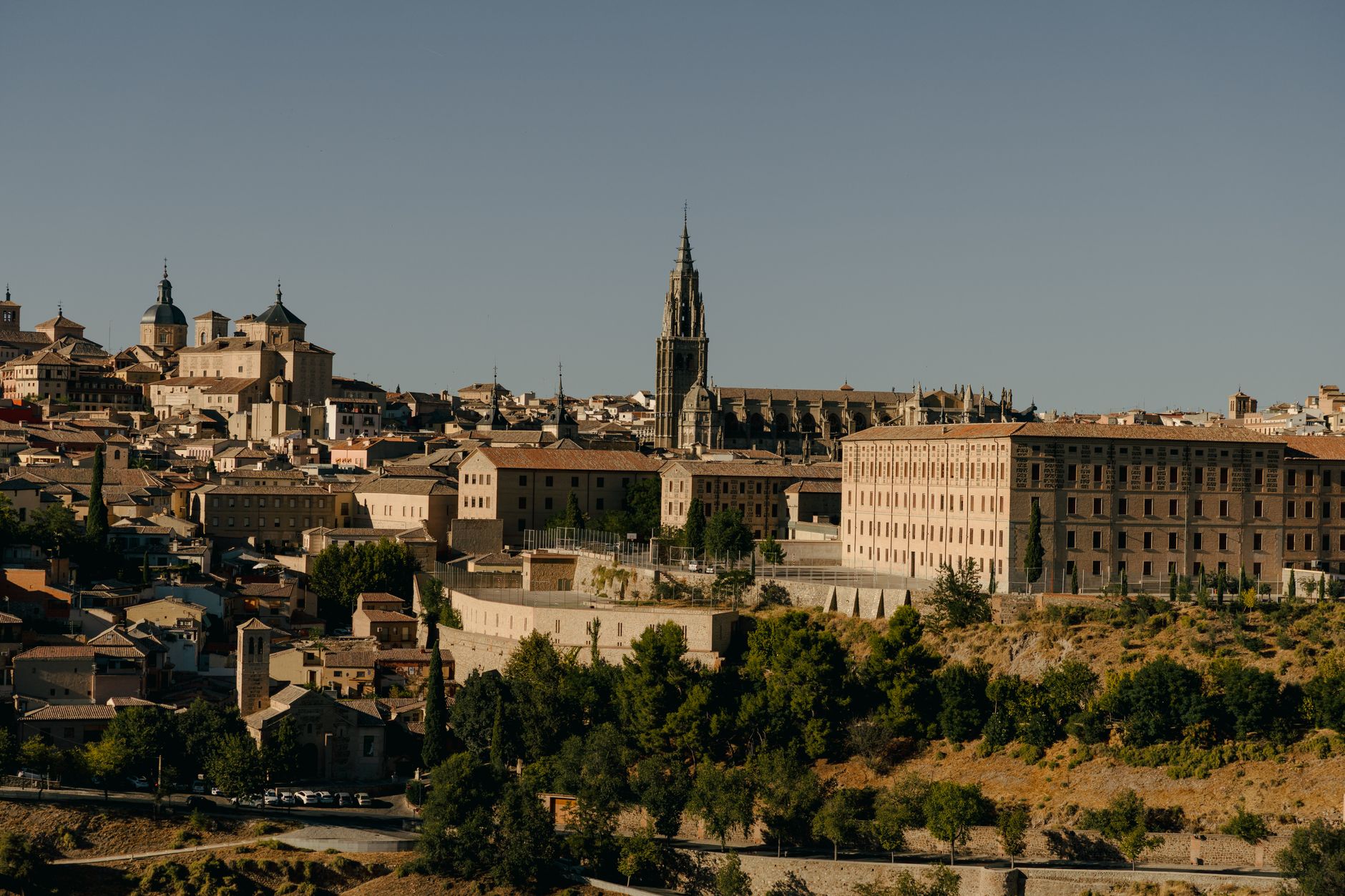
The final flash of evening light over the Cathedral towers, seen from the Paseo de la Herradura, reminds us that after the banquet of the senses, the refuge of eternal stone always remains.