There are celebrations that transcend the mere protocol of the social calendar to become the exact X-ray of a creative moment. When the lights of the main runway dim and the studio spotlights are folded away, the Spanish capital traditionally seeks a meeting point where the rigor of pattern-making yields to poised hedonism. Such was the case during the latest edition of Mercedes-Benz Fashion Week, where the culmination of weeks of collective effort found its natural refuge in an evening conceived for both applause and sensory delight. It was not merely about toasting the success of the presented collections, but rather reclaiming gastronomy as the invisible thread that stitches and sustains contemporary cultural events.
In this ephemeral yet deeply resonant ecosystem, the choice of venue and culinary conception played a decisive role. The night’s gastronomic proposal eschewed passing gimmicks in favor of a sophisticated reinterpretation of seasonal repertoires, where local produce and contemporary technique engaged in a dialogue devoid of unnecessary artifice. Amid glasses of selected designation-of-origin wines and miniature haute cuisine bites, attendees discovered that true luxury resides in shared time and discreet excellence. This report takes the reader into the INNER WORKINGS of that unrepeatable dawn, unravelling the details of a banquet that has already become part of the recent memory of domestic design.
The Geography of the Encounter: Ephemeral Architecture for a Major Night
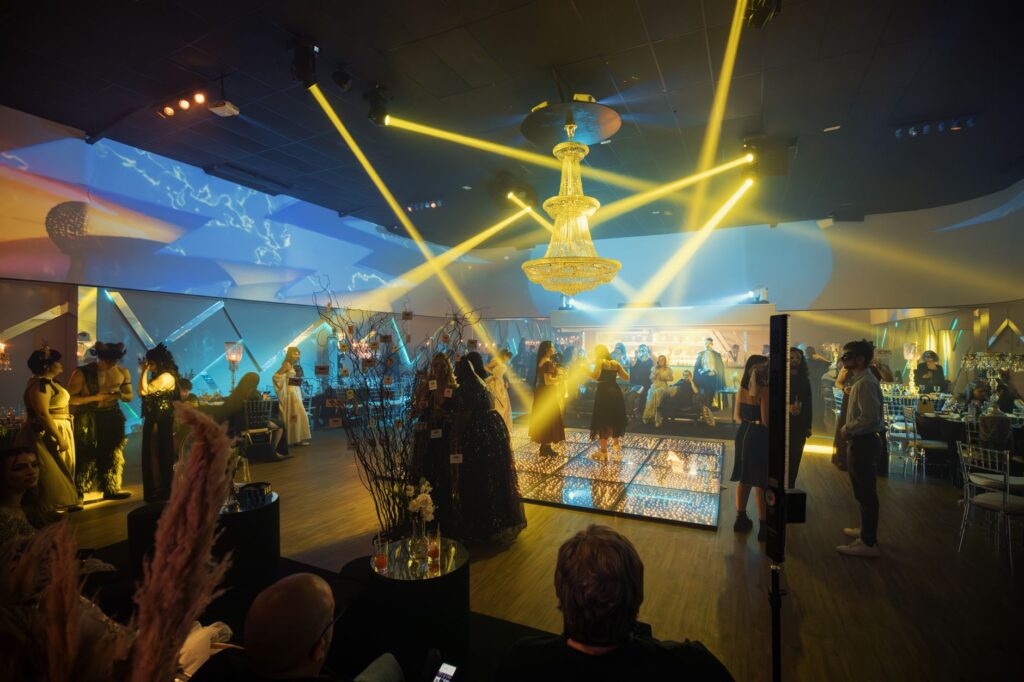
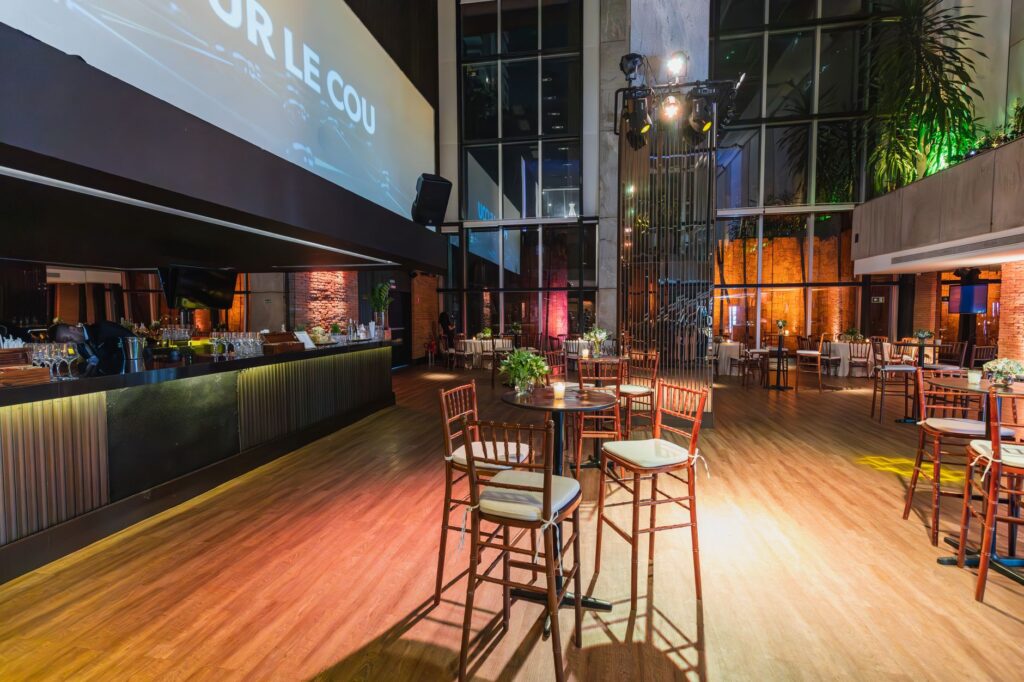
The space chosen to host the grand gathering functioned from the very first moment as a statement of aesthetic intent. Far from conventional hotel ballrooms, the industrial architecture rehabilitated for the occasion offered a blank canvas where light and shadow built almost sculptural volumes. The diaphanous spaces allowed for fluid movement among guests, encouraging relaxed conversation between tailoring veterans and the new promises of national design. The exposed metal structures were softened by low-intensity lighting installations, creating an enveloping atmosphere reminiscent of great Parisian ateliers during midnight fittings.
The spatial arrangement was not left to chance, but rather to a meticulous study of human flow. Perimeter rest areas were established to contrast with the central core of activity, allowing guests to alternate the efervescence of clusters with moments of visual pause. Noble materials, such as dark wood and brushed brass, dialogued with the most avant-garde technical textiles, paying a subtle homage to the materials that hours earlier had paraded down the official runway. Every corner was designed so that the photographer’s lens could capture not only the pose, but the naturalness of an industry that lives by and for formal beauty.
The Culinary Narrative: When Produce Becomes Haute Couture
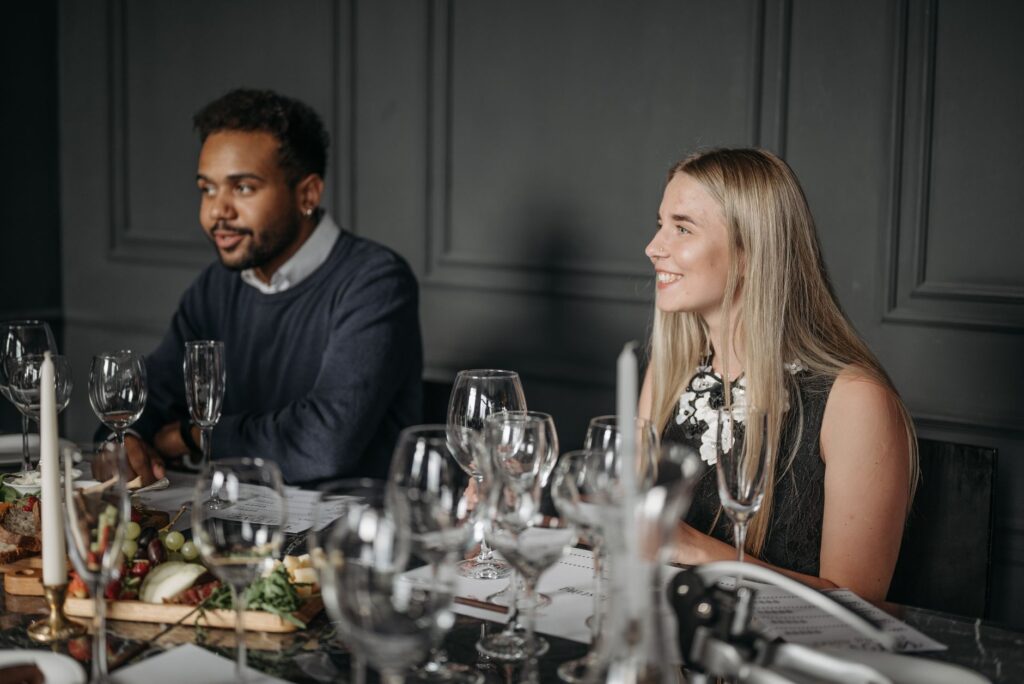
At the heart of the evening, the gastronomic offering operated under the same stringent standards that govern the creation of a haute couture dress: rigorous selection of raw materials, absolute respect for seasonality, and flawless technical execution. The chefs leading the culinary stations conceived an ephemeral menu structured around small bites that condensed the essence of the Iberian larder and the nuances of avant-garde cooking. Crispy textures alternated with subtle emulsions and broths reduced over hours, proving that miniature cooking demands as much precision as a bias-cut pattern piece.
Among the most celebrated creations were the vegetable trompe l’oeils that toyed with diners’ gustatory memory, as well as cuts of small game meat marinated with citrus fruits and Atlantic-leaning spices. Each course was accompanied by a precise oenological recommendation, prioritizing wines from small independent producers committed to minimal intervention in the vineyard. Food ceased to be a mere social accompaniment to become the backbone of the experience, a universal language that facilitated understanding between creators, patrons, and institutional figures present in the room.
The Human Pulse: Faces, Complicities, and Atelier Confidences
Beyond the camera flashes and society chronicles, the night was marked by a climate of long-awaited relaxation after months of intense workshop activity. Internationally established models shared tables and confidences with textile artisans whose work, often anonymous, underpins the foundations of the industry. Discussions touched upon the difficulty of sourcing sustainable raw materials, the logistical challenges of internationalizing an independent brand, and generational handover in traditional trades linked to bespoke tailoring.

In the clusters formed around the main bars, established designers acted as impromptu mentors for emerging talents, weaving a support network that rarely transcends to public opinion. The human atmosphere eschewed institutional rigidity to embrace genuine camaraderie, where shared applause for a professional peer replaced commercial rivalry. It was, ultimately, confirmation that the national creative community possesses a solid, mature identity deeply conscious of its cultural legacy.
Sustainability and Future: The New Codes of Responsible Celebration
One of the most significant aspects of this edition was the explicit willingness to minimize the event’s ecological footprint, translating the principles of circular and responsible fashion into the realm of large-scale banquet organization. All products used in the culinary stations came from local, certified organic suppliers, drastically reducing emissions associated with merchandise transport. Likewise, a rigorous waste management protocol was implemented to ensure the integral use of food surpluses through collaborating social entities.
The furniture employed and the ephemeral decorative elements were conceived under premises of reuse and recycling, avoiding single-use plastics and favoring high-end biodegradable materials. This environmental sensitivity demonstrates that major sector events can no longer afford to ignore their impact on the surroundings. Beauty and ethical commitment walked hand in hand throughout the night, setting a new standard for how major cultural and design events should be conceived in our country in the future.
True sophistication no longer lies in ostentatious excess, but in the ability to celebrate collective talent while respecting the environment that makes it possible.
This paradigm shift reflects the maturity of a sector that understands the future of creation is inextricably linked to transparency, traceability, and absolute respect for natural cycles, both on the runway and at the table.
The Rhythm of the Dawn: Music, Design, and Sonic Atmospheres
As the night progressed, the lighting intensity dropped another degree to give way to a sound proposal carefully curated by independent selectors. Music did not function as mere background ambience, but as the definitive catalyst that transformed the tranquil dinner into a vibrant celebration. Ambient electronic beats mixed with classic soul vinyl and seventies disco melodies, creating a stylistic contrast that connected directly with the aesthetic references of the collections presented during the week.
The impromptu dance areas near the DJ booth became the meeting point where hierarchies were definitively dissolved. Directors of major fashion publications, internationally acclaimed photographers, well-known faces from the big screen, and young creators shared space and rhythm on a dance floor illuminated by recycled neon tubes. Music acted as the emotional glue of a marathon day, closing the perfect circle between creative effort and festive catharsis.
Practical guide
How to access the event: Attendance at the Mercedes-Benz Fashion Week Closing Party is exclusively by direct invitation issued by the official organization, main sponsors such as El Corte Inglés, or participating firms.
Regular location: Venues vary with each edition to adapt to the year’s conceptual narrative, prioritizing rehabilitated industrial warehouses and singular architectural enclaves in the center or northern periphery of Madrid.
Dress code: Creative black-tie or contemporary evening wear is suggested, prioritizing support for independent national designers and personal archival pieces.
Recommended gastronomy: Culinary stations are ephemeral and change hands with each call, typically collaborating with Michelin-starred chefs and signature caterers specialized in local produce.
Sustainability: The event features a carbon footprint measurement and plastic elimination protocol, making it mandatory for attendees to respect on-site recycling guidelines.

Official coverage: Media accreditation is managed through the official press office of IFEMA Madrid and communication agencies associated with the event.
The Emotional Epilogue: The Echo of an Unrepeatable Night
When the last guests left the venue with the first lights of dawn cutting the city’s skyline, there remained in the air the certainty of having witnessed something more than a simple end-of-season party. The communion between needle and plate, between the aesthetic rigor of design and the earthly pleasure of haute cuisine, had resulted in a memorable event. The tired yet smiling faces of those bearing the weight of the national creative industry reflected the pride of a job well done and the excitement for future projects already beginning to take shape in the capital’s silent ateliers.
In the end, what lingers in the collective memory are not just iconic dresses or sophisticated menus, but the shared energy of a community that firmly believes in the transformative power of beauty. The night closed its doors, but the pulse of Spanish design beats stronger than ever, prepared to face the challenges of the upcoming season with the elegance and determination that only authentic talent and passion can grant.
Source in EN: Condé Nast Traveler Spain