Introduction to an inaccessible Atlantic sanctuary
The Desertas archipelago, three volcanic silhouettes emerging fiercely about twenty-five kilometers southeast of Madeira, represents one of the wildest and most isolated natural enclaves in the Macaronesian biogeographic region. On these basaltic rock coasts battered by the relentless swell of the North Atlantic Ocean, nature preserves an ancestral pulse completely detached from urban footprints. Here, in marine cavities patiently carved by the sea over millennia, survives the most significant eastern Atlantic colony of the Mediterranean monk seal (Monachus monachus), one of the rarest and most vulnerable pinniped species on Earth. This report examines with scientific rigor and a journalistic eye the ecological keys sustaining this fragile insular refuge, the dynamics of ocean currents nourishing its waters, and the complex conservation programs attempting to guarantee its long-term survival.
The history of this territory is a raw testimony of isolation and biological resilience. For centuries, the Desertas were considered a useless wasteland, visited occasionally by daring fishermen or navigators seeking shelter from storms. However, beneath the rugged surface and the vertical cliffs plunging precipitously into deep marine bottoms, lies an extraordinarily rich trophic web. Strict protection policies implemented in recent decades have transformed this forgotten corner into an international reference natural laboratory for marine biology and insular protected area management, proving that the recovery of emblematic species is possible when science, rigorous surveillance, and absolute respect for ecological cycles are combined.
Volcanic geomorphology and marine cliff dynamics
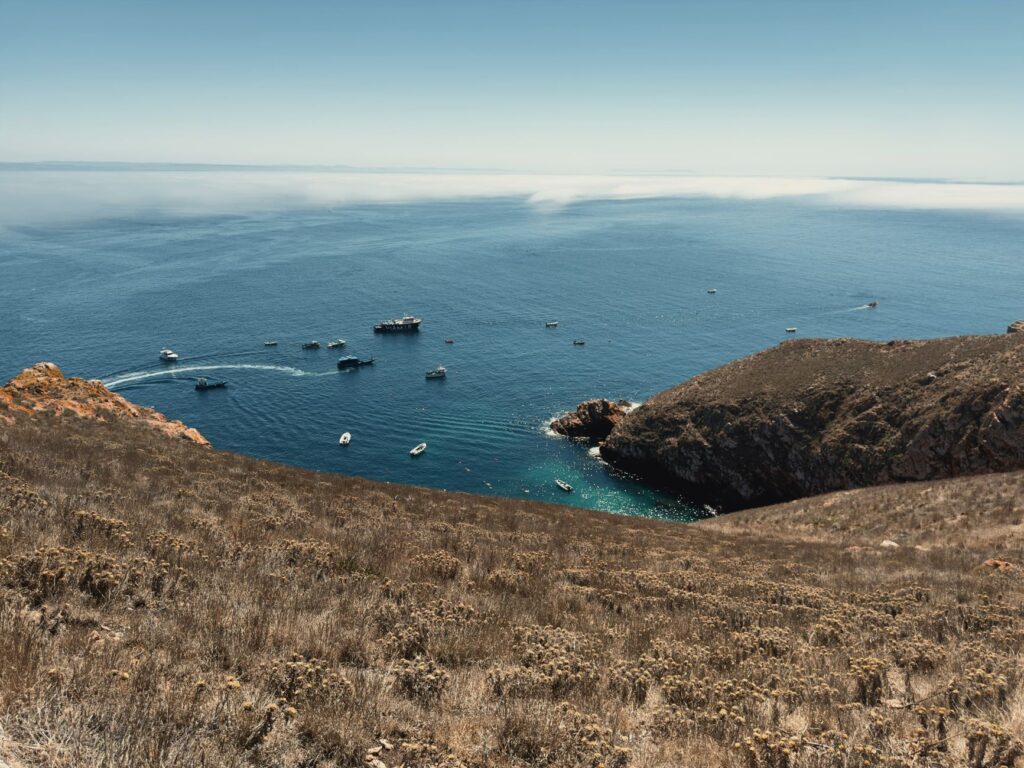
To understand the ecological magnitude of the Desertas, it is imperative to analyze their geological origin. Deserta Grande, Bugio, and Chão are the emerged remnants of ancient volcanic edifices collapsed and sculpted by relentless marine erosion. Their slopes offer no fine sand beaches or simple accesses; they are dominated by basaltic cliffs reaching dizzying heights, steep submarine canyons, and submerged littoral platforms where wave energy dissipates its force. This extreme geological architecture is precisely what saved the monk seal from total extinction in the past, by providing an impenetrable network of sea caves inaccessible by land and shielded from dominant northwest winds.
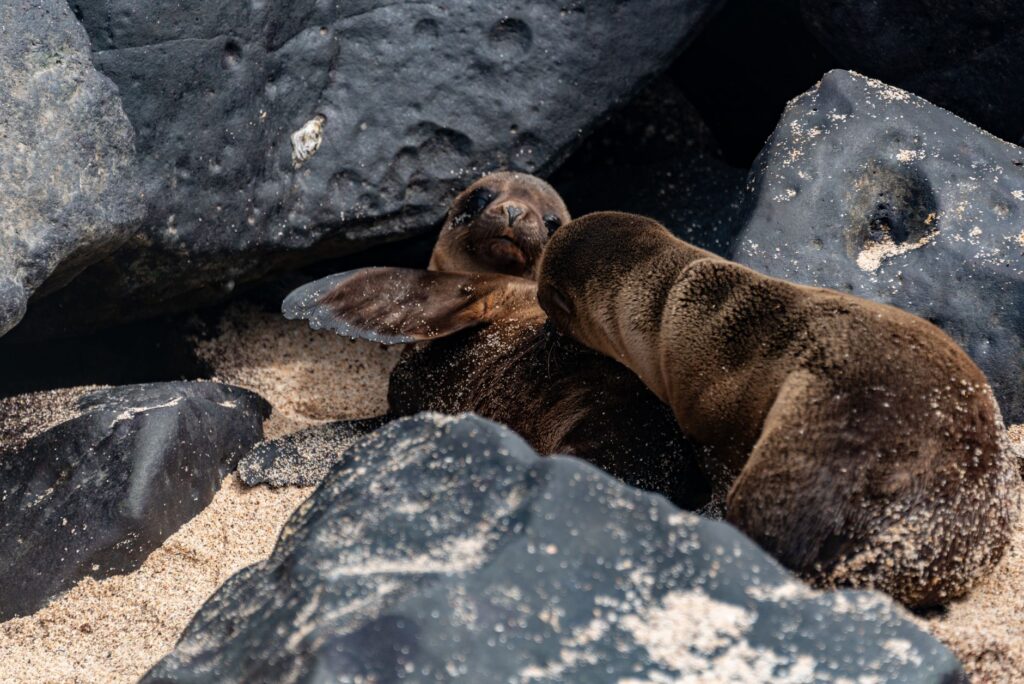
Tides and winter storms constantly sculpt these cavities, creating interior pebble beaches where adult specimens rest, molt their skin, and females give birth to their pups in conditions of absolute tranquility. The stability of these caves is crucial: any structural alteration caused by rockfalls or anomalous sea-level rise due to climate change represents a direct threat to the species’ reproductive success. Geologists and biologists monitoring the natural reserve carry out periodic cartographic evaluation campaigns to record millimeter changes in the morphology of these vital grottoes.
Archipelago oceanography: local currents and upwellings
The waters bathing the Desertas Islands are subject to a complex oceanographic regime, dominated by the influence of the southern branch of the Gulf Stream and the Canary Current, which interact with the insular submarine topography. This convergence of water masses generates local upwelling phenomena that displace nutrient-rich waters laden with nitrates and phosphates from oceanic abysses toward the surface. As a result, primary productivity experiences notable seasonal peaks, turning the coastal environment into an exceptional pantry of cephalopods, crustaceans, and benthic and pelagic fish.
Surface water temperatures oscillate moderately between eighteen degrees Celsius in winter and twenty-four in summer, a thermal range favoring both the permanence of the resident seal colony and the reproduction of their main prey. Marine currents also act as larval dispersal vectors, biologically connecting the Desertas with the Madeira archipelago and the Savage Islands, configuring a network of marine protected areas key to the ecological health of Macaronesia. Recent oceanographic research underlines how minor variations in thermohaline circulation directly affect food availability for juvenile specimens, which require high energy intake rates during their first months of life.
Biology and trophic ecology of the monk seal
The Mediterranean monk seal (Monachus monachus) is a large marine mammal, with adult specimens exceeding two and a half meters in length and reaching weights close to three hundred kilograms. Despite their robust appearance, they are extremely elusive animals sensitive to human presence. Their diet is eminently carnivorous and opportunistic, based on capturing rock fish such as groupers, scorpionfish, and seabreams, as well as actively hunting octopuses and cuttlefish inhabiting the rocky bottoms of the insular platform. Hunting dives often last several minutes and reach considerable depths in search of prey buried in sediment or sheltered in abyssal crevices.

The species’ social behavior in this Atlantic refuge displays fascinating adaptations to the scarcity of optimal space. Although solitary animals for most of the year, greater tolerance is observed near maternity caves during the breeding season. Mothers show extreme maternal dedication, nursing their pups with exceptionally fat-rich milk during the first weeks of life, a critical period when newborns develop waterproof fur and acquire swimming skills necessary to face the pounding Atlantic waves.
The long road to demographic recovery
The contemporary history of the monk seal in the Desertas is a tale on the razor’s edge. At the beginning of the twentieth century, the species was relentlessly persecuted by local fishermen who considered them direct competitors for fishery resources and pests destroying their nets. Poaching, coupled with human coastal occupation and habitat alteration, reduced the Atlantic population to a handful of individuals on the brink of total disappearance in the 1980s. At that critical juncture, Madeira’s regional authorities, in collaboration with international scientific organizations, implemented an unprecedented rescue strategy.
The survival of the monk seal in the Desertas proves that strict habitat protection and the end of direct persecution can reverse the destiny of species on the brink of the abyss.
Absolute prohibition of commercial and recreational navigation in surrounding coastal strips was decreed, bottom trawling was banned, and a permanent surveillance post managed by nature wardens was established. The demographic response, although slow due to pinnipeds’ natural low reproductive rate, has been hopeful: the population has risen from fewer than ten individuals censused in the eighties to over three dozen today, with sporadic migratory flow beginning to connect these islands with other areas of North Africa and the Canary Islands.

Historical conflicts and coexistence with artisanal fisheries
The relationship between Madeira island fishing communities and the monk seal population has historically been marked by tension and misunderstanding. For generations, artisanal fishermen blamed the animals for declining whitefish catches and the destruction of traditional fishing gear. This latent conflict required a titanic pedagogical effort by the regional administration and the rollout of economic compensation programs and support for sustainable fleet modernization, drastically reducing the impact of negative interaction.
Today, perception has changed radically. The monk seal has become a symbol of regional pride and an indirect claim to Madeira’s environmental excellence. Local fishermen actively participate in citizen science programs, spotting and reporting the presence of specimens in open waters, which enriches the biological databases of the Madeira Natural Park. However, experts warn that guard must not be lowered: occasional poaching in open waters and the risk of collision with fast boats remain latent threats requiring constant vigilance and regular naval patrols.
Non-intrusive scientific research and new technologies
Studying Monachus monachus in the Desertas Islands poses formal methodological challenges due to the animals’ extreme sensitivity to direct handling. To avoid any form of stress altering reproductive habits, research teams led by the Institute of Forests and Nature Conservation have prioritized non-intrusive methodologies. This includes installing advanced high-resolution infrared camera trapping systems inside breeding caves, as well as non-invasive genetic analysis from hair samples and skin flakes collected in resting areas.
Likewise, submerged hydrophones are employed to record acoustic patterns and animal vocalizations, allowing researchers to estimate specimen presence and social activity without direct human presence in the environment. Data obtained through these advanced technological tools are processed with artificial intelligence algorithms facilitating individual identification of each seal based on unique scar patterns and body markings, a continuous visual census guaranteeing precise knowledge of colony demographics year after year.
Practical guide
Planning a respectful approach or an indirect scientific observation trip to the Desertas Islands environment requires adhering to extraordinarily strict environmental regulations. The islands are an Integral Nature Reserve and terrestrial access is completely prohibited to the general public, reserved exclusively for authorized researchers and environmental surveillance personnel.
How to get to the reserve boundaries: The only legal way to contemplate the geographical contour of the Desertas is through authorized maritime excursions departing from the port of Funchal in Madeira. These tour boats operate under strict marine wildlife watching licenses, always operating at a minimum safe distance established by law to prevent fauna disturbance.
Navigation and sighting regulations: Anchoring in Desertas coves is strictly prohibited, as is approaching within three hundred meters of the coastline with unauthorized vessels, using drones in insular airspace, or scuba diving in littoral waters. Failure to comply with these guidelines entails severe administrative penalties.

Best time for landscape observation: The months between May and September offer the most stable weather conditions in Madeira’s sea, allowing safe crossings from Funchal with clear views of the imposing volcanic cliffs of Deserta Grande and Bugio.
Interpretation and outreach centers: To thoroughly understand monk seal biology without altering their habitat, visitors are encouraged to visit the species’ dedicated interpretation center in Funchal, featuring interactive panels, full-scale replicas, and audiovisual materials from research cameras installed in Desertas caves.
Emotional epilogue facing the blue abyss
Contemplating the silhouetted profile of the Desertas Islands from the deck of a research vessel at the edge of the exclusion zone is an experience transcending mere wildlife viewing; it is a profound awakening to the fragility of life in the planet’s confined insular spaces. When the intense blue of the Atlantic breaks violently against dark basalt walls and the water surface briefly stirs to reveal the curious and ancestral gaze of a monk seal surfacing to breathe, time seems to stand still. In that fleeting moment of silent communion between observer and animal, decades of collective effort, scientific dedication, and institutional commitment condense. This remote sanctuary is not only the inviolable home of Europe’s most endangered pinniped, but also tangible proof that humanity can amend historical errors and return to the ocean part of the wild grandeur that was once stripped away.