
The Steel Lifeline Across the Saharan Sands
In the northwestern reaches of Africa, where the dunes of Erg Amatlich shift their contours with every gust of the harmattan, lies one of the continent’s most remarkable feats of logistical engineering. Mauritania’s Desert Railway is not merely a freight transport line; it is the backbone sustaining the nation’s iron ore export economy and, simultaneously, the sole mechanical thread connecting isolated northern Saharan communities with the Atlantic coast. Spanning over seven hundred kilometers of single track, this convoy daily defies extreme temperatures, sand abrasion, and the vastness of a territory where human presence is reduced to nomadic camps and small mining outposts.
The genesis of this infrastructure dates back to the 1960s, when the former colonial power and international consortia recognized the necessity of evacuating high-grade ore extracted from the bowels of Kedia d’Idjil. Since then, the management of this artery has evolved, but its essence remains unchanged: a titanic deployment of diesel locomotives hauling up to two hundred cars laden with black rock, snaking through invisible borders and limestone landscapes. Understanding how this line operates requires delving into a complex web of mechanical maintenance, desert safety protocols, and a mobility culture deeply rooted in survival.
Traction Engineering Under Thermal and Aeolian Siege
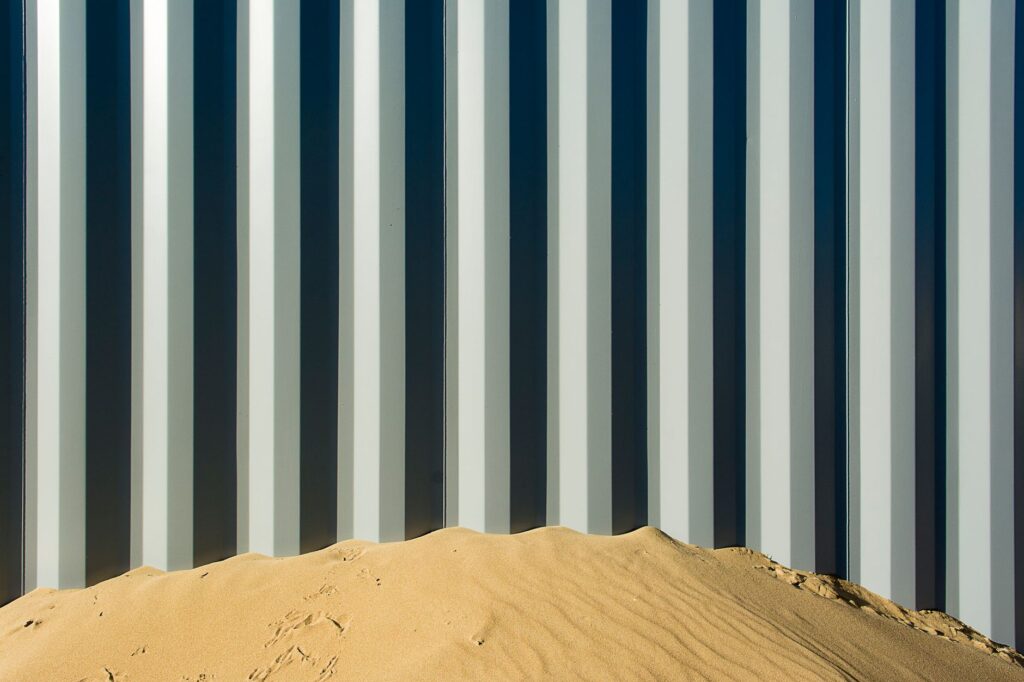
The technical challenge faced by the national railway operator in Mauritania far exceeds conventional civil engineering standards. The tracks rest directly upon beds of sand and rock, with no foundation other than natural compaction and ballast hauled from distant quarries. During the summer months, steel temperatures can exceed seventy degrees Celsius, forcing track maintenance crews to execute constant alignment and welding operations to prevent rail buckling. The invasion of mobile dunes, locally known as barchans, represents another relentless threat requiring the permanent deployment of mechanical sweepers and teams of workers equipped with shovels and heavy machinery.
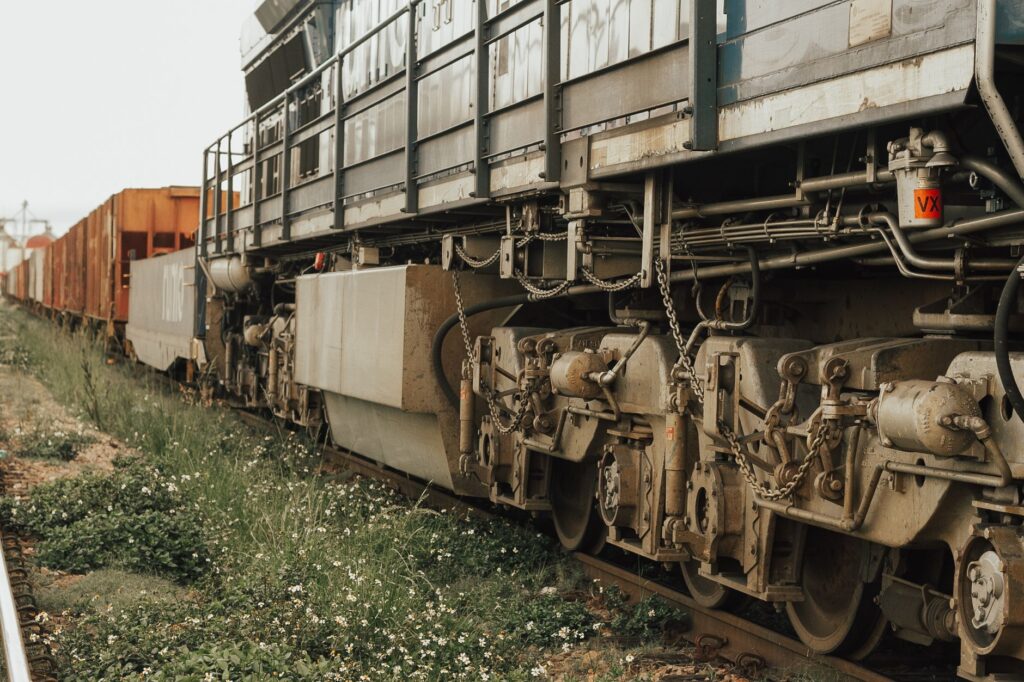
The locomotives, powerful diesel units imported and adapted to withstand fine dust infiltration, must operate with ultra-high-capacity air filters and undergo exhaustive overhauls after every complete round trip. Each convoy, reaching a total length of up to 2.5 kilometers, functions as a coordinated unit where radio communication and pneumatic braking systems are critical safety elements. Distributing weight evenly across the hopper cars requires millimeter precision to prevent derailments along the sharp curves skirting mountain massifs before descending toward the Atlantic seaboard.
Mineral Logistics: From Zouerate to the Nouadhibou Mineral Pier
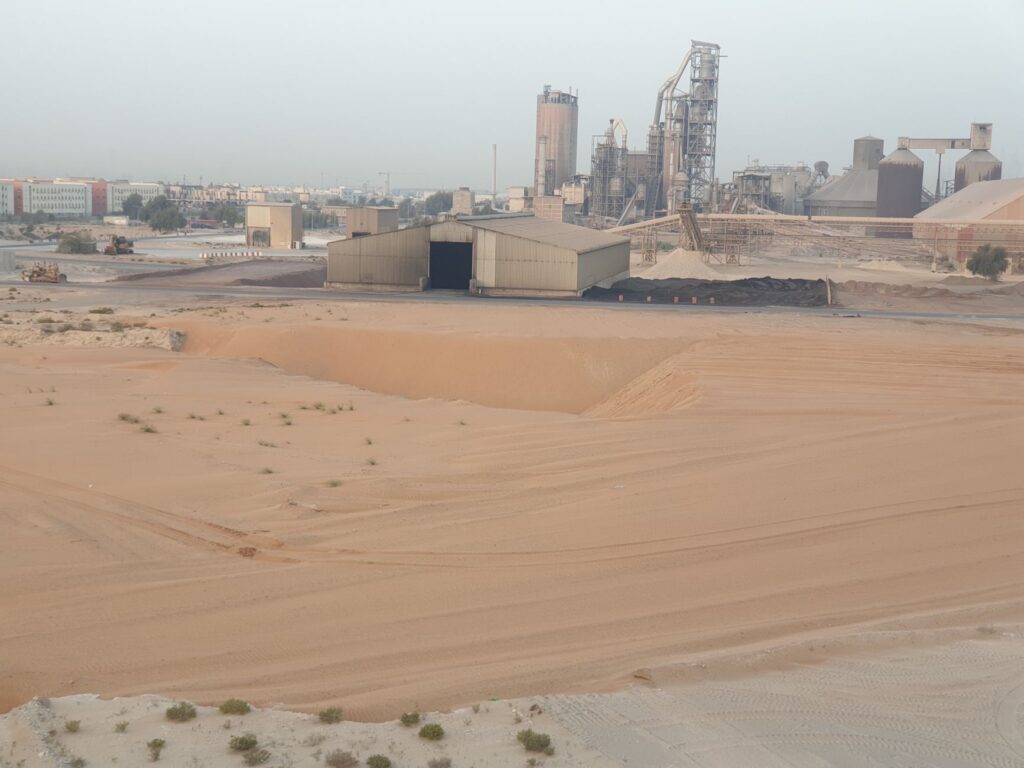
The operational cycle of this railway begins at the open-pit mines of Zouerate and F’Derick, where gigantic excavators extract iron ore that is subsequently crushed and sorted in high-capacity industrial facilities. Loading the cars is accomplished via automated hoppers that dose thousands of tons daily with chronometric precision. Once formed, the westward journey marks the beginning of an uninterrupted fourteen-to-eighteen-hour trek, depending on weather conditions and total tonnage hauled.
Upon reaching the western terminus on the Nouadhibou peninsula, the landscape shifts dramatically. Dunes give way to the port facilities of Cansado, where massive railcar dumpers empty the ore directly onto giant conveyor belts feeding the holds of international freighters bound for Europe and Asia. This steady flow of raw material serves as the primary foreign exchange generator for Mauritania’s economy, establishing the railway as a strategic national security asset and the primary barometer of the country’s financial health in international commodities markets.
The Human Pulse: Passengers and Traders on Service Cars
Beyond its industrial function, the Desert Railway fulfills an irreplaceable social role. For residents of settlements scattered along the route, such as Choum or Ben Amera, the train represents the only reliable connection to the outside world. Although convoys are primarily dedicated to ore, they include passenger coaches and open flatbeds where local travelers, merchants, and nomads transport everything from household goods to small livestock.
Traveling on mineral flatbeds or crowded passenger cars demands extraordinary resilience. Temperatures oscillate drastically between blistering midday heat and freezing desert nights. Passengers must equip themselves with traditional robes, airtight protective goggles against blowing sand, and personal provisions of water and food for the entire journey. Despite the discomforts and inherent risks, this collective mobility experience reflects the adaptability of local communities, turning the transit into a ritual where trans-Saharan trade stories and seasonal migrations intersect.
The Shadow of Monod and the Choum Milestone
The history of this railway line is punctuated by geopolitical anecdotes and engineering milestones forming part of the regional collective memory. One of the most fascinating episodes occurred during initial design phases in the 1950s, when the original route had to bypass the Choum mountain massif. To avoid tunneling through territory then under Spanish Sahara control, French engineers chose a rail segment winding directly into the neighboring colony, necessitating complex diplomatic negotiations.
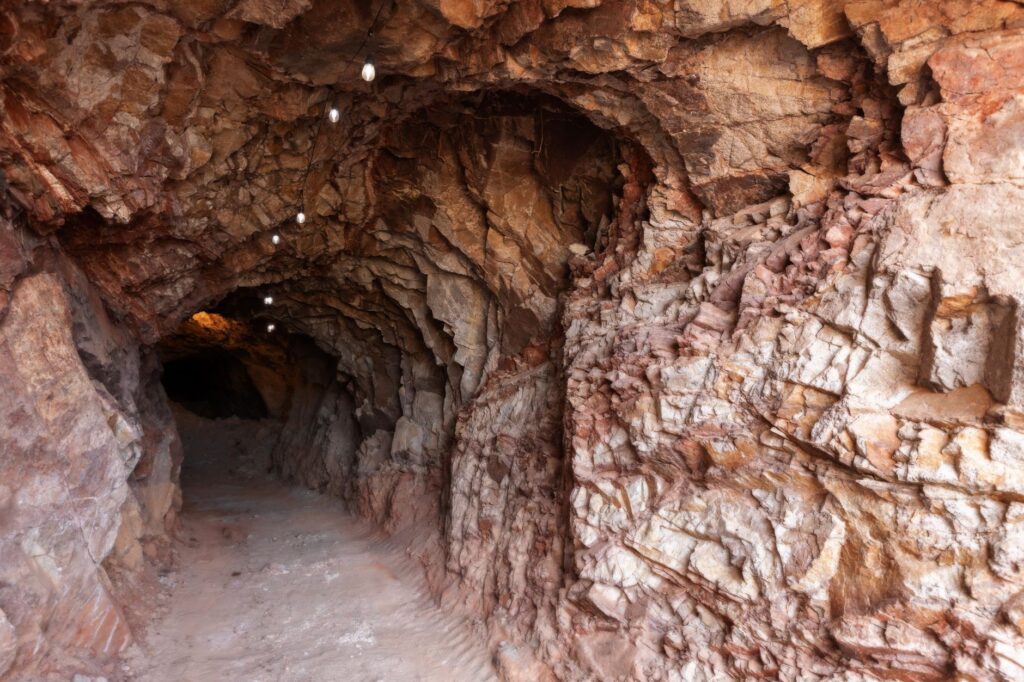
Years later, following border adjustments and regional conflicts, the celebrated Choum Tunnel—known as the Tunnel of the Lions—was constructed, a bore blasted through solid rock that definitively diverted the track strictly within Mauritian territory, eliminating dependence on the foreign border crossing. Today, the vestiges of that original detour and the monumental scale of the current tunnel attract engineers, historians, and intrepid travelers seeking to understand the geological and historical layers shaping this frontier landscape.
Safety, Maintenance, and the Challenges of Modernization
In recent years, management of the Desert Railway has undertaken a gradual modernization process aimed at increasing freight capacity and improving operational safety standards. Acquiring new fuel-efficient locomotives, installing satellite positioning systems for convoy tracking, and systematically replacing wooden ties with reinforced concrete elements in critical sections demonstrate this investment effort.
Nonetheless, structural challenges persist. Marine corrosion at the Nouadhibou terminal, combined with constant quartz dust abrasion inland, demands a relentless preventive maintenance program. Similarly, the safety of occasional hitchhikers riding mineral flatbeds remains a concern for authorities, who implement educational campaigns and checkpoints at major stations to prevent fatal accidents amid the desert expanse.
Mauritania’s mining train is not merely an engine extracting wealth; it is the metaphor of an ancient pulse where the tenacity of steel challenges the relentless tide of sand.
The long-term sustainability of this infrastructure also relies on balancing intensive mining operations with the preservation of the fragile surrounding desert ecosystem, where endemic flora and fauna struggle to survive under extreme aridity. Spill control, workshop waste management, and the protection of local biological corridors are now integral parts of environmental impact reports required of operating consortia.
Practical guide
How to get there: Primary access to the rail network is through the economic capital, Nouadhibou, connected via regular flights from Casablanca and Nouakchott, or via the coastal highway from Morocco.
Trip planning: Passenger train schedules are approximate and strictly subordinated to the absolute priority of iron ore freight traffic. Verifying service status at SNIM offices in Nouadhibou or intermediate stations is essential.
Recommended equipment: For traveling on flatbeds or passenger cars, sturdy windproof clothing, airtight protective eye goggles, traditional face wraps, thermal sleeping bags, and a generous reserve of drinking water are mandatory.
Accommodation: Hotel options are concentrated in Nouadhibou and Zouerate. In intermediate settlements like Choum, lodging is limited to simple local guesthouses or makeshift camps.
Safety and permits: Traveling with authorized local guides and checking updated diplomatic advisories regarding northern Mauritania’s desert zones is strongly recommended.
The Final Beat Between Saline Horizon and the Atlantic
When the last car of the mineral train crosses the peninsula sands and enters the saline mist of the Atlantic Ocean, the metallic clatter of wheels on rail merges with the steady roar of the waves. In that frontier where the desert dies into the sea, the epic of iron acquires an almost poetic dimension. The workers cleaning locomotive filters, the merchants adjusting their bales over dusty hoppers, and the engineers ensuring track alignment share a single code of silent endurance.
Every ton of ore hauled toward the Cansado pier serves as a reminder that civilization survives in the most inhospitable places through mechanical precision and unflagging human will.
Witnessing the convoy’s arrival at dusk, silhouetted against ochre and violet skies, encapsulates the fascination of a route defying conventional tourism. Here, there are no preset comforts or sanitized itineraries; only the relentless grandeur of Saharan geography and the realization that travel, in its purest state, is an exercise in wonder and absolute respect for the forces shaping our world.