
Origins of a Continental Audacity
At the close of the nineteenth century, the Andes mountain range represented an unyielding barrier to commerce and integration between Argentina and Chile. Journeys on muleback across the Uspallata Pass demanded weeks of physical hardship, exposing travelers and goods to the harsh extremes of a volatile climate. Amid growing economic and geopolitical urgency, Chilean brothers Juan and Mateo Clark conceived an unprecedented infrastructure: a narrow-gauge transcontinental railway capable of bridging the highest mountain range in the Americas outside of Asia. The endeavor required monumental technical vision, combining conventional adhesion on gentler slopes with the complex Abt rack-and-pinion system to scale impossible gradients.
The construction of the Transandine Railway was not merely an exercise in civil engineering, but a test of human survival. British engineers and local laborers—Chileans, Argentinians, Italians, and Spaniards—had to drill through living rock under minimal oxygen conditions, enduring sub-zero temperatures, persistent avalanches, and gale-force winds. Every kilometer gained toward the summit was a hard-won victory against Andean geology. The final stretch, culminating at the summit tunnel over three thousand meters above sea level, symbolized the pinnacle of the golden age of rail, uniting two oceans through an iron scar that defied geographical logic.
Rack-and-Pinion Technology and Overcoming Verticality
Conquering gradients of up to eight percent required highly specialized mechanical technologies. The Swiss-developed Abt rack system involved installing one or two toothed bars along the center of the tracks, into which cogwheels coupled to the steam locomotives meshed precisely. This millimeter-level coupling ensured that the trains would not slip into the abyss on the steepest inclines. The engines had to withstand immense thermal stress, operating in environments where boiler water boiled at lower temperatures due to reduced atmospheric pressure, which forced engineers to redesign combustion cycles and cylinder insulation.
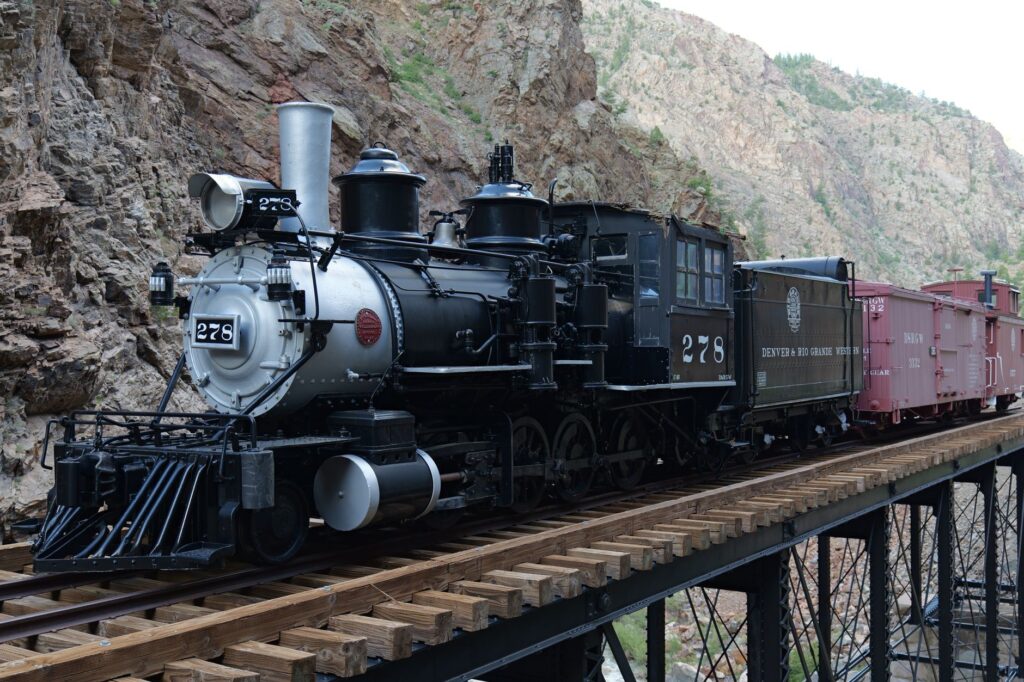
Beyond mechanical propulsion, the layout demanded the construction of an intricate network of alluvial defenses, windbreak galleries, and spiral tunnels designed to gain altitude in a controlled manner. Engineers had to calculate with mathematical precision the thermal expansion of metallic rails in an environment where daily temperature ranges exceeded thirty degrees Celsius. Every steel bridge, imported from European shipyards and transported in pieces along bridle paths, was assembled manually over deep gorges crossed by turbulent glacial rivers.
Seasonal Isolation and Climatic Vulnerability
Despite the brilliant technical design, the Transandine Railway always operated under the shadow of Andean climatic instability. During winter months, accumulated snowfall exceeded ten meters in key sectors such as Las Cuevas and Caracoles, completely halting convoy circulation. Avalanches and mudslides—locally known as huaicos—frequently destroyed viaducts and buried the tracks, severing a corridor vital for postal and passenger exchange between Buenos Aires and Valparaíso.
Maintaining the line required permanent crews stationed in high-mountain refuges, equipped with snowplow locomotives featuring reinforced steel front wedges. These clearing operations constituted a titanic battle against the elements, where response time measured the economic viability of the corridor. The reliance on a single summit tunnel without a low-level alternative condemned the system to chronic vulnerability which, combined with the progressive obsolescence of rolling stock in the mid-twentieth century, sealed its definitive decline against the modernization of asphalt highway transport.
Socioeconomic Impact on the Linking Valleys
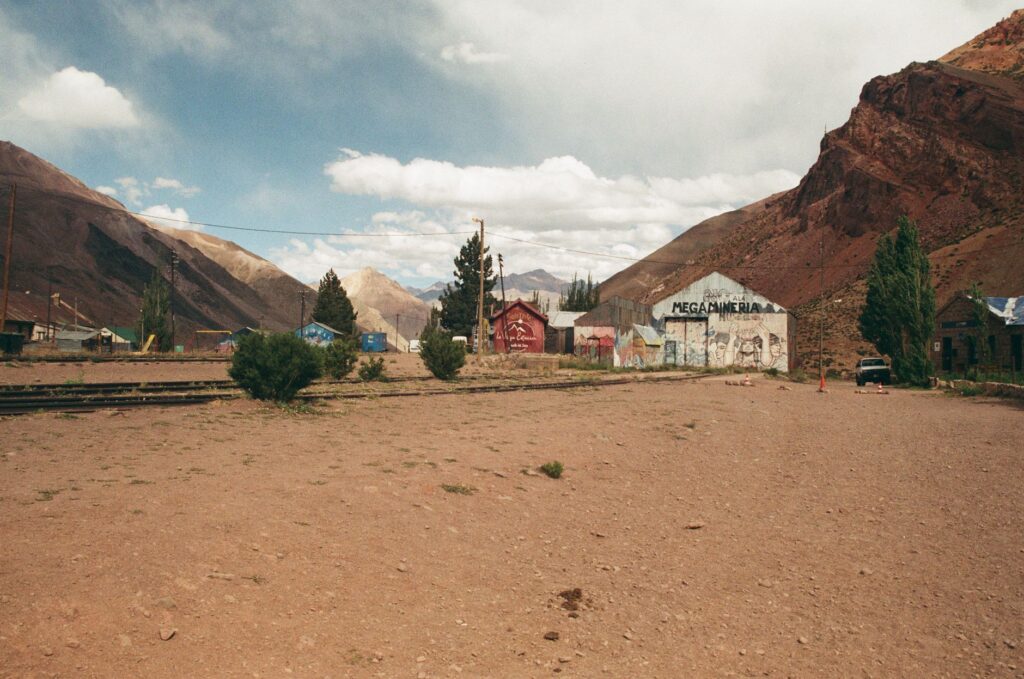
The arrival of the railway radically transformed the economy of the Mendoza and Aconcagua valleys. Previously isolated localities such as Uspallata, Punta de Vacas, and Las Cuevas on the Argentine side, or Juncal and Río Blanco on the Chilean side, experienced accelerated demographic growth driven by the need for maintenance workshops, coal supply stations, and housing for railway personnel. The train not only carried copper, livestock, and manufactured goods, but democratized cultural exchange, allowing entire families to cross the cordillera in hours rather than weeks.
The Andean pass ceased to be an insurmountable wall and became an ephemeral corridor where the steam engine challenged the continent’s verticality.
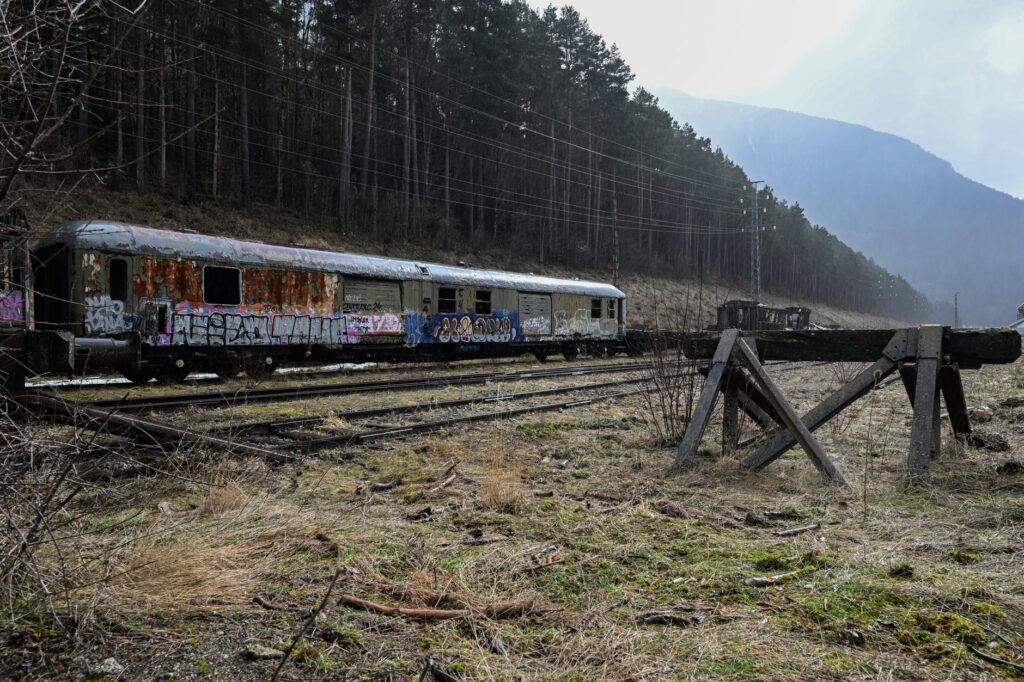
However, the definitive closure of passenger service in 1984 and the subsequent total abandonment of the route plunged these communities into deep economic lethargy. The former railway workshops and stone stations, built with solid British architectural craftsmanship, were left abandoned to the mercy of wind and vandalism. Today, the memory of that golden era survives only in the fragmented testimonies of retired railway workers and in the industrial ruins flanking National Route 7, silent witnesses to a lost connectivity that still stirs the nostalgia of historians and travelers alike.
Industrial Archaeology of the Andean Route
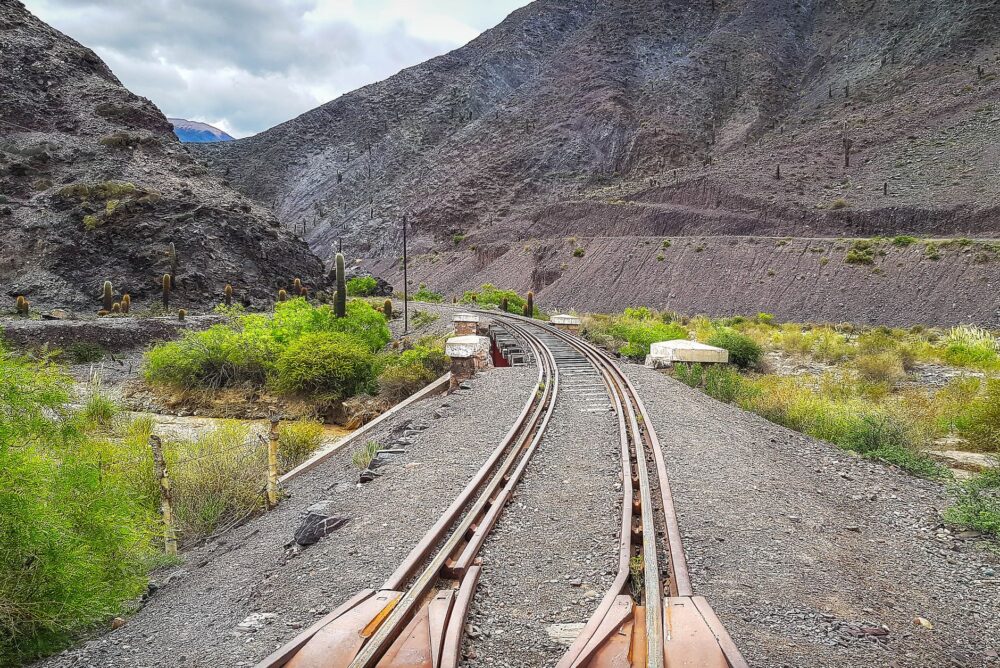
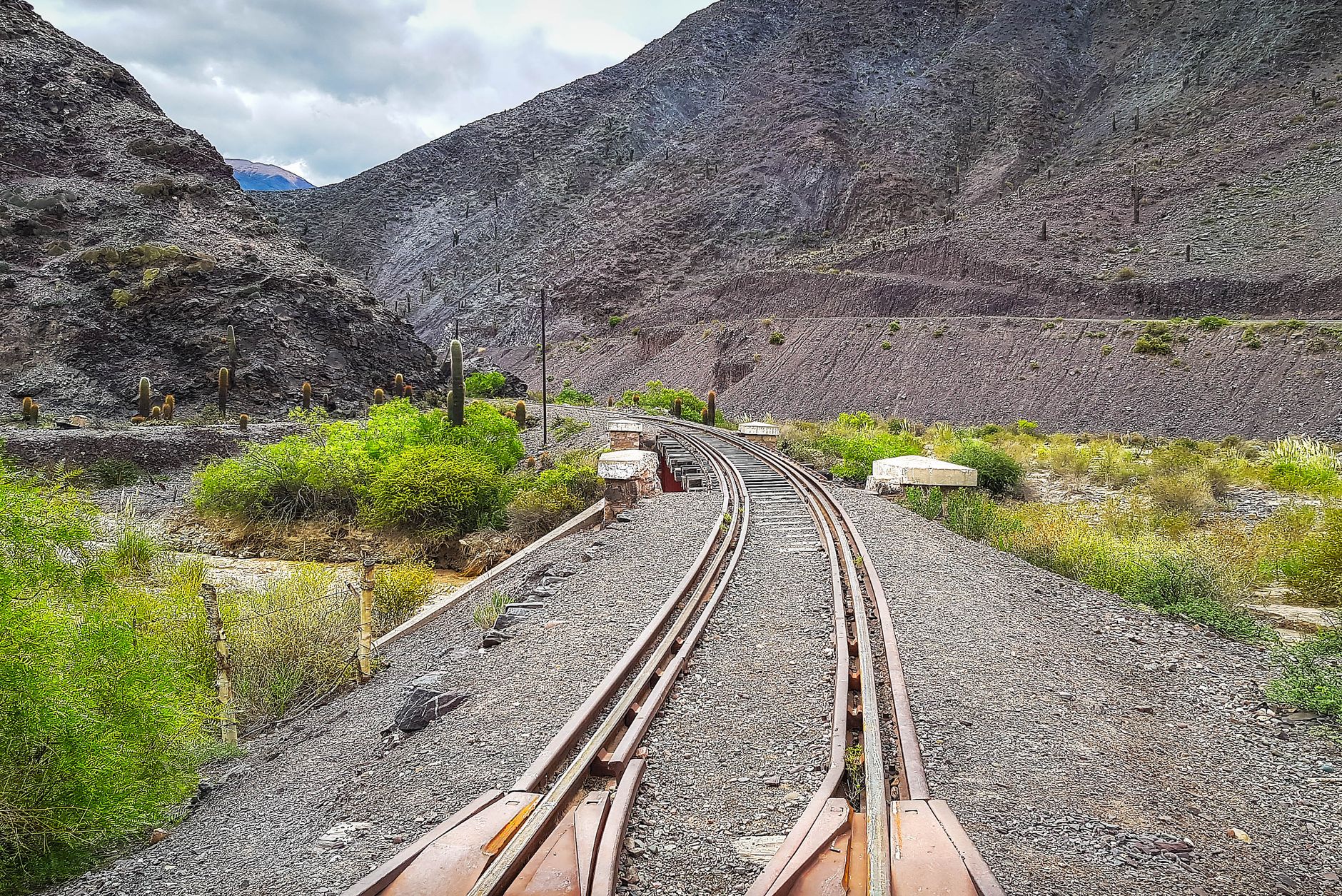
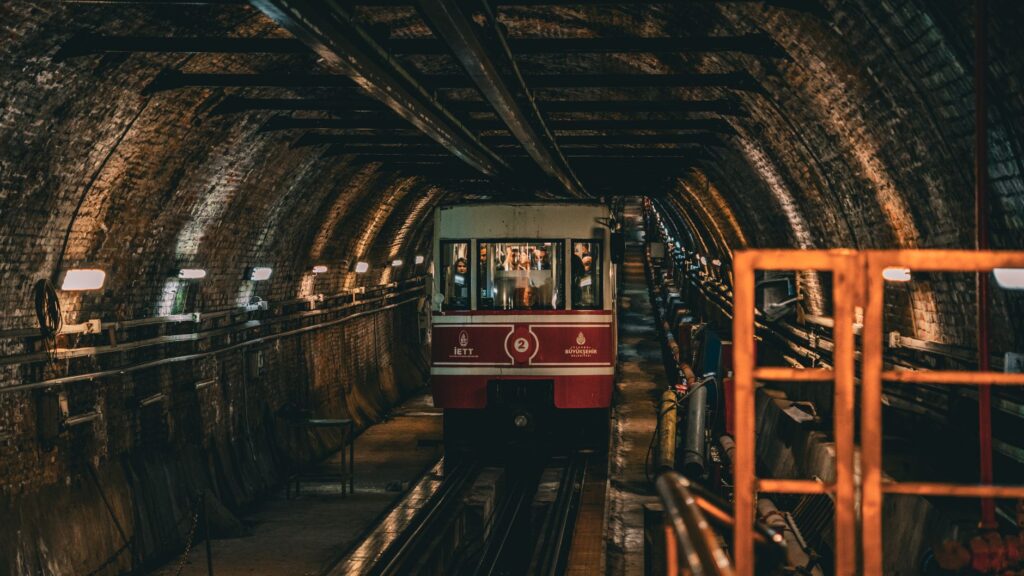
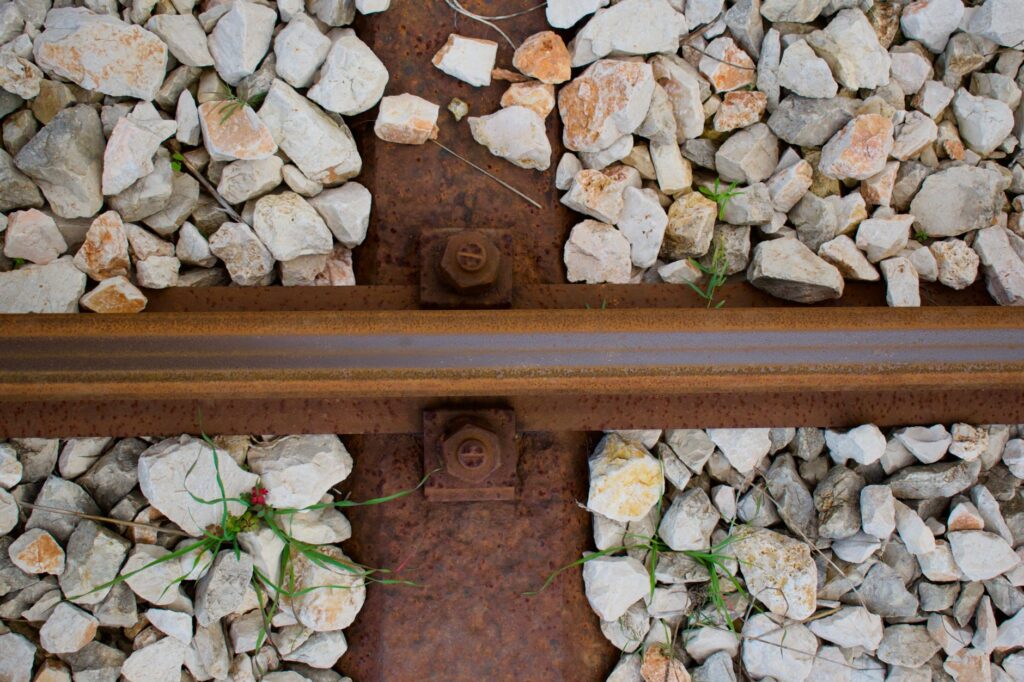
Exploring the vestiges of the Transandine Railway today is an open-air exercise in industrial archaeology. Along the canyons of the Mendoza River and the Aconcagua basin, wooden ties petrified by cold and twisted steel rails trace a ghostly path reaching deep into the cordillera. Metal lattice bridges, firmly bolted to granite cliffs, continue to bear the invisible weight of an engineering feat that remains astounding in scale and daring. Tunnel mouths, sealed with masonry walls to prevent accidents, guard within their chambers the echo of pistons and steam that once bridged two worlds.
Industrial heritage specialists agree that preserving this corridor is essential to understanding the evolution of transport infrastructure in high-altitude mountain zones. Unlike European rail lines converted into mass tourism attractions, the Transandine remains in a wild, abandoned state that enhances its contemplative value. Each semi-ruined station retains original construction details, from slate roofs to plunger telegraph systems, configuring a dispersed museum at three thousand meters of altitude that demands urgent preventive conservation policies.
Contemporary debates regarding bi-oceanic integration often circle back to these historical lessons.
Practical guide
How to get there: Access to the main vestiges of the Transandine Railway begins from Mendoza (Argentina) or Santiago (Chile) via National Route 7 (Argentina) or Route 60 (Chile), which wind parallel to the historic rail alignment.
When to travel: The optimal months for high-mountain exploration span the summer period from November to March, when the weather is more stable and routes are free of snow. During winter, passes frequently close due to severe storms.
Requirements and safety: Driving a vehicle in excellent mechanical condition is essential, along with checking the brake system and carrying high-altitude coolant. Registering with the Argentine National Gendarmerie or Chilean Carabineros before exploring trails near abandoned tracks is strongly recommended.
Accommodation and services: The towns of Uspallata and Puente del Inca offer basic guesthouses and dining options. There are no hotel services adjacent to the historic tunnel mouths, requiring daytime excursions to be planned from nearby urban centers.
Recommended equipment: Layered clothing (the layering system), trekking boots with high-traction soles, high-SPF sunscreen, UV-filtering sunglasses, and sufficient drinking water to prevent altitude-induced dehydration.
Emotional Epilogue in Silenced Summits
As the sun begins to retreat behind the snowy peaks of Aconcagua, absolute silence reasserts its sovereign domain over the Las Cuevas valley. In that crepuscular moment, devoid of the bustle of modern traffic, one can perceive the distant echo of a station bell and the metallic whisper of cogwheels gripping the rack. The wooden ties enduring the onslaught of wind and ice are not merely inert remnants of an industrial age; they represent the tangible testimony of human daring—of men who dared to challenge the greatest mountain range in the Western Hemisphere with the sole force of steam and conviction. In the quiet of the high mountains, the old Transandine rests like a sleeping titan, reminding us that paths uniting peoples transcend mere economic utility to become indelible monuments of South America’s collective memory.