
Silence and Noble Woods in the Heart of Lombardy
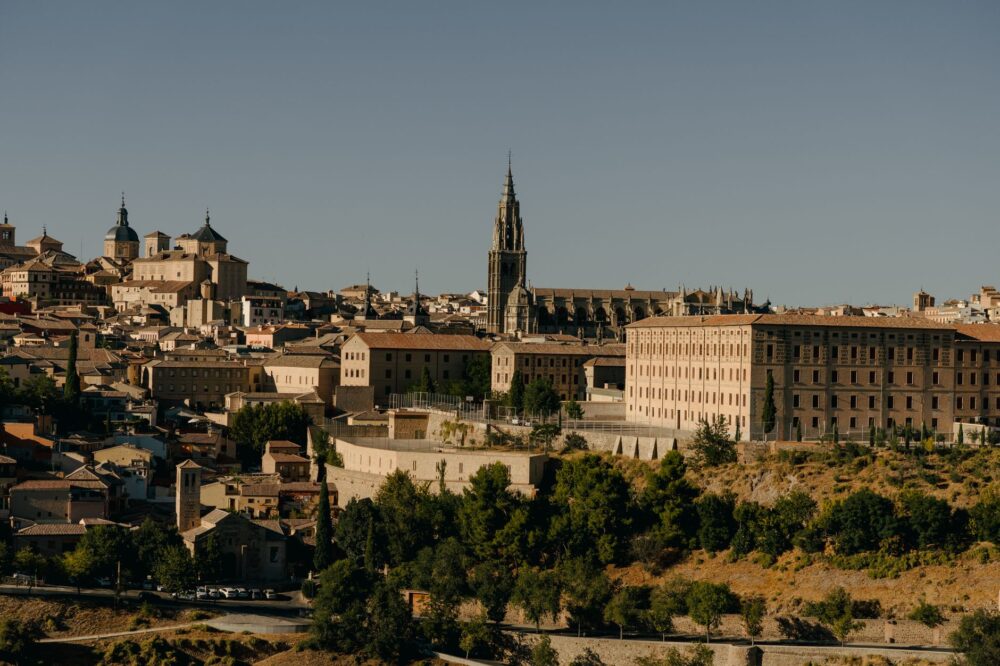
Cremona is not a city that shouts its secrets; it entrusts them to the gentle friction of a gouge against maple grain and the dense aroma of colophony and amber varnishes that permeates its medieval streets. Just a few steps from the majestic cathedral, violin-making workshops continue to operate with the same deliberate rhythms that marked the golden age of instrumental craft, when the Amati, Guarneri, and Stradivari families elevated acoustic carpentry to the status of fine arts. Today, this living heritage is not merely contemplated behind museum glass; it resonates powerfully in tiny studios where a new generation of international artisans engages in dialogue with tradition.
Traveling to Cremona today means understanding that Western classical music possesses a tactile, tangible geography. Every violin, viola, or cello born at these workbenches is the result of a delicate balance between the physics of sound waves and botanical intuition. Contemporary master makers personally select their woods in the red spruce forests of Val di Fiemme, seeking precise grain patterns that have weathered alpine winds before becoming the soundboard that will sustain the soul of the instrument.
The Anatomy of Sound: Selecting the Materials
The process of building a bowed string instrument begins long before the chisel touches its first board. In the warehouses of Cremonese luthiers, time is the most valuable variable. Pieces of flamed maple for the ribs and back, alongside red spruce for the top, rest for decades under controlled humidity and temperature conditions. This natural aging eliminates internal wood stresses, allowing the material to respond with maximum sensitivity to string vibration.

Artisans examine growth ring density with precision magnifying glasses, seeking millimeter-level regularity. A single error in board selection can ruin months of meticulous work. Wood lives and breathes, the masters assert in their shops, and the luthier’s craft consists of listening to what each piece demands before removing excess material. This absolute respect for the medium defines the work ethic in the world capital of instrumental music.
From the Inner Mold to Sacred Geometry
Unlike other woodworking traditions, the classical school of Cremona is founded on the internal mold system. Around a central walnut or willow block, the artisan assembles the corner blocks and bends the ribs using a hot iron. This primitive skeleton determines the volumetric personality of the instrument, establishing the exact proportions that will guarantee acoustic projection in concert halls worldwide.
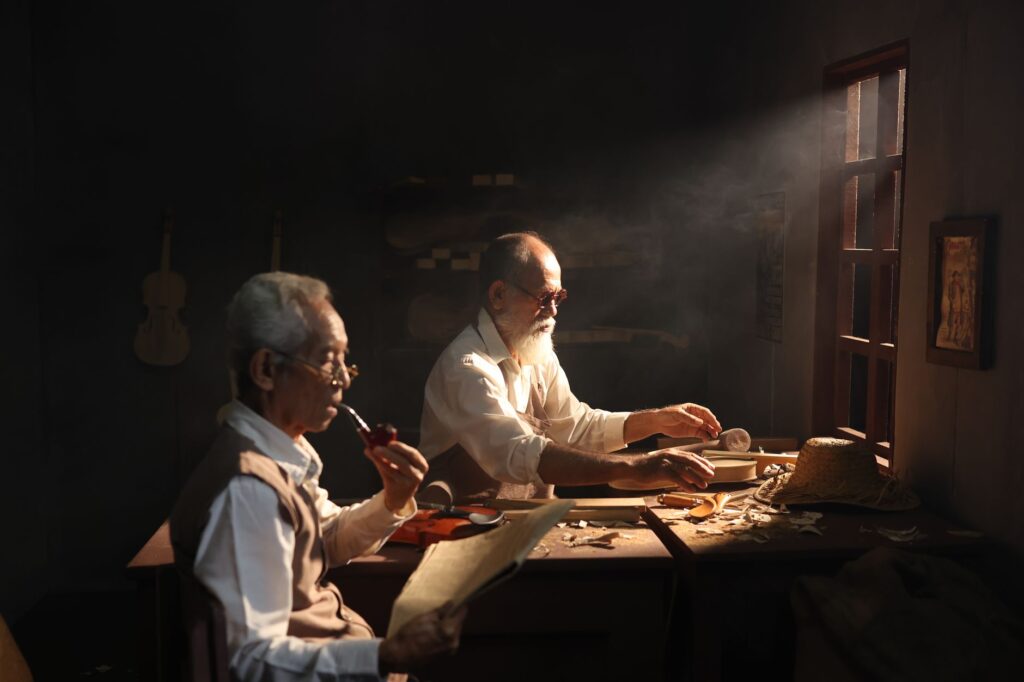
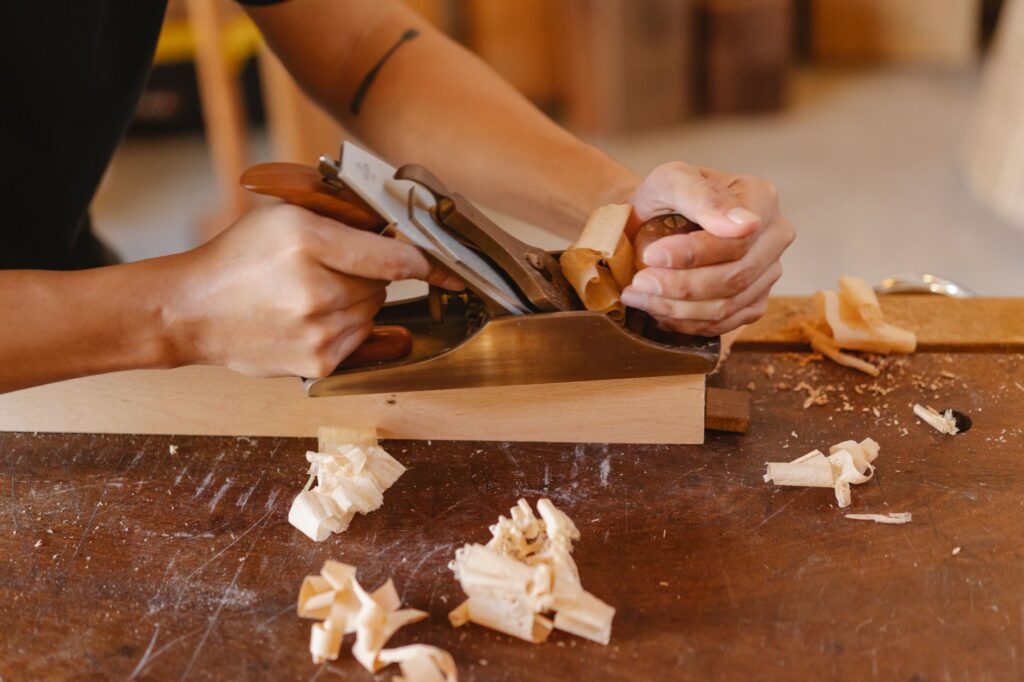
Once the ribs are fixed, the two fundamental components are carved: the back and the belly. Using gouges of varying curvature and microscopic precision blades, the luthier pares down the solid block of wood until reaching optimal thicknesses, which in many areas do not exceed two and a half millimeters. Thickness is never uniform, responding instead to acoustic topographic maps learned through decades of observation and tactile flexibility tests.
One of the most tense moments in the workshop is the tracing and cutting of the f-holes, the openings that allow sound to escape and the top plate to flex. These apertures do not rely solely on aesthetic criteria; they act as the breathing mouth of the instrument. Their position, length, and the angle of their wings drastically condition the timbre and harmonic warmth of the violin.
The luthier works with extremely fine files and microscopic blades to profile the edges of the f-holes. Any asymmetry would alter airflow within the resonance box. It is here that human hands demonstrate absolute superiority over any industrial automation, adjusting structural rigidity with a sensitivity granted only by daily practice over many years.
The Alchemical Secret of Varnishes
If geometry provides structure, varnish endows the violin with its aesthetic soul and protects its organic integrity. Cremona’s workshops zealously guard master formulas combining natural oils, conifer resins, turpentine, and historical mineral pigments. Unlike modern synthetic varnishes that seal the wood and stifle vibration, traditional preparations allow the instrument to breathe and mature over time.
Application requires dozens of ultra-thin layers, applied with a pad or soft-haired brush, followed by natural drying under diffuse Lombard sunlight. The final color is never flat; it exhibits subtle plays of transparency revealing the deep grain of the maple beneath a golden or mahogany surface. This artisanal finish grants every violin an unrepeatable visual identity, turning it into a total work of art.
Final Assembly and Setting the Soundpost
The process culminates in fitting the accessories: the ebony fingerboard, pegs, tailpiece, and above all, the bridge and soundpost. The soundpost, a small cylinder of spruce situated inside the body beneath the right foot of the bridge, acts as the transmission link between the top plate and the back. Its placement requires special tools and millimeter precision; shifting it by even half a millimeter can completely transform the voice of the instrument.
Once strung, the violin undergoes rigorous acoustic testing in sound-insulating listening rooms. The luthier adjusts tension, shaves the bridge microscopically, and checks tonal response across the entire register, from deep lows to subtle harmonics in high fingerboard positions. Only when the instrument emits that characteristic round, velvety timbre inherent to the Cremonese school is it deemed ready for its journey into the hands of a professional performer.
The violin is not an inert object; it is a resonance box built from the memory of trees and tuned with the patience of time.
Today, the labor of these artisans is protected as Intangible Cultural Heritage of Humanity by UNESCO, a recognition underscoring the urgency of safeguarding a craft that survives mass production pressures. Young people arriving in Cremona from five continents to train at the prestigious International School of Violin Making embrace this ethical and technical commitment, ensuring the heartbeat of wood keeps sounding in the 21st century.
Practical guide
Planning a visit to Cremona to explore its instrumental tradition requires respecting the schedules and privacy of artisanal workshops. Here are the fundamental keys for a rigorous, respectful experience:
- How to get there: The nearest airport is Milan-Linate, located about 90 kilometers away. From Milan Central Station, direct trains connect to Cremona in approximately one hour.
- When to go: Spring and autumn offer optimal weather conditions and coincide with chamber concert series in the city’s historic palaces.
- Workshop access: Most independent studios welcome visits by prior email appointment. It is essential to avoid interruptions during delicate varnishing or top-adjustment processes.
- Violin Museum (Museo del Violino): Located in the Palazzo dell’Arte, it houses an unrepeatable collection of original instruments by Stradivari, Amati, and Guarneri del Gesù, alongside a world-class acoustic auditorium.
- Cabinetmaking and Luthiery Institute: Educational spaces such as the International School of Violin Making occasionally organize temporary exhibitions on historical woods and tools.
- Local etiquette: Workshops are spaces of concentration and relative silence. Visitors must request permission before taking photographs of workbenches or precision tools.
Epilogue: The Echo That Transcends Generations
When the sun sets behind Cremona’s medieval towers and the last chisel strikes cease at the workbenches, the city seems to hold its breath. In the silence of the Lombard night, newly tuned violins shelter within themselves the memory of alpine forests and the tireless pulse of their creators. Every instrument leaving these workshops carries away not only a perfect harmonic structure, but the silent resilience of an ancient craft refusing to fade. In their notes beats the certainty that true beauty requires time, noble wood, and human hands willing to listen to the deep heartbeat of the world.