
Beyond Traditional Diplomacy
The bilateral relationship between Canada and Mexico is typically analyzed through the lens of commerce, industrial investment, and labor migration agreements. However, there exists an equally vital dimension deeply rooted in the shared natural territory: ecological diplomacy and the joint management of transcontinental biological corridors. This strategic alliance is not restricted to documents signed in ministerial offices; it manifests in the field, where scientists, indigenous communities, and government agencies collaborate to preserve migratory species that recognize no political borders.
The concept of a comprehensive strategic partnership acquires physical and urgent meaning when examining the map of North American migration routes. From the vast expanses of the Canadian taiga to the temperate forests of central Mexico, millions of birds, mammals, and insects depend on the continuity and health of highly diverse habitats. Binational cooperation seeks to ensure that conservation policies in the north find resonance and continuity in the south, establishing shared standards of environmental monitoring and biodiversity protection.
The Pulse of the North: Boreal Forests and Wetlands
At the northern extreme of this alliance, Canada’s immense boreal forests act as the green lung and prime breeding ground for numerous species that embark each autumn on a long journey south. These ecosystems, characterized by their resilience to extreme climates and vast soil carbon storage, are fundamental for global climate stability and the reproduction of waterfowl and passerines.

Canadian environmental agencies work closely with Mexican institutions to map breeding populations and understand the pressures these birds face in their wintering grounds. Habitat loss due to logging and climate change in the north has direct repercussions on the abundance of these species when they arrive at wetlands and winter jungles in Mexican territory.
Nature does not understand trade treaties, but it demands firm agreements between nations to ensure its long-term survival.
The exchange of satellite technology and field methodologies allows researchers to track individual specimens, documenting critical stopovers along the migratory route. This steady flow of scientific information is one of the most solid pillars of bilateral cooperation regarding natural resources.
The Southern Sanctuary: Oyamel Forests in Mexico
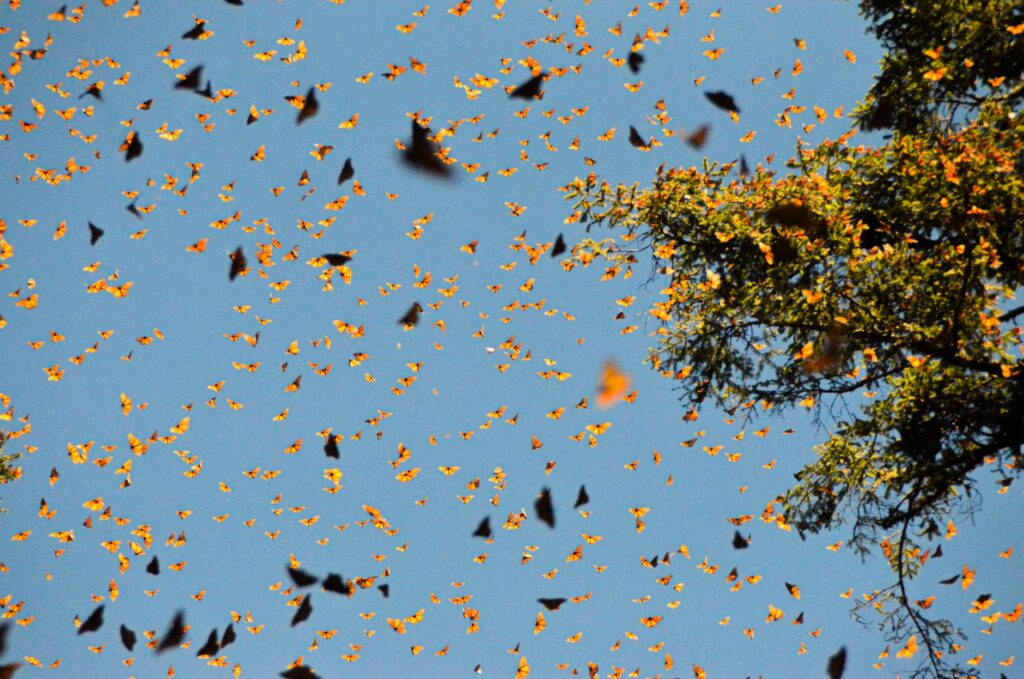
At the opposite end of the corridor, the oyamel forests in the states of Michoacán and Mexico represent the final destination of one of the planet’s most fascinating natural phenomena: the migration of the monarch butterfly. After flying thousands of kilometers from southern Canada and the United States, these lepidopterans find refuge in the specific microclimates of Mexican mountains, covering entire branches and trunks with golden and black blankets.

Protecting these sanctuaries has required titanic efforts by Mexican authorities, frequently supported by international technical cooperation and funds, including Canadian contributions focused on community sustainability. Local communities, which for decades depended on timber extraction, now actively participate in ecotourism and anti-logging patrols, becoming the primary guardians of the monarch’s winter habitat.
- Continuous monitoring of forest cover in core reserve zones.
- Alternative economic development programs for communal ejido communities.
- Environmental education in rural schools along the migration routes.
- Restoration of degraded areas through reforestation with native species.
Challenges, however, persist. Extreme climate variations in the north alter the butterflies’ departure times, while prolonged droughts in central Mexico threaten water availability and the thermal balance insects need to survive the winter.
Ecological Connectivity and Climate Change
Addressing the biodiversity crisis in the 21st century requires setting aside isolated conservation policies. The framework of cooperation between Canada and Mexico recognizes that the degradation of a single link in the migratory chain can cause the collapse of entire populations. Therefore, experts from both countries promote the concept of ecological connectivity, advocating for the creation and maintenance of safe natural corridors across thousands of kilometers.
This includes protecting crucial resting and feeding sites in the United States, but with shared technical leadership between the nations of the far north and south. Binational workshops exchanging experiences in protected natural area management have become an indispensable tool to unify forest management criteria and invasive species control.
The resilience of shared ecosystems depends directly on the speed with which both nations adapt their regulatory frameworks to a rapidly transforming climate reality.
Data gathered by Global Affairs Canada and Mexican environment ministries underscore that investment in green infrastructure and the protection of cross-border watersheds is a national and regional security priority.
Citizen Science and Community Participation
One of the most encouraging aspects of this ecological relationship is the growing integration of civil society into conservation efforts. Citizen science programs allow thousands of people in Canada, the United States, and Mexico to record the passage of monarch butterflies, migratory bird sightings, and the blooming of key nectar plants, creating massive databases scientists use to evaluate ecosystem health.
Indigenous communities in both countries play a leading role in this network. Their traditional knowledge, accumulated over generations, offers fundamental keys to understanding natural cycles and predicting environmental alterations that mathematical models often overlook. Collaboration with these communities not only enriches scientific research but ensures that conservation policies respect human and territorial rights.

Involving local communities in environmental management is the only guarantee that conservation transcends changes in government administrations.
Community-based ecotourism projects promoted in key regions allow visitors to observe wildlife without altering natural behaviors, generating direct economic income that incentivizes the preservation of forests and wetlands against the pressure of intensive agriculture and urban expansion.
Pending Challenges on the Binational Agenda
Despite achievements in technical and scientific cooperation, the environmental agenda between Canada and Mexico faces monumental challenges. Global economic pressures, agricultural frontier expansion, and the development of large infrastructure projects along migration routes represent constant threats to the integrity of shared ecosystems.
Likewise, there is an urgent need to harmonize legal frameworks and rapid response mechanisms for natural disasters, such as large-scale forest fires affecting both Canadian boreal forests and wooded areas in Mexico. The ability to share human resources, specialized equipment, and mitigation protocols is an evolving area within bilateral agreements.
Specialists agree that green diplomacy must be elevated to the same priority level as trade agreements. Without a stable and functional natural environment, the economic and social foundations of both countries will be severely compromised in the coming decades.
Practical guide
How to observe nature and support conservation in Canada and Mexico:
- Ideal travel seasons: For boreal forests in Canada, the months of June through August offer the best weather conditions. For the monarch butterfly sanctuaries in Michoacán and the State of Mexico, the optimal season runs from December to February, when insect concentration peaks.
- Responsible tourism: In Mexican sanctuaries, always hire certified local guides and strictly respect marked trails. In Canada, maintain a prudent distance from wildlife and follow leave-no-trace principles in national parks.
- Citizen participation: Get involved in international citizen science platforms like Journey North or iNaturalist to report sightings of migratory species during your travels.
- Operator selection: Choose ecotourism agencies that reinvest a portion of their revenue into local reforestation and environmental education projects.
Final Reflection on Natural Balance
The natural history linking Canada and Mexico is a constant reminder that the Earth functions as an interconnected system where human borders are mere geographical conventions. The survival of emblematic species like the monarch butterfly or boreal birds depends on political and social will capable of transcending electoral cycles and cultural differences. Looking to the future, consolidating this ecological corridor is not just a matter of environmental protection, but an ethical testament to our shared responsibility toward the living heritage of the American continent.
Fuente en ES: Global Affairs Canada / Source in EN: Global Affairs Canada (https://news.google.com/rss/articles/CBMiuwFBVV95cUxQSUUyamkxM25MTDRSel9Ja2JuTVV6Q1FSZlF4VGtTWHFQOGhyU2FzQkZBamNUUW5HVWUtMk9RYnhkTFY1a05DZUlOWGxJWjdLVGE1VklKWUt4dXVYM1JaV2U5QkZYWlFUS2ZYV3JLQXc5V1kzYTJTemhsTmVsRUUwd2lFa3QwcjBObDV6UWlIUUVKZEtGOTNWaUUxV2pOOGl3T1FsZzVNTDM3VkhoTWtmeHdzNE1WRVRLYk1J?oc=5)