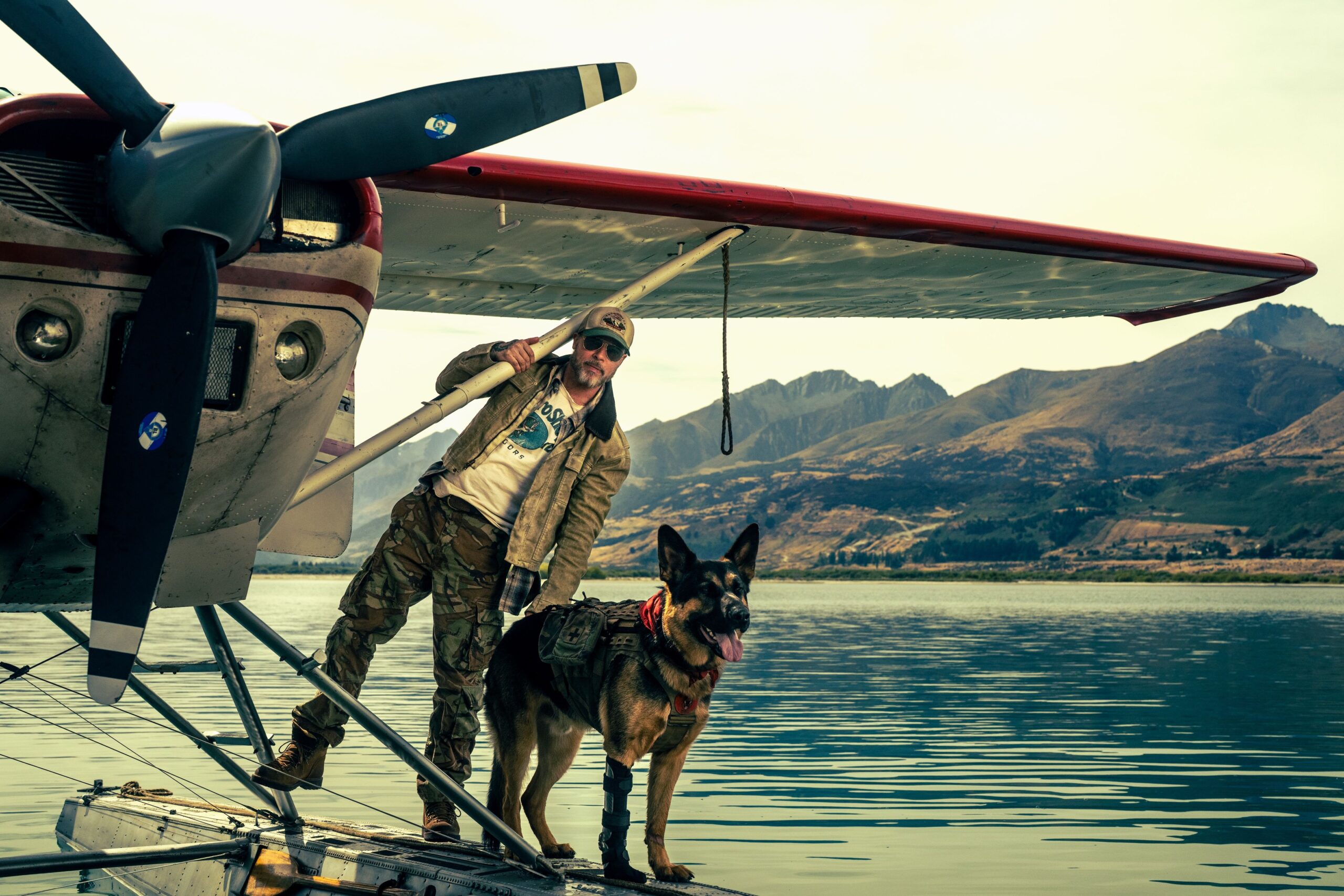
The Call of the Untamed Territory
The horizon of Alaska makes no concessions to star-studded status. When the cameras of a major film production move into the northernmost reaches of the American continent, nature ceases to be a mere backdrop and transforms into a character with its own voice. In this unforgiving setting, where daylight fades into golden twilight and the bitter cold tests the resilience of any technical crew, one of the most unique cinematic proposals of recent years took shape within the adventure and survival genres. The presence of Brad Pitt in these coordinates does not respond to traditional Hollywood glamour, but rather to a deliberate immersion in geographical harshness.
The cinematic premise places the actor and his co-star, a meticulously trained German shepherd, on a journey where the line between civilization and absolute isolation completely blurs. This is not merely a tale about conquering snowy peaks or crossing rushing rivers, but an exploration of human vulnerability in the face of vast boreal ecosystems. The filmmakers deliberately sought locations where human footprints were nearly imperceptible, forcing both actors and crew members to coexist with the unpredictable reality of subarctic weather.
Physical Preparation and Geographical Isolation
Adapting to the rhythm of Alaska demands a radical transformation in working routines. Far from the soundstages of Los Angeles, filming depended heavily on narrow weather windows. Extreme temperatures dictated daily agendas, requiring every sequence to be coordinated with surgical precision to avoid unnecessary risks. In this context, the relationship between Pitt and the canine was not forged in preliminary rehearsals, but on the ground as both faced the same freezing currents and rocky paths.
The animal trainers accompanying the production note that the dog did not act under artificial stimuli, but responded instead to a dynamic of complicity and mutual trust developed over months of coexistence in temporary base camps. This synergy reflects on screen through an authenticity difficult to replicate in digital environments. Every frame breathes the rawness of a territory where local wildlife—grizzly bears, wolves, and moose—constantly reminds film crews that they are merely temporary visitors in a domain that does not belong to them.
Nature does not negotiate its rules; it imposes its own pace and demands that those who temporarily inhabit it learn to listen before acting.
Ephemeral Architecture and Logistics at the Edge of the World
Setting up a film set in remote areas of Alaska requires logistics comparable to a scientific expedition. Given that access via conventional roads is impossible in many chosen locations, the transport of heavy equipment, generators, and medical supplies was handled exclusively by bush planes equipped with skis and specialized helicopters. This aerial dependency conditioned the pace of work, turning each filming day into an exercise in meticulous planning.
Temporary structures installed to house the technical crew had to comply with strict environmental conservation regulations to prevent any disturbance to the fragile tundra soil. The shelters used were not designed for modern comfort, but rather for thermal functionality and resistance against hurricane-force winds descending from the Gulf of Alaska. This display of lightweight engineering demonstrates how contemporary cinema can venture into the most pristine wilderness while minimizing its ecological footprint through biodegradable materials and exhaustive cleanup protocols at the end of each production phase.
The Director’s Vision and the Aesthetics of the Outdoors
The visual direction of this project rejects the artifice of excessive digital color grading, opting instead for a chromatic palette dominated by the metallic grays of glaciers, the ochres of thawed earth, and the dark green of spruce forests. The camera adopts an observational viewpoint, allowing the immensity of the landscape to dominate the framing and dwarf the human figure. This aesthetic decision reinforces the script’s core thesis: the individual facing immensity, forced to confront personal limits in the absence of modern distractions.
Cinematographers utilized specialized lenses designed to capture the scarce natural light of the arctic winter, achieving visual textures that convey the tactile sensation of cold and humidity. Each outdoor sequence was conceived as a moving painting where the German shepherd’s behavior acts as an emotional barometer of environmental tension, anticipating the dangers of the surroundings before the camera registers them.
Traditions and Legends of Local Communities
Venturing into Alaska’s interior also involves establishing a respectful dialogue with native communities that have inhabited these latitudes for millennia. Elders from local tribes collaborated closely with the production to ensure the cinematic narrative respected sacred toponymy and traditional restrictions regarding certain hunting areas and winter transit routes. These exchanges provided the crew with an indispensable cultural perspective, enriching the story’s background with nuances of ancestral survival that transcend mere fictional entertainment.
Legends about forest spirits and the duality between the wolf and the domestic dog served as narrative inspiration to deepen the bond between the protagonists. Far from presenting nature as a hostile threat to be subdued, the cultural focus shared with indigenous inhabitants proposes a vision of cohabitation and mutual respect—values that Brad Pitt’s character gradually internalizes as his journey through the frozen wilderness unfolds.
The Animal Factor: When the Companion Surpasses Fiction
The dramatic weight of the film rests heavily upon the shoulders—and paws—of the canine lead. Unlike traditional cinematic pets generated by computer graphics or trained exclusively to respond to mechanical commands, this German shepherd possesses a physical presence that brings unusual density to the story. Its capacity to convey disorientation, loyalty, and physical fatigue transforms the traditional dynamic of adventure films, where the hero typically resolves conflicts alone.
Animal behavior specialists point out that filming under such adverse conditions heightened the dog’s natural instincts, achieving genuine reactions to sudden temperature drops, freezing water currents, and the vastness of the horizon. This behavioral authenticity becomes the true emotional engine of the plot, establishing a silent yet forceful counterpoint to the usual verbosity of Hollywood cinema.
Adventure cinema finds its true greatness when it dispenses with special effects and relies on the eloquence of shared silences between man and animal.
Practical guide
How to get there: The main access to filming and exploration areas in southern and central Alaska is through Ted Stevens Anchorage International Airport (ANC), connected via regular flights to major US cities. From Anchorage, travel into the wilderness requires local charter bush planes or all-terrain vehicles adapted for gravel roads.
When to go: The summer season (June to August) offers moderate temperatures and extended daylight, ideal for hiking and wildlife photography. For those seeking to experience the winter harshness reflected in cinema, February and March allow visitors to witness fully snow-covered landscapes and aurora borealis activity, though temperatures frequently drop below minus twenty degrees Celsius.
Requirements and safety: Registration with local forestry services is mandatory before undertaking any trekking route in remote areas. Traveling with certified guides experienced in preventing encounters with large wildlife and carrying satellite communication devices is strongly recommended, as conventional phone coverage is nonexistent across much of the territory.
The Silent Legacy of the North
At the end of the journey, when camp lights are turned off and absolute silence reclaims the tundra, the certainty remains that certain stories can only be told where nature retains its primal power. The filming experience in Alaska left an indelible mark on both the technical crew and its main actors, proving that large-scale cinema is still capable of seeking truth in the planet’s most inaccessible corners. Far from spotlights and red carpets, the true measure of a cinematic work reveals itself in its ability to converse with the wind, the snow, and the untouched memory of the land.
Source in English: Condé Nast Traveler Spain – In the Heart of the Beast: Brad Pitt and a Dog in the Wild Nature.