
Autumn in central Mexico brings not only a drop in temperatures and shifting tones across rural landscapes, but also one of the cleanest atmospheric windows of the year. As the heavy summer rains conclude, the atmosphere undergoes a natural purification process where water vapor and suspended particles decrease significantly. This meteorological phenomenon transforms the nights of the Central Highplateau into a privileged stage for astronomical contemplation, allowing amateur enthusiasts and seasoned travelers to seek refuge in the areas surrounding Mexico City to reconnect with the firmament.
Far from urban bustle and the persistent light pollution that drowns out constellations over the capital, the high valleys and volcanic foothills of the State of Mexico, Puebla, and Hidalgo harbor corners where nocturnal darkness remains a protected heritage. Between October and November, Earth crosses the dust trails left by historic comets, giving rise to three main meteoric events that can be enjoyed without costly optical equipment, relying solely on patience, visual adaptation, and proper clothing.
The Stellar Transition and the End of Summer Haze
Understanding why autumn is so conducive to astronomical observation requires looking at the climatic cycles of the Trans-Mexican Volcanic Belt. During the summer months, constant humidity generates a dense cloud and atmospheric layer that disperses artificial light, creating a luminous dome over large cities. With the arrival of October, northern winds progressively sweep away this humid remnant, inaugurating the dry season that will extend until the following spring.
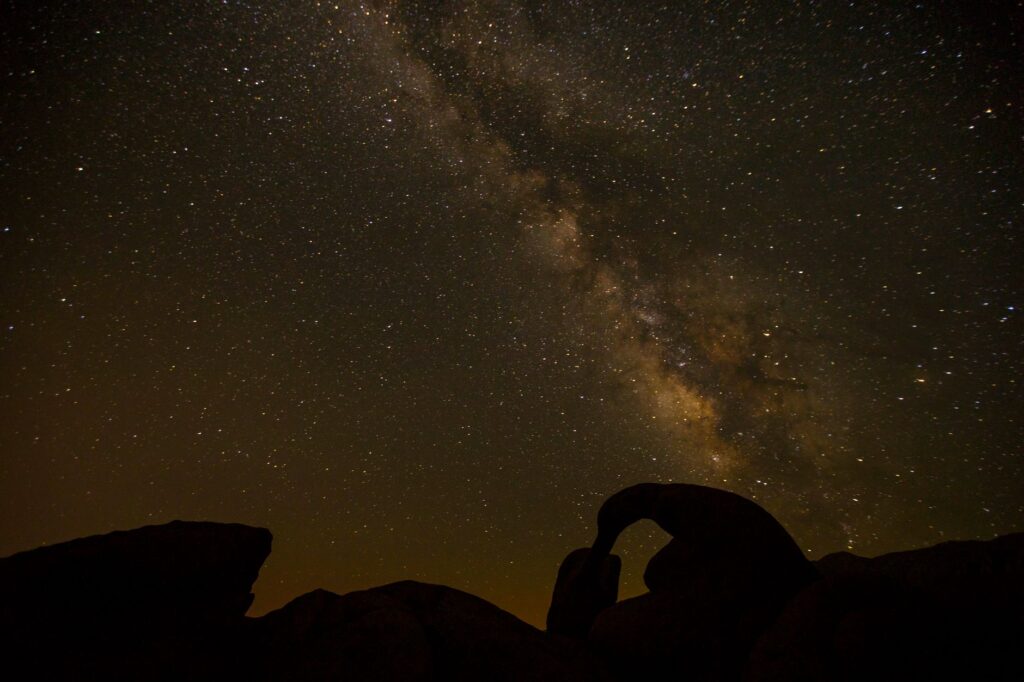
This gradual cleansing of the air drastically reduces atmospheric turbulence, a critical factor known in science as sky visibility and stability. While distinguishing anything beyond the main stars is a chimera within the megalopolis, just a two- or three-hour journey away, nocturnal skies recover their pristine depth. Rural communities and protected natural areas surrounding the Mexico City basin thus become ideal viewpoints to witness the fleeting passage of celestial bolides.
Orionids: The Luminous Legacy of Halley’s Comet
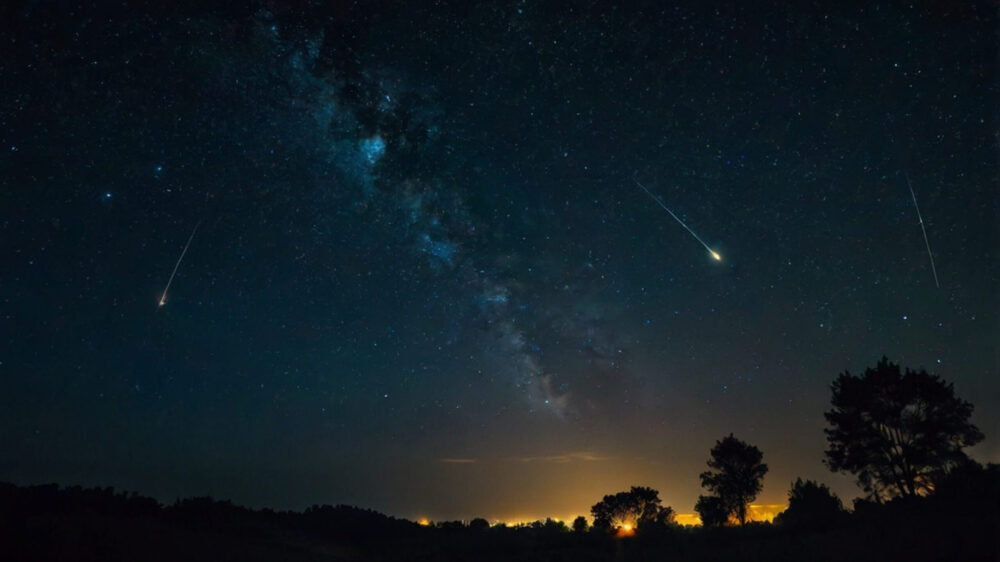
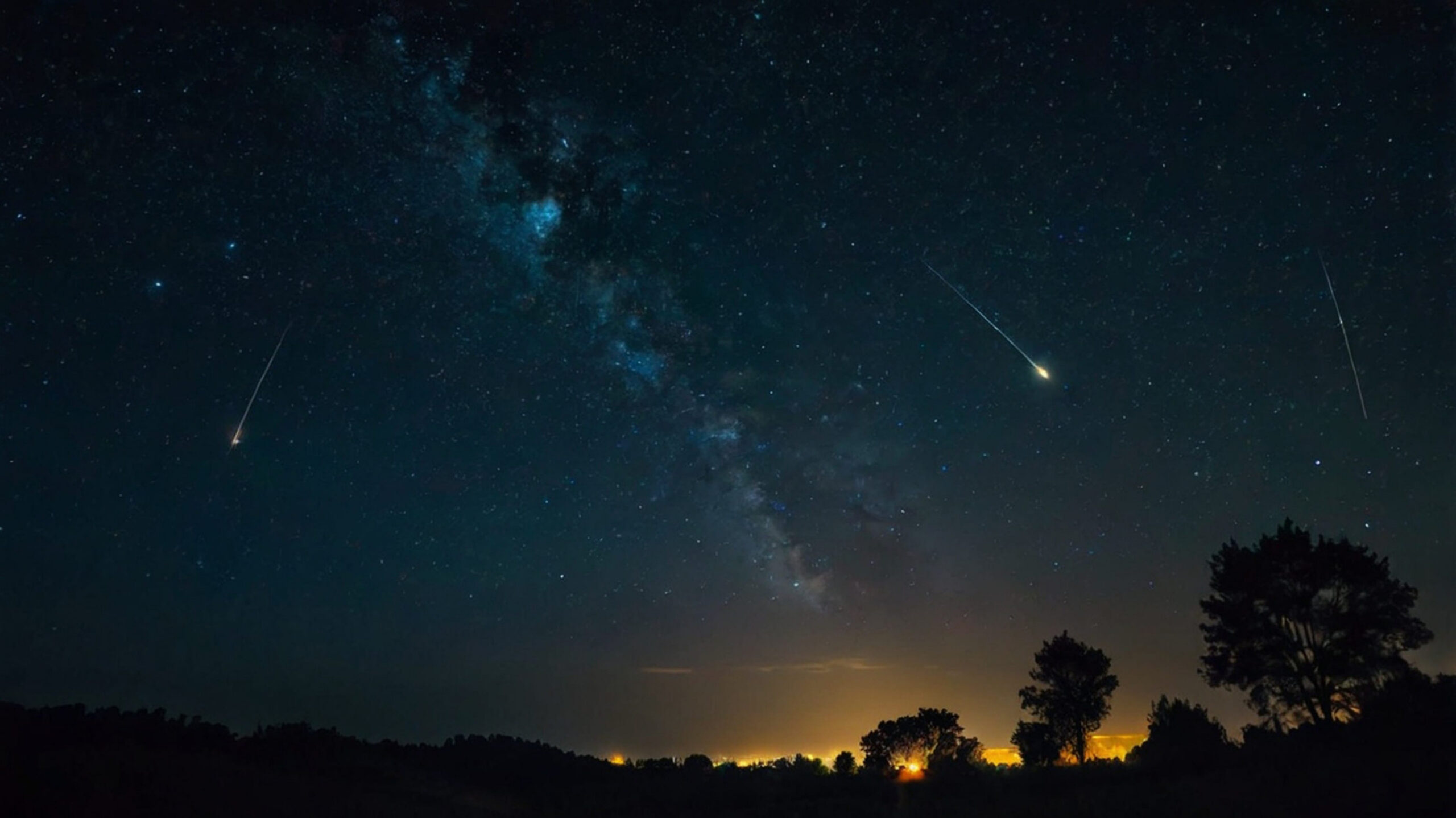
The first major event of this autumn cycle corresponds to the Orionids, whose activity spans from early October to early November, peaking usually around October 21 and 22. This phenomenon has a fascinating origin: the meteors slicing through the night sky are actually tiny dust particles shed by the famous Halley’s Comet during its successive close passes to the Sun over millennia.
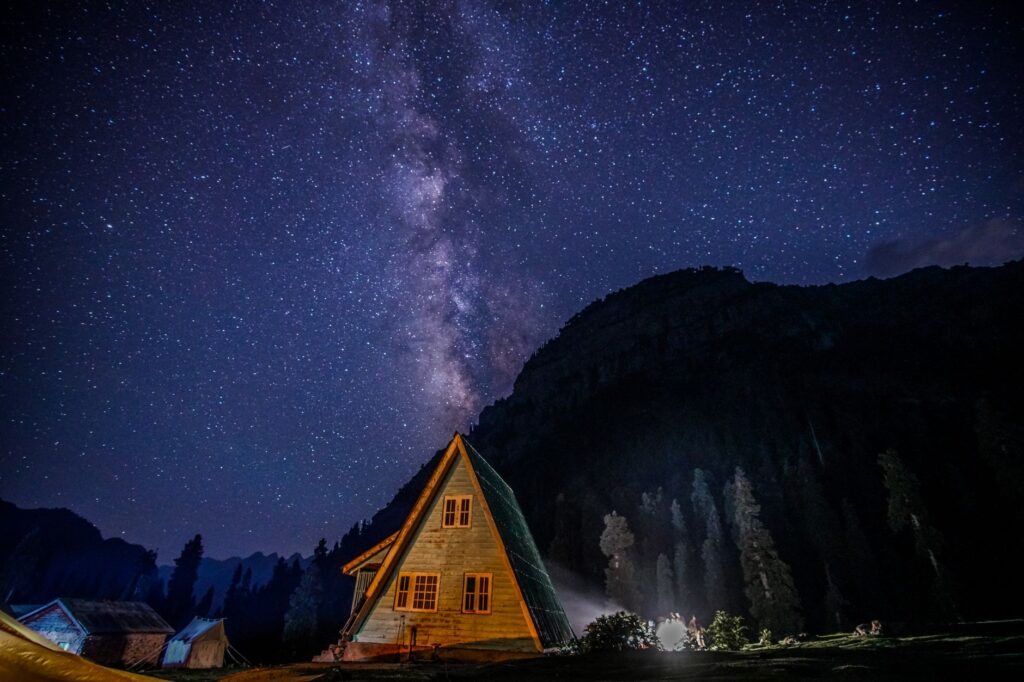
As Earth crosses this residual orbit, the fragments enter our atmosphere at breakneck speeds hovering around 66 kilometers per second. Frictional heating with the upper layers of air causes them to disintegrate, producing extremely fast and bright luminous streaks, often accompanied by persistent trails. To observe them successfully from central Mexico, specialists recommend positioning oneself in open spaces oriented toward the east after midnight, the moment when the constellation Orion rises above the horizon.
Southern and Northern Taurids: The Slowness of Fireballs
Weeks later, between late October and mid-November, the firmament offers a spectacle of a different nature thanks to the Taurids, divided into two streams: the Southern and the Northern. This meteoric swarm originates from the debris of Comet Encke, a celestial body with a short orbital period. Unlike the breakneck speed of the Orionids, Taurids are characterized by their leisurely movement across the celestial vault.
Taurid particles enter the atmosphere at a considerably lower speed, approximately 27 kilometers per second. This slower velocity allows observers to enjoy longer-lasting meteors and, occasionally, the appearance of exceptionally bright fireballs that illuminate the surrounding landscape with orange or bluish flashes. Although their hourly rate is moderate compared to other massive annual events, their visual quality more than compensates for the wait.
The night sky of the Mexican Central Plateau is not merely a scenic resource, but a reminder of our scale before the cosmos, accessible to anyone willing to switch off screens and wait in silence.
The Geography of Darkness: Seeking the Best Horizons
Choosing the right site to witness these meteor showers requires stepping outside conventional tourist circuits and venturing into territories where nocturnal human activity is minimal. In the vicinity of Mexico City, the Izta-Popo Zoquiapan National Park offers high-altitude plains exceeding three thousand meters above sea level, placing the observer above a considerable fraction of the dense atmosphere.
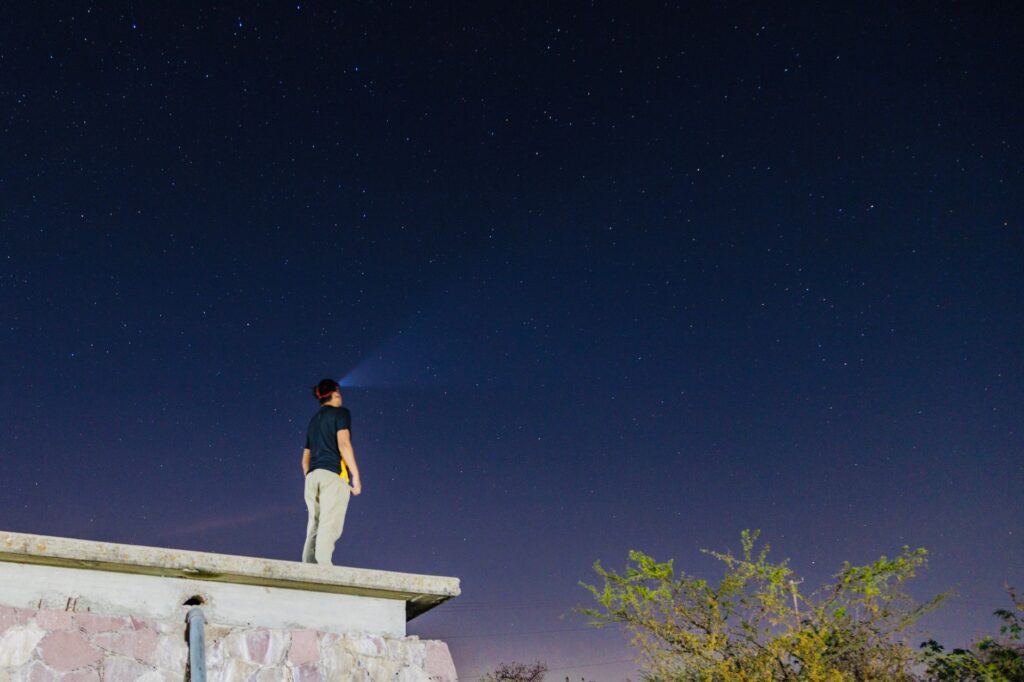
Another corridor of great value for astrophotography and amateur observation is located in the forested areas of the municipality of Aculco and the elevations bordering the state of Hidalgo, such as the surroundings of Huasca de Ocampo. In these landscapes, rugged topography acts as a natural barrier against urban glare originating from the Valley of Mexico and the city of Pachuca, guaranteeing clear horizons toward key cardinal points for tracking meteoric trajectories.
Logistical Preparations for a Night in the Open
Observing the night sky during autumn demands rigorous logistical planning, especially due to the thermal conditions prevailing in the high areas of the country’s center. As the sun sets, temperatures in mountainous landscapes experience drastic drops that can reach values close to or below freezing, meaning thermal clothing gear should not be left to chance.
It is advisable to dress following the principle of technical layers: an initial thermal layer to wick away body moisture, an insulating fleece, and a windproof, waterproof jacket. Likewise, it is essential to have flashlights equipped with red light to preserve the nocturnal adaptation of the eyes; the white light of mobile phones ruins dark adaptation for at least twenty minutes, hindering the detection of fainter meteors.
Citizen Science and Respect for the Nocturnal Environment
The rise of astrotourism in Mexico has highlighted the urgent need to protect dark sky quality against the uncontrolled expansion of inefficient public lighting. Organizations dedicated to scientific outreach remind us that light pollution not only affects professional astronomical research, but also profoundly alters the biological cycles of nocturnal fauna and local pollinators.
Participating in the observation of Orionids and Taurids also involves adopting low-impact environmental practices. This includes refraining from lighting unauthorized campfires, avoiding fireworks that cause light and acoustic pollution in the surroundings, and packing out any waste generated during the stay in protected natural areas.
Practical guide
Key dates: Orionids peak between October 21 and 22; Southern Taurids reach maximum activity in early November and Northern Taurids around mid-November.
Suggested location: High mountain areas in Izta-Popo National Park, high valleys of Aculco in the State of Mexico, and rural peripheries of Huasca de Ocampo in Hidalgo.
Equipment requirements: No telescopes or binoculars needed; wide-field naked-eye viewing is superior. Extreme thermal outerwear, sleeping bag, and ground insulation are mandatory.
Visual tip: Allow your eyes to adapt to the darkness for at least thirty minutes without looking at illuminated screens and direct your gaze toward broader celestial quadrants away from residual light pollution.
Journalistic attribution: Data based on astronomical reports compiled by Alan x el Mundo regarding observation conditions on the Mexican Central Plateau.
The Silence of the Firmament as the Final Destination
After hours of waiting beneath the celestial vault, when the early morning cold penetrates clothing fibers and the world’s rhythm seems to have completely halted, the moment that justifies the journey occurs. A brilliant streak cuts forcefully across the constellation of Orion or an orange fireball descends lazily over the distant profile of the volcanoes, reminding us of the fleeting nature of our own existence before the immensity of the universe.
In those moments of absolute communion with the night, the distance between the big city and wild nature vanishes, leaving only the luminous echo of comet particles that decided to burn up in our atmosphere after traveling millions of kilometers in the darkness of deep space.
Source in EN: Alan x el Mundo (https://alanxelmundo.com/tres-lluvias-de-estrellas-de-otono-y-donde-verlas-cerca-de-mexico)