
Introduction to the Aquatic Labyrinth of Southern Vietnam
The Mekong Delta is not merely a geographical feature, but a vast liquid organism where solid ground often feels more like a suggestion than a certainty. In this southernmost frontier of Vietnam, human life has unfolded for centuries around a choreography of tides, monsoon floods, and colossal sediments carried by the world’s ninth-longest river. Far from paved asphalt highways, the true backbone of this region lies in a dense system of natural and hand-dug canals that transform water into the only logical pathway for communication, commerce, and survival.
While mass tourism often reduces this geography to a quick postcard of conical hats and photogenic markets, the everyday reality of the delta is sustained through a complex network of river transport. Wooden barges, flat-bottomed cargo vessels, and small rowing boats operate as an uninterrupted circulatory system. This report examines the engineering of these vessels, the economic logic of their floating markets, and the delicate ecological balance that allows millions of people to inhabit a territory in constant mutation.
The Naval Architecture of Wooden Barges: Resilience in Muddy Waters
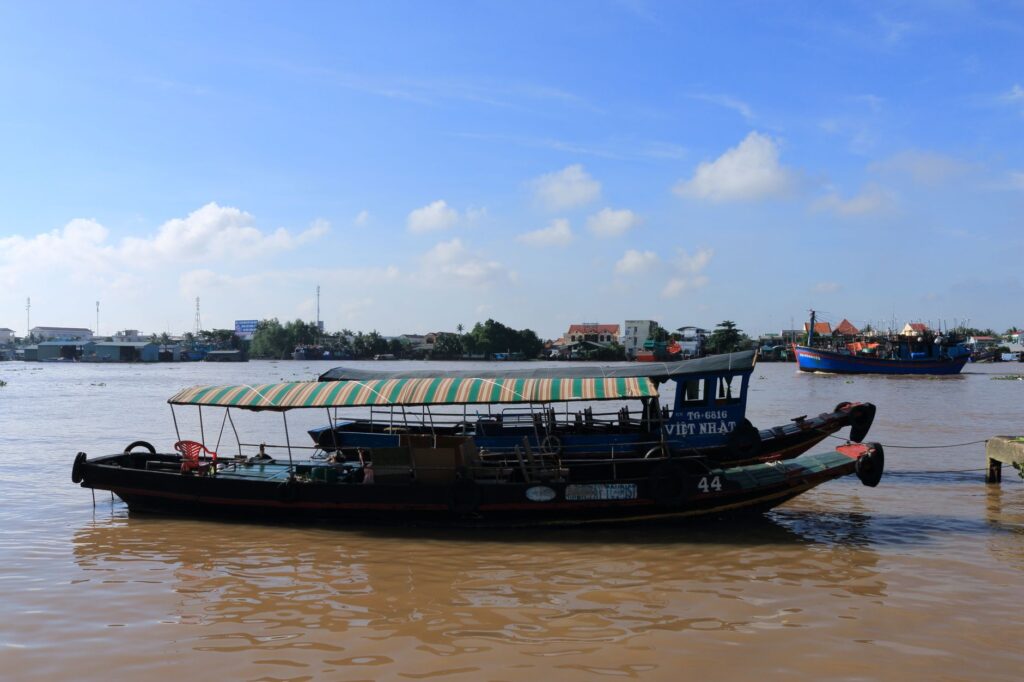
Building a vessel capable of navigating the labyrinths of the Mekong requires an ancestral understanding of materials and currents. Along the riverbanks of provinces like Cần Thơ, Long An, or Tiền Giang, artisanal shipyards continue to build barges using local hardwood species such as teak or treated mangrove timbers designed to withstand extreme humidity and the acidic corrosion of freshwater laden with sediment. Unlike metal hulls, wood offers a fundamental structural flexibility when vessels run aground on shifting sandbars or collide with floating timber swept along by the current.
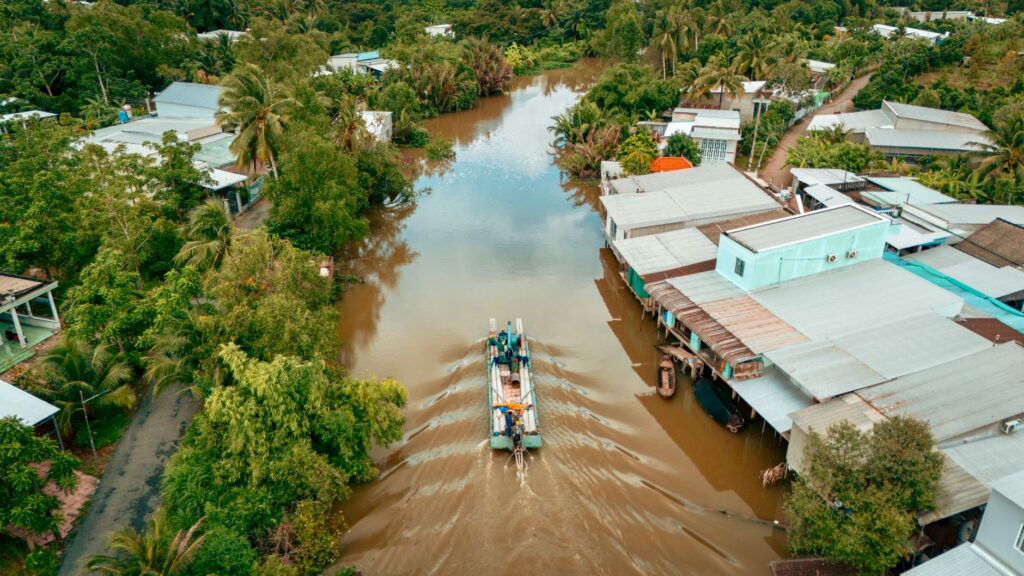
The design of these craft responds strictly to utilitarian functionality. They feature flat bottoms to maximize cargo capacity without increasing draft, allowing them to traverse canals where water depth barely exceeds a meter during the dry season. The bow, frequently painted with large protective eyes oriented toward the mysteries of the river, serves both a symbolic and practical function in community navigation. Each plank is assembled using traditional ship carpentry techniques that avoid excessive use of iron screws, which would rapidly oxidize under the combined action of tropical heat and water.
Propulsion and Maintenance in Riverside Shipyards
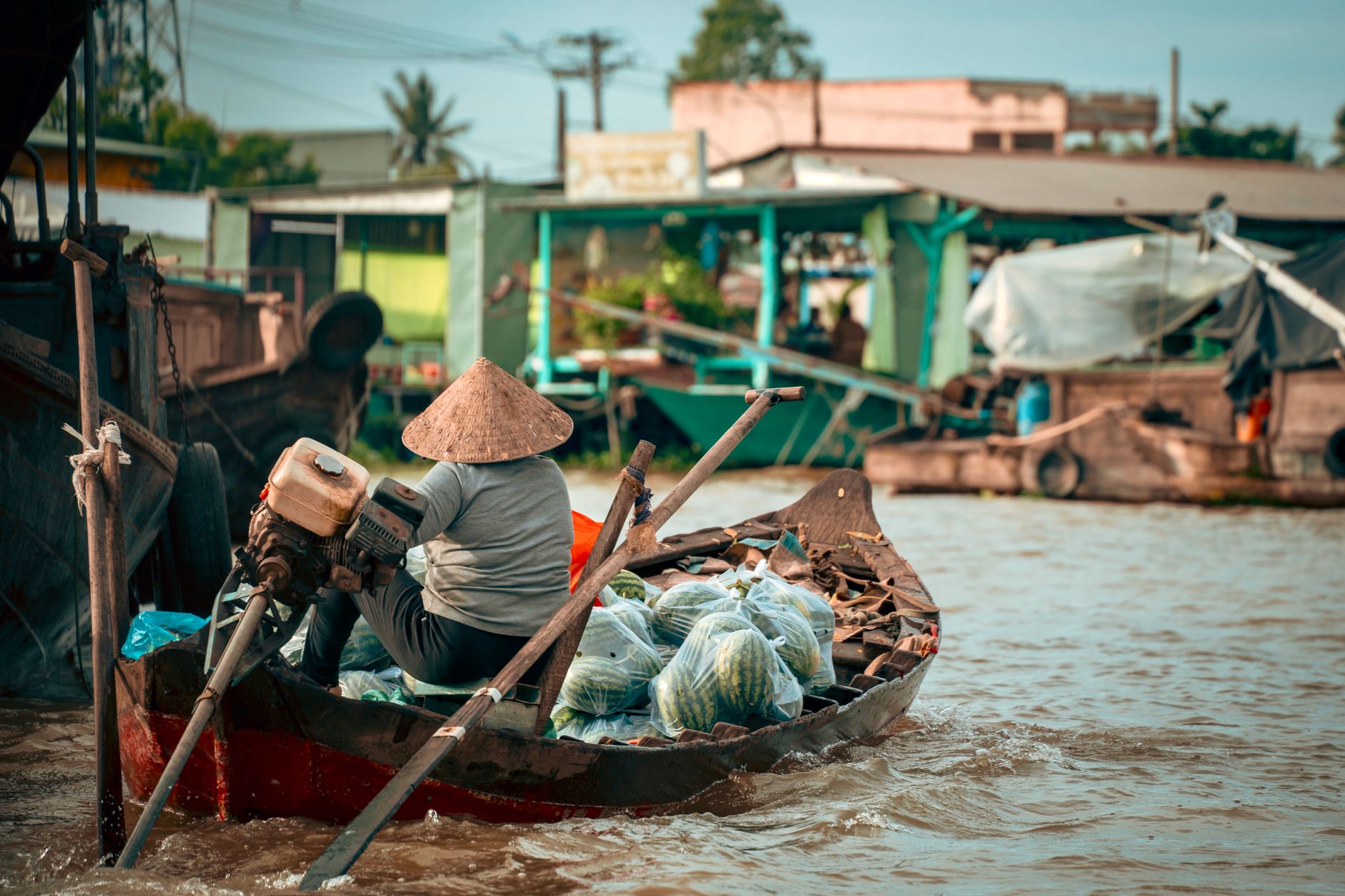
The technological evolution of these vessels has incorporated internal combustion engines adapted from trucks or tractors, locally known as *đuôi tôm* or long-tail motors. This system allows for a long, articulated drive shaft that facilitates quickly lifting the propeller to bypass plant obstacles or shallow areas. Maintenance of these hulls is carried out periodically on improvised slipways right on the riverbank, where carpenters caulk the seams with oakum and natural pitch, guaranteeing the watertightness of a fleet that rarely rests.
Floating Markets: Commerce as an Amphibious Choreography
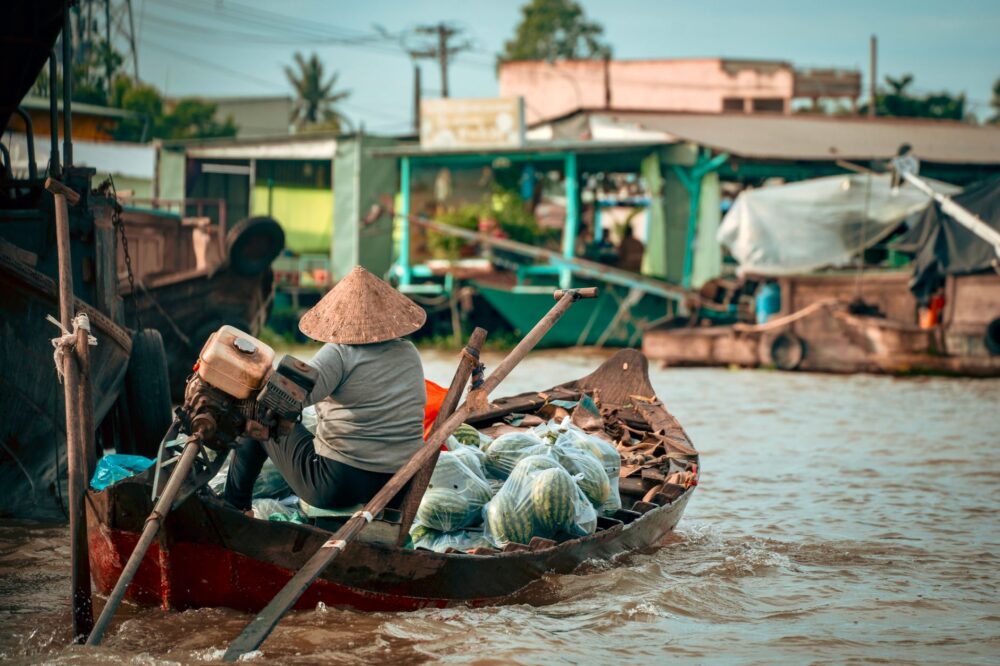
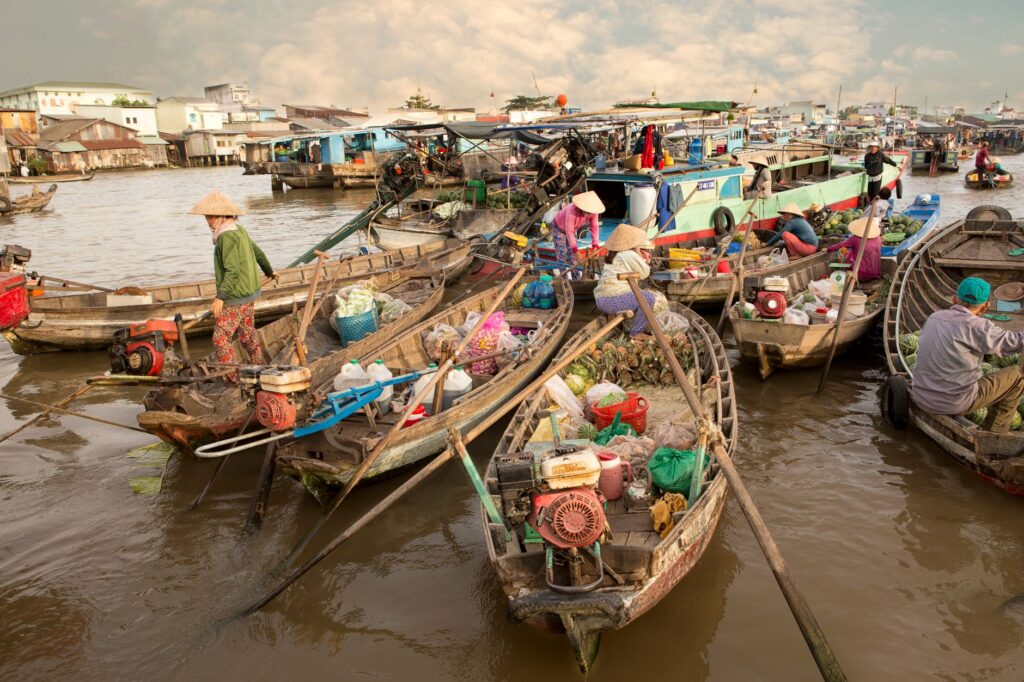
The focal point of mobility and economy in the delta is manifested in its celebrated floating markets, with Cái Răng being one of the most notable examples surviving terrestrial modernization. Far from being a tourist attraction staged for the occasion, this market operates from the earliest hours of dawn as an open-air commodities exchange. Here, brick-and-mortar shops do not exist; the docks are the sides of the barges, and transactions are conducted through a visual signaling system as simple as it is effective.
To advertise what product is being sold on each boat without shouting over the roar of diesel engines, merchants hang a sample of their merchandise on a long vertical bamboo pole known as a *bẹo*. If a pineapple hangs, pineapples are sold; if pumpkins are displayed, the barge operates as a wholesale vegetable supplier. This visual code allows intermediaries and retail buyers to navigate directly to the appropriate vendor, optimizing a market where inventory changes hands while the craft slowly drift.
Water in the delta does not separate communities; it unites them through an umbilical cord of wood, diesel, and tide where each vessel acts as a mobile market and a floating home.
The logistics of these markets require millimeter precision. Large barges act as regional collection centers, purchasing entire harvests directly from farmers in areas inaccessible to trucks. Subsequently, they transfer the merchandise to smaller boats that venture into secondary canals, ensuring that fresh fruit, rice, and fish arrive promptly at local markets before the intense midday heat accelerates their decomposition.
Canals, Locks, and the Artificial Management of Water Flow
The fluvial landscape of the delta is not entirely natural. During the French colonial period and, more intensely, after the country’s reunification, a monumental civil engineering task was undertaken to excavate rectilinear canals connecting the main branches of the Mekong—the Tiền and Hậu rivers—to drain swampy lands and facilitate the transport of rice to export ports.
Today, this artificial network is controlled through a system of gates and locks managed by local authorities and irrigation communities. The function of these infrastructures is twofold and delicate: during the dry season, they prevent salt-water intrusion from the South China Sea from ruining rice crops in the interior; during the rainy season, they regulate excess flow to prevent catastrophic floods. However, this artificial control has altered natural sediment dynamics, generating ecological challenges that planners seek to mitigate through wetland restoration.
Commercial Navigation and Heavy Freight Transport
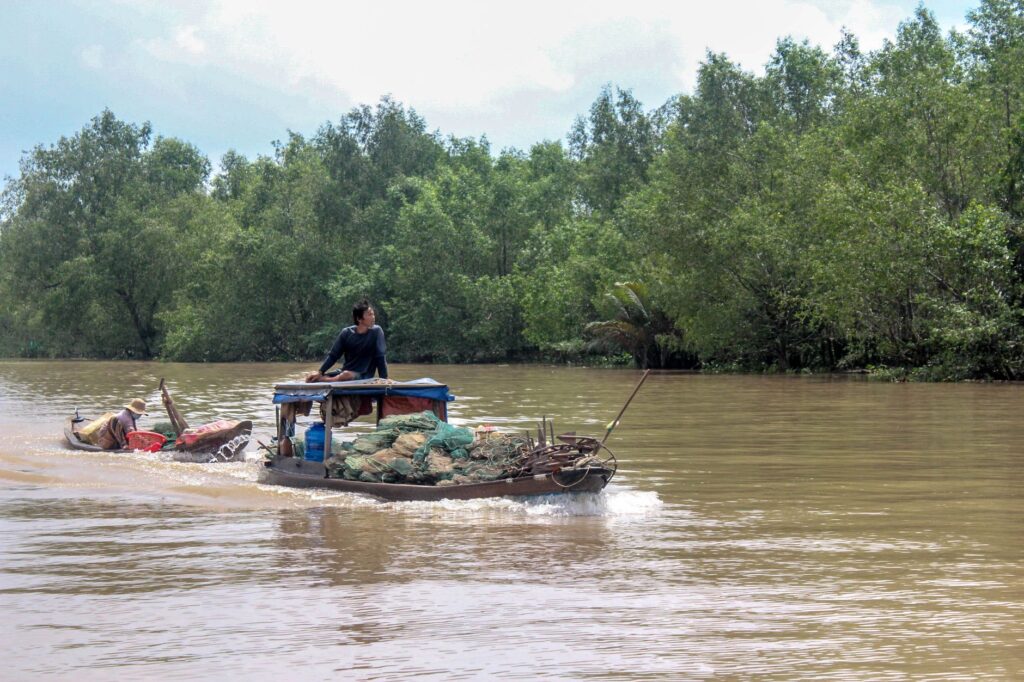
Beyond subsistence agriculture and retail trade, the main channels support the constant transit of heavy cargo barges carrying construction materials, sand for the expanding real estate industry, and agricultural containers bound for the international ports of Ho Chi Minh City. These cargo vessels, though less picturesque than traditional wooden boats, share the same waterways, requiring complex right-of-way regulations and signaling that local captains master based on experience accumulated over generations.
Practical guide
Planning a responsible trip through the Mekong Delta requires understanding its logistical logic and leaving terrestrial haste behind. The best way to enter this amphibious territory is to use public river transport and hire local guides operating traditional boats with low environmental impact.
- How to get there: The main access is by road from Ho Chi Minh City to base cities like Cần Thơ or Mỹ Tho (between 2 and 4 hours by bus). From there, penetration is carried out exclusively by water.
- When to go: The dry season, spanning from November to April, offers the best weather and navigation conditions, although the flood season (from May to October) showcases the delta at its ecological peak.
- Recommended accommodations: Choose family-run homestays managed by local communities along the secondary canals in Ben Tre or Vinh Long.
- Mobility tips: Avoid high-speed motorboats (*speedboats*), as they generate strong wakes that erode riverbanks and damage residents’ traditional vessels.
- Local etiquette: Always greet river merchants with respect, ask permission before photographing people in the markets, and support the local economy by purchasing directly from producers aboard their boats.
The Liquid Memory: The Future of Amphibious Transport
As climate change accelerates sea-level rise and upstream dams in the upper Mekong drastically reduce sediment input, the delta faces an existential crossroads. The loss of solid ground and the salinization of aquifers threaten not only intensive agriculture but also the lifestyle of thousands of families who depend exclusively on navigation to survive.
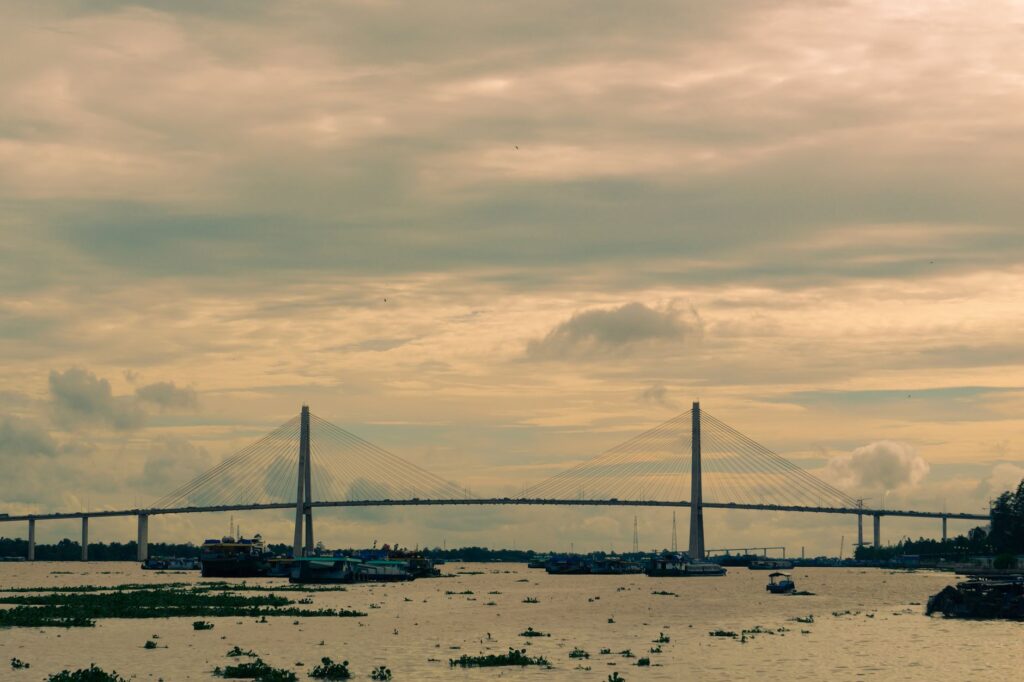
However, the adaptive capacity of local communities remains the region’s most solid asset. Far from abandoning the waters, local engineers and community associations are redesigning traditional boats to make them more energy-efficient, exploring solar-electric motors to reduce noise and hydrocarbon pollution in protected channels. The future of the delta will depend on its ability to preserve this ancestral transport system, integrating it into a development model where water remains the home and path of its inhabitants.
Fluvial Epilogue: Sunset Over the Canals
As the sun descends over the horizon of southern Vietnam, the surface of the Mekong River transforms into a mirror of fire reflecting the silhouettes of nipa palms and the masts of barges moored for the night. In that instant of stillness, when the bustle of the floating markets fades and only the distant murmur of the current and the splashing of fish can be heard, the true dimension of this landscape is understood. It is not merely a commercial route or a passing tourist destination, but an amphibious civilization that has negotiated every meter of its existence with the generosity and fury of the waters.