
The Liquid Artery of the Gulf of Guinea
The fresh water of the Volta does not flow today as it did before the monumental human intervention of the twentieth century. Behind the colossal concrete walls of the Akosombo Dam, the original riverbed metamorphosed into one of the most extensive artificial reservoirs on the planet, an expanse of 8,500 square kilometers that submerged entire valleys, hunter-gatherer settlements, and ancient land trade routes. In this immense inland sea of West Africa, geography imposes an unappealable condition: where dirt roads and invisible bridges over seasonal streams once stood, today only nautical distances exist. The communities inhabiting the peninsulas and islets created by the inundation depend entirely on a complex web of intermodal transport.
Understanding mobility in the Volta basin requires abandoning the conventional parameters of land logistics. Here, paved roads terminate at red-earth docks, where off-road vehicles and heavy freight trucks must board floating platforms to bridge distances that, in a straight line, might seem brief but in practice demand hours of navigation. The sovereignty of passenger boats and cabotage barges is absolute. Yet this system operates under permanent tension marked by technical obsolescence, the seasonal fluctuation of water levels, and a scarcity of replacement parts for a fleet that in many cases exceeds four decades of continuous service.
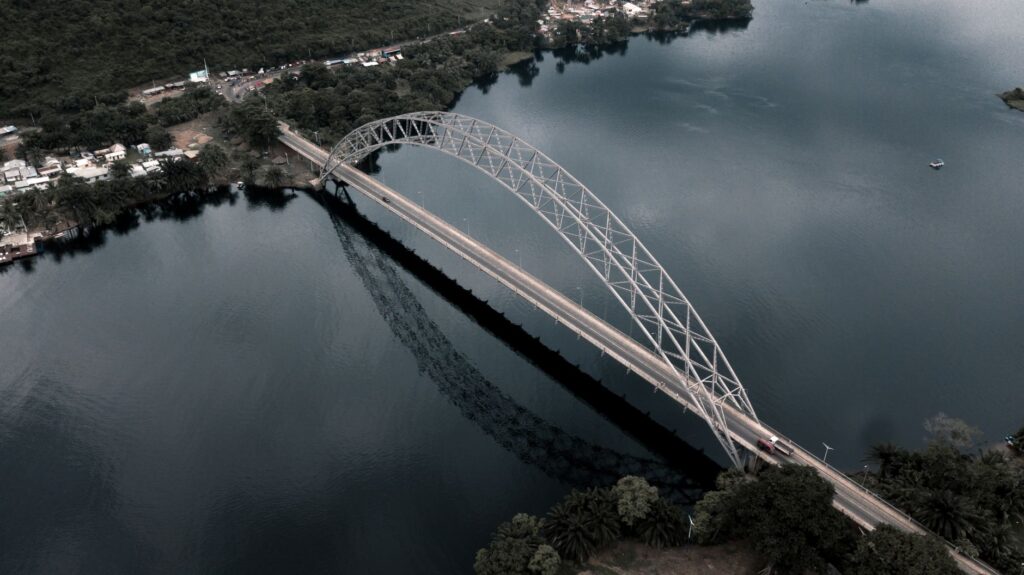
Amphibious Engineering and the Legacy of the Yapei Shipyards
The technical backbone of this transport network relies on a combination of artisanal shipyards and industrial floating docks installed at strategic points such as Akosombo, Kpando Torkor, and Yeji. In these enclaves, the tradition of riverside carpentry intersects with the heavy metallurgy necessary to keep line ferries afloat. These vessels, equipped with large-displacement internal combustion marine engines, support the daily transit of tons of yams, maize, smoked fish, and passengers moving between the southern region and the northern savannas. The naval architecture of these ships prioritizes function over comfort: uncluttered decks capable of accommodating mixed vehicles and reinforced steel hulls that withstand the occasional impact of submerged logs.
Maintenance logistics in the reservoir present colossal operational challenges. With no direct railway connections to most inland ports, every sheet of steel or mechanical component must travel down dusty roads from Accra. Local engineers operate with limited resources, improvising mechanical solutions to extend the service life of propellers and hydraulic ramp systems.
The true engineering of the Volta does not lie in the original blueprints of its dams, but in the miraculous capacity of its workshops to resurrect engines that global industry has long declared obsolete.
This daily technical effort ensures that the commercial lifeline between the industrial south and the agricultural north remains open.
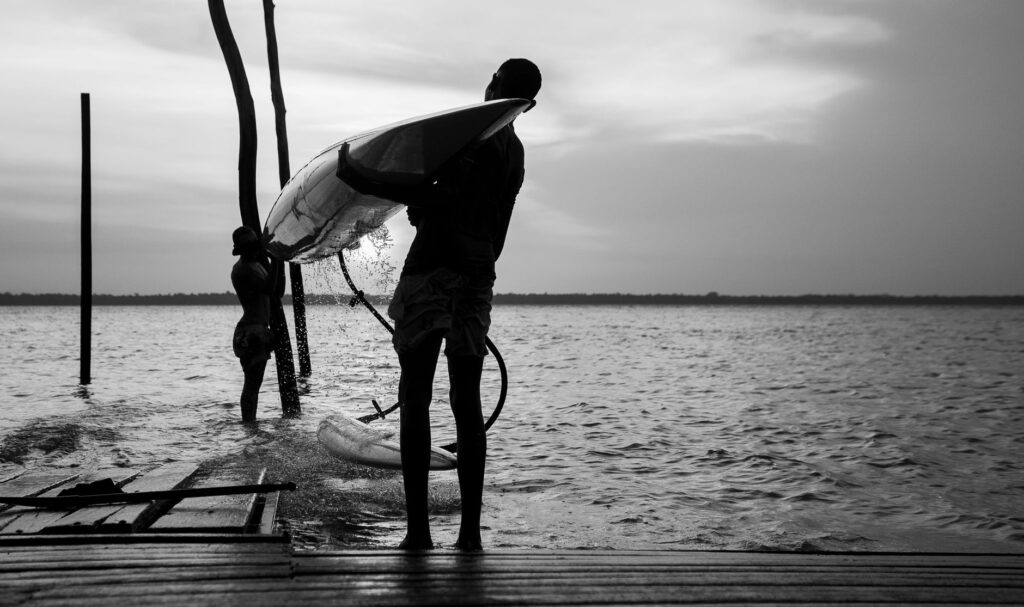
The Invisible Routes of Cabotage and Motorized Pirogues
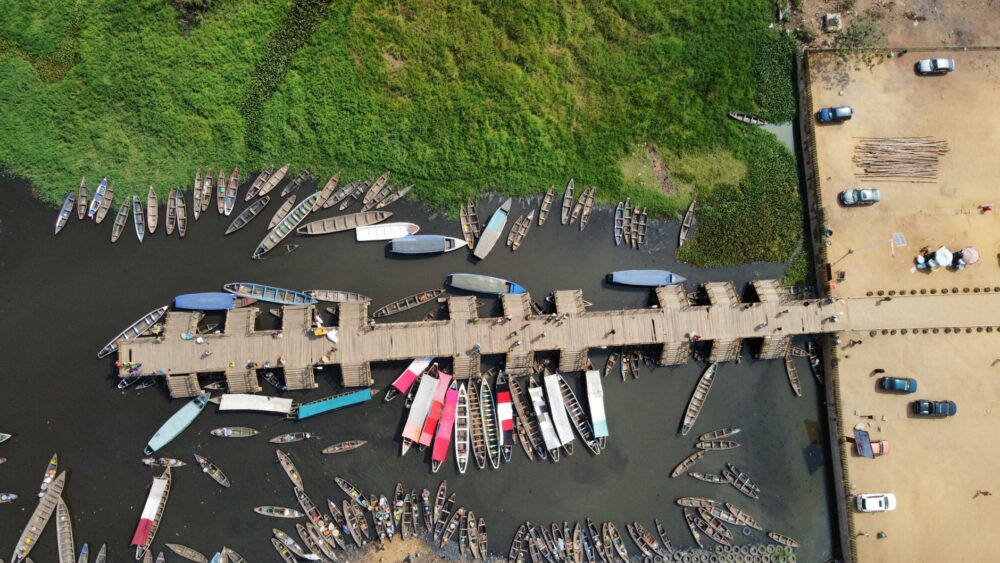
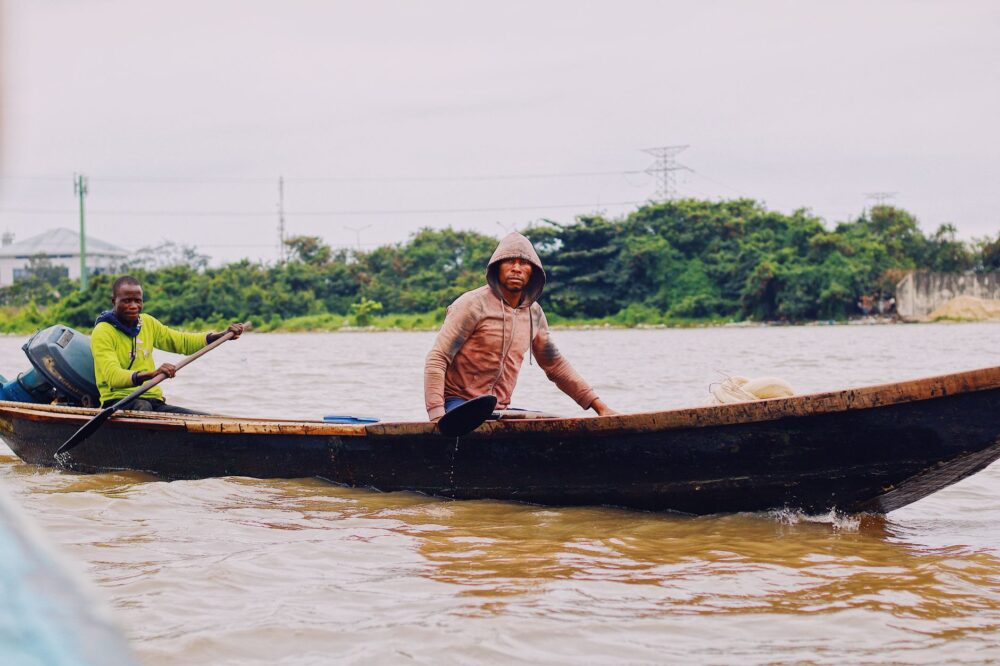
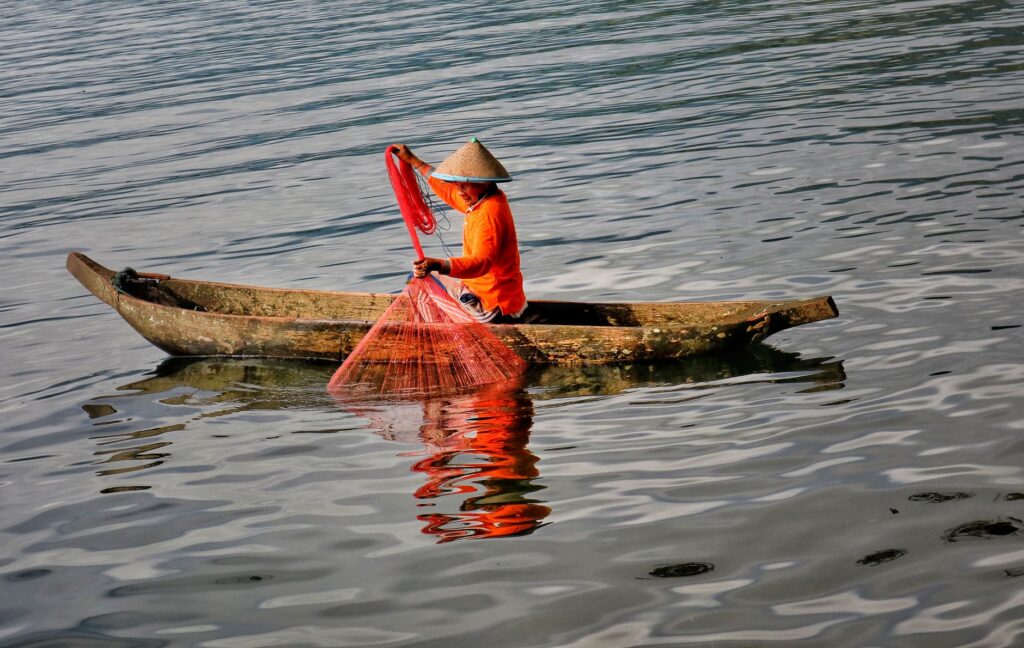
Beyond the large state-run ferries connecting the main terminals, a capillary network of carved wooden pirogues and lightweight fiberglass boats weaves the connectivity of the most inaccessible corners. These small vessels operate from informal jetties—muddy clay beaches where local fishers and farmers negotiate cargo rates by hand. The pirogues, propelled by two-stroke outboard motors, act as the region’s buses: transporting everyone from children heading to school to sacks of grain and bicycles, often defying the limits of their buoyancy for the sake of economic subsistence.
Navigation in these secondary waters requires profound empirical knowledge of the environment. Local captains must navigate a ghostly underwater landscape composed of the half-rotted trunks of trees left standing when the reservoir filled. These submerged forest remnants pose a constant hazard to hulls and propellers, demanding strict visual navigation and rigorous topographical memory. Furthermore, sudden breezes and seasonal tropical storms can transform the placidity of the lake into a rough-water arena where overloaded pirogues face extreme vulnerability.
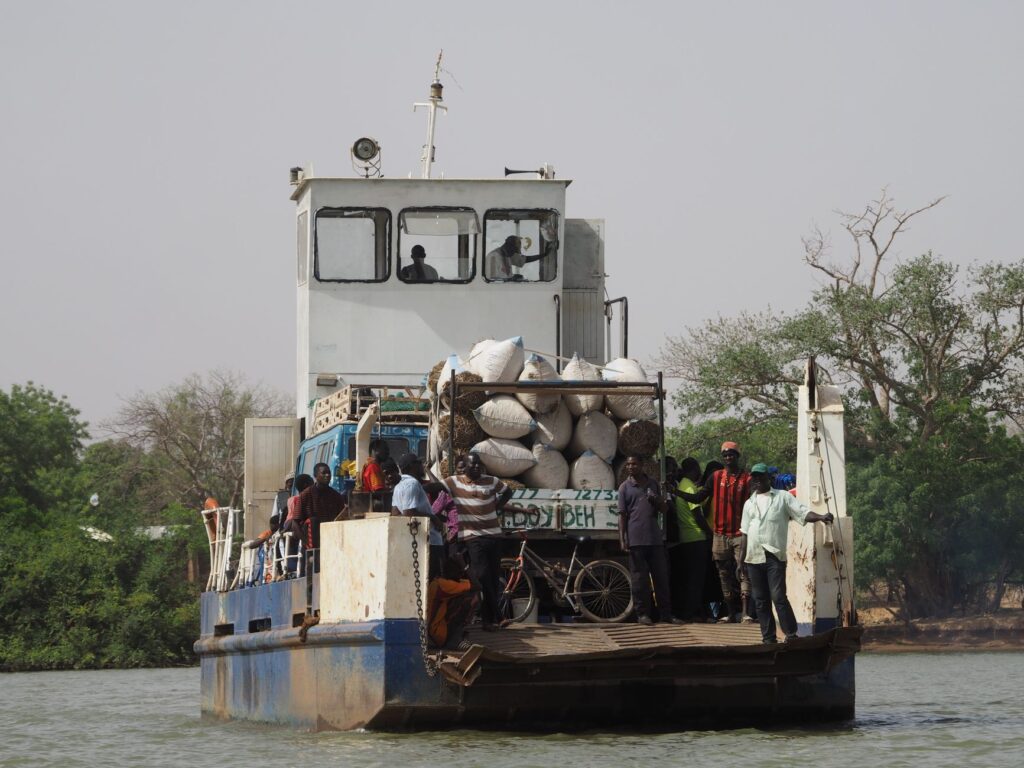
The Geography of Floating Markets and the Commercial Pulse
The rhythm of transport on the Volta is inexorably dictated by the calendar of regional markets. Port cities like Yeji function as logistical nodes where river routes from the north converge with roads descending toward the gulf. These docks witness the frantic transshipment of goods: fish from aquaculture and artisanal lake fishing are packed into wicker baskets and loaded onto scheduled buses, while imported manufactured goods move inland. The efficiency of this supply chain determines food prices throughout the Ghanaian national territory.
However, disruptions in ferry services—caused by unexpected mechanical breakdowns or drastic drops in water levels during prolonged droughts—trigger devastating economic bottlenecks. When a barge is put out of service, trucks carrying perishable goods can remain stranded for weeks under the equatorial sun, rotting harvests before they reach urban consumption centers. This structural fragility underscores the urgent need to diversify transport infrastructure and improve investment in preventive maintenance for a communication route that remains irreplaceable.
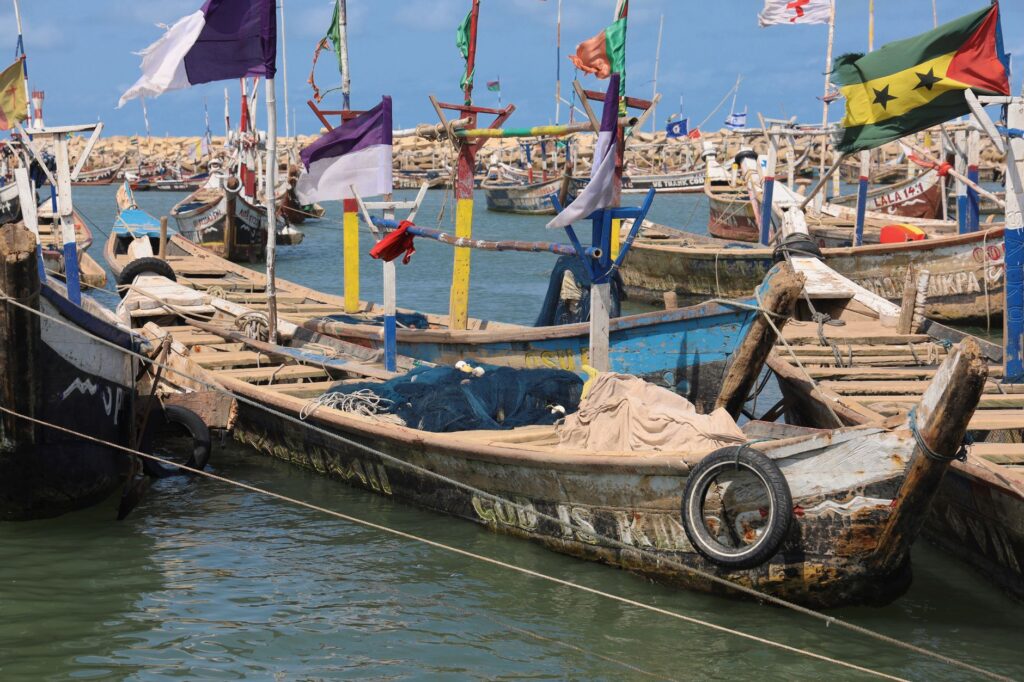
Energy Transition and the Ecological Challenges of River Transport
Over the past decade, environmental pressure and rising fossil fuel costs have sparked a crucial debate regarding the sustainability of transport on Lake Volta. Emissions from aging diesel engines, compounded by accidental oil and lubricant spills from the artisanal fleet, are altering water quality in areas of high nautical traffic density. Local organizations and environmental research institutions are demanding a transition toward cleaner propulsion technologies, suggesting the gradual incorporation of solar-powered electric motors for smaller vessels operating short routes between islands.
Simultaneously, climate change is altering precipitation patterns in the upper basins feeding the Volta, causing extreme oscillations in reservoir levels. During years of severe drought, minimum drafts prevent deep-draft ferries from approaching traditional docks, forcing the setup of temporary jetties further away from urban centers and increasing logistical costs.
The long-term viability of this great liquid highway will depend on institutional adaptability to reconcile commercial demands with the hydrological fragility of the ecosystem.
Practical guide
- Getting there: The main access to the Volta basin is by road from Accra to the ports of Akosombo (south) or Kpando Torkor (center). The journey by bus or private vehicle takes between two and four hours depending on initial urban traffic.
- Main connections: State-run ferries operate regular routes between Akosombo and Yeji, although schedules are indicative and subject to fuel availability and the mechanical condition of the vessels. It is recommended to check locally at port offices.
- Auxiliary transport: Private motorized pirogues are the only means to access smaller islands and riverside communities without a formal dock. Fare and cargo prices are negotiated directly with captains before boarding.
- Safety and health: Malaria prophylaxis and up-to-date vaccinations are essential. Travelers are advised to bring their own life jackets when using smaller boats, as official provisions are often scarce or nonexistent.
- Best time to travel: The dry season (November to April) offers the most stable navigation, although water levels may be low in the north. The rainy season (May to October) increases the presence of sudden storms on the lake.
The Twilight Reflection on the Mirror of Akosombo
When the sun descends rapidly behind the hills defining the reservoir’s horizon, the water’s surface adopts a copper hue that erases the boundaries between the sky and the liquid expanse. On the decks of ferries docking at dusk, passengers roll out their mats to spend the night in the open air, rocked by the gentle sway of the hull against the concrete pier. This rhythm of waiting and movement summarizes the essence of a territory where industrial modernity and ancestral rusticity coexist in a fragile daily balance.
Along the shores, the silhouettes of fishers mending their nets in the glow of kerosene lamps complete a picture of human resilience against the designs of modified geography. The Volta River, transformed into a labyrinth of fresh water and monumental dams, continues to beat to the rhythm of its iron ships and wooden pirogues, reminding the traveler that true connectivity is not a matter of speed, but of perseverance amidst vastness.