
Introduction to the Aquatic Labyrinth of Southern Nigeria
In the southernmost tip of Nigeria, where the mighty Niger River fractures into thousands of muddy arteries before merging with the Gulf of Guinea, solid ground yields to a vast amphibious tapestry. This territory, shaped by capricious tides and impenetrable mangroves, knows neither paved highways nor conventional railways. Here, mobility is an exercise of millenary resilience, a constant balance between the brute force of outboard motors and the ancestral wisdom of navigators who have tamed the water for generations. The transport system of the Niger Delta is not merely a logistical infrastructure; it constitutes the invisible backbone that enables the survival of millions of inhabitants in an environment as generous as it is relentless.
Comprehending the dynamics of this intermodal network requires plunging into a framework where traditional hand-carved canoes coexist with modern steel barges dedicated to oil and commercial cabotage. Along this intricate web of creeks, the clock is measured by the height of the tide and the endurance of fuel. Riverine communities rely on this incessant flow for the exchange of goods, access to healthcare facilities, and the continuity of their traditions. In this report, we examine how amphibious engineering and community organization redefine connectivity in one of the most complex river deltas on the planet.
Liquid Geography and the Constraints of Relief
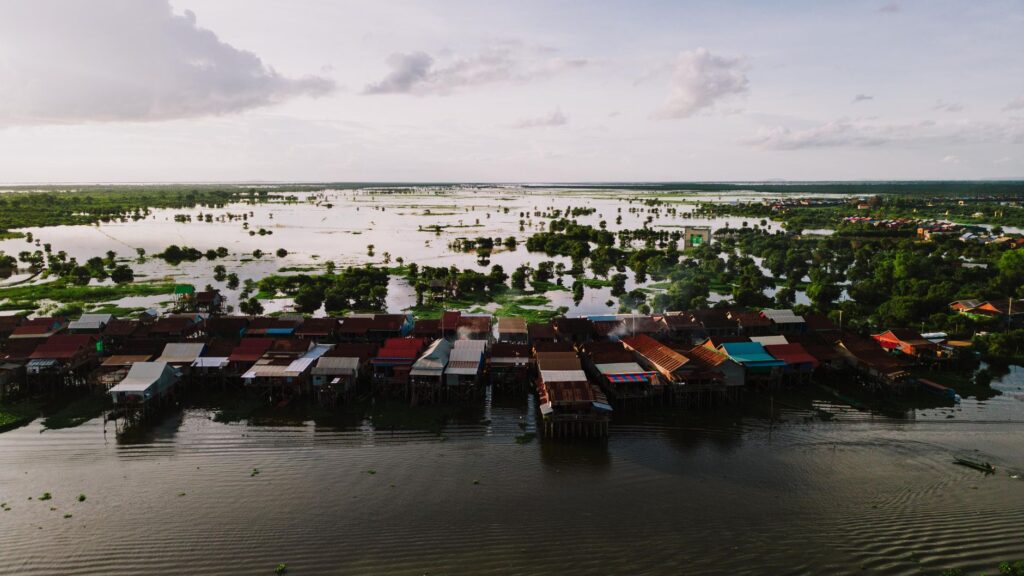
The Niger Delta encompasses more than seventy thousand square kilometers of swamps, mangrove forests, and lowland tropical rainforests. This shifting topography is dictated by the seasonal pulse of rains and ocean tides that penetrate dozens of kilometers inland. During the wet season, the volume of the rivers overflows their natural banks, transforming settlements into ephemeral islands and forcing a constant redesign of navigation routes. Shifting sandbanks and dense accumulations of water hyacinth further complicate transit, turning each journey into a test of skill for boat captains.
Unlike other river regions of the world where canalization has imposed an artificial order, the delta maintains an untamed character. Riverbank erosion and natural land subsidence continually alter the depth of the channels. This means today’s navigable routes may become impassable tomorrow, requiring a deep empirical knowledge of the environment. Local inhabitants read the currents by examining water color, the direction of floating debris, and the behavior of avian fauna, an accumulated lore that no modern navigation chart has managed to fully replace.
The Artisanal Fleet: Evolution from Wooden Log Canoes to Fiberglass
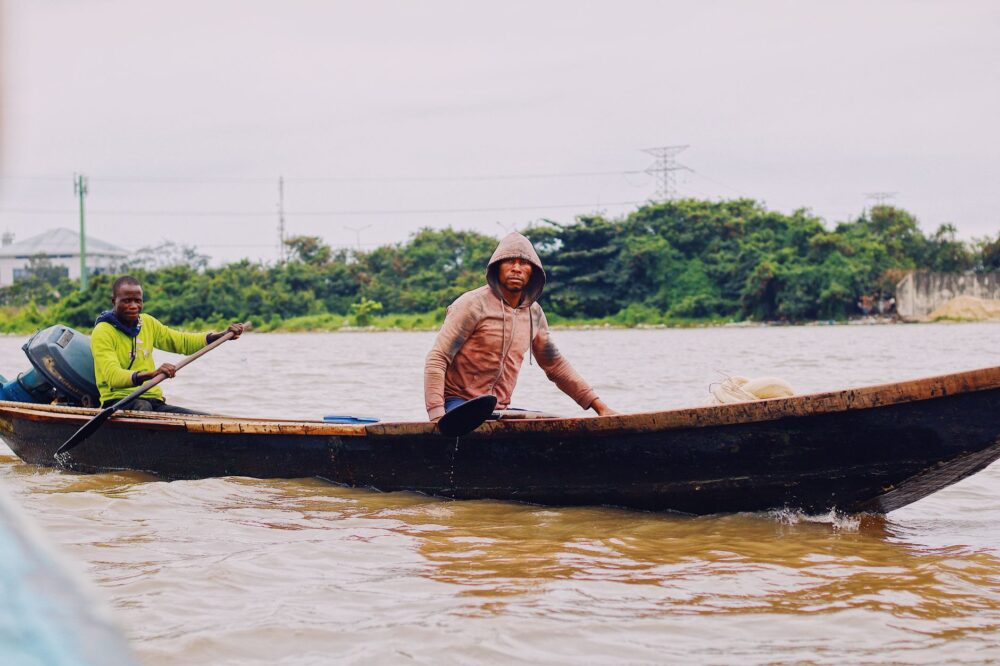
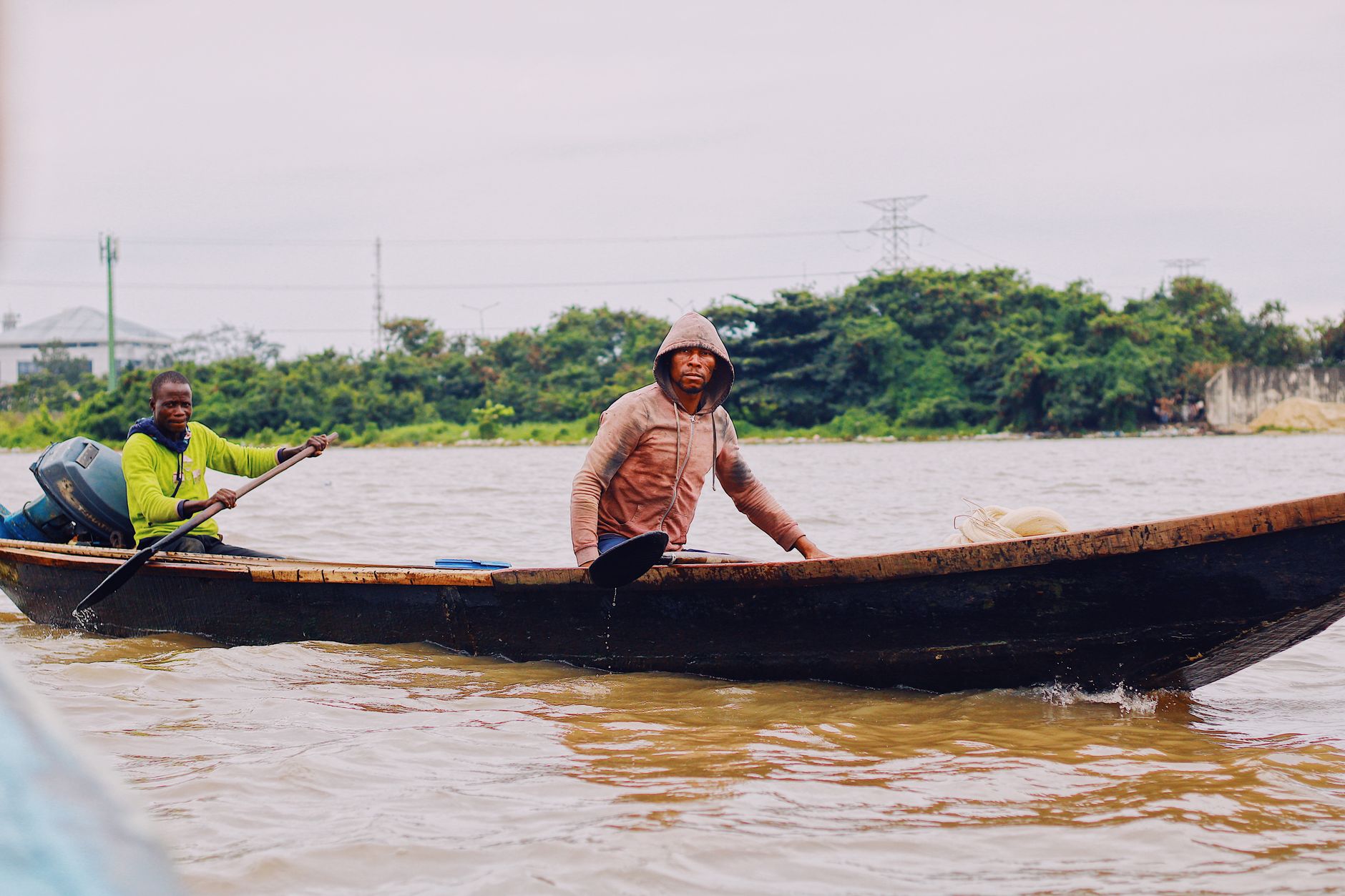
The backbone of daily mobility in the delta is composed of a heterogeneous armada of light watercraft. Traditionally, these vessels were sculpted from massive trunks of timber trees such as iroko or mahogany, an artisanal process requiring weeks of patient labor with adzes and fire. However, in recent decades, the scarcity of hardwood and the need for greater durability have driven a radical transformation toward the use of fiberglass and lightweight aluminum.
- Traditional Monoxylous Canoes: Preserved in remote areas for inshore fishing and short trips among mangroves.
- Molded Fiberglass Boats: Lightweight, resistant to saline corrosion, and capable of supporting powerful outboard motors of up to two hundred horsepower.
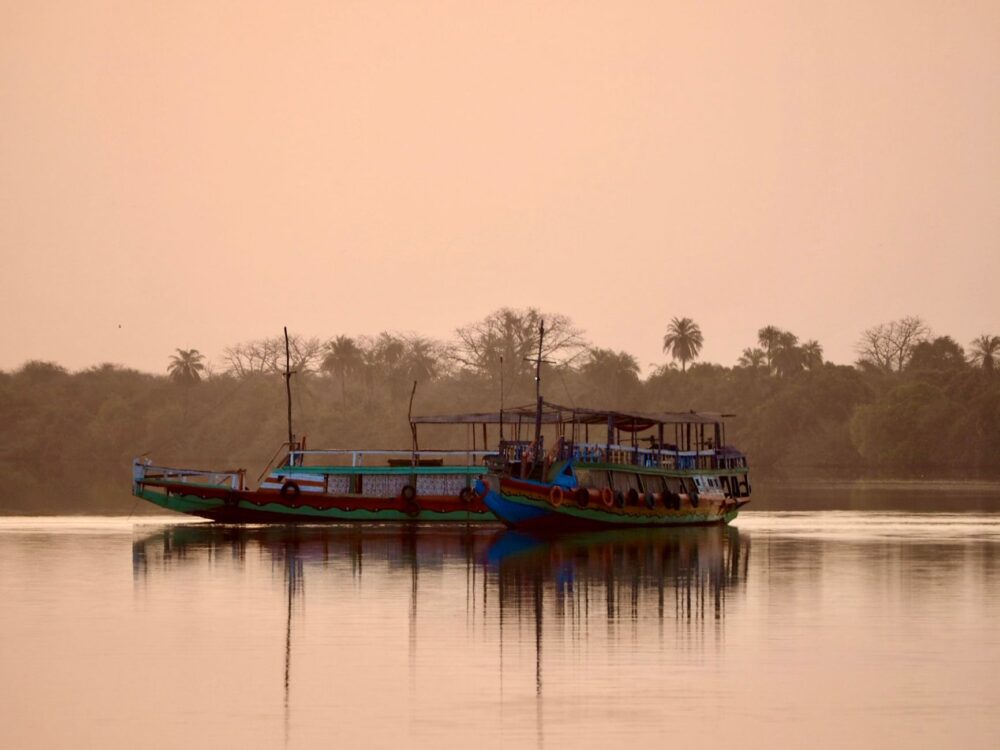
- Collective Transport Canoes: Widened structures allowing the transfer of up to twenty passengers alongside their cargo and farm animals.
This material modernization has not been exempt from economic challenges. The cost of importing fiberglass and two- and four-stroke engines represents a heavy financial burden for local fishing and transport cooperatives. Despite this, the speed and superior payload capacity of these new vessels have drastically shortened travel times between rural markets and major urban collection hubs such as Port Harcourt and Warri.
Cabotage Logistics and Heavy Cargo Transport
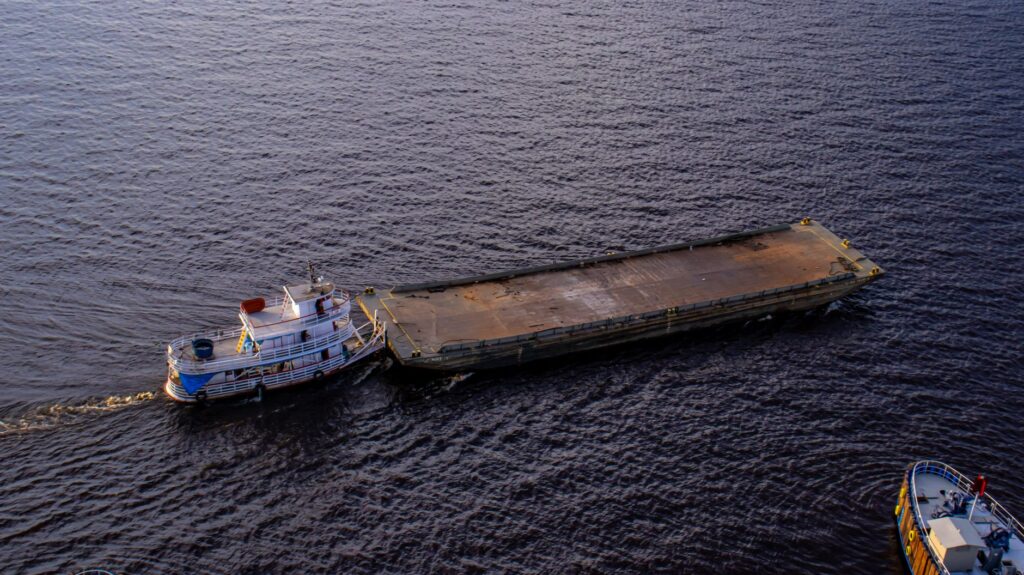
Beyond passenger transport, the Niger Delta supports intense heavy cargo traffic supplying both the local economy and the national energy industry. Flat-bottomed barges, towed by robust river tugboats, ply the main channels carrying everything from staple foods like cassava and smoked fish to building materials, machinery, and refined fuel. This interior cabotage is the sole viable route to move tons of goods toward enclaves entirely devoid of land access.
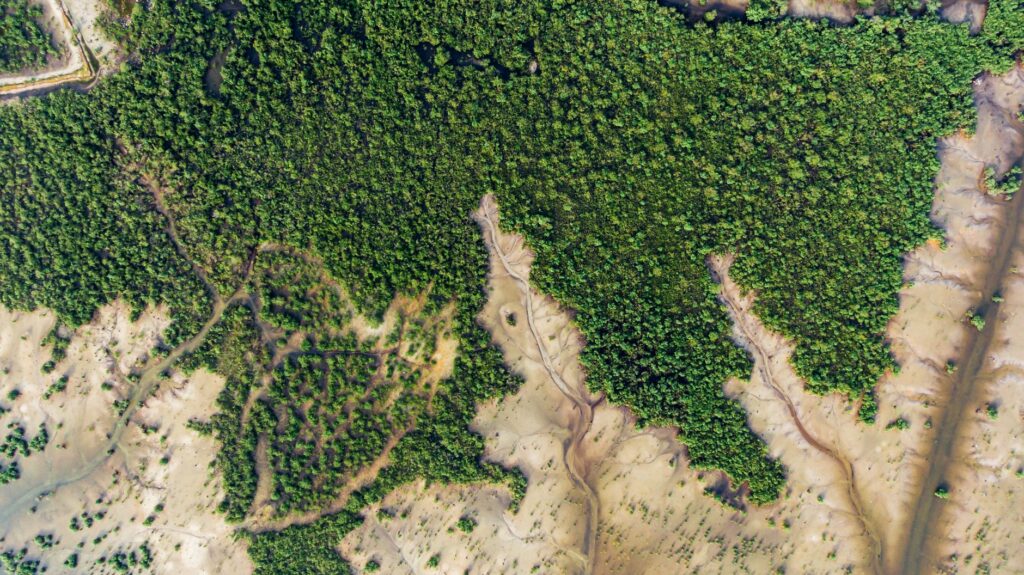
Water does not separate our communities; water is the path uniting our past with our survival in this green labyrinth.
The coordination of this river logistics operates under a complex system of informal harbor masters and transport guilds regulating tariffs, loading shifts, and route safety. Nonetheless, congestion at strategic confluence points, such as the Onitsha piers and the approaches to the Bonny River estuary, generates frequent bottlenecks. The lack of nighttime buoyage and the overloading capacity on numerous barges increase collision and shipwreck risks during nocturnal storms.
Port Infrastructure and Intermodal Nodes of the Estuary
The delta ports act as the pressure valves for this entire intermodal system. Historical facilities such as the wharves of Sapele, Burutu, and Akassa, which once played a central role in the colonial palm oil trade, have undergone alternating processes of modernization and decline. Today, the transition between river and land transport is concentrated in selected nodes equipped with concrete ramps and transfer warehouses to receive products coming from interior zones.
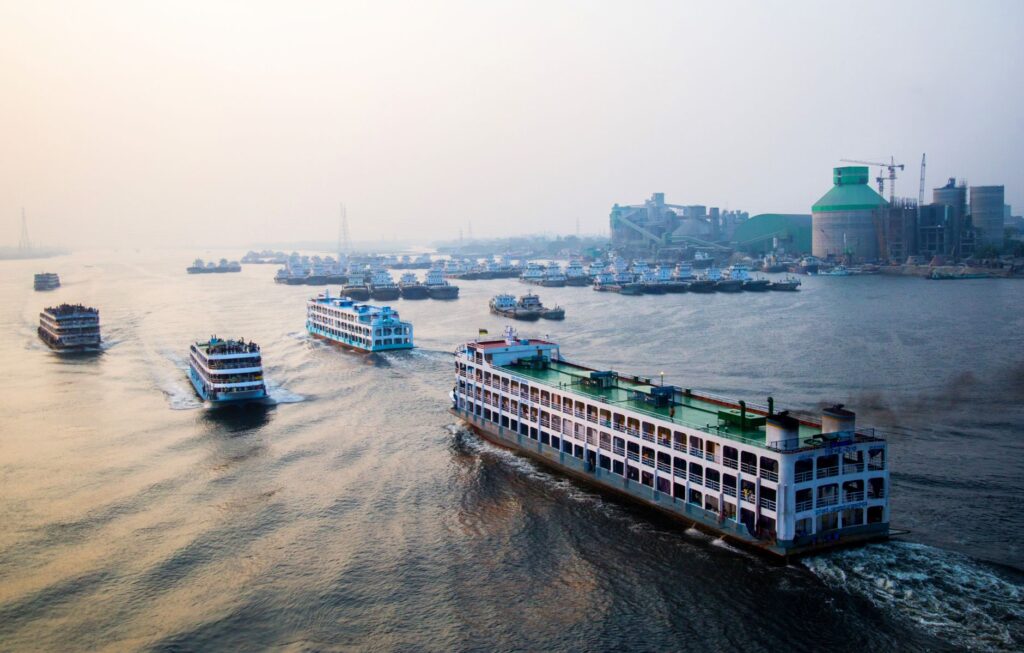
The integration between deep-draft ferries operating in coastal waters and the canoes of smaller tributaries exhibits notable structural deficiencies. The scarcity of adequate floating pontoons forces transshipment operations to be conducted under precarious conditions, with passengers and cargo jumping from one vessel to another over slippery surfaces. This operational vulnerability underscores the urgent lobbying for public investments aimed at equipping community wharves with basic docking infrastructure and port security.
Socioeconomic Impact of Riverine Mobility on Communities
For delta communities, the state of aquatic routes directly dictates their economic well-being and access to fundamental rights. A disruption in navigation due to hydrocarbon spills, communal conflicts, or the uncontrolled proliferation of aquatic weeds immediately paralyzes the subsistence economy. Floating markets, where traders exchange agricultural products for urban manufactures, depend entirely on the punctuality of line barges.
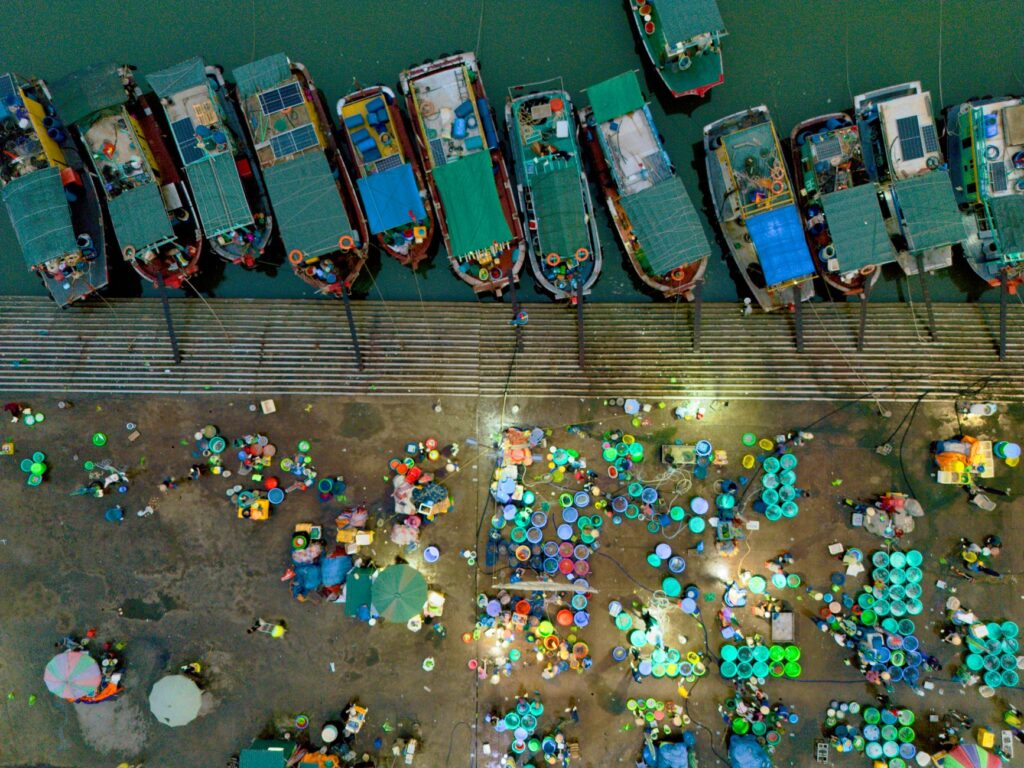
Likewise, river transport is the exclusive vehicle for delivering essential public services. Itinerant medical brigades combating malaria and other endemic diseases in the delta utilize medicalized boats to reach isolated villages. Similarly, the secondary education of thousands of youths relies on the availability of subsidized aquatic school transport services, whose current scarcity drives high rates of early school dropout in more remote rural areas.
Environmental Challenges, Security, and Route Maintenance
Maintaining navigability in the Niger Delta faces a multi-factorial crisis. On one hand, deforestation in upper basins accelerates sedimentation in estuaries, forcing constant dredging operations that are rarely executed with the required frequency. On the other hand, chronic pollution from oil spills and urban plastic accumulation drastically degrades aquatic ecosystems and hinders the operation of outboard motors, whose propellers frequently entangle in solid waste.
- Accelerated Sedimentation: Drastic reduction of draft in secondary channels during the dry season.
- Hydrocarbon Pollution: Severe damage to wooden hulls and accelerated corrosion in metallic barge structures.
- Insecurity in Channels: River piracy activities and motor thefts forcing restrictions on night navigation.
Faced with these challenges, regional authorities and community organizations debate the implementation of channel cleanup programs and joint patrols. However, the vastness of the territory and the political complexity of the region hinder the enforcement of lasting solutions ensuring safe and sustainable transit for all system users.
Practical guide
Planning a journey or a journalistic expedition through the river transport system of the Niger Delta requires thorough logistical preparation and profound respect for local rhythms.
How to Get to Main Transport Nodes
The airports of Port Harcourt (PHC) and Warri (QRW) are the primary entry gates for accessing the delta region. From these terminals, overland transit must be coordinated toward authorized wharves along the principal riverbanks.
Vessel Types and Service Hiring
It is advisable to contract transport services through official boat operators’ cooperatives at the main docks. Avoid unregistered watercraft and ensure the vessel carries mandated life vests for all occupants before embarking.
Recommended Season and Health Precautions
The dry season, spanning between November and March, offers the most stable conditions for navigation, although minor channels may present draft restrictions. Malaria prophylaxis, up-to-date yellow fever vaccinations, and an adequate supply of bottled drinking water are indispensable.
Final Reflection on Amphibious Resilience
In Nigeria’s amphibious heartland, movement is not merely a means to reach a destination, but the very essence of daily life. The waters of the Niger, with their unpredictable currents and eternal mangroves, continue to demand absolute respect from those who traverse them. Despite the obsolescence of much of its infrastructure and the severe environmental challenges threatening its balance, the river transport network demonstrates an admirable capacity for adaptation. The fiberglass canoes plying the channels at dawn stand as living testimony to a people who refuse to be confined by land, finding in the fluidity of water their greatest strength and most indomitable freedom.