
Introduction to the Southern Frontier
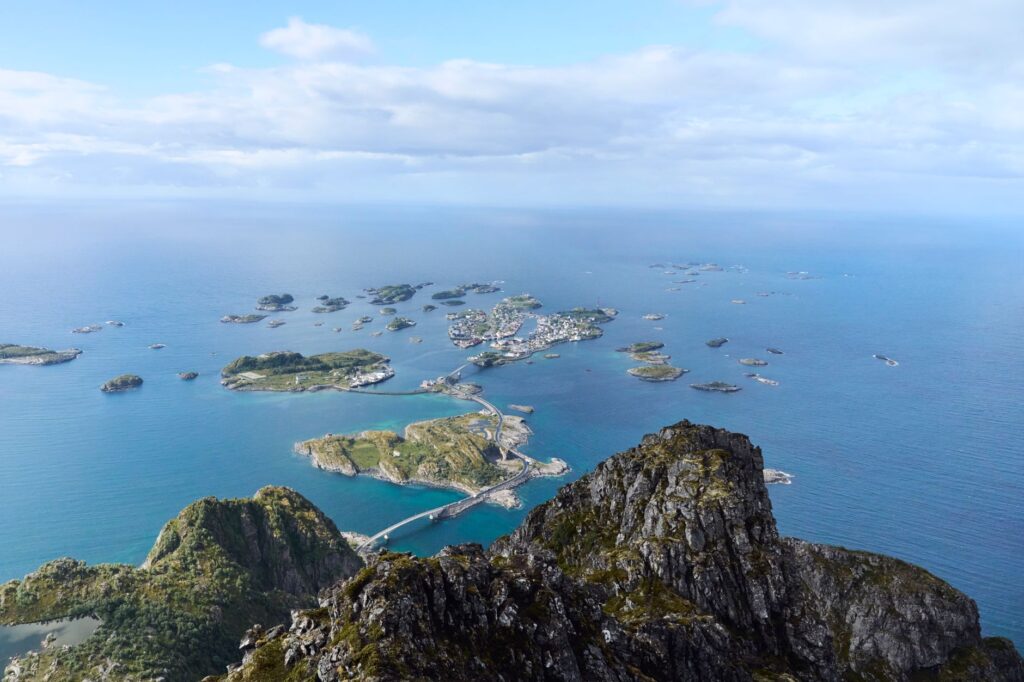
At the remote edge of southern latitudes, where westerly winds dominate the horizon and tides carve the coastline with relentless violence, lies an archipelago whose very existence depends on the millimetric precision of its transport network. Death Island is not a hostile territory by geographical whim, but a complex web of narrow channels, deep fjords, and rocky shallows that have challenged navigators for centuries. Today, the economic and social survival of its sparse inhabitants does not rest upon sprawling highways or international airports, but upon the fragile and tenacious connectivity of an intermodal system where tidal barges, hardwood docks, and minor watercraft converge.
Understanding the logistics of this oceanic outpost requires shedding conventional notions of modern mobility. Here, schedules are not dictated by a centralized clock, but by the rhythm of marine currents and the fury of storms. Every transport of goods, every medical evacuation, and every routine journey represents a complex operation of meteorological calculation and seamanship. Port infrastructures, many built on coigüe wood piles and artisanal shingles, withstand the constant pounding of an ocean that forgives neither maintenance errors nor structural design flaws.
The Architecture of Isolation and Coastal Routes
The backbone of mobility across the archipelago is a small but resilient fleet of multipurpose coastal cargo barges. These vessels, engineered with reinforced steel hulls to withstand floating logs and occasional ice floes, connect main ports with the most isolated anchorages. Routes are not drawn on conventional maps, but traced through logbooks accumulated over generations by local captains who know every shallow ledge and treacherous tidal rip. The reliance on these maritime routes is absolute: without them, the supply of fuel, perishable food, and medical supplies would collapse within weeks.
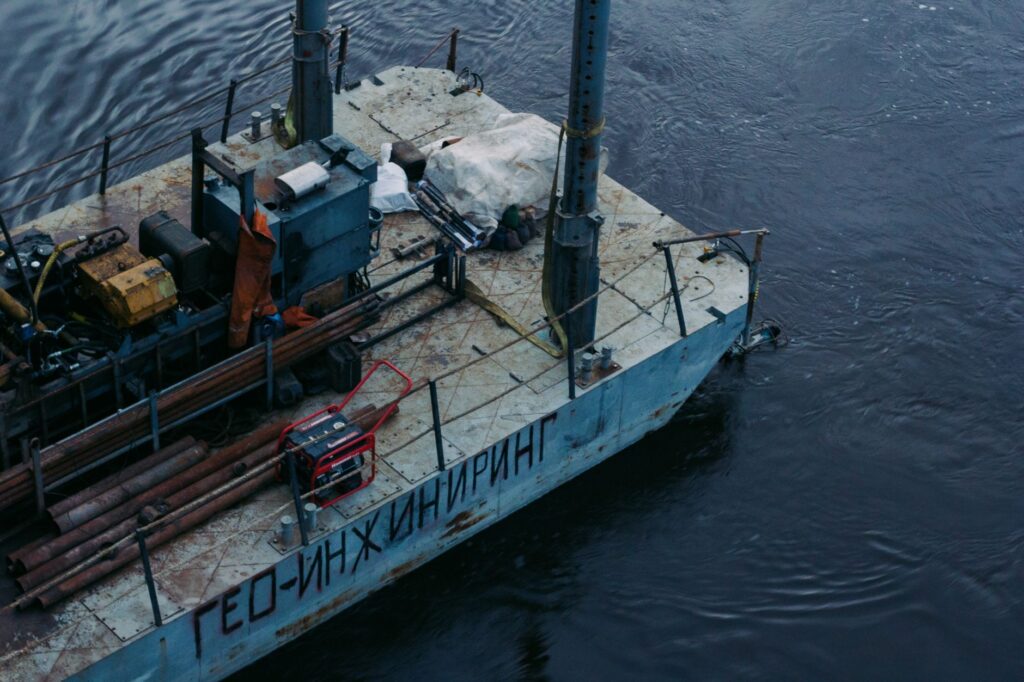
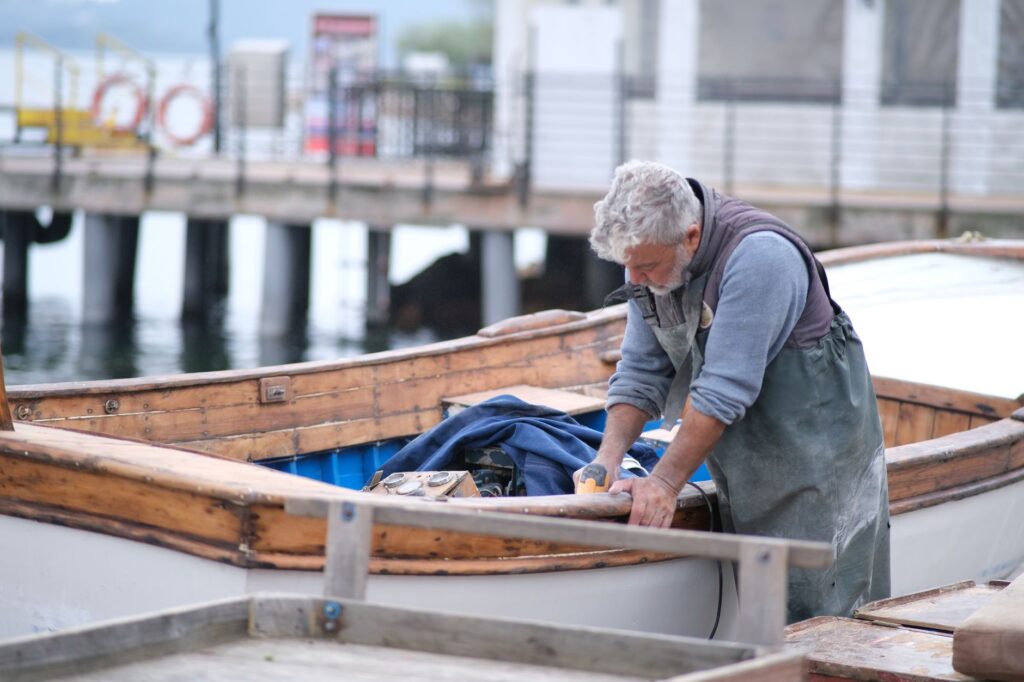
Local port authorities face a constant budgetary dilemma. Traditional docks, originally built for small-scale artisanal fishing, must now receive vessels of greater draft and tonnage. This transition has forced a rethinking of civil engineering in extreme marine environments, where conventional reinforced concrete suffers accelerated degradation due to salinity and material fatigue. Engineers stationed in the area utilize hybrid solutions, combining cathodically protected metal piles with floating platforms capable of adapting to tidal ranges exceeding six meters of vertical amplitude.
The true measure of infrastructure in the archipelago is not its monumentality, but its resilience against isolation and its capacity to adapt to the ocean’s caprice.
Technical Challenges of Navigation in Narrow Channels
Navigating the interior channels of the archipelago demands highly specialized crews. Katabatic winds descending from mountain peaks can transform a calm strait into a trap of gale-force gusts within minutes. Global positioning systems and radar are indispensable tools, but visual experience and empirical knowledge of natural coastal landmarks remain the definitive resource for negotiating the most complex passages. Navigational aids, solar beacons, and luminous alignments suffer severe wear from marine corrosion and nesting native birds.
Compounding this is a chronic shortage of dry docks and specialized mechanical workshops nearby. Any critical failure in a barge’s propulsion systems requires towing the vessel to shipyards located hundreds of nautical miles away, leaving a significant portion of the archipelago temporarily unsupplied. This structural vulnerability highlights the urgency of establishing stricter preventive maintenance protocols and equipping local communities with critical spare parts and basic on-site repair capabilities.
The Terrestrial Link: Gravel Roads and Suspended Walkways
Once vessels dock at island piers, transport shifts to a terrestrial network as precarious as it is vital. Interior roads are overwhelmingly consolidated gravel tracks winding through temperate rainfalls and water-saturated peatlands. During winter months, nocturnal frosts and persistent rains turn these routes into challenges for four-wheel-drive vehicles, necessitating the constant use of chains and severe axle-weight restrictions to prevent roadbed collapse.
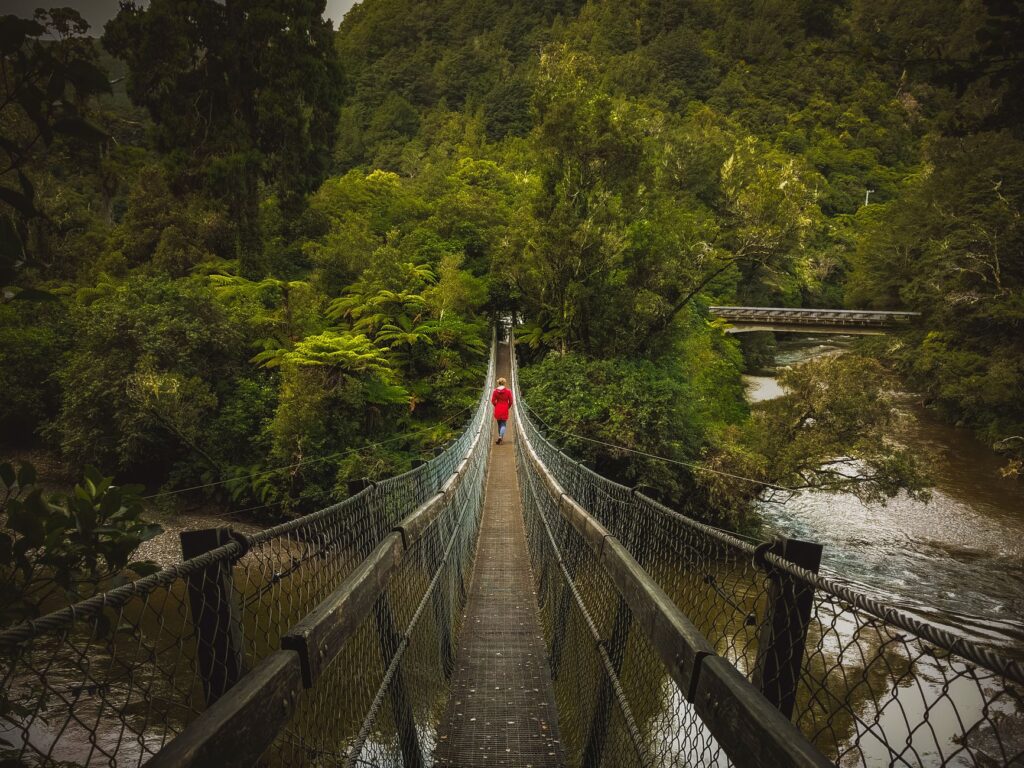
In sections where topography becomes impractical for traditional roads, ingenious systems of suspended walkways and high-resistance wooden bridges have been developed. These structures allow pedestrian transit and the movement of small livestock between the fragmented islets. However, wood requires periodic replacement due to rot caused by constant ambient moisture, demanding sustained community effort and specific budget allocations that do not always arrive with necessary regularity.
Integration with Emergency Air Transport
When weather conditions completely prohibit maritime navigation, the sole communication link with the mainland or larger islands is short-haul air transport. Landing strips, cleared over flat terrain of compacted gravel or drained meadows, lack complex instrumental night lighting and depend exclusively on daytime visibility. Aircraft utilized are twin-engine turboprops adapted for short strips and rough surfaces, piloted by aviators with vast experience in southern meteorology.
The use of these airfields is strictly limited to medical emergencies, postal mail, and priority passenger transport. Fares and frequencies are partially subsidized by the state, but operating costs remain high for permanent residents. Coordination between air operators and port captains is a daily exercise in logistical synchrony, constantly evaluating whether to cross channels by sea or attempt takeoff before fog completely closes the pass.

The Economics of Cabotage and Local Supply
Human survival in the archipelago depends on a highly vulnerable supply chain. Everything from liquefied petroleum gas for heating to construction materials and fishing fleet spare parts arrives via general cargo holds. Local merchants must plan inventories months in advance, assuming significant financial risks and spoilage hazards due to unforeseen delays at departure ports or prolonged storm cancellations.
This commercial dependency has fostered a unique economic model based on cooperativism and logistical solidarity. Families share cargo hold space on barges, coordinate wholesale purchases to lower freight costs, and establish rotating shifts for manual cargo unloading when port cranes break down. Far from the automated efficiency of global ports, commerce on Death Island survives through social cohesion and a deep understanding that logistics is a common good.
In an environment where the margin for error is minimal, solidarity among neighbors and mariners is the invisible fuel keeping the entire infrastructure running.
The Impact of Climate Change on Traditional Routes
Over the past decade, historical weather patterns have experienced notable alterations that further complicate transport planning. Northwest quadrant windstorms are more frequent and intense, drastically reducing safe operational windows for minor navigation. Likewise, anomalous sea-level variations complicate docking at fixed piers designed under older parameters, forcing captains to maneuver with extreme caution during lowest ebbs.
Scientific bodies warn that existing infrastructure will require urgent structural adaptations to guarantee the archipelago’s habitability in the medium term. Proposals under study include installing articulated hydraulic ramps, selective dredging of silted access channels, and incorporating hybrid barges with greater autonomy and maneuverability in extreme current conditions.
Practical guide
How to get there: Access to the archipelago is exclusively via regular coastal cargo barge services departing from the mainland port of Puerto Edén. There are no commercial airlines open to the general public, with flights limited to charter and medical services.
When to travel: The period between December and February offers the most stable meteorological conditions, featuring lower indices of extreme gusts and maximum daylight hours. However, passenger tickets must be booked months in advance due to high seasonal demand.
Accommodation and services: Conventional hotel infrastructure is practically nonexistent; lodging is limited to small family pensions and community residences. Carrying cash is essential, as electronic payment systems frequently fail due to unstable satellite connections.
Recommended equipment: High-resistance waterproof clothing, trekking footwear with adhesive soles, and backup satellite communication systems are required for any travel outside main inhabited centers.
Epilogue at the Edge of the World
When the last ray of sunlight filters through the cloudy ridges of the archipelago and the silhouette of a coastal barge disappears behind the rocky headland, the certainty remains that this intermodal labyrinth is much more than a mere sum of routes and docks. It is tangible proof of human tenacity against the indifferent vastness of the southern ocean. In every challenging voyage, in every dock plank replaced by calloused hands, and in every emergency flight piercing the mist, a silent pact is reaffirmed: inhabiting the edge of the world is not an act of isolation, but a daily exercise in connection and endurance.