
Introduction to the Atlantic Sanctuary
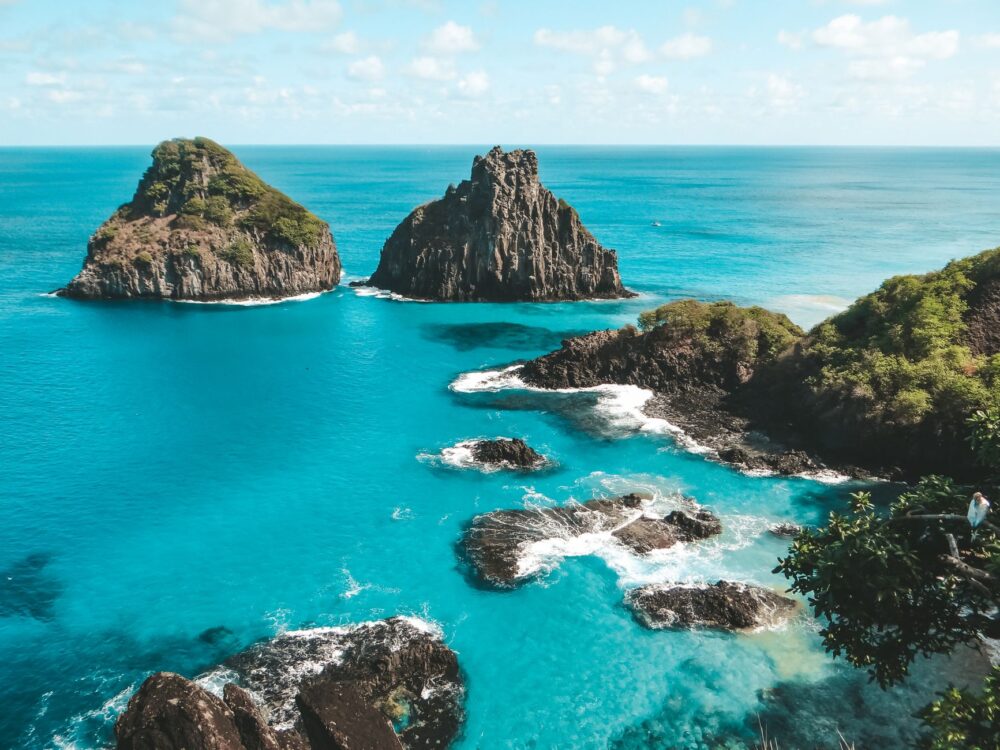
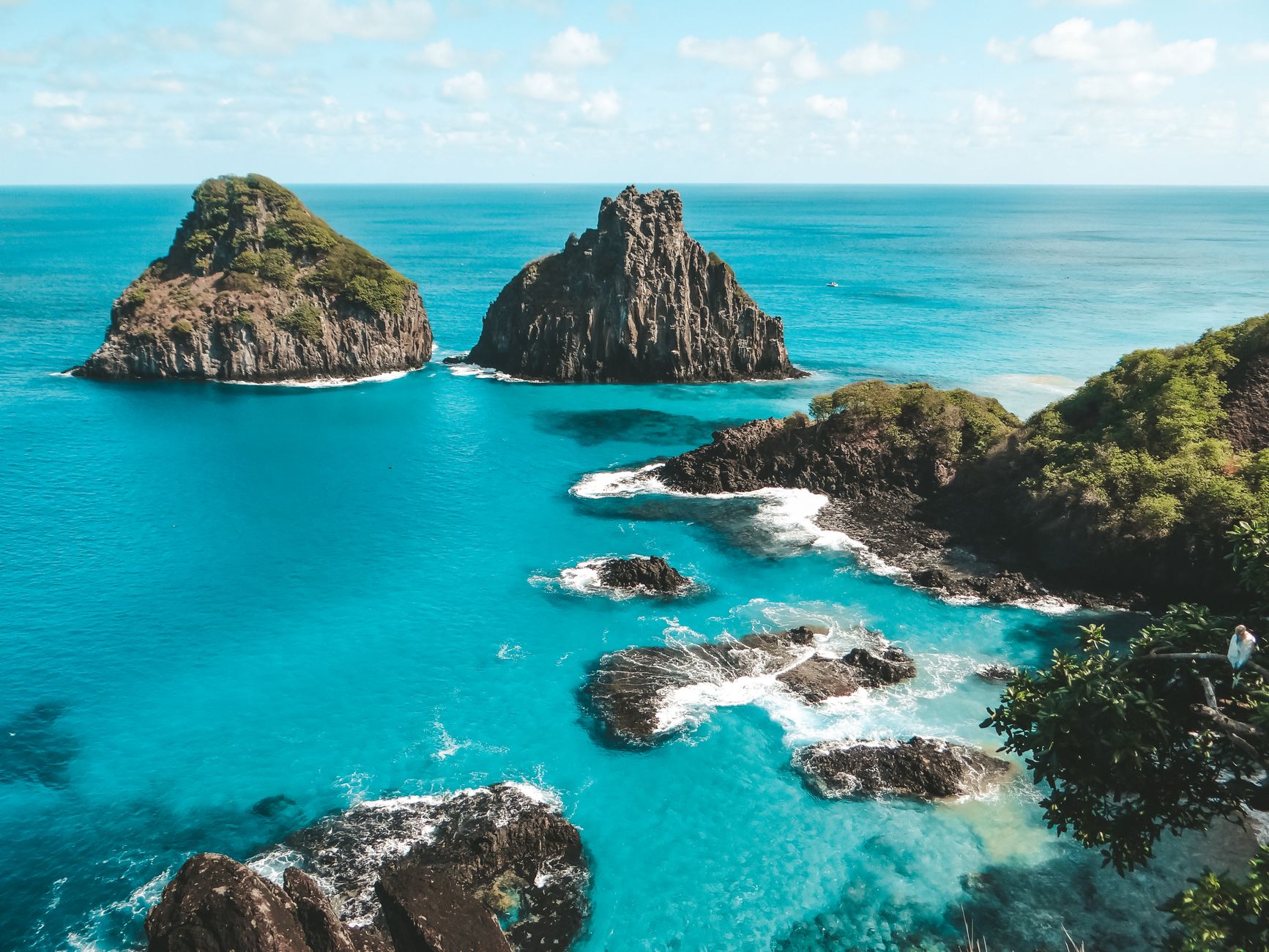
At the western edge of the tropical Atlantic, more than three hundred and fifty kilometers off the northeastern coast of Brazil, lies a stronghold of volcanic rock and marine biodiversity known as the Fernando de Noronha Archipelago. This geographic isolation has not only shaped terrestrial landscapes of singular beauty but has also forged a marine ecosystem of exceptional scientific value. In its surrounding waters, characterized by remarkable transparency and a constant warm temperature, lives one of the few studied resident populations of bottlenose dolphins (*Tursiops truncatus*), a group that has made Dolphin Bay its permanent home and a natural laboratory for international marine biology.
The rigorous study of these marine mammals requires looking far beyond the tourist surface. The presence of this stable community responds to a complex interplay between underwater topography, ocean current patterns, and food availability. Over the past few decades, researchers and marine biologists have documented how these cetaceans use the protected waters of the bay not only for daytime resting after long nocturnal foraging trips in the open ocean, but also as a critical space for socialization and calf-rearing, an ecological equilibrium that today faces new anthropogenic pressures.
Volcanic Geology and Oceanographic Dynamics
The origin of Fernando de Noronha dates back millions of years, when intense submarine volcanic activity thrust a chain of submerged seamounts from the ocean floor. The current formations represent merely the eroded summits of this ancient relief. This insular structure acts as a natural barrier against equatorial currents, generating local upwelling phenomena that transport nutrients from the abyssal depths to the photic zone. These processes enrich the water column, fostering the development of dense phytoplankton and zooplankton populations that sustain the entire trophic chain.
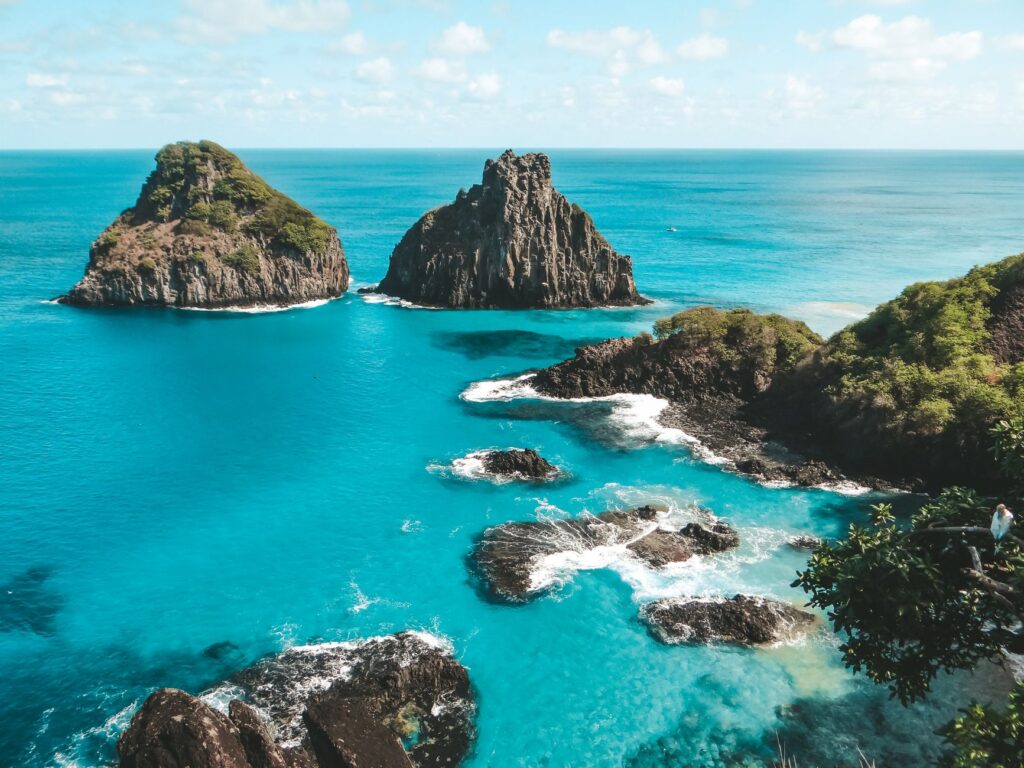
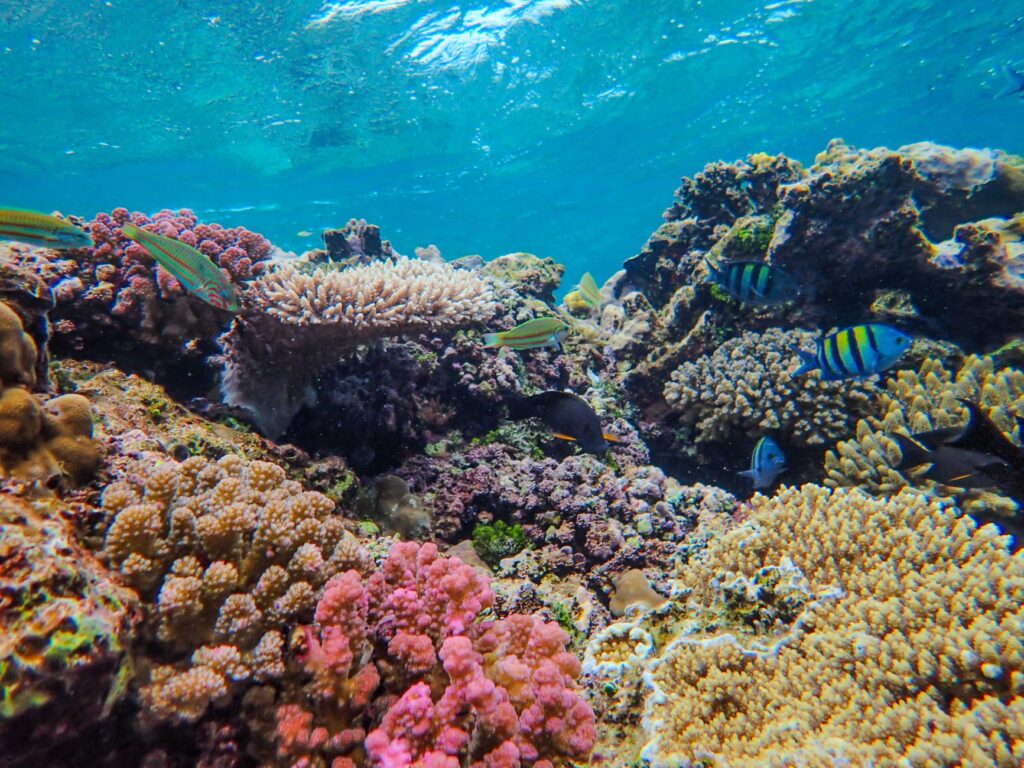
The marine currents washing the archipelago are dynamic and shifting, modulated by trade winds and seasonal oscillations of the tropical Atlantic. For bottlenose dolphins, this oceanographic framework dictates their daily routes. While the submarine continental shelf and peripheral coral reefs offer fishing grounds abundant in benthic and pelagic fish, the sheltered bays of the northern main island provide areas of low hydrodynamic energy. Here, minimal turbulence allows the animals to rest in synchronized formations, reducing energy expenditure while floating or swimming slowly near the surface.
Social Behavior and Daytime Resting Patterns
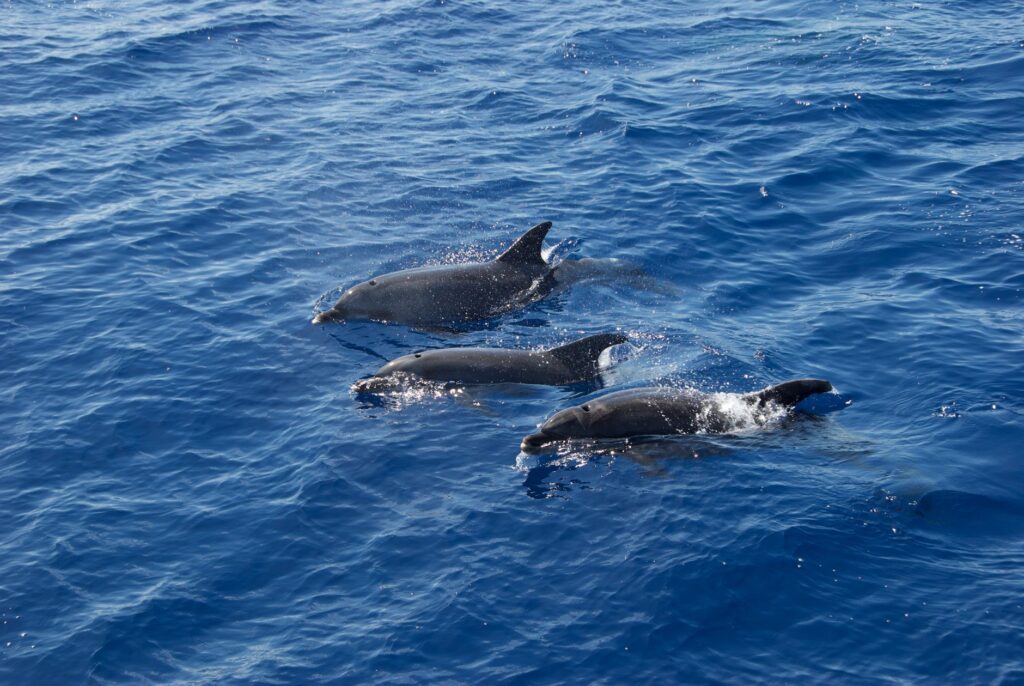
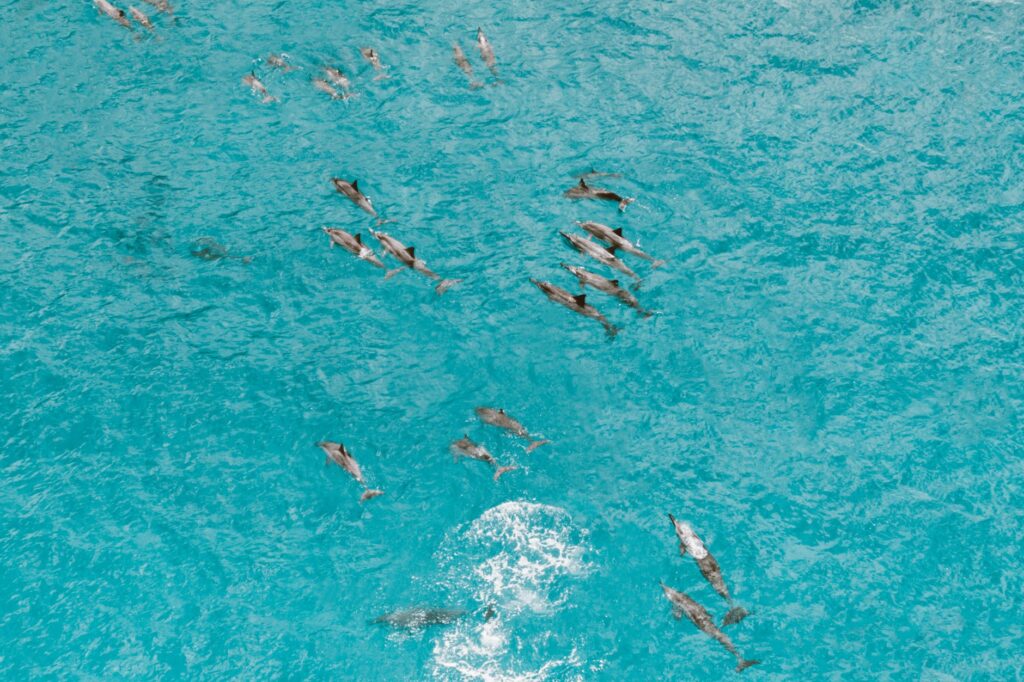
The daily cycle of the resident population of Fernando de Noronha follows a predictable yet fascinating rhythm. At dawn, the dolphins move from offshore feeding grounds into the protected coastal waters, particularly Dolphin Bay, an area under strict navigational regulation where boats are prohibited. In this refuge, the animals adopt a behavior known as daytime resting. They swim in parallel, forming compact groups that move in a coordinated, low-speed manner—a behavior interpreted by researchers as a defensive strategy against potential predators and a mechanism to ensure hemispheric brain sleep.
During the afternoon hours, the social dynamics transform radically. Resting gives way to intense interactive activity, featuring acrobatic leaps, playful behaviors, and complex vocalizations. These interactions are fundamental for consolidating bonds within the pod, establishing hierarchies, and facilitating the learning of juveniles. Mothers with calves show special attention to protecting their young, keeping them at the center of the group and constantly scanning the environment for occasional oceanic sharks or unauthorized vessels.
Trophic Ecology and Hunting Strategies
While daytime resting occurs in shallow waters, the survival of these cetaceans depends on their ability to exploit offshore food resources. Research based on stable isotope analysis and direct observation of foraging behavior reveals that the bottlenose dolphins of Noronha possess an opportunistic yet highly specialized diet. They consume a wide variety of fish and marine invertebrates, including species from the *Carangidae* and *Scombridae* families, which inhabit both reefs and the pelagic water column.
Hunting strategies vary and demonstrate remarkable behavioral plasticity. Sometimes they operate alone, using echolocation to detect prey buried in sandy sediment or hidden among coral formations. In other instances, they deploy cooperative tactics, herding small fish schools toward the surface or against coastal rock walls to facilitate capture. This hunting efficiency is crucial to sustaining the high metabolic requirements of a population inhabiting oligotrophic tropical waters, where nutrients are not always abundant.
The continuous study of cetaceans in isolated oceanic islands reminds us that ocean health is measured not only in the immensity of the open sea, but in the fragility of these small enclaves where land and abyss converge.
Demographic Evolution and Scientific Monitoring
Long-term tracking of this community has been made possible through photogrammetry and individual identification catalogs based on unique notches and scars on dorsal fins. Since the 1990s, pioneering conservation projects have tracked hundreds of individuals, allowing researchers to estimate the resident population size, which typically fluctuates between two hundred and three hundred specimens. Demographic data indicate a relatively stable population, albeit with a low recruitment rate characteristic of marine mammals with slow reproduction rates.
Scientific monitoring has also revealed the genetic vulnerability of these insular populations. Because they are geographically isolated, gene flow with other coastal or pelagic populations on the Brazilian continental shelf is limited. This underscores the importance of maintaining ecological connectivity and avoiding any factor that could reduce the group’s genetic variability. Researchers continue to assess the impact of global environmental variables, such as rising sea surface temperatures associated with climate change, which could alter the distribution of the prey species upon which the dolphins depend.
Anthropogenic Pressures and Protected Area Management
Despite being integrated into the Fernando de Noronha National Marine Park and an Environmental Protection Area, the dolphins face challenges derived from human pressure. The surge in international tourism, although regulated by government agencies, generates constant boat traffic in the vicinity of park boundaries. Commercial vessels, diving operators, and unauthorized recreational activities represent sources of acoustic and physical stress for the animals, altering their natural resting and socializing patterns.
Underwater acoustic pollution generated by outboard motors interferes with the cetaceans’ echolocation and communication systems. Likewise, the risk of accidental collisions and entanglement in abandoned fishing gear or illegal fishing practices at the outer boundaries of the reserve remain latent threats. Institutional responses have included tightening nautical approach regulations, establishing strict exclusion zones, and promoting environmental education programs aimed at both local residents and visitors arriving at the archipelago.

Practical guide
How to get there: Access to the Fernando de Noronha Archipelago is exclusively by air via regular commercial flights departing from Recife (*REC*) and Natal (*NAT*), operated by major Brazilian national airlines. Planes land at the local airport (*FEN*).
Entry requirements: All visitors must pay the Environmental Preservation Tax (*TPA*), a daily fee calculated based on the length of stay, which can be paid online in advance. Additionally, visitors must purchase admission to the Fernando de Noronha National Marine Park, which grants access to main beaches and trails for ten days.
Best time to visit: The archipelago features two distinct seasons. Between December and February, northern seas are calmer, ideal for diving and whale/dolphin observation under optimal visibility conditions. From April to August, trade winds increase wave action along the Atlantic coast.
Marine observation rules: Swimming, diving, or boating in designated exclusion areas for dolphin resting, such as Dolphin Bay, is strictly prohibited. Observation must take place from authorized land-based viewpoints on the cliffs, using binoculars or telephoto lenses to avoid any disruption to animal behavior.
Accommodation and sustainability: Hotel infrastructure ranges from family-run guesthouses to low-impact ecotourism options. Visitors are encouraged to choose establishments committed to efficient water and energy management, which are highly limited resources in this fragile insular ecosystem.
Final Reflection on the Blue Horizon
Observing the unmistakable silhouette of a dolphin cutting across the glassy surface of a Noronha bay is an eloquent reminder of the delicate harmony governing life in confined oceanic spaces. Far from constituting mere visual spectacle, this resident community represents an irreplaceable biological indicator of tropical Atlantic health. The preservation of their habitat depends not solely on institutional surveillance or tourist restrictions, but on our collective capacity to understand that every marine corner deserves to be guarded with scientific rigor, ethical respect, and an unwavering commitment to the endurance of wildlife in its most pristine state.