
Introduction to the Misty Edge of Haida Gwaii
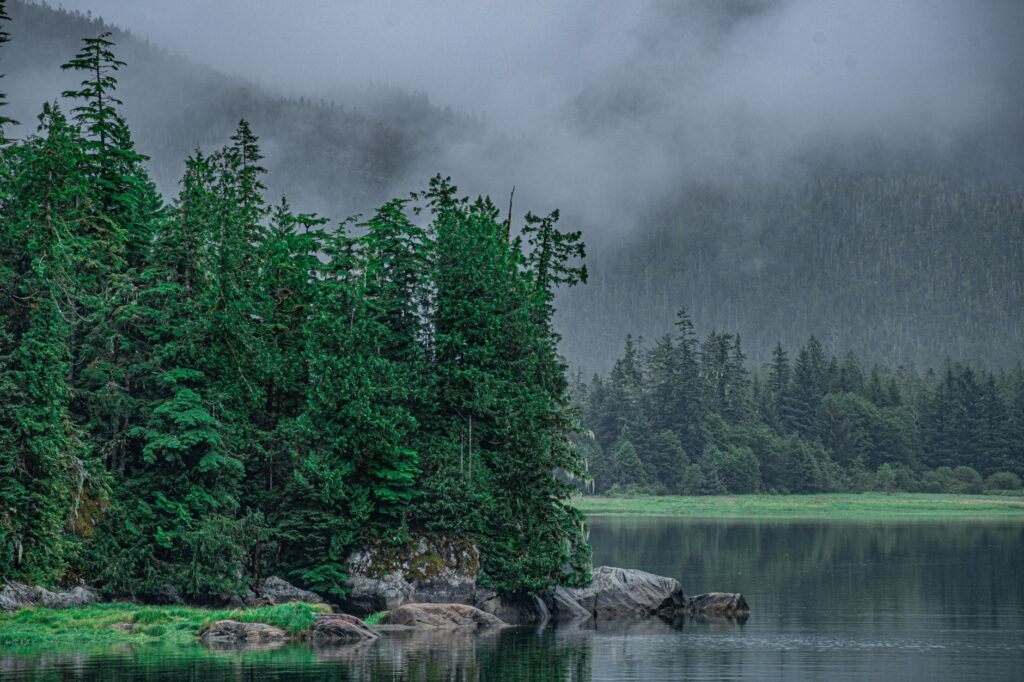
At the northernmost tip of British Columbia, where Pacific currents carve a labyrinth of islands blanketed by temperate rainforests, lies the archipelago of Haida Gwaii. Historically known as the Queen Charlotte Islands, this territory stands as one of the most isolated natural and cultural enclaves in North America. Here, geography is not a mere backdrop, but a dynamic actor dictating the rules of navigation, habitation, and human survival for over ten millennia. The perpetual mist, descending from mountain peaks to embrace the breaking surf of basaltic rock, envelops the traveler in an atmosphere of timeless stillness.
Approaching this territory demands abandoning contemporary haste and surrendering to the rhythm of the tides. Inshore navigation, traditionally carried out in hollowed-out red cedar canoes and today adapted to low-draft coastal vessels, is the sole pathway to unraveling the secrets of narrow channels where saltwater clashes against vertical granite walls. This report examines how totemic architecture and abandoned or repatriated villages form a living testimony to the cultural sovereignty of the Haida nation, offering the rigorous traveler a masterclass in the interdependence between humankind and the marine environment.
The Geography of Isolation and the Oceanic Pulse
The archipelago comprises over two hundred islands, separated from the Canadian mainland by the turbulent Hecate Strait. This body of water acts as a natural barrier that has preserved the ecological singularity of the region, often termed the Northern Galápagos. Tectonic forces and glacial erosion have carved deep fiords—locally known as inlets—where tides generate currents of unusual violence. Comprehending the dynamics of these marine passages is essential for any voyage; flood and ebb patterns dictate the temporal windows during which navigators can bypass narrow straits without risking grounding or being swept out to sea.
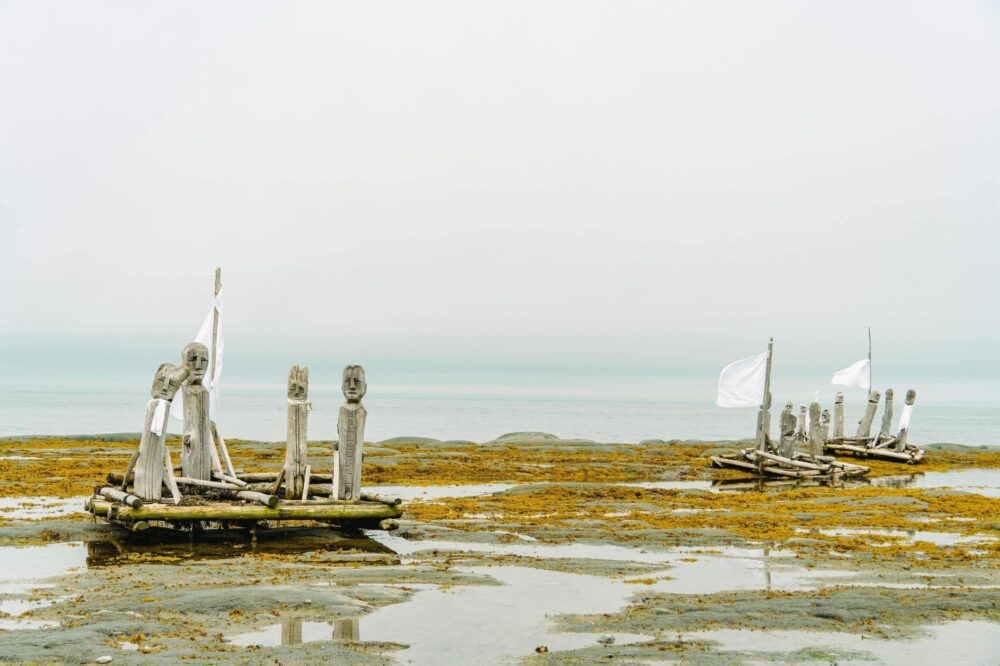
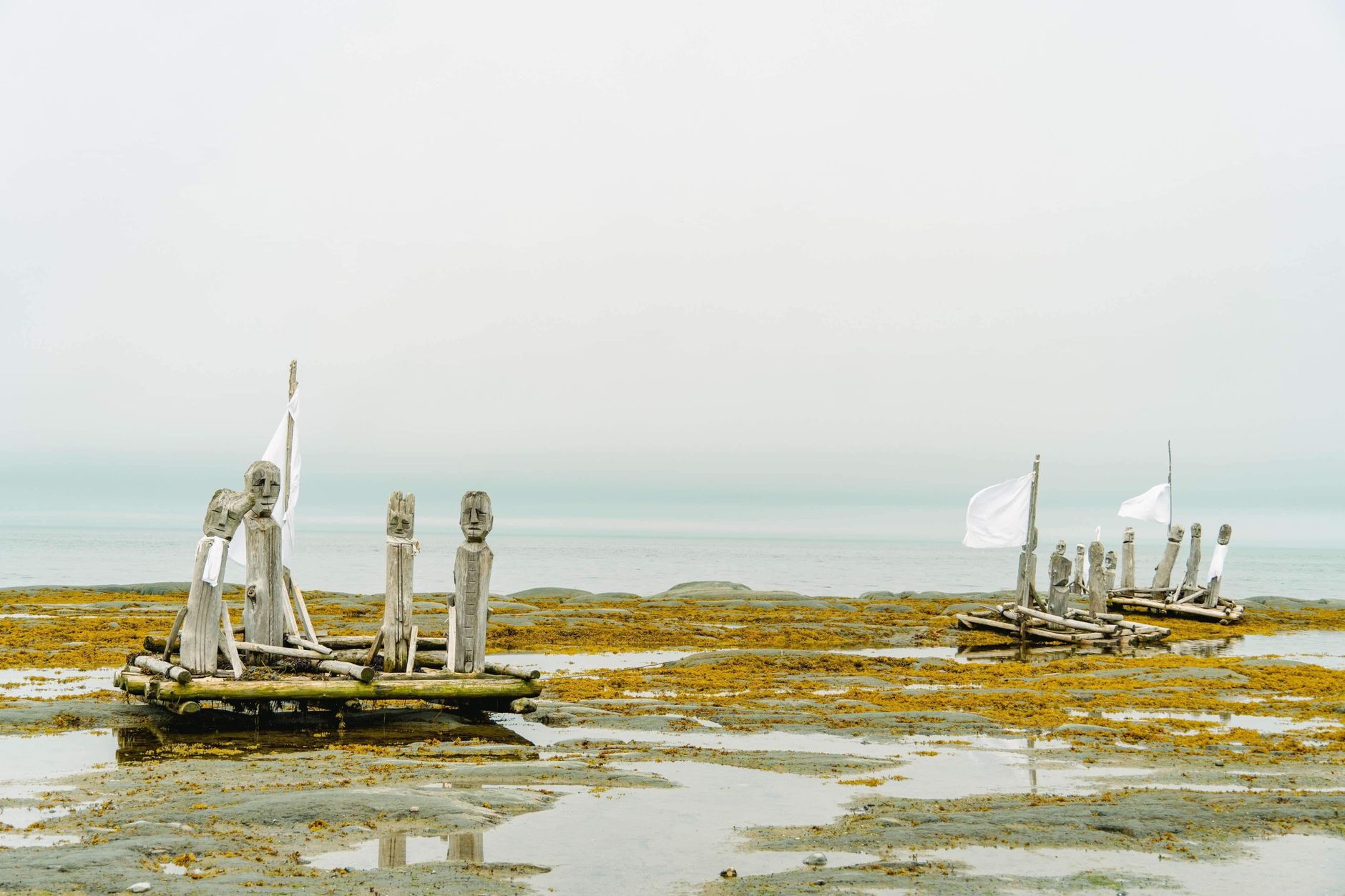
Tides in Haida Gwaii can exceed seven meters in amplitude, transforming entire landscapes within hours. At low tide, sea beds emerge covered in giant kelp forests, creating a golden tapestry that contrasts with the leaden gray of the sky. This constant fluctuation fuels an exceptionally rich trophic chain. Cold, nutrient-rich waters sustain stable populations of orcas, humpback whales, sea lions, and marine avifauna that find an impregnable refuge on these cliffs. Coastal navigation under these conditions requires seamanship, absolute respect for meteorological forecasts, and deep empathy with the natural surroundings.
The Architecture of Cedar: Shelters Against the Elements
Facing climatic rigor, characterized by precipitation exceeding three thousand millimeters annually, the vernacular architecture of Haida Gwaii has evolved as a masterclass in material adaptation. The central resource is the western red cedar (Thuja plicata), a sacred tree whose mechanical and chemical properties render it the perfect construction material. The ancient communal dwellings, rectangular in plan and constructed with post-and-beam frameworks, were designed to house entire clans, shielding them from hurricane-force winds blowing in from the Gulf of Alaska.
Cedar is not merely timber in Haida Gwaii; it is the physical archive of collective memory, a resource that yields its life to house the spirit of the community against the fury of the ocean.
Traditional carpentry techniques dispensed with metallic elements, utilizing friction joints, wooden wedges, and bindings made from plant fibers. Planks, carefully split from living trunks without needing to fell the tree—a sustainable millennial technique known as standing-tree stripping—were arranged overlappingly to channel rainwater outward. Inside, the gloom was broken only by the smoke of the central hearth, which ascended through an overhead opening. This architecture, ephemeral in origin yet astonishingly durable, demonstrates an intuitive understanding of materials physics and thermal behavior in subarctic climates.
Totem Poles and the Visual Narrative of the Territory
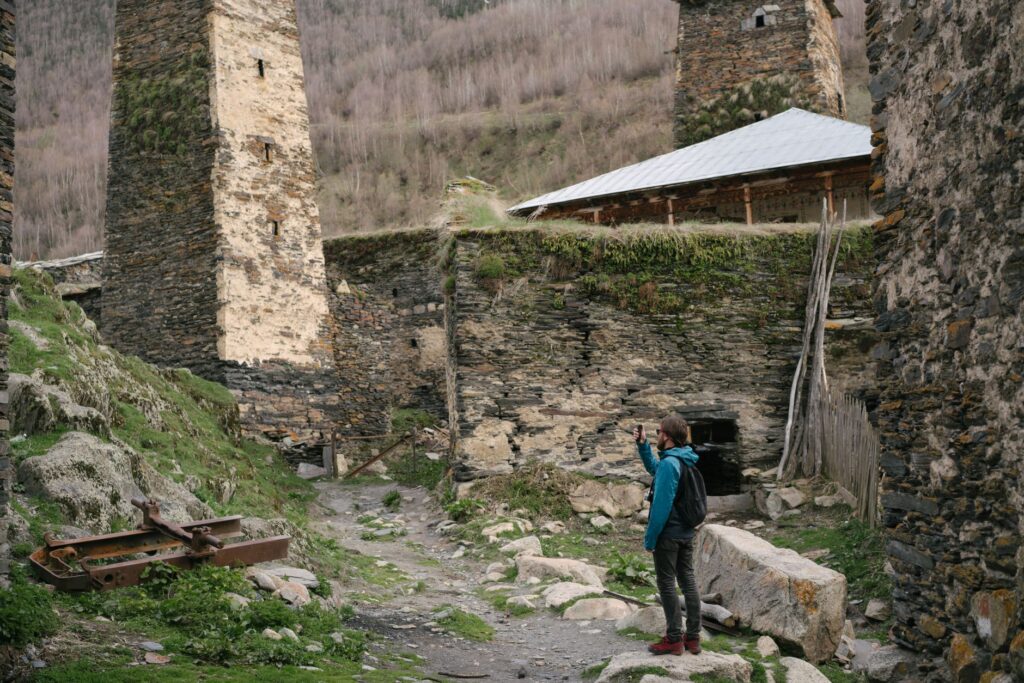
No analysis of Haida Gwaii’s cultural landscape would be complete without examining monumental cedar sculpture. Totem poles, erected in front of house facades or at ancestral cemeteries, act as genealogical records, historical chronicles, and territorial maps. Each zoomorphic figure—the eagle, the killer whale, the raven, the bear—encodes property rights, clan alliances, and foundational myths. Far from being mere decorative objects, these monuments participate in a natural biological cycle: carved from untreated wood, weather and moss slowly return them to the earth, completing a cycle of ecological reintegration.
Villages like SGang Gwaay (Anthony Island), declared a UNESCO World Heritage Site, offer the most poignant testimony of this process. There, the remains of grand houses and decaying totem poles stand among ferns and spruce trees, silent guardians of a past that refuses to fade into oblivion. Visits to these enclaves are conducted under strict conservation guidelines managed by the Haida Watchmen themselves, who accompany visitors to ensure that respect for the sanctity of the place overrides tourist curiosity. Reading these totem poles in their original context reveals a visual narrative where art and territory are indissoluble.
Inshore Navigation as an Immersion Practice
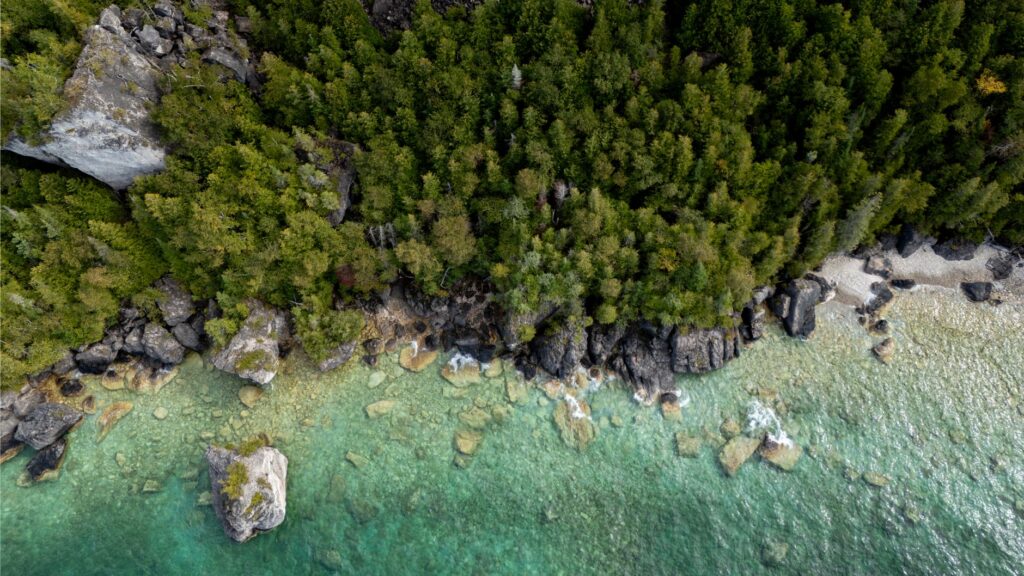
Traversing the interior waters of Haida Gwaii aboard lower-draft vessels allows access to hidden alcoves where large cruise ships could never drop anchor. This inshore navigation becomes an exercise in active contemplation. Gliding silently through channels flanked by emerald-green moss-draped rock faces, the traveler experiences a scale of proportion that shrinks daily worries. The sound of a paddle or an electric motor cuts through the air with surgical precision, allowing one to hear the distant blow of a whale or the cry of a bald eagle guarding its nest.
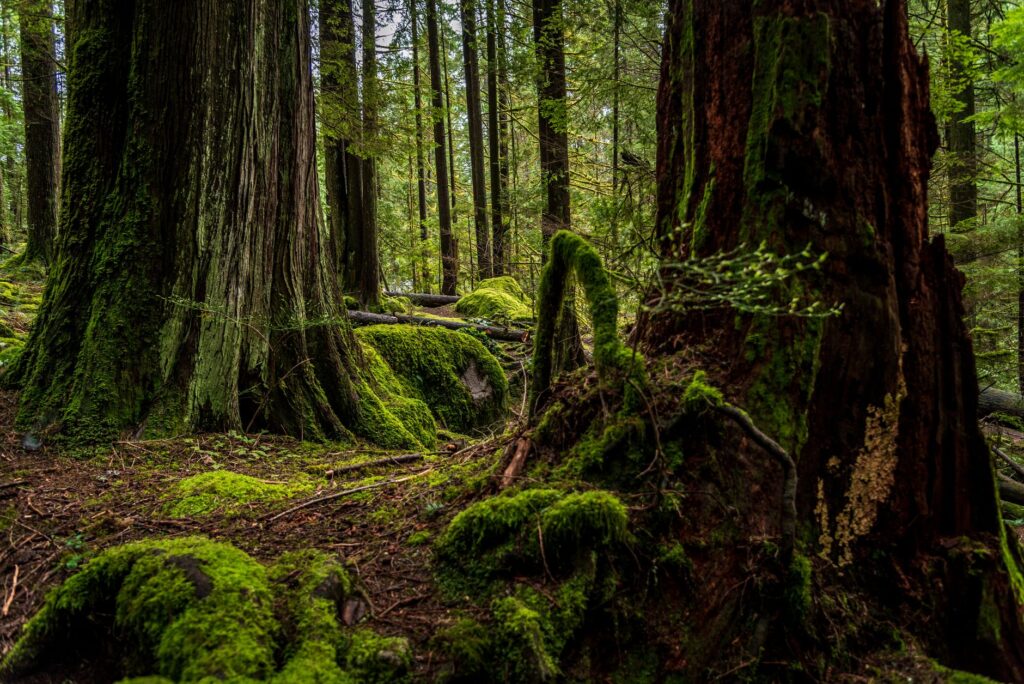
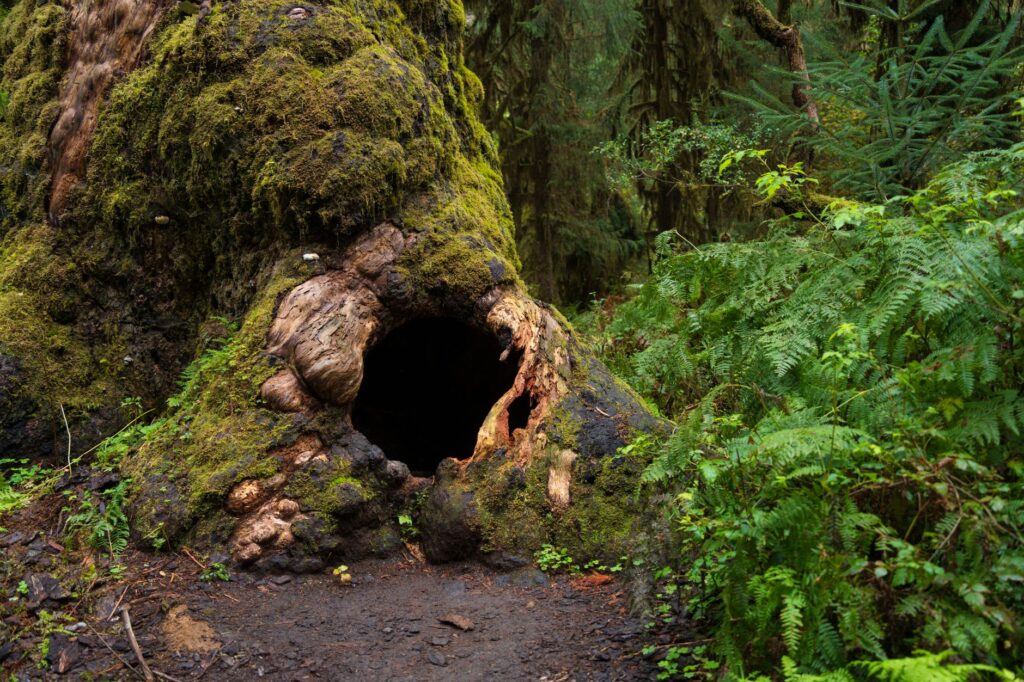
Stops at sheltered coves reveal microclimates where tree ferns and pollution-sensitive lichens thrive, serving as biological indicators of extreme air purity. On firm ground, walking over a forest floor carpeted in thick moss feels like stepping on a dense resilient mat that absorbs all sound. Local guides, predominantly members of the Haida Nation, enrich the journey by sharing traditional toponymy in the Xaad Kil language, where each geographical feature possesses a descriptive name relating its origin or ecological function, rescuing an ancient oral cartography.
Cultural Sovereignty and Regenerative Tourism
In recent decades, Haida Gwaii has undergone a model transformation in territory management. Through the Council of the Haida Nation, a governance model has been implemented that prioritizes cultural sovereignty and strict conservation over mass visitor growth. Tourism on these islands does not seek mass attraction, but rather the complicity of conscious travelers capable of understanding ecosystem fragility and the depth of the struggle for indigenous territorial rights recovery.
This regenerative approach means that every dollar spent on local transport, guides, or lodging stays directly within island communities, funding language education programs, environmental restoration, and maintenance of national and tribal parks (such as Gwaii Haanas). For the visitor, this translates into an experience where authenticity is not commercialized, but springs from respectful coexistence with those who have inhabited these shores since the beginning of time. The ethics of travel here are rooted in the Haida principle of *Gina ‘Waadluuxan Guel Goods*: everything is connected, and any action upon the land impacts the balance of the whole.
Practical guide
Planning an expedition to Haida Gwaii requires logistical rigor, respect for local regulations, and a meticulous selection of travel seasons.
How to get there
The primary air access route is via Sandspit Airport (Zha Kuns) on Moresby Island, with regular daily flights from Vancouver operated by regional airlines such as Air Canada Jazz or Pacific Coastal Airlines. Alternatively, travelers can take the BC Ferries vessel departing from Prince Rupert on the mainland to Skidegate, a maritime crossing of approximately seven hours traversing the exposed Hecate Strait.
When to visit
The optimal window for coastal navigation and hiking spans from late May to September, when meteorological conditions are most stable and daylight hours extend significantly. Winter months bring severe storms and gale-force winds that drastically restrict inshore navigation.
Permits and regulations
Access to the Gwaii Haanas National Park Reserve requires mandatory orientation provided by Parks Canada and the Haida Council, aimed at educating visitors on cultural and ecological protocols. Advanced registration is mandatory for entering remote zones and respecting landing restrictions at heritage sites.
Accommodation and services
Hotel infrastructure is limited and human-scaled, concentrated in towns such as Masset, Queen Charlotte (Daajing Giids), and Skidegate. Options include fishing lodges, small inns run by local families, and authorized campsites. Advance booking months ahead is strongly recommended due to the territory’s low carrying capacity.
The Final Echo of the Misty Archipelago
Upon leaving Haida Gwaii, as the aircraft climbs above the dense cloud layer crowning the archipelago, the prevailing sensation is that of having grazed an ancient secret. The islands remain there, anchored in the vastness of the North Pacific, imperturbable against the frenzy of global modernity. The mist closes in once again, hiding the cedar totem poles and the coves where tides continue carving stone with infinite patience. For the traveler who has learned to listen to the silence of its fiords, the journey does not end upon returning home; it settles permanently in memory as a reminder that geographies still exist on Earth where human dignity and nature converse in perfect, fragile harmony.