
The horizon has never been a static line, but rather a promise of transformation that challenges the stillness of everyday life. When major design houses choose a guiding concept for their annual production, they rarely limit themselves to a commercial exercise; instead, they propose an anthropological reading of human desire. On this occasion, the Parisian firm Hermès has chosen the phrase ‘L’appel du large’ to articulate its creative universe, a nautical term evoking the irresistible call of the open sea—that visceral impulse that drives the sailor to abandon the safety of the harbor in search of the unknown. It is no coincidence that this concept finds its most sophisticated echo in the literature of Charles Baudelaire, specifically within the verses of his immortal poem Le Voyage, where the act of traveling is revealed not as touristic distraction, but as a profound necessity of the modern soul to expand the limits of its own consciousness.
This report examines how the confluence between luxury craftsmanship and nineteenth-century symbolist poetry redefines our relationship with movement, territory, and matter. Through a journey that intertwines seafaring gastronomy, the selection of ingredients evoking salt and wind, and the contemporary reinterpretation of coastal pantries, we discover that travel is, above all, a sensory experience to be ingested, savored, and sedimented in memory. Far from the transience of contemporary tourism, the proposal of the French house and the Baudelairean legacy invite us into an exercise of slowness and contemplation, where every dish and texture acts as a coordinate on an invisible map.
The Poetics of the Abyss and the Awakening of the Senses
To understand the magnitude of ‘L’appel du large’, it is necessary to return to the texts where Baudelaire dissected the traveler’s melancholy. For the French poet, those who travel merely for the sake of moving are the only ones who truly shift; the rest carry their boredom across the world like prisoners of their own reflection. Hermès translates this existential unease into objects and experiences that defy transience. The gastronomy linked to this concept does not seek immediate satiation, but rather an anticipatory nostalgia for places not yet trodden. Chefs who engage with this philosophy understand that cooking for the traveler is an act of edible cartography, where the sea is not merely a resource provider, but a metaphysical territory.

In kitchens adopting this vision, marine produce is treated with an almost liturgical respect. Salt, iodine, seaweed, and deep-water fish become the vocabulary of a culinary discourse that dispenses with unnecessary artifices. Clean cooking methods are prioritized, along with concentrated broths tasting of heavy swells and ferments recalling the passage of time on the high seas. Each recipe becomes an edible translation of Baudelairean verses, where the diner experiences the exact mixture of vertigo and fascination felt by a sailor standing at the bow of a sailboat facing the immensity of the ocean.
The Recipe Book of the Breeze: Reinterpreting the Flavor of the Horizon
High-seas cuisine demands sobriety and precision. In this thematic block, we explore how the basic elements of the seafaring pantry are elevated to haute cuisine without losing their connection to the rawness of the environment. The use of oily blue fish, such as mackerel or horse mackerel, lightly cured in sea-water brine and wild dill, establishes the starting point of a menu designed to evoke the journey. These fish, historically sidelined in favor of nobler species, find in the simplicity of their treatment the perfect vehicle to express the force of the ocean.
Accompanying the main product, clear broths made from toasted bones, sea fennel, and a touch of citrus act as a revitalizing tonic. This type of preparation connects directly with the idea of elegant survival amidst immensity, a recurring theme in nineteenth-century travel literature. The natural fat of the fish is balanced by the acidity of the fennel, creating a dish that is simultaneously comforting and challenging to the palate.
The true journey does not consist in seeking new landscapes, but in possessing new eyes and savoring the world with the urgency of a shipwreck survivor.
Texture plays a fundamental role in this gastronomic proposal. The crispy textures of sun-dried seaweed contrast with the unctuous softness of semi-raw fish, imitating the roll of the waves over the rocks of the Atlantic coast. This attention to sensory detail proves that travel-inspired haute cuisine does not require exotic ingredients brought from distant latitudes; it is enough to attentively observe what the sea deposits each dawn on the shore.
The Architecture of the Wind: Spaces for Contemplation
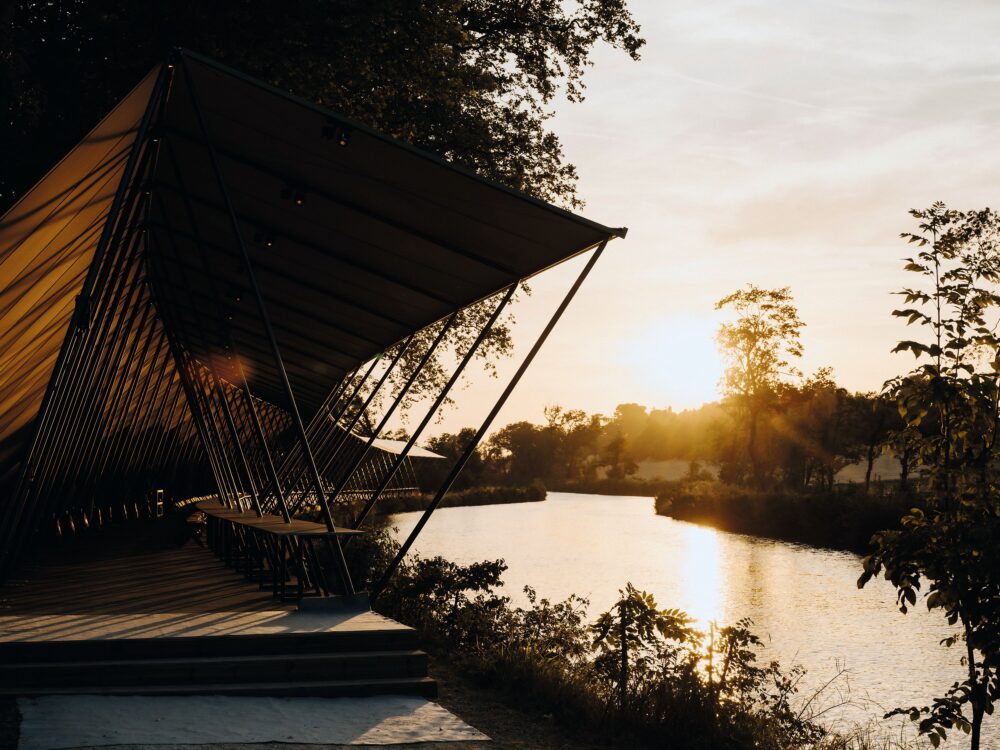
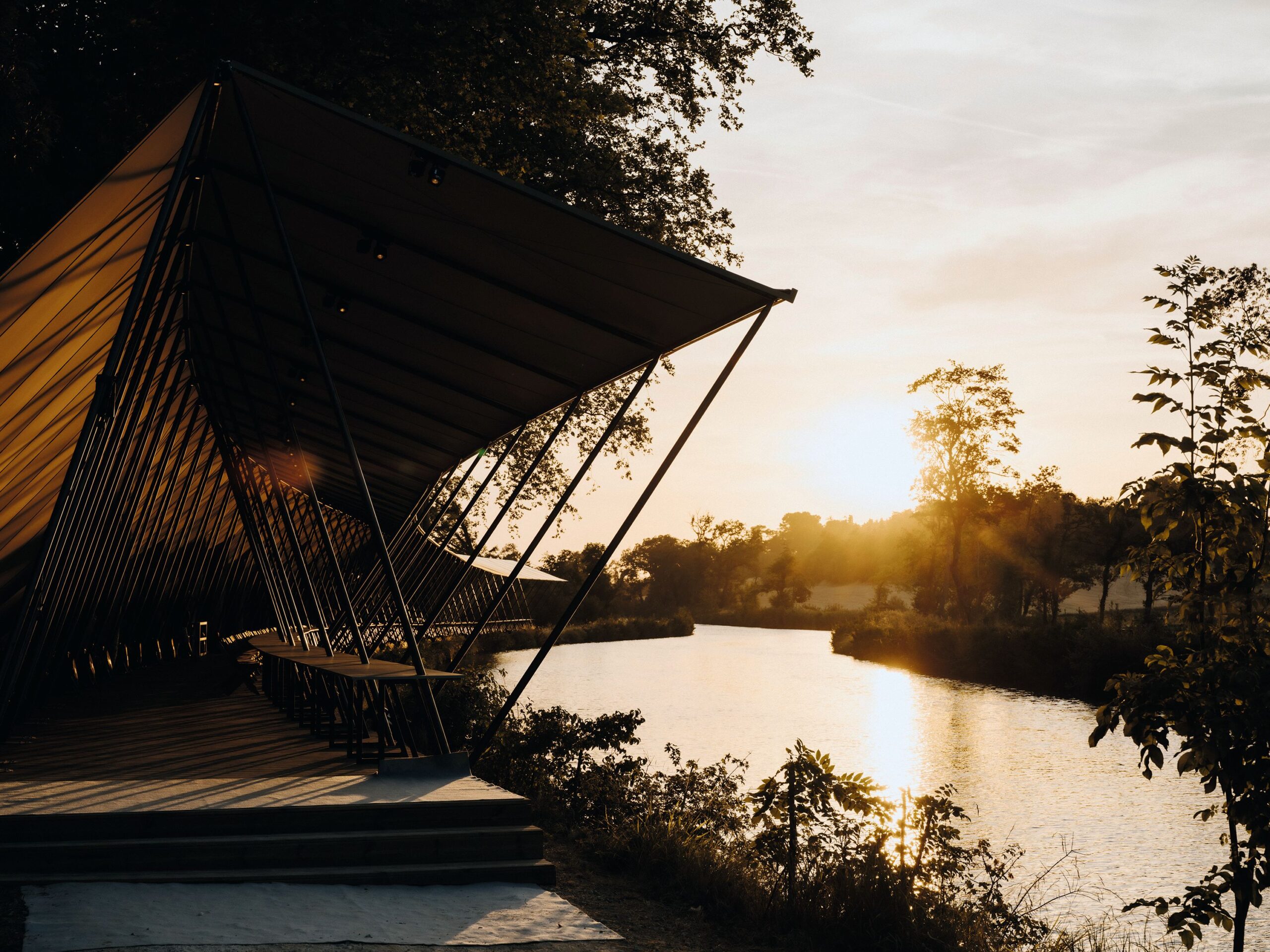
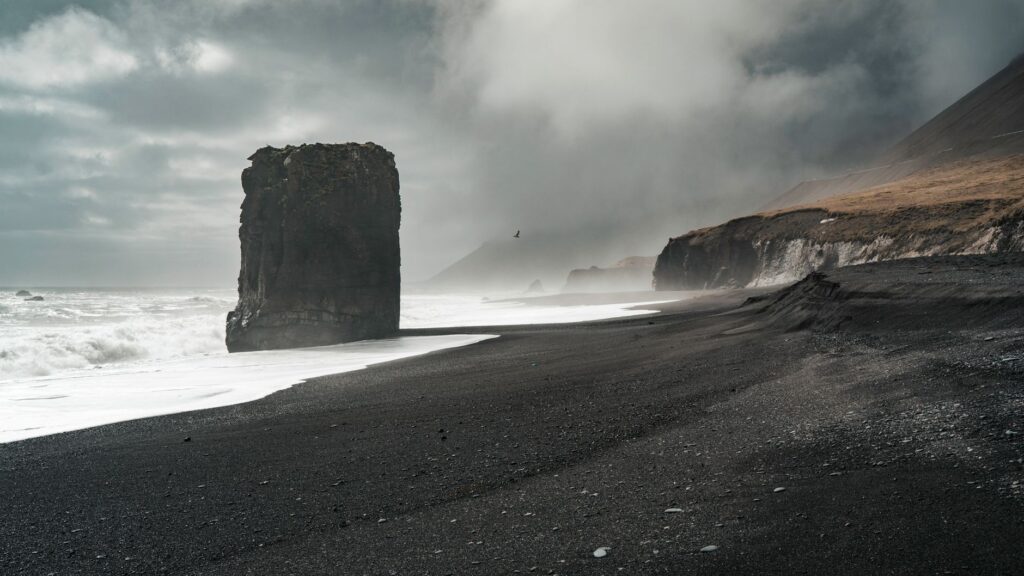
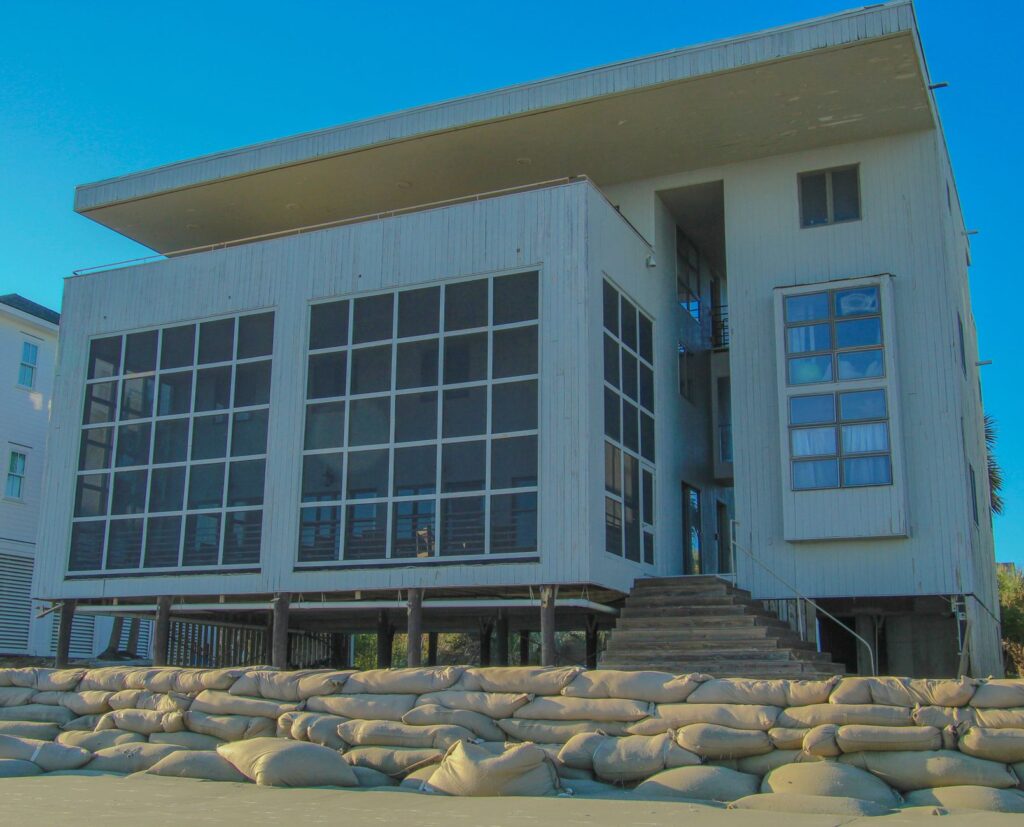
The concept of maritime travel also manifests in the layout of the spaces where this gastronomy is consumed. Restaurants and workshops embracing the aesthetic of ‘L’appel du large’ strip away superfluous elements to let architecture dialogue directly with the exterior landscape. Large windows oriented toward the sunset, woods treated solely with natural oils, and metals aging with the patina of sea salt create an environment where the diner feels exposed to the elements—protected yet open to the spectacle of the horizon.
This spatial design is deliberate, responding to the need to recover mindfulness in an era marked by constant distraction. By eliminating interior visual distractions, the visitor’s gaze is inevitably projected outward, toward the line where sky and ocean merge. The table becomes the deck of an immobile ship, and the dining room service adopts the discretion and efficiency of an experienced crew, where every gesture has a purpose and each dish is presented as a meteorological report of flavors.
The Sailor’s Pantry: Ingredients for a Culinary Journey
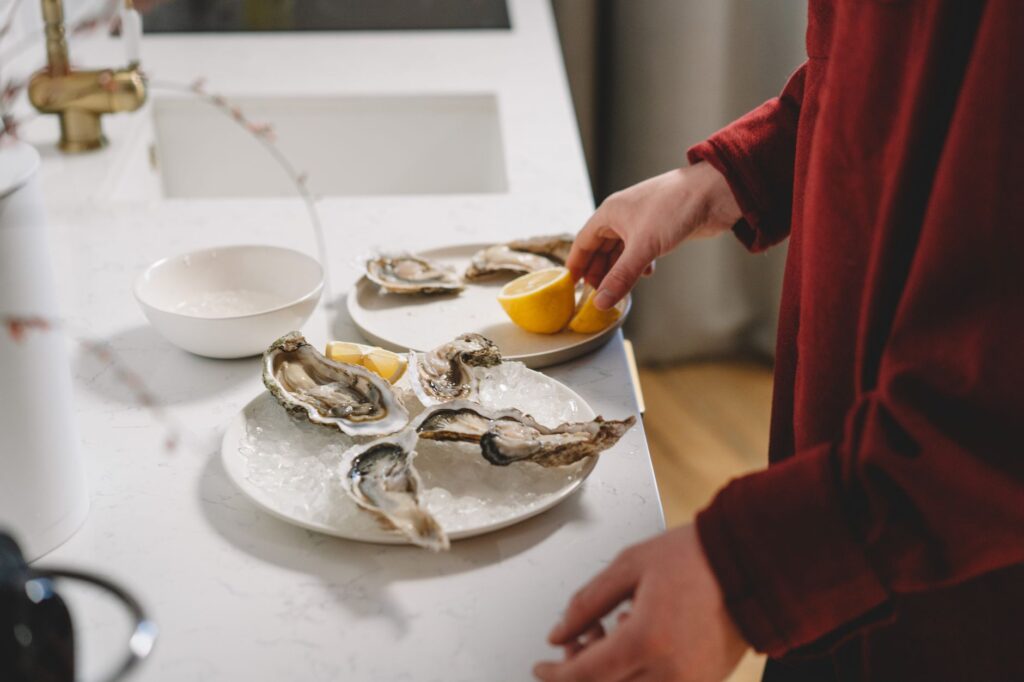
To bring the experience of ‘L’appel du large’ into domestic practice, the components of the pantry must be selected with rigor. It is not about accumulating products, but about choosing those possessing unquestionable history and provenance. Wild oysters, sea urchins, glasswort, and extra virgin olive oils infused with cliff herbs are the foundational pillars upon which this cuisine of the edge is built.
- Rock and deep-water fish: Caught through artisanal fishing methods respecting the biological cycles of the marine ecosystem.
- Virgin sea salt: Hand-harvested in traditional salt flats, preserving the trace minerals that add complexity to the dish.
- Coastal botany: Halophytic herbs like glasswort and sea fennel, providing natural salty and crunchy notes.
- Noble fats: Fermented butter and early-harvest olive oils that support and enhance the intensity of the marine environment.
The manipulation of these ingredients requires refined yet invisible technique. The goal is for the diner to perceive the pure flavor of origin without interference from unnecessary additives or masking agents. It is a cuisine of subtraction, where everything superfluous is stripped away to let the pure essence of the ocean emerge.
The Rhythm of Time and the Pause Along the Way
One of the greatest luxuries offered by the alliance between Hermès’ philosophy and Baudelaire’s thought is the recovery of leisurely time. In a society obsessed with speed and immediacy, stopping to savor a marine broth or contemplate the texture of an artisanal piece becomes an act of cultural resistance. Travel is no longer measured in kilometers covered, but in the depth of the impression left by the experience on our sensitivity.
This pause materializes in prolonged cooking times, slow fermentations, and extended after-dinner conversations flowing at the rhythm of the tides. The chefs and artisans participating in this movement act as guardians of a collective memory tied to the sea, reminding us that each dish is a truce against the noise of the modern world.
Traveling means stripping away certainties to allow the sea to dictate its own laws and return us transformed.
The result is an integrative experience transcending the purely gastronomic realm to become a way of inhabiting the world. By gazing toward the horizon, human beings recognize their own fragility and, simultaneously, their infinite capacity for wonder.
Practical guide
How to get there: The main routes to Atlantic-inspired coastal enclaves depart from the international airports of Paris and Bordeaux, with high-speed rail connections to historic ports along the western coastline.
When to visit: The transitional months between spring and autumn offer the best lighting and climatic conditions to appreciate the intensity of the marine landscape without the crowds of summer tourism.

Gastronomic recommendations: It is advisable to book months in advance at signature workshops and restaurants adhering to sustainable artisanal fishing, where menus adapt daily to dawn catches.
Accommodation: Seek out historical shelters and inns restored using bioconstruction criteria and local materials, far from mass-market hotel complexes.
Source: Condé Nast Traveler Spain