
Introduction to the Great Transcontinental Corridor
The territory of Mongolia, characterized by its vast steppe and the harshness of its continental climate, has historically represented a formidable logistical challenge for the integration of East Asia with the center of the Eurasian continent. At the heart of this complex transportation network lies the Trans-Mongolian Railway, a vital artery connecting the vast Siberian expanses with the gateways of mainland China, passing through the Mongolian capital of Ulaanbaatar. This infrastructure does not merely constitute a means of passenger transit, but a strategic corridor for commercial exchange and an engineering feat developed in extreme geographical conditions.
The conception and subsequent development of this railway line responded to geopolitical and economic imperatives that demanded overcoming the natural barriers of the Gobi Desert and the northern mountain ranges. Over the years, the route has evolved from a military and industrial supply line into a core channel for long-distance rail tourism and freight transport between the Russian railway system and the Chinese network. Studying its current operation involves understanding both its historical weight and the persistent operational challenges that define high-latitude rail transport in the twenty-first century.
Soviet Legacy and Track Architecture
The construction of the Trans-Mongolian during the 1950s was based on the transfer of technology and construction standards from the former Soviet Union. This determined the adoption of the 1,520-millimeter Russian broad gauge, a technical decision that generated a unique logistical discontinuity at the southern border with the People’s Republic of China, where the 1,435-millimeter standard international gauge is used. This technical divergence forced the development of complex transfer facilities and carriage-lifting workshops at the border station of Naushki and its Chinese counterpart, Erenhot.
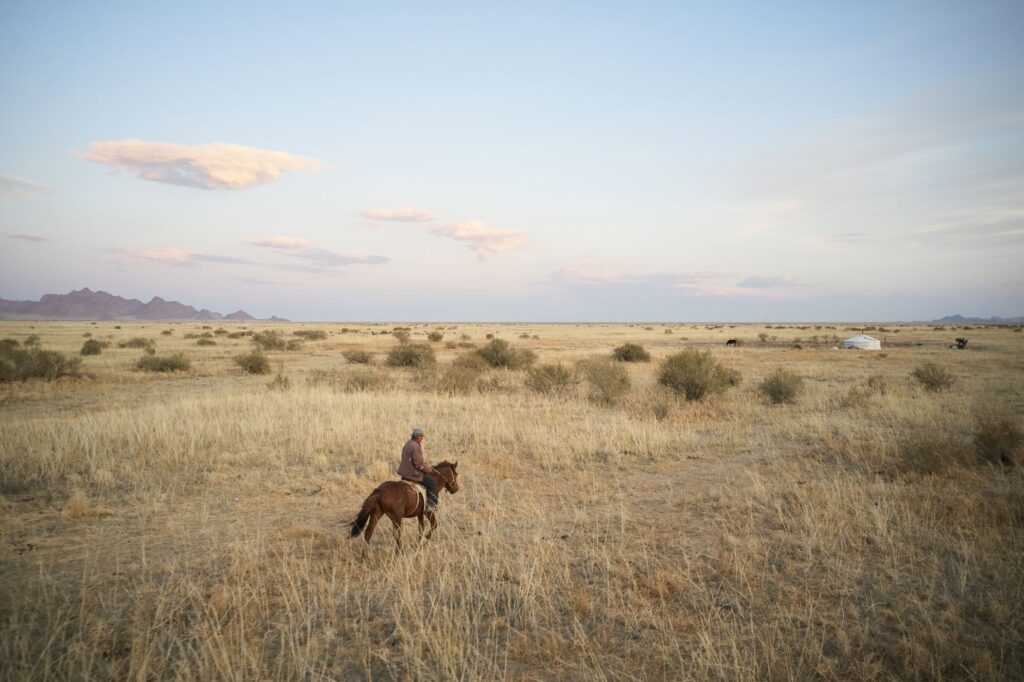
The engineers who designed the route had to deal with extreme temperature variations ranging from minus forty degrees Celsius in winter to over thirty in summer. The steel of the rails and the stone ballast had to be selected under strict specifications to prevent track displacement caused by seasonal permafrost and severe freezing. The intermediate stations, initially conceived as small technical maintenance posts and water supply points for steam locomotives, became consolidated as the urban and economic hubs that today articulate the Mongolian territory from north to south.
Gobi Desert Logistics and Topographical Challenges
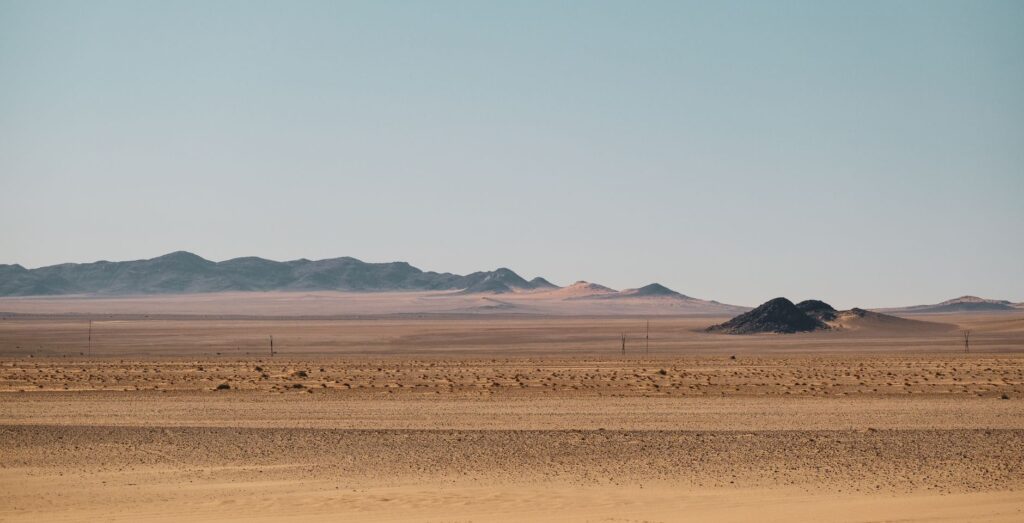
One of the most complex sections from a civil engineering standpoint extends through the depression of the Gobi Desert, where sand accumulation and the absolute scarcity of water resources hindered both original construction work and subsequent operational maintenance. To prevent tracks from being blocked by sand storms, maintenance teams implemented wind protection barriers and specific drainage systems to prevent embankment erosion from sudden seasonal flash floods.
Likewise, the topography of the central plateau demands constant tractive effort from locomotives, especially on the approach ramps to the mountain passes surrounding Ulaanbaatar. Signaling and traffic control technologies must adapt to the enormous distances between stations, where communication coverage relies on satellite networks and autonomous backup systems. Energy efficiency under these extreme conditions requires meticulous planning of convoy weights and the management of available fuel or electrical power.
Track Gauge Conversion and the Naushki Frontier
The pivotal point where technical infrastructure and border diplomacy converge is situated at the Naushki crossing, marking the transition between the Russian Federation and Mongolia. In this customs and technical enclave, passenger and freight trains undergo thorough inspections and complex border control procedures that can last for several hours. The standardization of customs processes has improved over the years, but the geopolitical nature of the corridor demands rigorousness in the documentary and physical verification of each convoy.
For passenger trains continuing their journey beyond national borders, the process of bogie exchange—the rolling structures supporting the carriages—constitutes one of the most fascinating mechanical operations in global rail transport. The carriages are lifted simultaneously by high-capacity hydraulic jacks, allowing the removal of the Russian gauge axles and the placement of those corresponding to the international gauge or vice versa. This procedure, executed with millimeter precision by specialized teams, exemplifies the complex interoperability required in Eurasian rail connections.
Ulaanbaatar: The Core Node and Urban Transformation
The capital of Mongolia owes its modern urban layout largely to the arrival of the railway in the mid-twentieth century. The central station of Ulaanbaatar not only centralizes passenger traffic but functions as the logistical hub for distributing heavy goods, fuels, and essential products supplying the entire country. The railway infrastructure conditions the city’s industrial development, placing warehouses, rolling stock repair shops, and grain silos in areas strategically connected to the main line.
blockquote>The railway in Mongolia is not merely a transport axis; it is the backbone that has enabled the connection of the traditional pastoral economy with global markets and the industrial network of North Asia.
In recent years, the increase in international tourism has transformed the dynamics of the Ulaanbaatar station, turning it into a fundamental starting point for travelers seeking to explore the vast rural expanses of the country. Local authorities and railway operators have invested in modernizing waiting rooms, improving ticketing systems, and optimizing schedules to ensure greater punctuality, despite recurring climate challenges during the harsh winter months.

Regional Connectivity and Future Prospects
The strategic role of the Trans-Mongolian extends beyond the bilateral relationship between Russia and China. For Mongolia, this line represents its main export corridor for mineral raw materials, especially coal and copper, toward Pacific ports and interior Asian markets. Current expansion plans contemplate the construction of secondary branches connecting remote mining deposits with the trunk line, increasing heavy freight transport capacity and reducing logistical costs for domestic industry.
blockquote>The modernization of transport infrastructure in Central Asia demands a delicate balance between international technological investment and the preservation of the logistical sovereignty of transit states.

Furthermore, trilateral agreements among Mongolia, Russia, and China continue to drive modernization projects to duplicate tracks in key sections, electrify high-density sectors, and digitize traffic management systems. These initiatives seek to transform the corridor into a competitive alternative to maritime and air transport, consolidating its position within the new global logistics routes redefining international trade in the twenty-first century.
Practical guide
Planning a journey or a logistical analysis along the Trans-Mongolian corridor requires attending to a series of verified operational recommendations:
- Visas and Documentation: It is necessary to verify entry requirements in advance for Mongolia, Russia, and China, including transit or multiple-entry visas according to the planned itinerary.
- Seasonality: Summer months (June to August) offer milder weather conditions for travel, while winter (November to February) exposes travelers to extreme temperatures but guarantees steppe landscapes of great uniqueness.
- Ticket Classification: International trains feature different compartment categories (Spalny Vagon or first class, and Kupe or second class), and advance booking several months ahead is essential due to high demand.
- Connectivity and Supplies: It is advisable to carry provisions of water and non-perishable food for long stretches between major stations, as well as universal power adapters and local currency (tugrik) for minor expenses during brief stops.
Final Reflection on the Steppe Horizon
Contemplating the immensity of the Mongolian steppe from the window of a moving train offers a unique perspective on the scale of the Asian territory and the human daring required to tame it. The Trans-Mongolian Railway transcends its technical function as a communication route; it embodies the persistence of an infrastructure capable of defying the elements and uniting profoundly diverse cultural realities across thousands of miles of parallel tracks. In each nocturnal journey beneath the starry Gobi canopy, the history of railway engineering merges with the millennial silence of a land that continues to beat to the slow rhythm of its locomotives.