
Steel Origins in the Land of Ice and Fire
The history of transportation in Iceland has been shaped for centuries by the harshness of its topography and the unpredictability of its weather elements. Unlike continental Europe, where rail networks expanded massively during the nineteenth century to connect empires and markets, the great North Atlantic island maintained an absolute dependence on horse-drawn trails, river fords, and, more recently, heavy-duty off-road vehicles. The absence of an intercity passenger network based on railway tracks has not been the result of technical disinterest, but the direct consequence of a living geology characterized by unstable lava fields, shifting glaciers, and glacial rivers that violently alter their flow within hours.
Nevertheless, Icelandic industrial annals record timid attempts to tame the terrain through the use of rails. At the beginning of the twentieth century, short narrow-gauge track segments operated intermittently on the docks of Reykjavík and during the construction of harbor breakwaters. These rudimentary steam locomotives, imported primarily from Denmark and Germany, served a purely logistical function, transporting basalt rock and heavy construction materials. None of these lines survived the modernization of national highways in the mid-century, leaving the country without an inherited railway tradition while opening a continuous debate on the viability of connecting the interior.
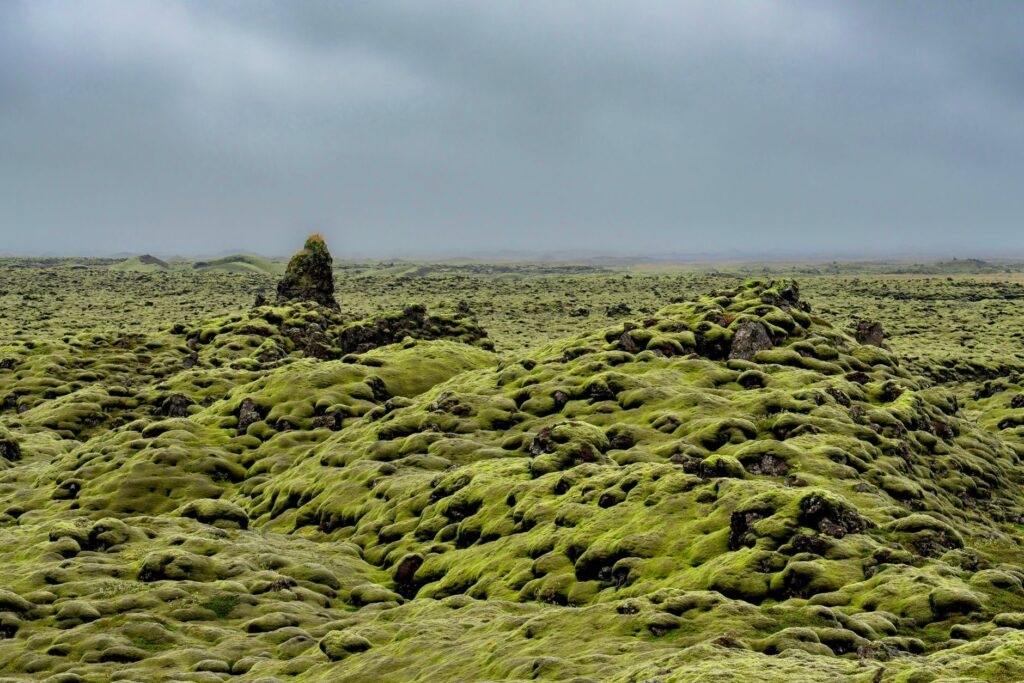
Today, the discussion surrounding interior mobility has regained prominence amid the exponential rise of tourism and the need to protect the delicate ecosystems of the central plateau. Projects for geothermal light rail systems or high-mountain funiculars are studied intermittently in ministerial offices, although scientific consensus points to the extreme vulnerability of the soil. Every intervention on pristine ground leaves an indelible scar that can take decades to heal due to the slow growth rate of arctic vegetation, composed fundamentally of ancient mosses and lichens.
The Implacable Geology of the Central Plateau
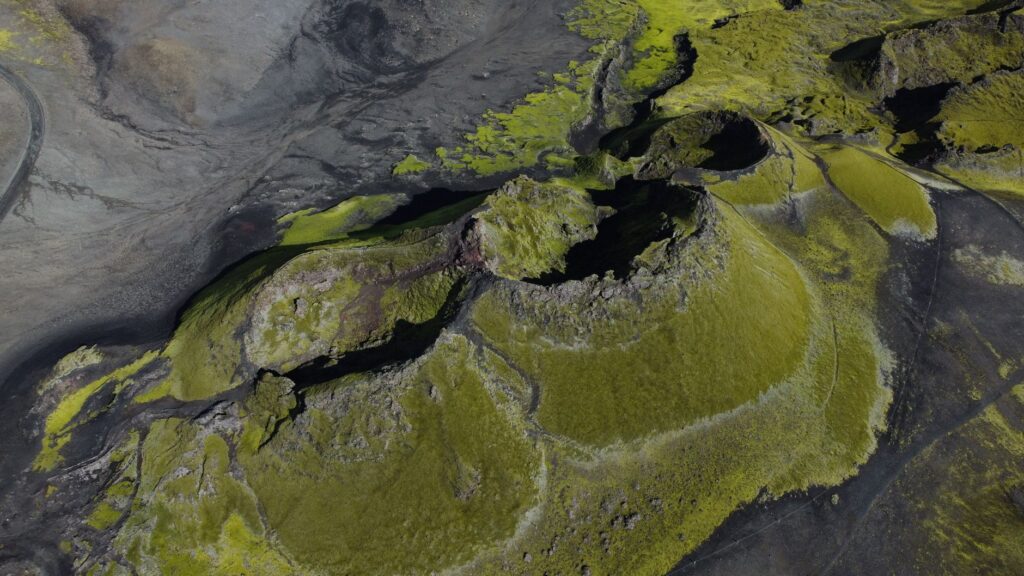
The heart of Iceland, known locally as the Highlands or Hálendið, represents one of the vastest and wildest uninhabited territories in Western Europe. Traversing this region requires understanding that the ground is not a static support, but a dynamic canvas shaped by subglacial volcanic activity and wind erosion. The tracks crossing the interior, passable only during the warmest summer months, turn into traps of mud and volcanic ash at the slightest unexpected precipitation.
Transport engineers face challenges here that do not exist in temperate latitudes. The phenomenon of solifluction—the slow movement of water-saturated soil over frozen layers—systematically destroys any rigid foundation. If a conventional railway line were projected onto this substrate, the tracks would twist and misalign within a few freeze-thaw cycles. Structural stability is a chimera on the plateau, forcing planners to consider floating technologies or flexible support systems that are rarely applied in high-density transport networks.
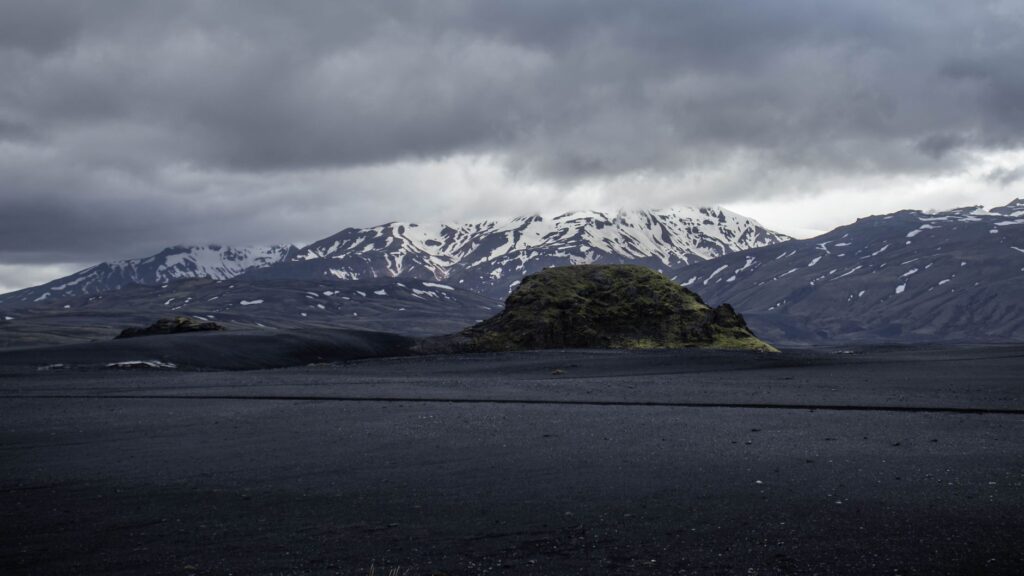
Added to this geological panorama is the fury of katabatic winds, masses of cold air descending from glaciers like Vatnajökull or Langjökull at hurricane speeds. These winds not only hinder the driving of conventional vehicles but also kick up black sandstorms capable of eroding metals within weeks. Any transport system aspiring to operate permanently in Iceland’s interior must withstand operational conditions comparable to space exploration or Antarctic high-mountain bases.
The Summer Pulse of Terrestrial Routes
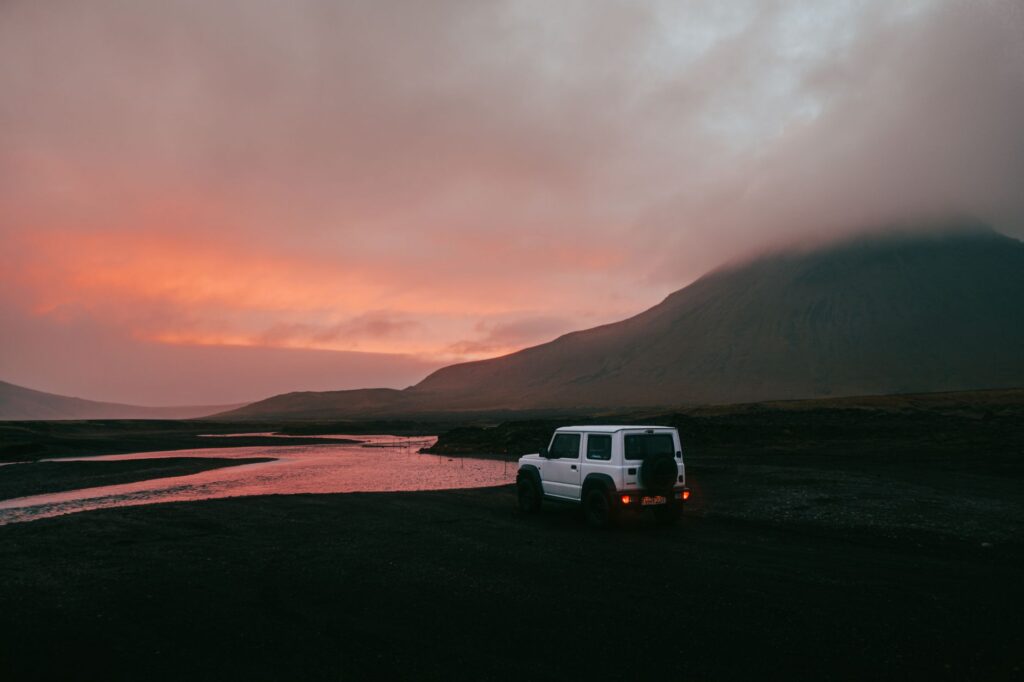
While the railway remains a theoretical aspiration or a port memory, the current connectivity of the interior relies on so-called superjeeps and high-clearance off-road buses. These machines, equipped with oversized tires that can be partially deflated to gain traction in soft snow or volcanic sand, are the only vehicles capable of negotiating river fords without bridges.
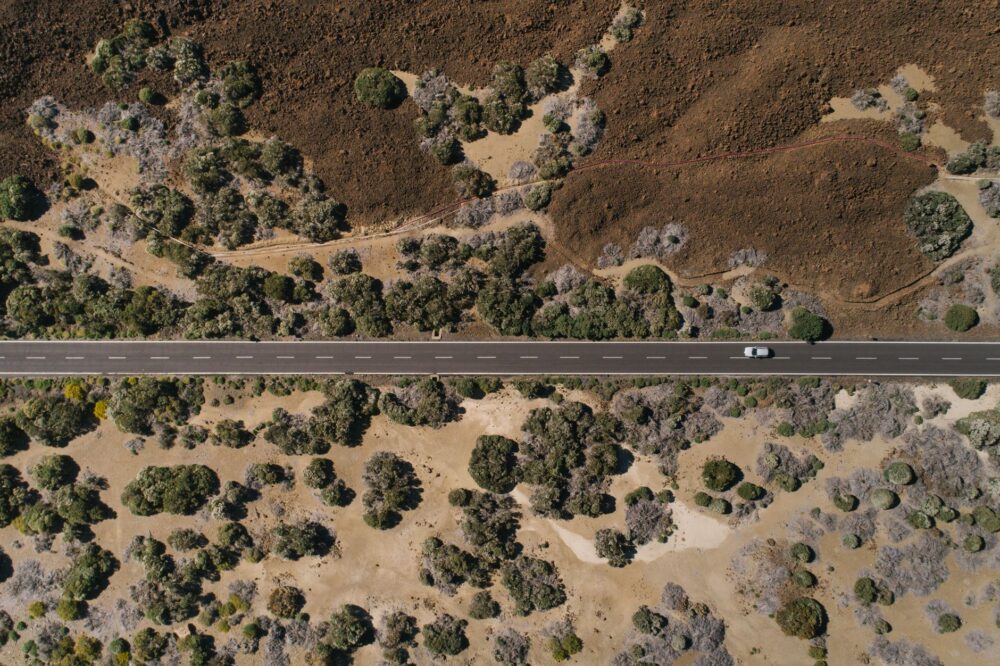
The most iconic routes, such as the mythical Kjölur track or the Sprengisandur traverse, meander between glaciers and black deserts following ancient paths historically traveled by outlaws and horse riders. Traveling along these dirt arteries requires meticulous planning and absolute respect for Civil Protection warnings. A single miscalculation when crossing a glacial river can transform an adventure journey into a rescue operation coordinated by the volunteer teams of the Landsbjörg association.
Access restrictions are strict to prevent the irreversible destruction of fragile tracks. When authorities decree the closure of roads due to spring thaw—the period known as leysing—the isolation of the interior is absolute. This seasonal dependence demonstrates the fragility of a mobility system that lacks stable underground or aerial alternatives, turning each trip into a test of patience and adaptation to the natural environment.
The Ring Road Alternative and Peripheral Transport
Given the practical impossibility of massively penetrating the center, the backbone of Icelandic mobility is concentrated on Route 1, popularly known as the Ring Road. This paved highway of over thirteen hundred kilometers circumnavigates the island, connecting the main urban centers of the coast, fishing ports, and agricultural valleys of the south and north.
The maintenance of the Ring Road represents a titanic effort for the Icelandic road administration, especially during winter months when blizzards and snow avalanches regularly isolate entire communities. Tunnels carved through mountainous fjords, some single-lane with passing bays, have drastically reduced travel times and avoided the most dangerous mountain passes. Modern engineering has successfully stitched together the coastal periphery, but the interior continues to resist any attempt at intensive road integration.
Long-distance public transport along this peripheral route operates through seasonal bus networks that adapt their frequencies to tourist demand. However, outside the high season, connections drop markedly, forcing local residents to rely on private transport or domestic flights operated by regional airlines connecting Reykjavík with small coastal airports such as Akureyri, Egilsstaðir, or Ísafjörður.
The Environmental Debate Over Infrastructure Footprint
Any proposal for improvement or expansion of transport infrastructure in Iceland triggers an intense national debate between economic development needs and the conservation of one of the most pristine landscapes on the planet. Environmental organizations and natural heritage advocates argue that the arrival of mass transport to the interior will destroy the silence and solitude that define the Highland experience.
Hydroelectric and geothermal energy projects required to power hypothetical electric transport networks in remote areas have also faced social contestation. The preservation of virgin landscape stands as a superior economic value to mere logistical optimization, given that the country’s international appeal is based precisely on its character as a natural sanctuary far removed from Europe’s major industrial agglomerations.
This balance between accessibility and preservation forces a rethink of traditional mobility models. Instead of building new roads or railways, current trends point toward smart management of existing flows, the promotion of carpooling in low-emission vehicles, and the creation of interpretation centers at highland access points to channel and educate visitors before entering areas of high ecological fragility.
Practical guide
Planning a trip focused on exploring transport routes and hard-to-reach areas in Iceland requires rigor, foresight, and a deep understanding of local safety regulations.
- Best time for interior travel: July and August are the only months when Highland tracks (F-roads) officially open to vehicular traffic, weather permitting.
- Vehicle requirements: Driving on interior tracks with conventional two-wheel-drive passenger cars is strictly prohibited. A 4×4 vehicle with high ground clearance is legally required to cross river fords.
- Official information sources: Check the Icelandic Road Administration (Vegagerðin) website daily for road conditions and SafeTravel.is for real-time weather alerts.
- River safety: A glacial river should never be crossed alone or without assessing water depth and temperature. Vehicle rental insurance policies typically exclude flood damage incurred at river fords.
- Connectivity and fuel: Service stations in the interior are extremely scarce; refueling whenever the opportunity arises and carrying extra jerry cans on long routes is mandatory.
Final Reflection on the Horizon of Insular Mobility
«Taming the Icelandic territory is a fleeting illusion; the true mastery of the traveler lies in learning to move at the rhythm dictated by the elements.»
Ultimately, the absence of a railway network in Iceland’s interior does not constitute an infrastructural deficiency, but a constant reminder of human limits against the creative force of the Earth. As tectonic plates continue to pull apart beneath our feet and glaciers carve valleys in constant mutation, mobility in this Atlantic outpost will remain an exercise of respect and caution.
The future of travel on the island does not lie in the imposition of grand pharaonic works of concrete and steel, but in the consolidation of a sustainable transport model that protects the essence of a unique territory. After all, there are places in the world where the greatest technological conquest is not arriving faster, but knowing when to stop to preserve what makes the journey worthwhile.