
Baltic Origins and the Light of Bornholm
In the geographical heart of the Baltic Sea, the Danish island of Bornholm is distinguished not only by its granite cliffs and medieval architecture, but as home to one of Europe’s most influential communities of glass artisans. The distinctive light of this enclave, constantly reflected across the surrounding water, has attracted creators for decades seeking to fuse the purity of Scandinavian design with the most radical material experimentation. Far from the mass industrial circuit, the island’s glassmaking tradition is grounded in the oral transmission of knowledge and absolute mastery of furnace temperatures, a process where every second determines the survival of the piece.
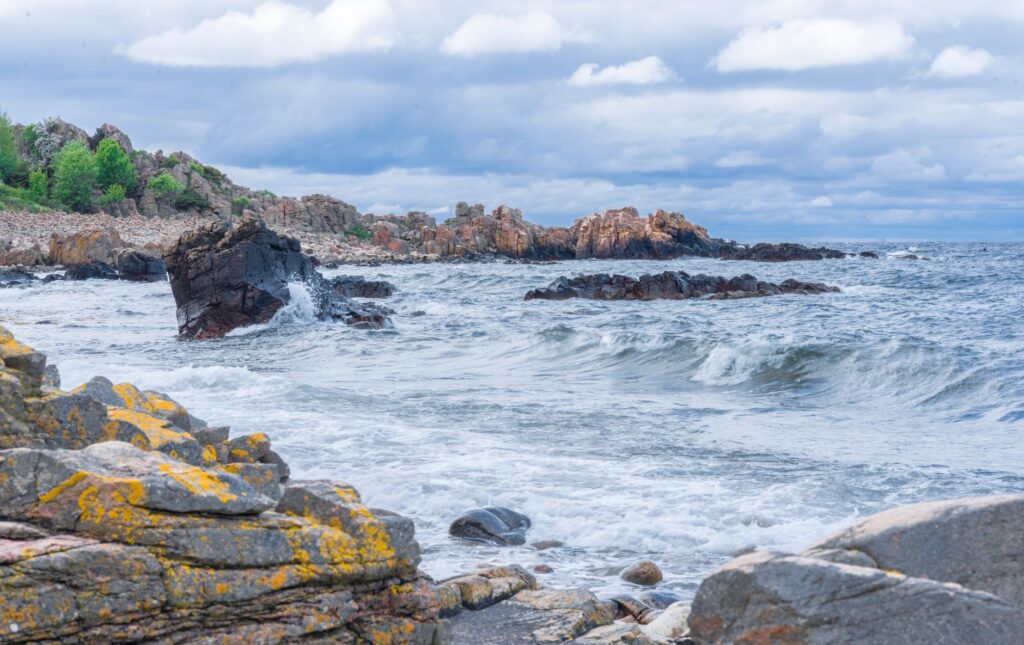
The origins of this modern movement date back to the second half of the twentieth century, when a group of pioneering creators found in old port buildings and uninhabited rural areas the ideal space to install their crucible furnaces. Today, the entire island forms part of the global circuit of artisanal excellence, establishing itself as an inescapable reference for understanding how contemporary glass plastics dialogue with the natural environment. The raw material, melted at over twelve hundred degrees Celsius, becomes the vehicle through which local artists interpret the roughness of the insular landscape, transforming sand and metallic oxides into translucent volumes of great formal complexity.
The Alchemy of the Workshop: Tools and Thermal Mastery
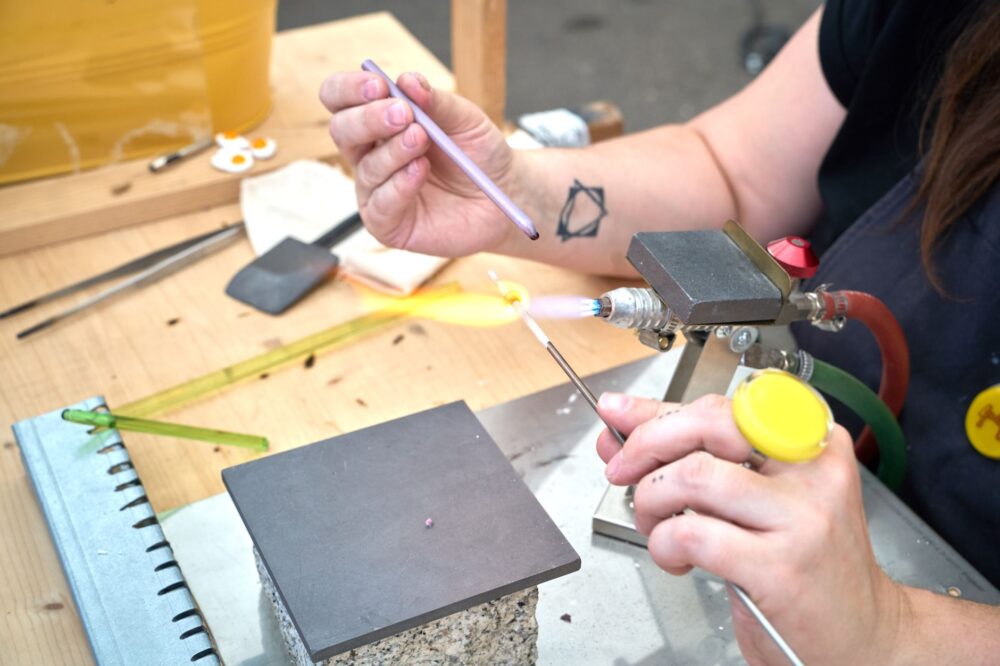
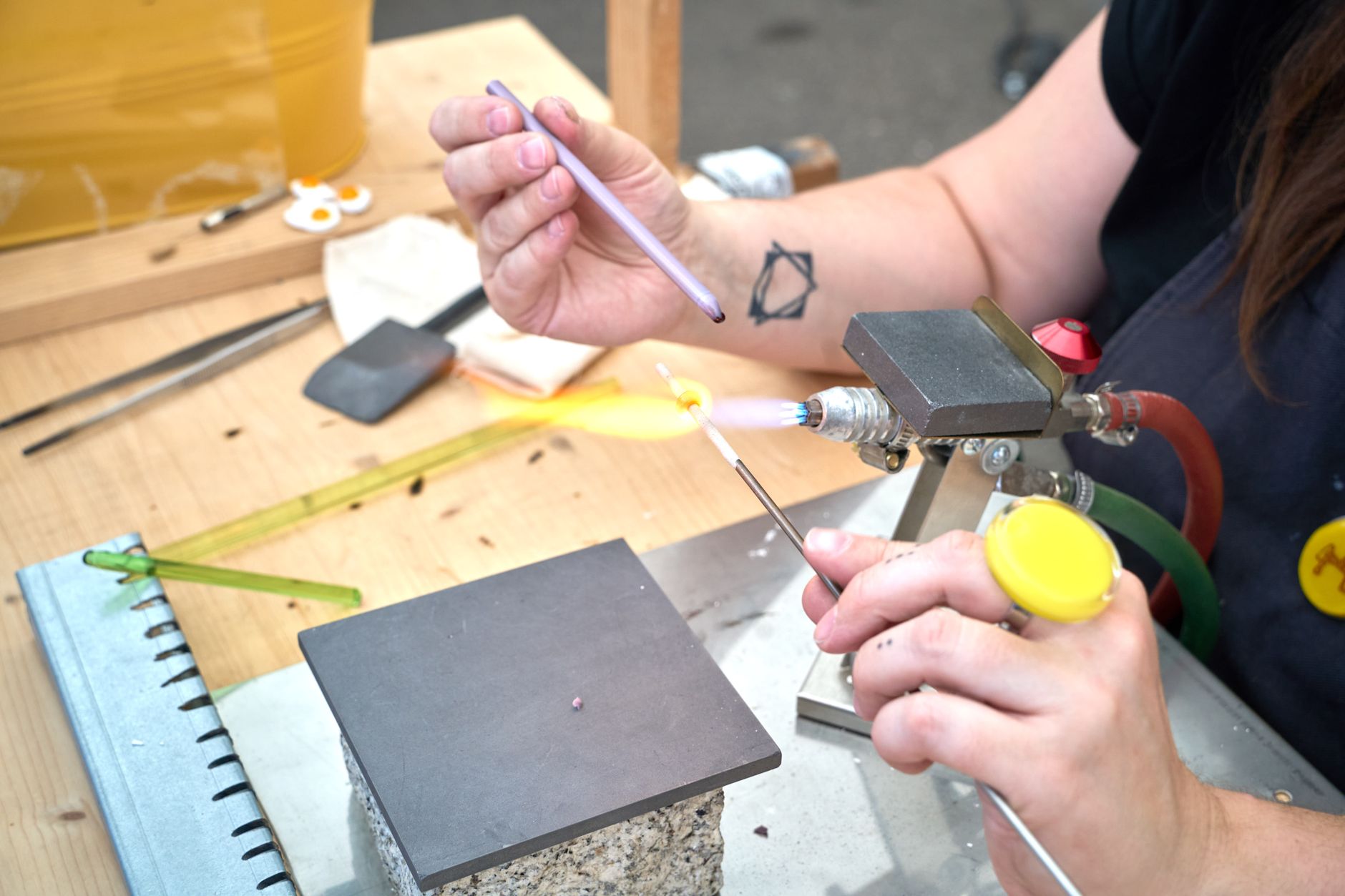
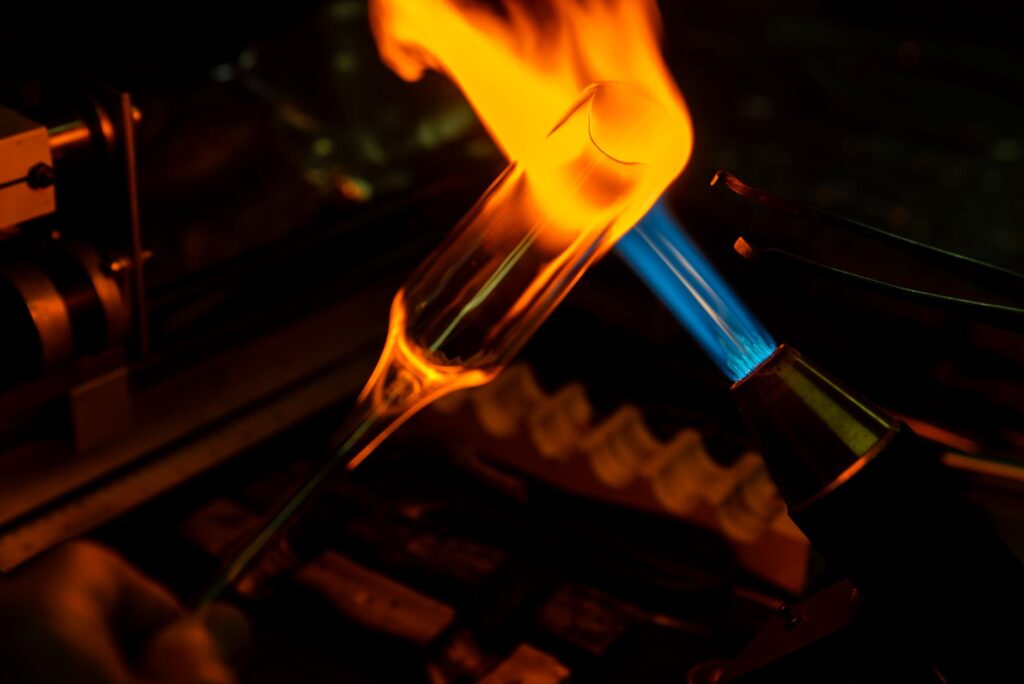
Daily work in Bornholm’s studios demands an extreme combination of physical strength, micrometric precision, and artistic sensitivity. Inside the workshops, the air vibrates from the constant heat of gas and electric furnaces, operated day and night to keep the glassy mass at its optimum viscosity point. Master artisans use stainless steel blowpipes, graphite tongs, thermal cutting shears, and previously dampened fruitwood molds to sculpt the material within minutes. Each tool possesses its own history and is custom-adapted by individual creators to respond to the specific demands of their collections.
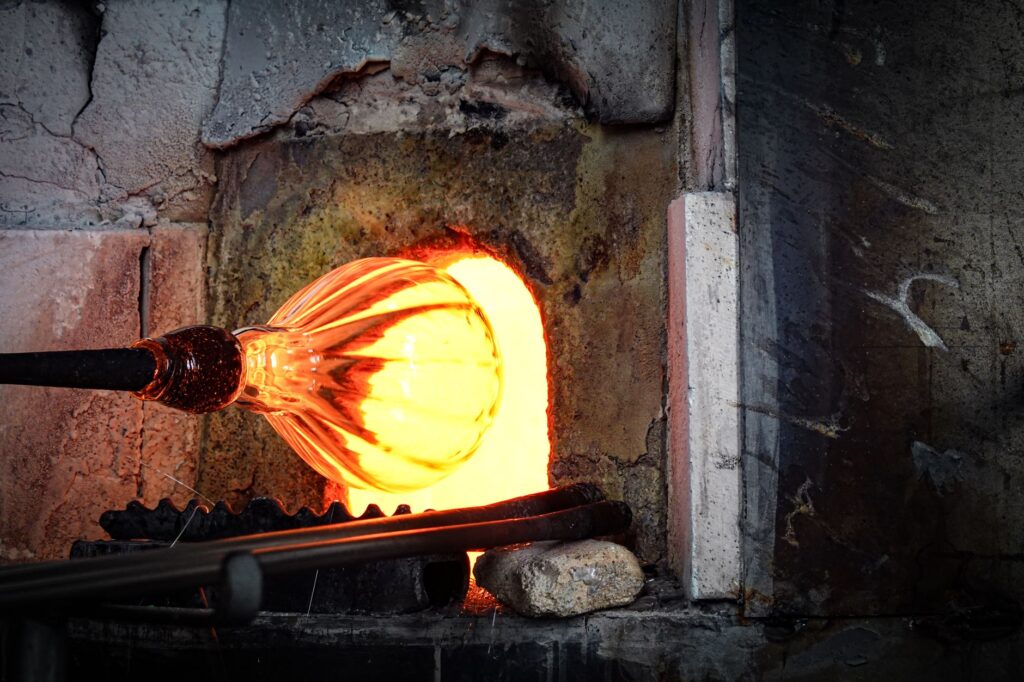
The annealing process constitutes one of the most critical phases within the workshop. Once the piece has acquired its definitive shape at the end of the blowpipe, it is transferred with utmost care to the annealing lehr, a secondary furnace where the temperature decreases gradually over hours or even days. This controlled cooling prevents internal stresses that could spontaneously fracture the object. It is in this precise interval that the artisan’s patience is truly tested, as any unforeseen alteration in the thermal descent curve can ruin weeks of technical preparation and conceptual design.
The Role of the Royal Danish Academy and the Avant-Garde
The creative vitality characterizing Bornholm cannot be explained without the direct influence of higher education institutions and international artistic residencies. The ceramics and glass department of the Royal Danish Academy of Fine Arts, with a partial presence on the island, has historically acted as a magnet for emerging talents from around the world. This institution fosters a pedagogy where experimentation with opaque textures, iridescent colors, and asymmetrical forms coexists with the functionalist rigor inherited from classic Nordic design. Students learn not only to master traditional blowing and casting techniques, but to question the physical limits of the medium.
Workshops open to the public allow visitors to witness firsthand this symbiosis between academia and productive craftsmanship. In towns like Svaneke and Gudhjem, visitors observe how young creators collaborate side by side with veteran masters in the development of large-scale sculptural installations and limited-edition tableware. This generational transfer guarantees the survival of highly specialized trades that might otherwise have vanished facing automated industrial production. The result is a dynamic cultural ecosystem where formal innovation never betrays respect for historical craftsmanship.
Sustainability and Energy Efficiency in Glassworking
In the twenty-first century, hot glass production faces unavoidable environmental challenges due to the high energy consumption implied by continuous melting furnaces. Independent studios in Bornholm have led a pioneering transition toward more sustainable management models, implementing heat recovery systems and exploring the use of renewable energies like wind and solar power, which are highly prominent in the island’s energy matrix. Likewise, the optimization of work cycles allows for shutting down or reducing furnace intensity during periods of lower activity without compromising the structural integrity of the refractory linings.
Adding to this operational concern is the systematic utilization of recycled glass and experimentation with local cullet—fragments of defective pieces re-introduced into the crucible to give life to new works with unpredictable chromatic traces. This circular economy approach not only reduces the carbon footprint of the workshops but endows creations with a sustainability narrative deeply integrated into their aesthetic value. Collectors and art lovers increasingly value this ecological traceability, making environmental awareness an inseparable component of the contemporary piece’s authenticity.
Port Architecture and Exhibition Spaces
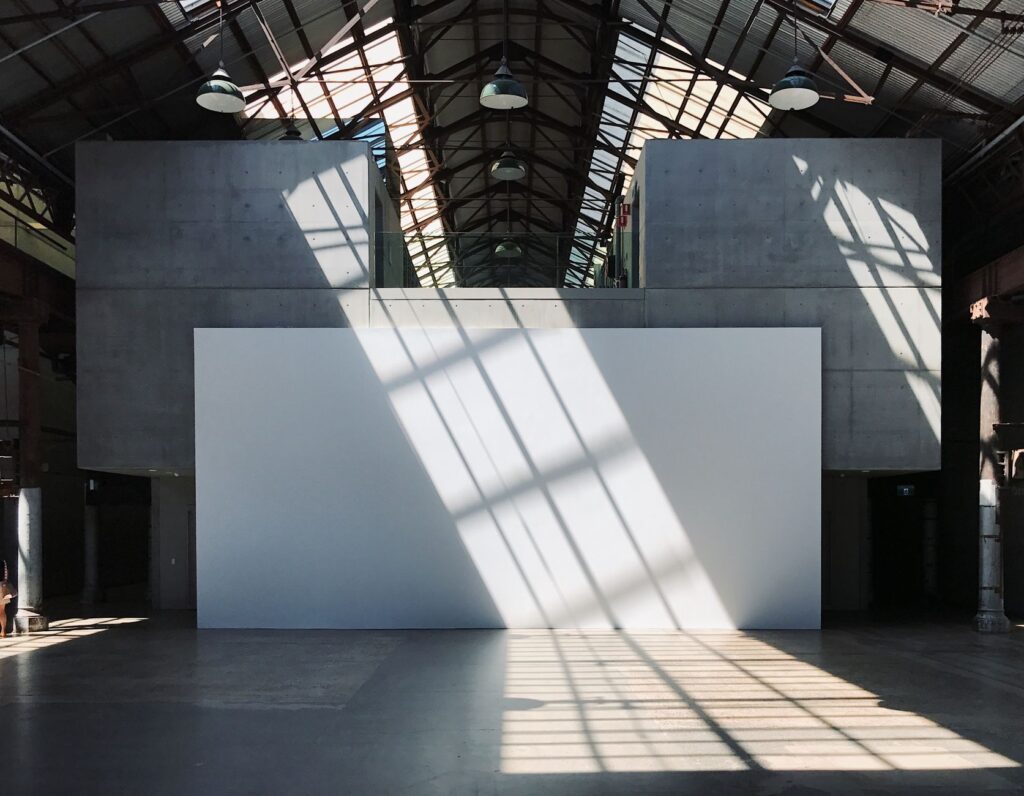
Bornholm’s architectural landscape exerts a decisive influence on how glass art is exhibited and marketed. Former fish warehouses built from tarred wood and local stone have been sensitively converted into open-plan galleries and exhibition rooms. In these spaces, natural Baltic light penetrates through large windows, directly interacting with sculptures and utilitarian objects arranged on oak tables or weathering steel supports. Architecture acts as a neutral, respectful framework enhancing the translucent and reflective qualities of the exhibited works.
This decentralized exhibition circuit transforms a visit to the island into an immersive cultural itinerary where the traveler moves between marine cliffs and perfectly preserved urban centers. Signposted routes connect artisanal workshops with contemporary art centers such as the Bornholm Art Museum, generating a continuous dialogue between the region’s archaeological heritage and Northern Europe’s most avant-garde artistic expressions. The experience of contemplating glass in its place of origin, surrounded by the sound of the sea and the Baltic wind, grants the journey an aesthetic dimension unattainable in conventional exhibition spaces of major metropolises.
International Collecting and the Glass Art Market
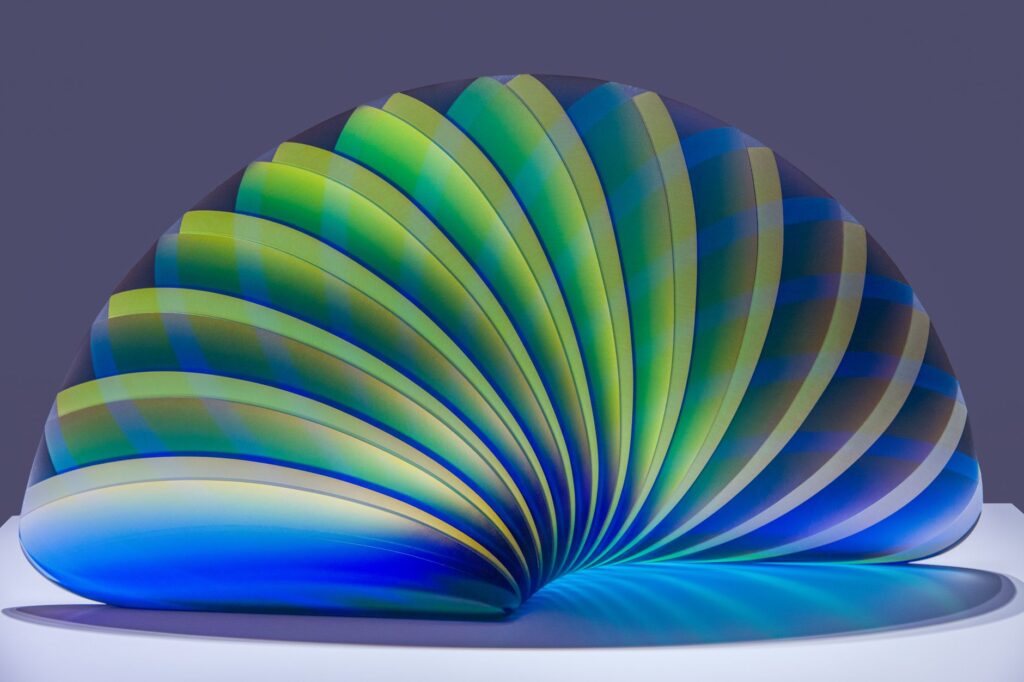
The global recognition of Bornholm’s glass has consolidated a highly specialized collecting market attracting buyers and museum institutions from around the planet. Galleries in Copenhagen, London, and New York vie for unique pieces signed by master residents on the island, whose works already form part of permanent contemporary design collections. Unlike serial industrial productions, the value of these pieces lies in the unrepeatability of the manual gesture, the complexity of chromatic patinas obtained through layered glass applications, and the constructive honesty defining the Scandinavian school.
This international prestige has not altered, however, the intimate character of local workshops, where creators continue welcoming visitors with an unusual closeness in global art commerce circuits. Acquiring a work in Bornholm involves establishing a direct link with the author, understanding the technical effort invested in its firing, and knowing the exact origin of the minerals used in its composition. This conscious cultural consumption model prioritizes quality over quantity, ensuring the island’s glassmaking tradition maintains its artistic integrity and relevance within the international design landscape.
Practical guide
How to get there: The most efficient way to access Bornholm is via regular flight from Copenhagen Airport to Rønne, taking approximately thirty-five minutes. Daily high-speed ferries also operate from Ystad in southern Sweden, connecting to the island in just over an hour and a half.
When to travel: Months between May and September offer the best weather conditions and guarantee that all workshops and galleries remain open with extended hours. During summer, boreal light extends late into the night, favoring photography and outdoor exploration.
Recommended accommodation: Lodging ranges from restored historic inns in Svaneke to sustainable design boutique hotels integrated into coastal cliffs. Booking several months in advance is strongly recommended due to high seasonal cultural tourism demand.
Workshop visit rules: Most workshops permit free access to blowing areas, though maintaining a safe proportional distance from active furnaces is mandatory, along with strictly following technical staff instructions to prevent accidents with hot tools.
Memory, Matter, and Horizon in the Baltic
Contemplating the sunset over Bornholm’s marine horizon from the threshold of a glassblowing studio synthesizes the essence of a journey where geography and art merge seamlessly. In this northern corner, glass is neither merely a decorative support nor a utilitarian consumer object, but the material witness of a symbiotic relationship between human beings, the relentless force of natural elements, and the resilience of a community that has turned the mastery of fire into its most enduring hallmark. Every trapped bubble inside a piece, every iridescent hue provoked by cobalt oxide, and every hand-polished surface encapsulates the living memory of a landscape continuing to inspire new generations of global creators.