
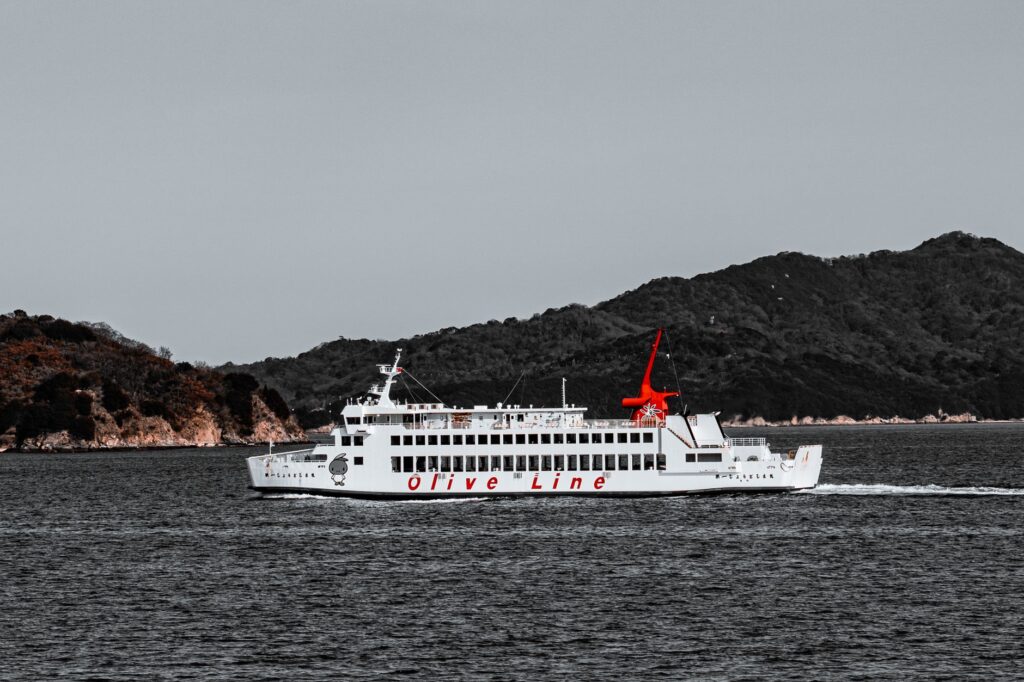
The marine horizon between the main islands of Honshu and Shikoku was once the exclusive domain of ferries battered by unpredictable currents and dense sea mists. For decades, crossing this stretch of the Seto Inland Sea meant an unavoidable pause in Japan’s transport logistics, a waiting period where time was measured in hours of inter-island navigation. Today, that geographical fracture has been stitched together by one of the most daring civil engineering achievements of the 20th century: the Great Seto Bridge, a colossal network of seventeen structures linking Okayama Prefecture with Kagawa Prefecture.
This road and rail artery is not merely a shortcut on the map, but a supreme demonstration of how long-span technology and underwater foundations can redefine the territorial sovereignty of a mountainous archipelago. Spanning more than thirteen kilometers of leaps across granitic islets, the project required unprecedented structural solutions to withstand hurricane-force winds, recurring earthquakes, and the material fatigue caused by constant marine salinity. Conceived after decades of geological studies and political debates, the complex represents the culmination of the modern dream to bind the Japanese territory through high-capacity routes.
The Genesis of a Colossus Over the Inland Sea
The idea of uniting Honshu and Shikoku began to take shape in Japanese planning circles toward the end of World War II, driven by the urgent need to decentralize the economy and connect historically isolated regions. However, the initial technical challenges seemed insurmountable. The depths of the Seto Inland Sea, combined with muddy seabeds and tidal currents exceeding seven knots in certain straits, forced engineers to discard conventional foundation methods and devise entirely new techniques to work under tons of hydraulic pressure.
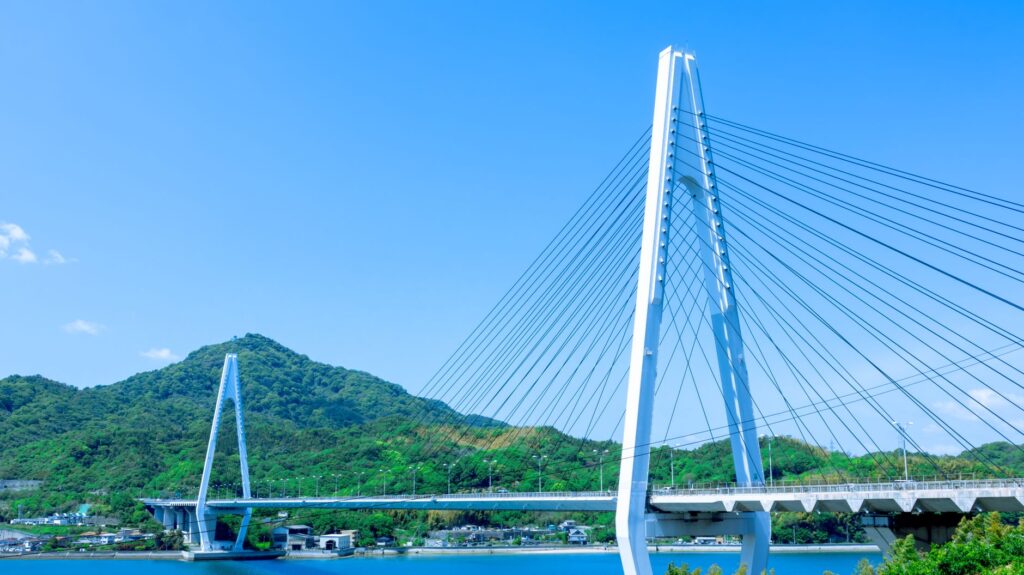
The final design did not rely on a single structural typology, but rather on a mosaic adapted to the geological characteristics of each intermediate section. Thus, the system combines large-span suspension bridges, cable-stayed bridges, and steel truss viaducts. Each responds to a precise equation between aerodynamic flexibility and rigidity under heavy loads, especially since the lower deck of the complex was reserved from its inception to house the railway tracks of the Honshi-Bisan line, allowing the simultaneous passage of bullet trains and automobiles.
Deep-Water Foundation Engineering
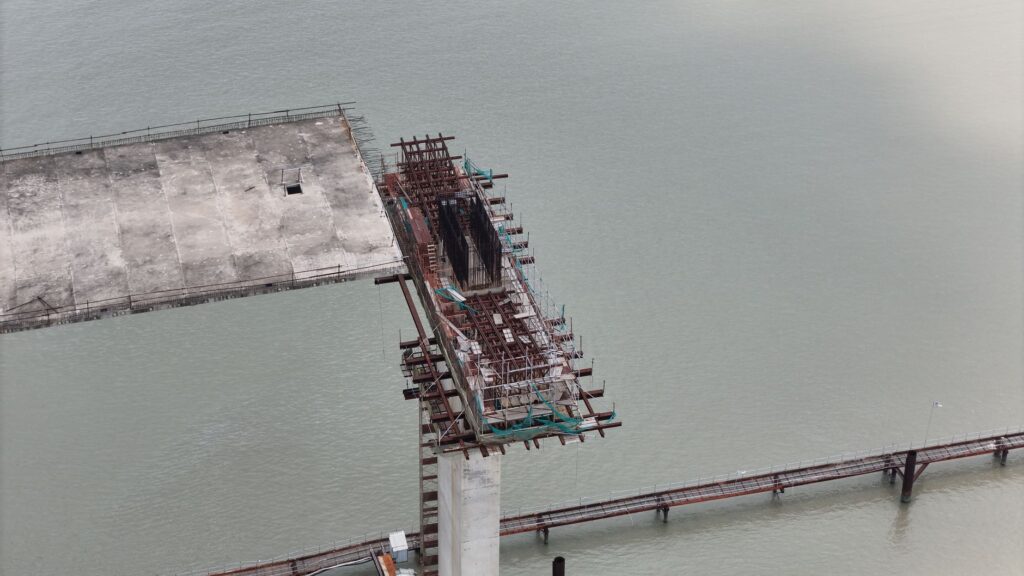
Constructing the monumental piers that support the decks required the development of pioneering underwater excavation techniques. In locations where the seabed lay dozens of meters deep, construction teams had to assemble gigantic double-walled steel caissons, which were towed to the exact spot and sunk through the controlled injection of underwater concrete poured under pressure.
This massive casting process required meticulous coordination to prevent the segregation of the material in contact with salt water. Engineers designed special high-strength, rapid-setting concrete mixes capable of withstanding the shear stresses generated by sea currents while the main piers rose meter by meter toward the surface, becoming unmistakable visual landmarks in the middle of the archipelago.
The Dance of Winds and Structural Aerodynamics
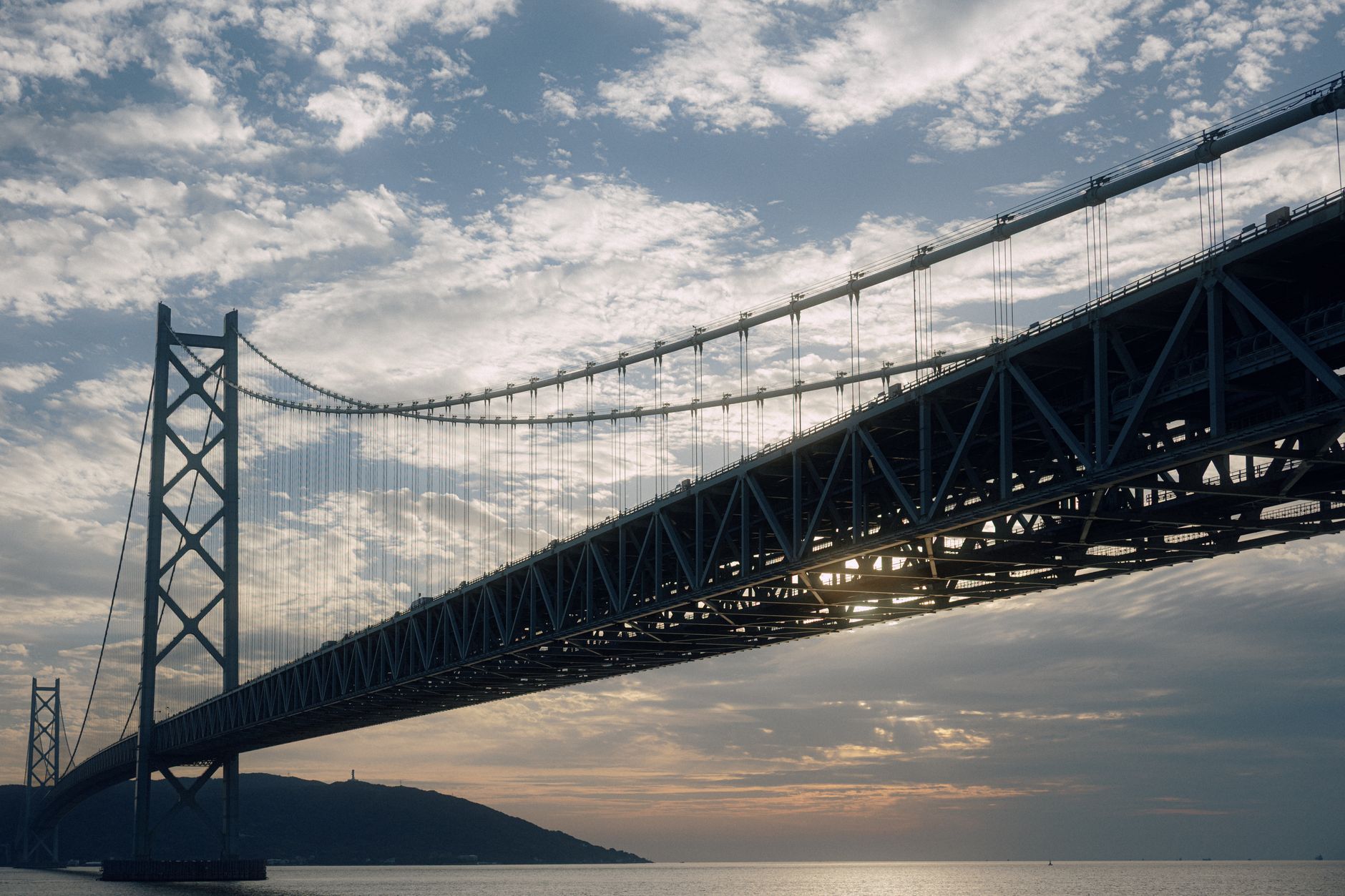
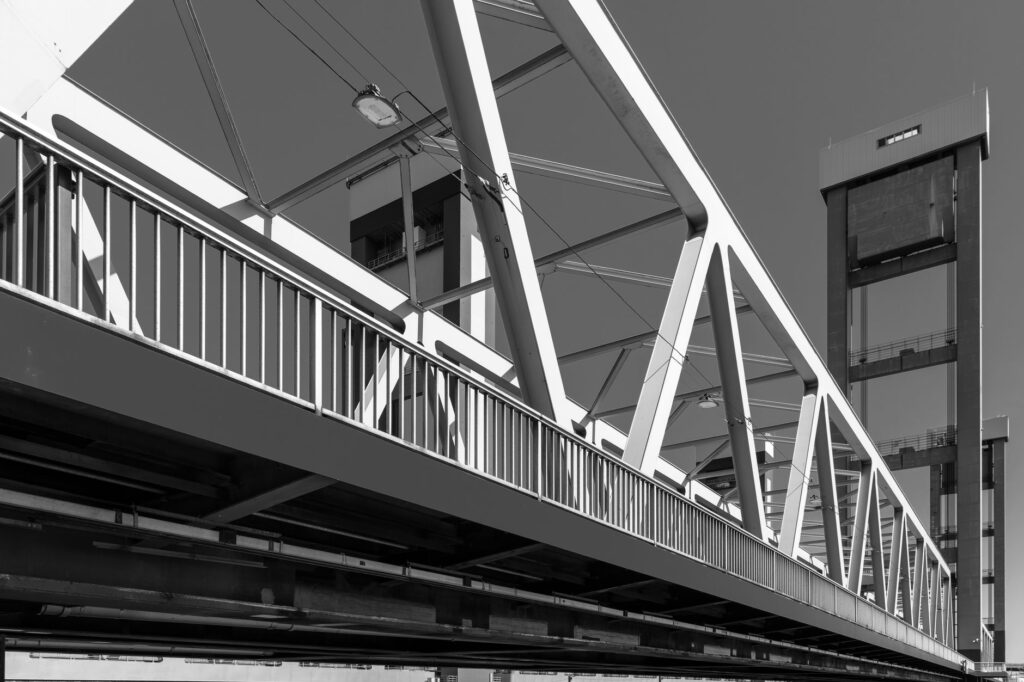
One of the greatest enemies of long-span bridges is not the static weight they support, but the dynamic force of wind. In the Inland Sea region, seasonal typhoons generate turbulence capable of inducing fatal oscillations in rigid decks. To neutralize this phenomenon, the designers of the Great Seto Bridge equipped the suspension structures with aerodynamic steel truss decks, allowing gusts of air to flow through the superstructure without generating destabilizing vortices.
Additionally, massive hydraulic dampers were installed in the towers and anchorage chambers of the main cables. These devices dissipate the kinetic energy generated by seismic movements and crosswinds, ensuring that the complex maintains its structural integrity even under extreme weather conditions that temporarily force traffic closures for safety protocols.
The Railway Pulse on the Honshi-Bisan Route
Unlike other major road connections around the world, the Great Seto Bridge was conceived from the outset as a multimodal corridor where the railway plays a role just as prominent as the six-lane highway. The passage of trains on the Seto-Ohashi Line demands rigorous mechanical tolerances, as constant vibrations and the axle load of the trainsets subject the structure to cyclical wear far exceeding conventional road traffic.
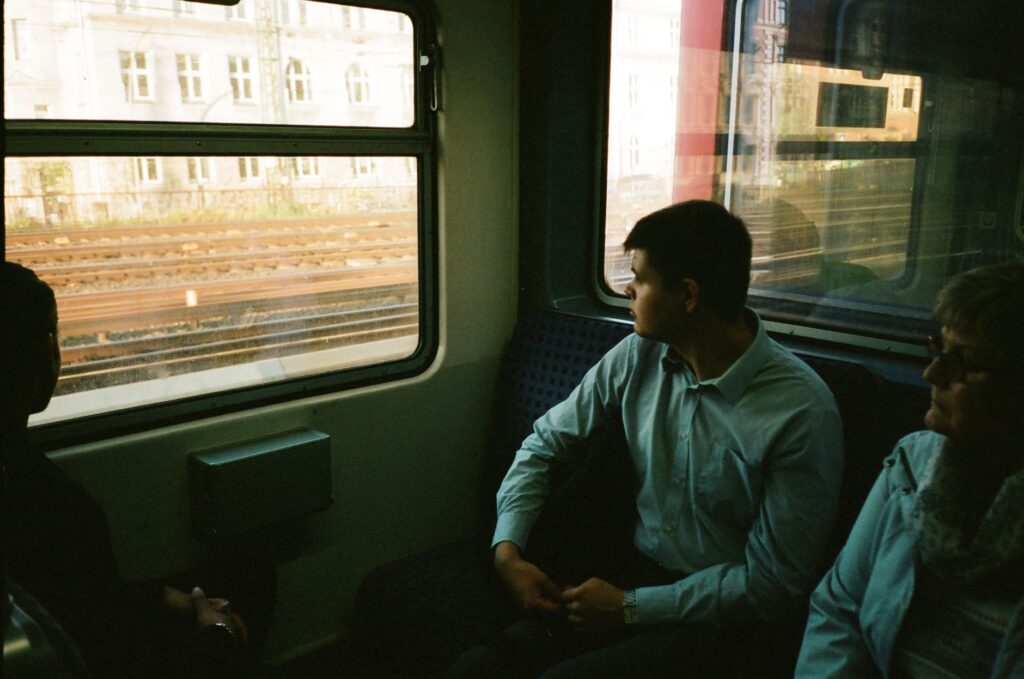
Engineers solved this challenge by using special expansion joints and ballastless track systems on reinforced concrete slabs, ensuring a smooth and silent transition between the suspended sections and the land-based approach viaducts. For travelers crossing the strait today aboard electric trains, the sensation is that of floating above the sea at a dizzying height, observing the smaller islands and fishing boats plying the waters far below the bogies.
Socioeconomic Impact and Regional Transformation
The opening of the complex in 1988 radically altered the demographic and commercial dynamics of Shikoku. Before the inauguration, the island depended on a ferry system vulnerable to weather conditions and limited in cargo capacity. The arrival of a permanent land connection drastically reduced travel times to major Honshu metropolises like Osaka and Okayama, integrating Shikoku into the country’s main industrial and consumer corridor.
However, this integration also brought complex challenges, such as the flight of human and commercial capital to the larger urban centers of Honshu. Local authorities had to rethink their economic development strategies to capitalize on the new accessibility without losing the cultural and scenic identity that characterizes prefectures like Kagawa, famous for its udon noodle production and historical heritage linked to Buddhist pilgrimages.
Preventive Maintenance and Invisible Structural Health
Keeping an infrastructure permanently exposed to salt fog, humidity, and extreme thermal changes operational requires an almost surgical inspection discipline. Hundreds of fiber-optic sensors and accelerometers are permanently integrated into the cables, towers, and critical welds of the bridge, transmitting real-time data to a centralized control center that monitors any anomaly in tension or material fatigue.
Teams of specialists carry out periodic checks by hanging from the metallic structures or walking inside the box girders in search of early signs of corrosion. This constant preventive maintenance is the key to preserving the structural operational capacity projected for over a century, turning the complex into a living organism that requires meticulous and constant care.
Practical guide
How to get there: The main gateway to the bridge system from the Honshu side is the city of Okayama, connected to Tokyo and Kyoto via the Shinkansen high-speed rail network. From Okayama station, express trains on the Seto-Ohashi line cross regularly to the island of Shikoku.
Best time to visit: Spring (March to May) and autumn (September to November) offer stable weather conditions, clear skies ideal for photography, and mild temperatures. It is advisable to avoid the typhoon season between August and September.
Recommended viewpoints: Seto Ohashi Park, located in the city of Sakaide in Kagawa Prefecture, offers the most impressive panoramic views of the suspension bridges and the Inland Sea islands. From the elevated viewpoints, the monumental scale of the civil work is fully appreciated.
Planning tips: If traveling by rental car, it is essential to check current toll rates, as maintaining the infrastructure involves high transit costs. For railway enthusiasts, acquiring a regional rail pass facilitates travel between the various insular connecting stations.
The Shared Horizon of Steel and Archipelago
At sunset, when the silhouette of the colossal piers is cut against the glowing sky of the Seto Inland Sea, the Great Seto Bridge ceases to be a mere sum of mathematical calculations and tons of steel to become a monumental sculpture in dialogue with the ancient geography of insular Japan. The lights of vehicles and trains crossing in the twilight trace continuous lines of human energy, reminding us that the most advanced engineering does not seek to subdue nature, but to find a balance where isolation transforms into a bridge toward the future.