
From the red carpet to national controversy
The official announcement shook Colombia’s political and media circles with the speed of a summer lightning bolt. President Gustavo Petro publicly communicated that he would receive a distinguished international tourism award in the French city of Cannes, a venue usually reserved for celluloid, glamour, and major film festivals. The news, disseminated with institutional pomp, promised to place the country on the map of global tourism excellence thanks to its preservation and sustainable development policies.
However, official euphoria was short-lived before colliding with the wall of journalistic verification and documentary rigor. Various media outlets, led by Revista Semana, began digging into the fine details of the French citation, uncovering a landscape considerably more complex and nuanced than initially presented by the administration. The distance between a direct recognition of the head of State and the awarding of specific community or territorial initiatives opened a deep debate on governmental communication, the management of international image, and the reality of the Colombian tourism industry.
This report takes a close look at the invisible threads connecting a gala on the Côte d’Azur with the political backstage in Bogotá. Through documentary sources, contextual analysis, and testimony from public diplomacy experts, we unravel how a sector promotion event transformed into a symbol of national polarization, laying bare the eternal tension between the official narrative and the fine print of global accolades.
The background of the Côte d’Azur citation
Cannes is not merely synonymous with Golden Palms and Hollywood stars; it is also a magnetic pole for industry fairs, corporate congresses, and territorial marketing contests aimed at attracting investors and visitors. In this ecosystem, tourism promotion entities compete annually for visibility in international catalogs, seeking to highlight the virtues of their respective destinations through advertising campaigns, promotional documentaries, or country brand strategies.
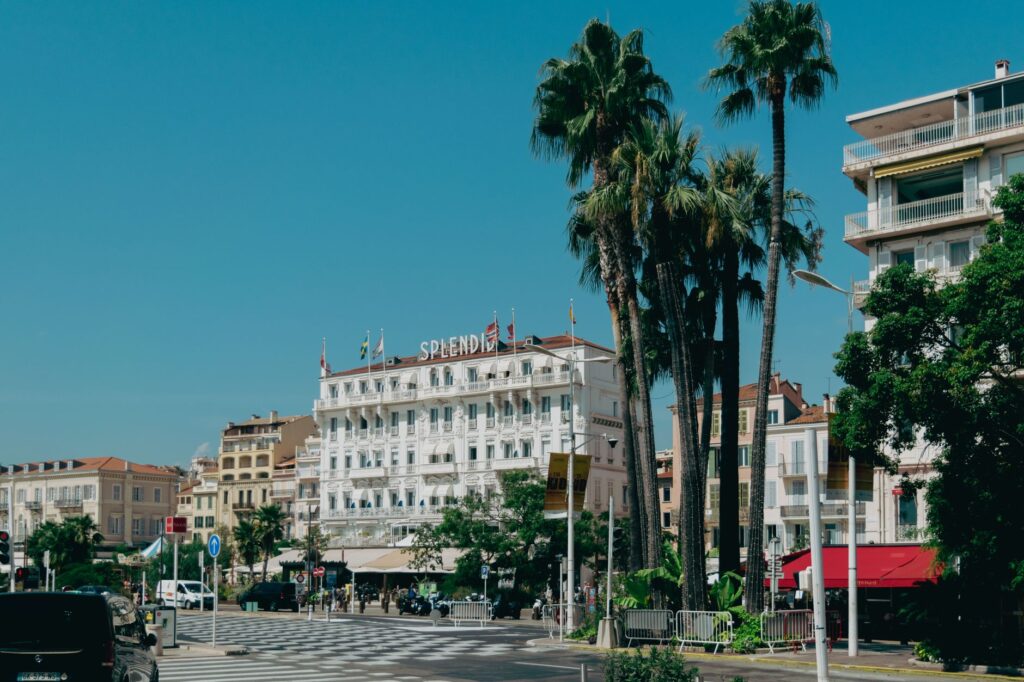
The citation that motivated the presidential trip is part of this circuit of specialized fairs, where awards frequently distinguish institutional campaigns, tourism web portals, or rural development projects driven by local organizations rather than decrees issued by a head of state. The confusion between institutional merit and direct governmental achievement tends to be a slippery terrain in contemporary politics, where the need for successful narratives often simplifies the complexity of collective processes.
International tourism industry awards respond to complex dynamics of territorial marketing, where the efforts of local communities are frequently subsumed into the institutional showcase of incumbent governments.
International analysts point out that these types of events function as public relations platforms for both organizers and participating governments. For the Colombian Executive, presence in Cannes represented a golden opportunity to project an image of environmental and cultural leadership, consolidating the concept of Colombia as a global powerhouse of life before international audiences interested in regenerative and nature tourism.
The true faces behind the accolade
While the media spotlight focused on the presidential figure and the appropriateness of the trip to French territory, the reality of the actual awardees bore a notable distance from the personalization of the recognition. At the center of the Cannes call were grassroots initiatives, sustainable tourism projects in regions historically hit by armed conflict, and conservation efforts led by indigenous and peasant communities.

These local experiences, which have transformed marginalized territories into sanctuaries of birdwatching, hiking, and historical memory, are the true architects of the appeal that now seduces international travelers. The recognition obtained in the French contest evaluated the impact of these practices on environmental sustainability and social inclusion, aspects that depend more on community resilience than on directives emanating from ministerial offices in the capital.
Spokespersons for the regional tourism sector have insisted on the need to make these anonymous actors visible, as they sustain the industry with their daily efforts. The governmental appropriation of an award that legitimately belongs to the social fabric generated discomfort among local tourism operators and non-governmental organizations, who demand a greater role in public policy and genuine respect for the social authorship of the country’s achievements in sustainable tourism.
Presidential diplomacy and the cost of the showcase
International trips by heads of state are always subject to public scrutiny, especially in nations with pressing socioeconomic urgencies like Colombia. The decision to undertake a transatlantic flight to receive an award of a sectoral nature rekindled the discussion about the relevance and fiscal cost of high-level diplomacy versus traditional diplomatic and consular channels.
Defenders of the presidential agenda argue that the presence of the mandatary in international forums of this magnitude is essential to position the country in the geopolitics of climate change and energy transition, dimensions that are now inseparable from the modern tourism offering. From this perspective, a head of state acts as the chief ambassador of the country brand, capable of opening doors that would remain closed to lower-ranking officials.
On the other hand, critics maintain that the excessive personalization of governmental management weakens institutions and distracts attention from structural problems affecting the tourism sector in the regions, such as deficient road infrastructure, air connectivity challenges, and security alerts in certain rural areas. The debate over Cannes thus became a microcosm of national political confrontation, where every event is interpreted through the prism of approval or rejection of the Government.
The impact on the national tourism industry
Beyond political controversy and the crossfire of statements on social media, the Cannes episode leaves important lessons for structuring tourism policy in Colombia. The country is going through a historic moment where the arrival of foreign visitors breaks successive records, driven by the devaluation of the local currency, exceptional biodiversity, and the end of major armed conflict fronts in several subregions.
However, accelerated growth brings colossal challenges in terms of sustainability, gentrification of traditional destinations, pressure on fragile ecosystems, and the need to ensure that the economic benefits of tourism truly reach host communities. Experts in sectoral development warn that international awards should serve as a stimulus to improve quality standards and not simply as tools for short-term political propaganda.
The true success of a tourism policy is not measured by the number of trophies displayed in official offices, but by the quality of life it generates in the territories and the long-term preservation of their natural and cultural heritage.
The true success of a tourism policy is not measured by the number of trophies displayed in official offices, but by the quality of life it generates in the territories and the long-term preservation of their natural and cultural heritage.
The consolidation of Colombia as a world-class destination demands a national pact that transcends presidential periods, integrating the vision of the private sector, academia, local governments, and host communities into a coherent and verifiable strategy for sustainable tourism development.
Practical guide
To understand the phenomenon of sustainable tourism in Colombia and the dynamics of international accolades, it is essential to approach the information from an analytical perspective that is responsible toward the traveler.
How to verify the authenticity of tourism recognitions
Always investigate the rules and criteria of the awards referred to in institutional campaigns. Serious accolades publish jury minutes, evaluation criteria, and the complete list of nominees in technical and community categories.

Community tourism and verified sustainability
Support local initiatives that hold sustainability certifications recognized by the Ministry of Commerce, Industry and Tourism or by international organizations such as the Global Sustainable Tourism Council (GSTC).
Planning responsible travel in Colombia
Consult official travel advisories and prefer local operators that guarantee fair trade practices, respect for ethnic communities, and protection of biodiversity in regions like the Coffee Triangle, the Amazon, and the Pacific.
The mirror of our own journey
At the end of the journey, the controversy surrounding the Cannes award reminds us that travel, on both a personal and collective scale, is defined as much by the expectations we project as by the stark reality we encounter upon arrival at our destination. Official narratives may attempt to map a territory of perfection and unquestionable triumph, but the truth of the regions is always revealed in everyday details, in the silent effort of those building the country from the ground up, and in the critical gaze of a citizenry demanding transparency and rigor. Tourism, in its purest essence, is an exercise in mutual discovery that rejects the artifices of propaganda and embraces the complexity of the real world.
Source in EN: Revista Semana