
The Steel Artery in the Glacial Labyrinth
Alaska’s coastal territory cannot be understood without its water routes. Far from the paved highways crisscrossing the North American continent, the southeast and south-central regions of the United States’ largest state depend on a fleet of blue-and-white vessels that defy currents, perpetual fog, and extreme tides. The Alaska Marine Highway System, known locally as the state ferry, operates as a floating highway uniting isolated communities where the only alternative to the ship is limited-capacity bush plane air travel. This public maritime transport network represents a colossal logistical challenge that has kept the economy and social cohesion alive for decades in settlements that would otherwise remain completely cut off during long boreal winters.
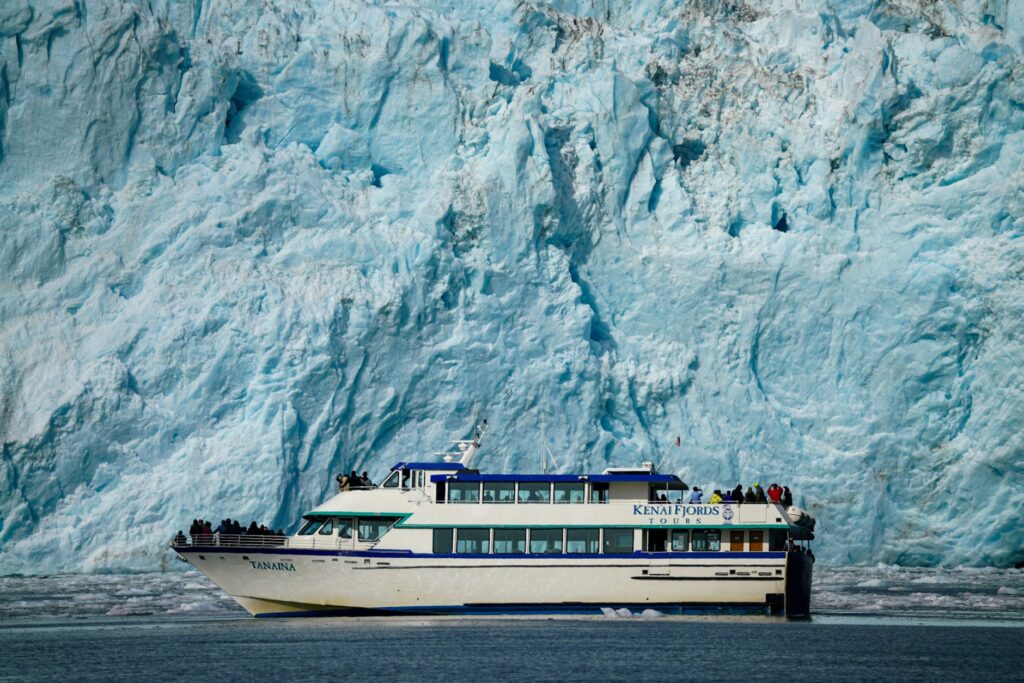
Navigating the Inside Passage involves traversing narrow channels flanked by granite walls towering over a thousand meters high, where glaciers descend directly into open water. In this geographical setting, ferry captains must contend with drastic changes in visibility, tidal currents exceeding ten knots in tight bottlenecks, and the constant presence of floating ice calved from active glacial fronts. The naval engineering applied to these vessels requires reinforced hulls capable of withstanding occasional impacts from small ice blocks, alongside high-maneuverability propulsion systems that allow them to dock at traditional wooden piers where port infrastructure is minimal and tidal swings reach seven meters within hours.
Life on Board: A Floating Community Among Fjords
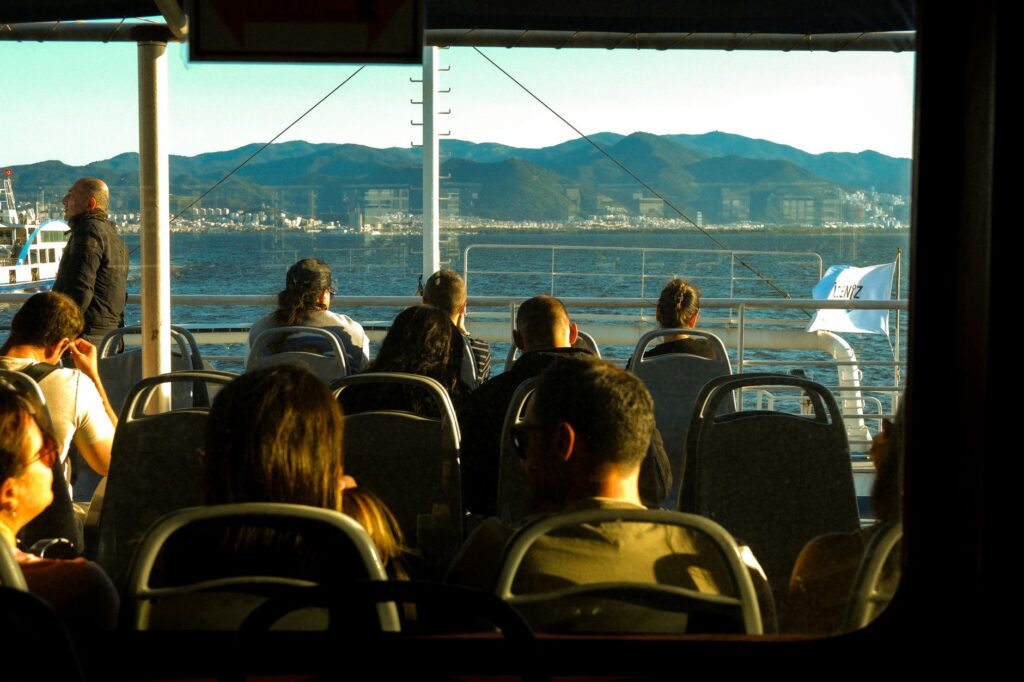
Traveling aboard these ferries transcends the conventional concept of moving from one point to another. For local residents, who use the network to attend specialized medical appointments in larger towns, visit family, or restock fresh produce, the lounges and decks become an extension of their living rooms. During multi-day crossings connecting Ketchikan, Wrangell, Petersburg, and Juneau with the terminal port of Bellingham in Washington state, a unique social microcosm weaves together. Families pitch lightweight tents on upper decks sheltered by awnings against persistent rain, while backpackers and researchers share stories with commercial fishermen in the ship’s cafeterias.
Life management on board is governed by the relentless rhythm of the tides and the loading and unloading schedules for freight trucks, food containers, and fuel. Unlike commercial cruise ships prioritizing superficial luxury and entertainment, the state fleet prioritizes public utility and operational endurance. The lower cargo decks house everything from fuel tanker trucks for home heating to private pickup trucks loaded with freshly caught salmon. This coexistence between essential freight transport and wilderness tourism creates an atmosphere where functionality outweighs aesthetics, giving the journey an authenticity difficult to find on other global shipping routes.
The sea is not a barrier separating Alaska’s communities; it is the only true highway keeping them united against the isolation of wild nature.
The Technical Challenge of Ports Without Concrete Docks
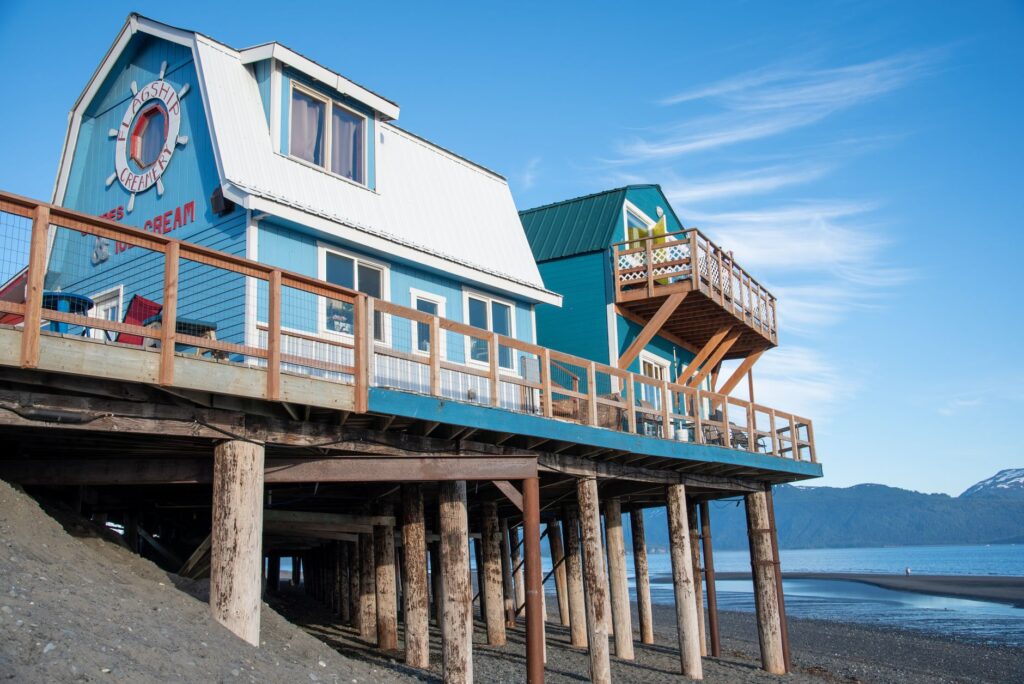
One of the most fascinating aspects of operating these ferries lies in adapting port infrastructure to a brutal geological environment. Much of Alaska’s coastal communities lack modern concrete docks and traditional breakwaters due to the depth of the channels and seabed instability caused by seismic activity and glacial retreat. Instead, the ships rely on articulated floating ramps and proprietary hydraulic systems that compensate for massive tidal ranges. The design of each vessel’s bow and stern doors must align millimetrically with these floating structures, a procedure executed under adverse weather conditions with crosswinds sweeping through the fjords without warning.
Onboard mechanical maintenance teams work continuously to ensure that hydraulic systems and main diesel engines operate without failure on routes where the nearest repair shop may be hundreds of nautical miles away. Technical self-sufficiency is an essential requirement for the crew. Naval engineers must anticipate any breakdown and carry critical spare parts on board, from high-pressure gaskets to electronic components for radar and satellite positioning systems. This technical demand turns the fleet into a global benchmark in managing maritime transport in high-complexity subarctic zones.
Subsistence Economy and Supply in Isolated Communities
The dependence of Inside Passage communities on the ferry system goes far beyond passenger mobility. Entire supply chains rely on the regularity of weekly departures to ensure the provisioning of perishable goods, medicines, and construction materials. When extreme weather conditions force operations to suspend for several days, supermarket shelves in towns like Hoonah or Yakutat quickly reflect the lack of replenishment. This vulnerability highlights the critical role played by the fleet as a publicly funded essential service whose profitability is measured not in dollar profits, but in the demographic viability of the coastal region.
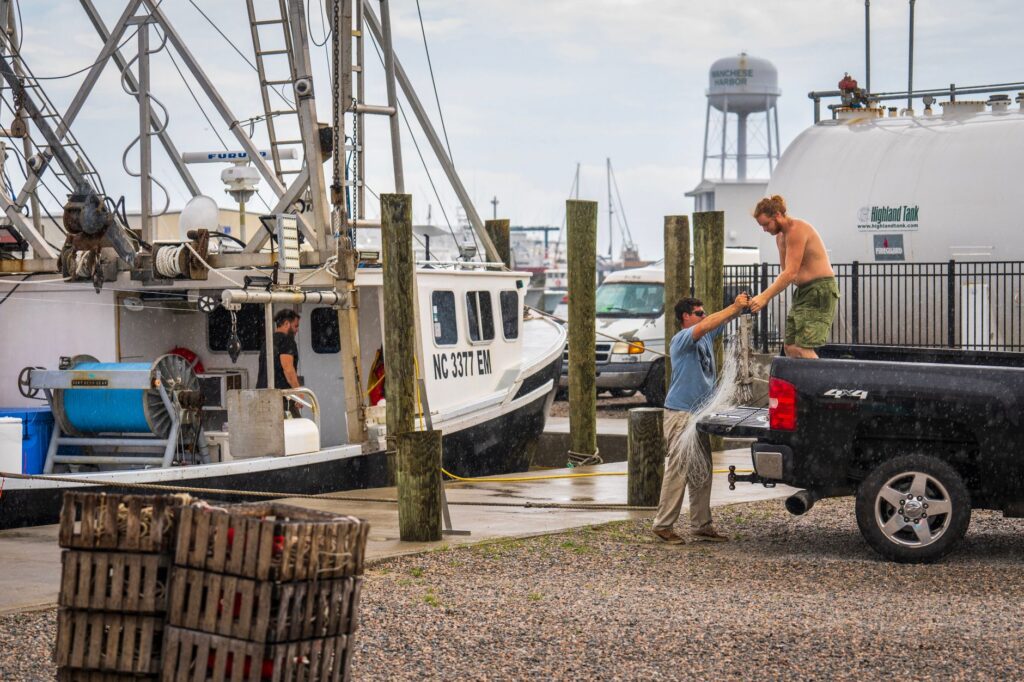
Likewise, the artisanal fishing industry heavily utilizes the ferries to transport their salmon and halibut catches to processing plants or directly to southern markets. Fishermen load their refrigerated trucks into the ship’s holds, optimizing a commercial circuit connecting the most remote fishing grounds with global consumption centers. Without this roll-on/roll-off cargo transport capacity, the local economy based on sustainable marine resource extraction would collapse, prompting the exodus of populations inhabiting these fjords for generations.
Sustainability and Energy Transition in the Boreal Fleet
In recent years, the ferry system has faced complex budgetary and environmental sustainability debates. The need to modernize an aging fleet has forced state authorities to rethink operating costs and carbon emissions associated with massive marine diesel consumption. Although total electrification of long-distance routes remains unfeasible due to current battery technology limitations in cold waters, improvements in engine efficiency and onboard energy management systems are being implemented to reduce environmental impact in fragile marine ecosystems.
Protecting the migratory routes of marine mammals, such as humpback whales and orcas traversing the Inside Passage during summer months, adds another layer of operational complexity. Captains must comply with strict speed regulations in designated areas to avoid collisions with local wildlife, balancing itinerary punctuality with the preservation of ecological balance. This commitment to the natural environment demonstrates that human connectivity and marine habitat preservation can coexist through rigorous planning and absolute respect for the laws of the boreal ecosystem.
Ensuring the survival of these maritime routes requires balancing public accounts with the moral responsibility of not abandoning coastal inhabitants to geographical isolation.
The Impact of Climate Change on Navigation Routes
Global warming is rapidly altering the physical conditions under which the state marine highway operates. Glacier retreat not only modifies the visual landscape of the fjords but increases the risk of massive rock and ice avalanches into the water, generating local tsunami-type waves posing a latent danger to coastal navigation. Furthermore, increasing frequency of severe storms in the Gulf of Alaska widens inoperability windows, forcing cancellations more frequently and affecting logistical predictability across the region.
Faced with this changing reality, crews and route planners must constantly update their safety and navigation protocols. Integrating satellite ice monitoring technologies and advanced local weather forecasting systems has become as vital as traditional navigation charts. The survival of this transport system depends on its adaptability to a natural environment that no longer behaves with past predictability, demanding constant investment in innovation and operational resilience.
Practical guide
Planning a journey aboard the Alaska Marine Highway System requires a rigorous understanding of its operations and limitations. Below are the fundamental aspects to organize a crossing:
- Advance Vehicle Reservations: Spaces for cars and RVs in the holds are extremely limited and must be booked months in advance, especially during the peak summer season (May to September).
- Onboard Accommodation: Long routes do not always have private cabins available. It is essential to bring a sleeping bag, mat, and appropriate clothing to sleep in designated lounges or protected decks.
- Itinerary Flexibility: Adverse weather conditions and unforeseen mechanical repairs can alter departure and arrival times with short notice. It is recommended to leave a margin of at least 48 hours in land travel plans.
- Food Provisions: Although ferries feature onboard cafeterias, variety can be limited. Bringing additional snacks and beverages is recommended, particularly if traveling with specific dietary needs.
- Documentation and Fares: Check resident and non-resident fares on the official Alaska Marine Highway System website. Prices vary significantly based on distance and vehicle size.
The Horizon of Cold Water
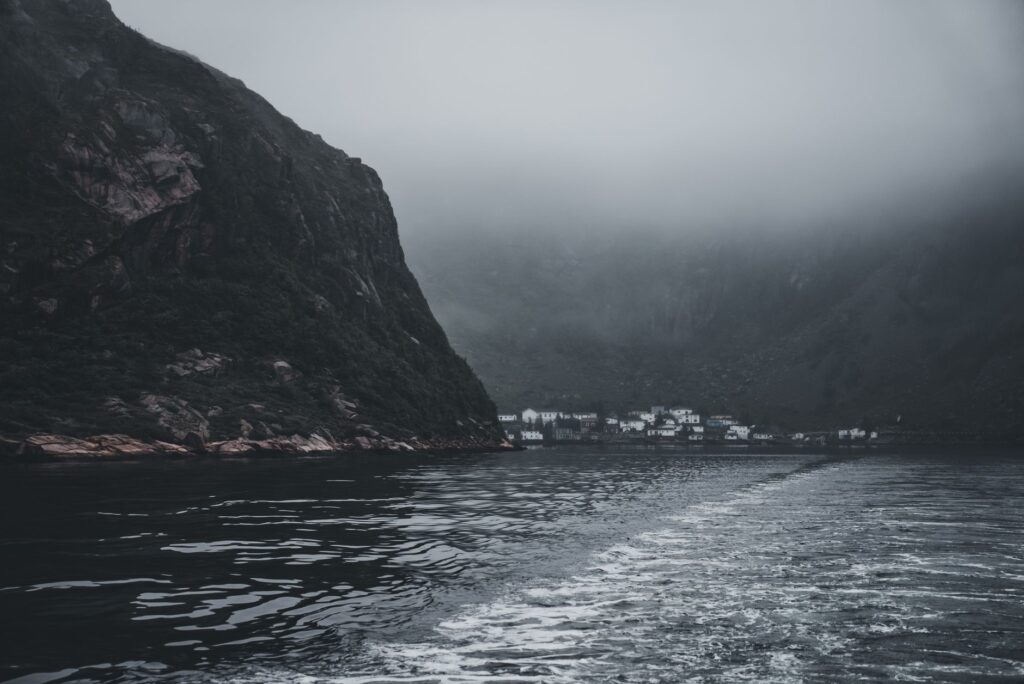
At the end of the voyage, as the ferry slows down to approach the wooden pier under persistent drizzle, the true magnitude of this human effort becomes apparent. It is not merely a public transport service, but a silent pact against loneliness and geographical distance. The vessel’s white lights cutting against the darkness of the fir trees and the gray mass of the mountain summarize a story of daily endurance. As the hydraulic ramps descend to connect the floating world with solid ground, the certainty remains that the pulse of these ships continues to be the indispensable heartbeat keeping the wild northern frontier alive.